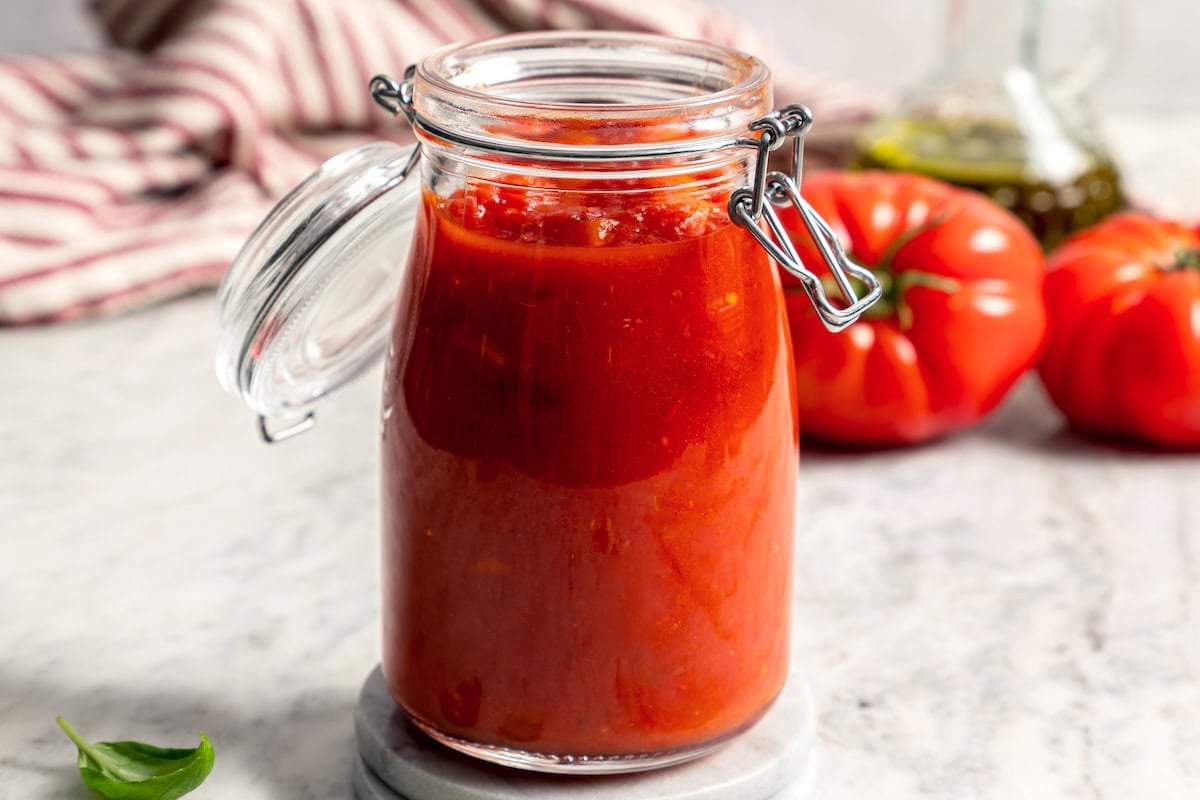
A simple homemade Italian tomato sauce comes together in about 30 minutes using canned or fresh tomatoes, garlic, olive oil, and fresh basil. The key is using quality tomatoes and letting the sauce simmer low and slow to develop deep, rich flavor. This filetto di pomodoro style sauce is lighter and fresher than jarred versions and works beautifully on pasta, pizza, or as a base for other dishes.
There is something deeply satisfying about making tomato sauce from scratch. It costs less than a jar of the good stuff, takes less than an hour, and tastes like something your Italian grandmother would be proud of. Once you make it yourself, it is genuinely hard to go back to store-bought.
The style we are focusing on here is filetto di pomodoro, which translates roughly to fillet of tomato. It is a Roman-style sauce known for being light, clean, and fresh rather than heavy or overly cooked down. It uses minimal ingredients, which means every one of them matters. You want real olive oil, good canned tomatoes, fresh garlic, and fresh basil. That is essentially it. The simplicity is the whole point.
This sauce fits beautifully into a homestead or from-scratch cooking lifestyle because it scales up easily for batch cooking, cans or freezes well, and can be customized endlessly depending on what you have on hand. Make a big pot on Sunday and you have the foundation for pasta nights, homemade pizza, shakshuka, stuffed peppers, or braised chicken throughout the week. It is one of those foundational kitchen skills that pays dividends every single time you use it. Whether you are cooking for one or feeding a hungry household, knowing how to make a solid tomato sauce from scratch is one of the most useful things you can have in your repertoire.
How to Make Homemade Italian Tomato Sauce: Light, Fresh, and Full of Flavor
Ingredients
- 2 tablespoons extra virgin olive oil
- 3 cloves garlic, thinly sliced
- 1 can (28 oz) whole San Marzano tomatoes
- 1/4 teaspoon red pepper flakes (optional)
- 1/2 teaspoon kosher salt, plus more to taste
- 1/4 teaspoon black pepper
- 6-8 fresh basil leaves
- 1 teaspoon sugar (optional, to balance acidity)
Prep your tomatoes
If using whole canned tomatoes, crush them by hand directly into a bowl before you start cooking. This gives you more control over the texture than blending and keeps the sauce feeling rustic and fresh. If using fresh tomatoes, score the bottoms, blanch briefly in boiling water, peel, and roughly chop.
Bloom the garlic in olive oil
Heat the olive oil in a wide, heavy-bottomed pan over medium-low heat. Add the sliced garlic and cook slowly for 2 to 3 minutes, stirring frequently, until it turns golden and fragrant. Do not let it brown or burn as bitter garlic will ruin the whole sauce.
Add pepper flakes and tomatoes
If using red pepper flakes, add them to the oil just before the tomatoes to bloom their flavor for about 30 seconds. Then carefully pour in your crushed tomatoes. The oil will spatter so stand back slightly and stir immediately to combine everything.
Season and simmer
Add salt, black pepper, and sugar if your tomatoes seem acidic. Stir well and bring the sauce to a gentle simmer over medium heat. Reduce heat to low and let it cook uncovered for 20 to 25 minutes, stirring occasionally, until the sauce thickens slightly and the flavors meld together.
Finish with fresh basil
Tear the basil leaves by hand and stir them in during the last 5 minutes of cooking. Adding basil too early can make it taste bitter and lose its brightness. Taste and adjust salt, pepper, or a tiny pinch of sugar as needed right before serving.
Toss with pasta or store for later
If serving with pasta, reserve a cup of starchy pasta water before draining. Add the cooked pasta directly to the sauce in the pan and toss over low heat, adding pasta water a splash at a time to loosen and help the sauce cling to every noodle. For storage, cool completely and refrigerate for up to 5 days or freeze for up to 3 months.
- Use San Marzano tomatoes when possible. They have lower acidity, fewer seeds, and a naturally sweeter, meatier flavor than standard canned tomatoes. Look for DOP-certified cans for the real thing.
- Never rush the garlic. Low and slow is the rule. If your garlic darkens past golden, start over. Burned garlic is impossible to fix and will make your entire batch bitter.
- Pasta water is your secret weapon. The starchy, salty water emulsifies with the olive oil in the sauce to create a silky, restaurant-quality coating that plain water cannot replicate. Always save a cup before you drain.
What to Look For in Canned Tomatoes and Sauce-Making Essentials
Our Top Picks
Curated for From-Scratch Cooking


Making tomato sauce from scratch is one of those skills that sounds like more effort than it actually is. Once you have done it a couple of times, it becomes second nature. You will start keeping canned San Marzano tomatoes in your pantry as a staple, you will get a feel for how long to cook the garlic, and you will develop your own little tweaks that make the sauce yours.
The tools and ingredients you invest in for this simple recipe serve you across dozens of other dishes in your kitchen. A good heavy pan, quality olive oil, and a reliable tomato are the foundation of so much of what makes from-scratch cooking worth it. Start with this sauce, build your confidence, and let it open the door to an entire world of cooking from the ground up.
Frequently Asked Questions
Can I use fresh tomatoes instead of canned?
Yes, fresh tomatoes work beautifully especially in late summer when they are at peak ripeness. Roma and San Marzano varieties are best because they have dense flesh and low water content. Blanch, peel, and roughly chop them before adding to the pan. You may need to simmer the sauce a bit longer to cook off excess liquid.
How long does homemade tomato sauce last in the fridge?
Properly stored in an airtight container, homemade tomato sauce keeps well in the refrigerator for up to 5 days. Make sure it is fully cooled before sealing and refrigerating. Always use a clean spoon each time you scoop from the container to avoid introducing bacteria.
Can I freeze this sauce, and how?
Homemade tomato sauce freezes exceptionally well for up to 3 months. Let it cool completely, then portion it into freezer bags or airtight containers leaving a little headspace for expansion. Label with the date. Thaw overnight in the fridge or under warm running water for a quicker option.
Why does my tomato sauce taste bitter?
Bitterness in tomato sauce usually comes from one of three things: garlic that was cooked too hot and browned, tomatoes with high acidity, or basil that was added too early and overcooked. A small pinch of sugar or a tiny drizzle of olive oil stirred in at the end can help balance bitterness from acidic tomatoes. For garlic issues, unfortunately starting fresh is the best fix.
Can I make this sauce in a large batch for canning?
Yes, this sauce scales up well for water bath canning. Because tomatoes are a high-acid food you can safely process them in a boiling water canner with the proper technique. Add a tablespoon of lemon juice per quart jar to ensure safe acidity levels. Always follow tested canning guidelines from sources like the USDA or National Center for Home Food Preservation.
For another perspective and additional photos: read the original article →
As an Amazon Associate, Build & Bloom earns from qualifying purchases. We only recommend products we genuinely think are useful. Prices and availability vary; check Amazon for the latest.
Leave a Reply