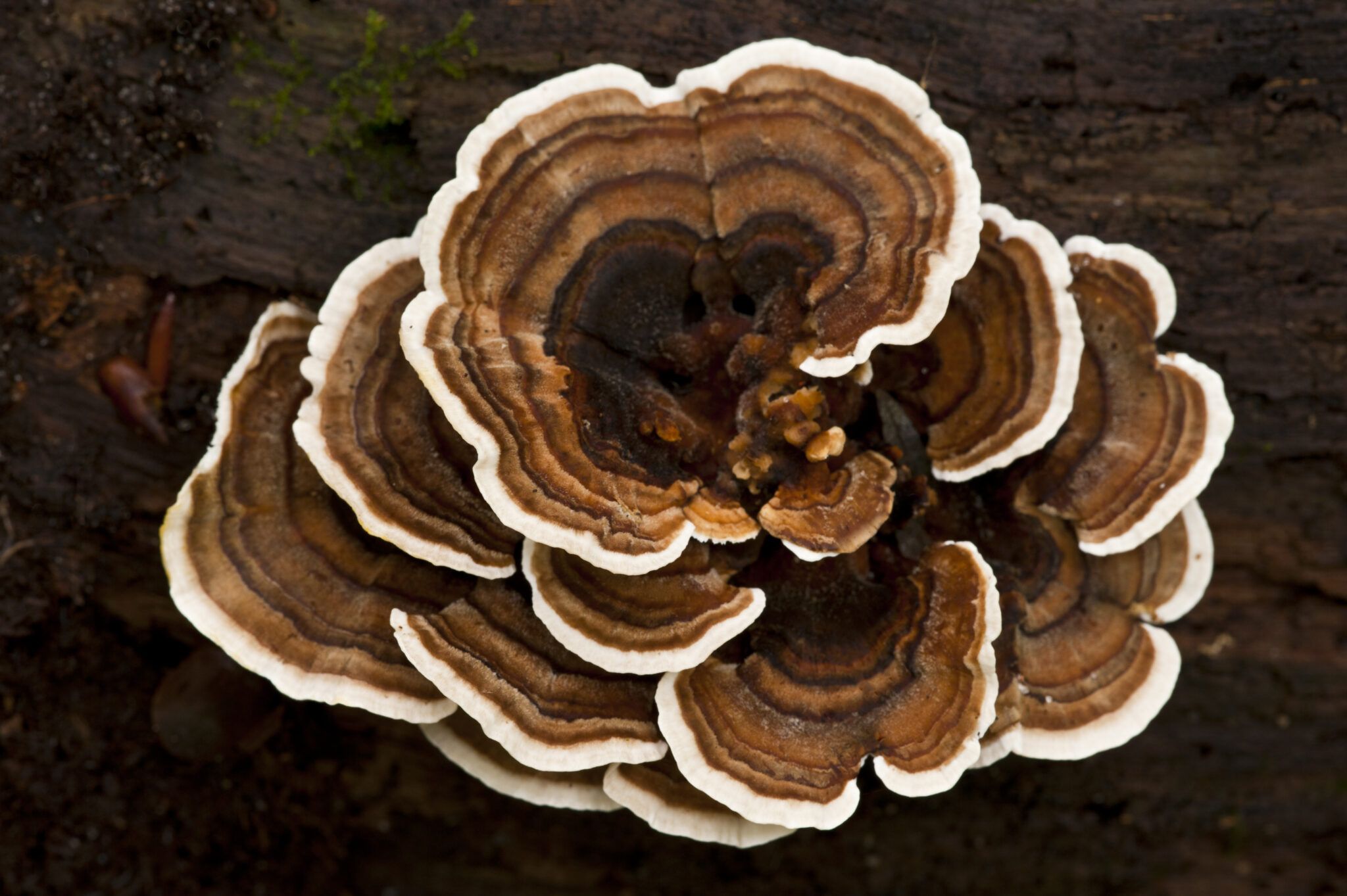

Turkey tail mushrooms (Trametes versicolor) are a well-researched medicinal fungus that can support immune function and gut health in dogs. They contain powerful compounds called polysaccharopeptide (PSP) and polysaccharide-K (PSK) that have shown anti-tumor and immune-modulating effects in studies. You can offer them to your dog as a dried powder, capsule, or brewed extract added to food.
If you’ve been diving deeper into natural health for your animals, you’ve probably come across turkey tail mushrooms. Named for their fan-shaped, multicolored rings that look remarkably like a wild turkey’s tail feathers, these fungi grow on dead hardwood trees across North America and have been used in traditional Eastern medicine for centuries. What’s exciting for dog owners is that modern science is starting to catch up, and the research is genuinely promising.
Turkey tail mushrooms contain two key bioactive compounds: PSK (polysaccharide-K) and PSP (polysaccharopeptide). Both are beta-glucans, a type of soluble fiber that interacts with the immune system in meaningful ways. A landmark study funded by the National Institutes of Health found that dogs with hemangiosarcoma who were given turkey tail extract lived significantly longer than those who weren’t. That’s not a small thing. While turkey tail isn’t a cure, it appears to offer real immune support that can complement conventional veterinary care.
Beyond cancer support, turkey tail mushrooms act as a prebiotic, feeding beneficial bacteria in your dog’s gut. A healthy microbiome is foundational to everything from digestion to mood to immunity. For dogs dealing with chronic illness, recovering from antibiotics, or simply aging into their senior years, adding a quality turkey tail supplement to their routine is one of the most evidence-backed natural steps you can take. The key is knowing how to source it responsibly and introduce it correctly, which is exactly what we’re going to walk through here.
How to Give Your Dog Turkey Tail Mushrooms: A Safe Introduction Guide
Talk to Your Vet First
Before adding any new supplement to your dog’s routine, loop in your veterinarian, especially if your dog is on medications or has an existing health condition. Turkey tail is generally well-tolerated, but your vet can help you determine an appropriate starting dose and flag any potential interactions. This step is especially important for dogs undergoing cancer treatment.
Choose a Quality Form
Turkey tail comes in several forms: dried whole mushroom powder, dual-extracted tinctures, capsules, and chewable supplements. Powder mixed into food is the most flexible for dosing. Look for products made from the whole fruiting body rather than mycelium grown on grain, as the fruiting body contains a higher concentration of active compounds.
Start With a Low Dose
Begin with roughly half the recommended dose for your dog’s weight and watch for any digestive changes over the first week. Some dogs experience mild loose stools when first introduced to any new mushroom supplement. Starting low and slow allows your dog’s gut to adjust and helps you identify any sensitivity before committing to a full serving.
Mix Into Regular Meals
Turkey tail powder has a mild, earthy flavor that most dogs tolerate well when blended into wet food, bone broth, or a small amount of plain yogurt. Tinctures can be added directly to the food bowl. Avoid giving supplements on an empty stomach initially, as this can sometimes cause nausea in sensitive dogs.
Ramp Up to a Full Serving Over Two Weeks
After a week of a half dose with no adverse reactions, gradually increase to the full recommended amount for your dog’s body weight. Most general guidelines suggest around 25-50mg of extract per kilogram of body weight daily, but always defer to product-specific instructions and your vet’s guidance over general rules.
Monitor and Track Changes
Keep a simple log of your dog’s energy, stool quality, appetite, and coat condition over the first month. Improvements in gut health and immune function are typically subtle and gradual rather than dramatic. Tracking helps you notice positive shifts you might otherwise miss and gives you useful information to share with your vet at check-ins.
Cycle or Continue Consistently
Some holistic vets recommend giving turkey tail continuously for dogs with chronic illness or cancer support needs, while others prefer cycling on and off. For general wellness maintenance, a consistent daily dose tends to yield the best results. Revisit your approach with your vet every few months as your dog’s health needs evolve.
- Always choose turkey tail products that provide a Certificate of Analysis (COA) from third-party lab testing to confirm the beta-glucan content and absence of heavy metals or contaminants.
- Brew dried turkey tail as a tea and freeze it into ice cube trays for an easy, mess-free way to add medicinal mushroom extract to your dog’s meals all week.
- If your dog is a picky eater, mix the powder into a small spoonful of unsweetened pumpkin puree first, then stir that into their main meal to mask the earthy taste more effectively.
What to Look For in Turkey Tail Supplements for Dogs
Our Top Picks
Curated for From-Scratch Cooking


Turkey tail mushrooms represent one of the more exciting intersections of traditional wisdom and modern veterinary science. The research is still growing, but what exists is genuinely encouraging, and for most healthy dogs, adding a quality turkey tail supplement is a low-risk, potentially high-reward decision. Start slow, source carefully, and loop in your vet so you’re making informed choices tailored to your specific dog.
As with so much on the homestead and natural living path, the goal isn’t to replace conventional care but to layer in thoughtful, evidence-based support wherever we can. Turkey tail mushrooms are a small, powerful piece of that puzzle, and once you find a routine that works for your dog, it becomes just another simple, nourishing habit in a life well-tended.
Frequently Asked Questions
Is turkey tail mushroom safe for all dogs?
Turkey tail is considered safe for most dogs when given in appropriate doses, but it should be introduced cautiously in dogs with autoimmune conditions, as immune-stimulating compounds could theoretically exacerbate certain conditions. Dogs on immunosuppressive medications should only take it under direct veterinary supervision. Always consult your vet before starting any new supplement.
How long does it take to see results from turkey tail mushrooms in dogs?
Immune and gut health benefits from turkey tail are typically gradual rather than immediate. Most owners and vets suggest allowing at least 4 to 8 weeks of consistent daily supplementation before evaluating results. Improvements in stool quality from its prebiotic effects may appear sooner, sometimes within two to three weeks.
Can I give my dog fresh turkey tail mushrooms I foraged myself?
Technically yes, but it comes with significant caveats. Accurate species identification is critical since look-alike species exist, and wild mushrooms can carry environmental contaminants. Additionally, the beneficial compounds in turkey tail are much more bioavailable when the cell walls are broken down through heat or extraction, so raw whole mushrooms provide minimal benefit. Foraging is best left to experts, and supplementing with a standardized extract is safer and more effective.
What is the correct dose of turkey tail mushrooms for dogs?
General guidelines commonly cited by integrative vets suggest approximately 25 to 50mg of turkey tail extract per kilogram of body weight per day, but this varies significantly by product concentration. Always follow the dosing instructions on your specific product label and consult your vet for dogs with health conditions or those using it as part of cancer care.
Can turkey tail mushrooms cure cancer in dogs?
No, turkey tail mushrooms are not a cure for cancer. However, research including a funded NIH study has shown that certain compounds in turkey tail may extend survival time in dogs with specific cancers like hemangiosarcoma by supporting immune function. It is best viewed as a complementary support tool used alongside, not instead of, conventional veterinary oncology treatment.
For another perspective and additional photos: read the original article →
As an Amazon Associate, Build & Bloom earns from qualifying purchases. We only recommend products we genuinely think are useful. Prices and availability vary; check Amazon for the latest.
Leave a Reply