
You’ve carefully planned your garden beds, but planting the wrong vegetables next to each other can sabotage your entire harvest. Some plants naturally repel each other, compete for the same nutrients, or attract the same destructive pests. Understanding companion planting incompatibilities helps you maximize space, reduce disease, and grow healthier, more productive crops without relying on chemicals.
The 5 Key Principles of Vegetable Incompatibility
Vegetables fail when planted together for specific biological and ecological reasons. Learn these core principles to plan a thriving garden.
Key Concepts
- Allelopathy: when one plant releases chemicals that inhibit nearby plant growth
- Nutrient competition: when adjacent plants target the same soil minerals
- Shared pest attraction: when nearby plants draw the same insects or diseases
- Root depth conflicts: when plants with similar root zones crowd each other
- Growth habit interference: when plant size or spread physically blocks neighbors
Principles
Recognize Allelopathic Plant Pairs
Fennel actively releases compounds that stunt growth in most nearby vegetables and should be isolated. Similarly, black walnut trees release juglone that kills tomatoes, peppers, and eggplants. Onions and garlic release sulfur compounds that inhibit bean and pea germination. Before placing any plant, research whether it has allelopathic properties that could chemically damage neighbors.
Identify Heavy Feeder Combinations
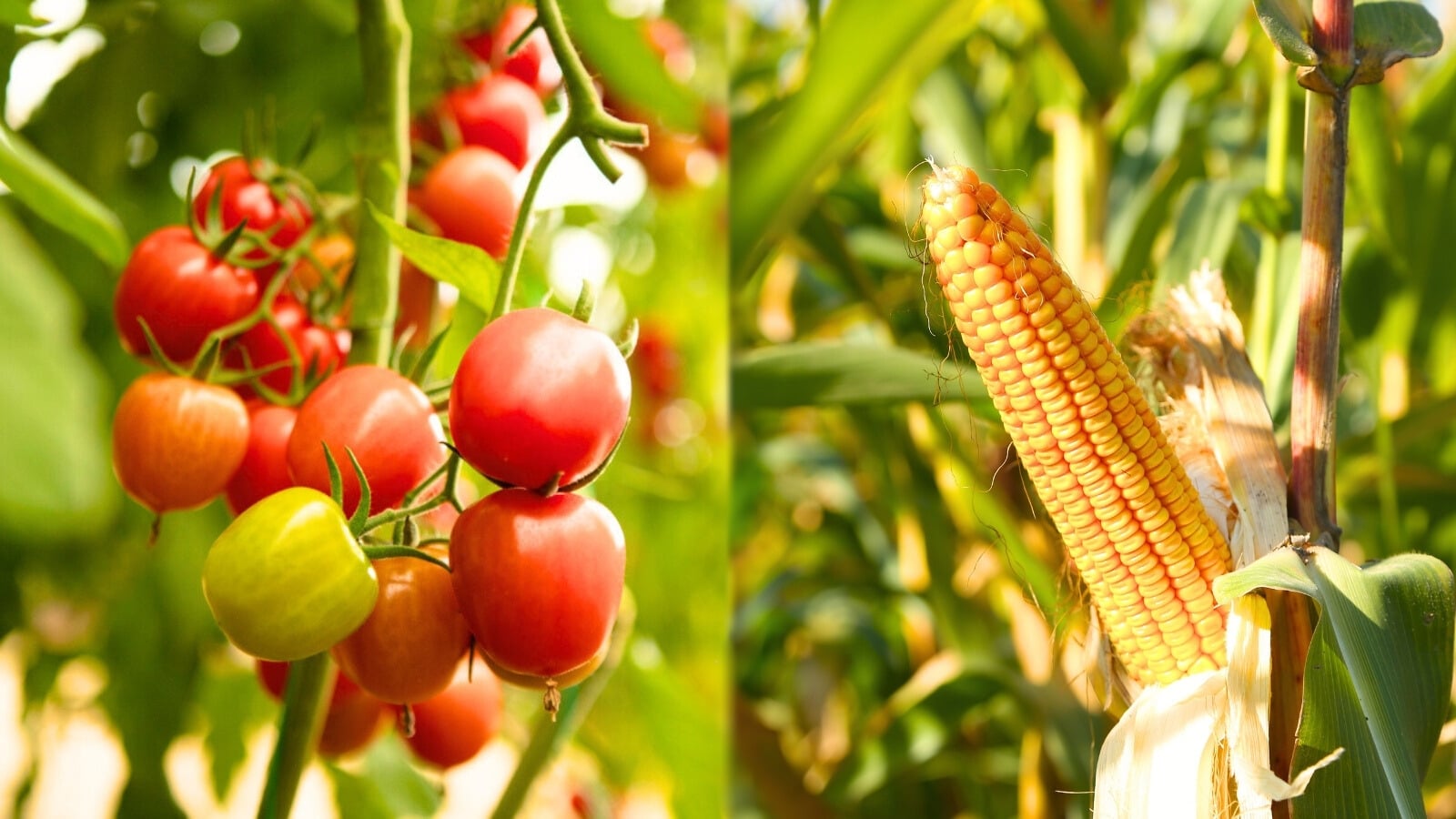
Tomatoes, corn, and cabbage are nitrogen-hungry plants that severely deplete soil when planted together. Two heavy feeders in adjacent beds compete for the same limited nutrients, resulting in stunted growth for both. Instead, follow heavy feeders with nitrogen-fixing legumes or light feeders like onions and herbs in subsequent seasons.
Prevent Shared Pest Outbreaks
Cucumbers and squash attract the same beetles and powdery mildew, so clustering them creates a pest buffet. Brassicas (cabbage, broccoli, kale) all host cabbage moths and worms. When susceptible plants touch or grow too close, pests spread rapidly through both crops. Spacing them far apart or using barrier plants creates natural pest interruption.
Avoid Root Zone Conflicts
Potatoes and tomatoes both develop tubers and fruits at similar soil depths, causing severe root competition and reduced yields. Carrots and onions compete for the same shallow-to-medium soil layer. Check each vegetable’s typical root depth before pairing them, and combine shallow-rooted plants with deep-rooted varieties to use vertical soil space efficiently.
Account for Mature Plant Size
Tall plants like corn and pole beans shade smaller neighbors like lettuce and spinach, blocking their required sunlight. Sprawling plants like pumpkins and watermelons physically smother adjacent crops as vines expand. Map out expected mature width and height for each variety, ensuring shorter or slower plants aren’t overshadowed by vigorous growers.
- Create a written companion planting chart for your specific varieties before spring planting — mark incompatible pairs in red to avoid placement mistakes
- Rotate crop families annually to different beds so pests and diseases don’t build up in the same soil location
- Use vertical structures like trellises to separate competing plants in the same bed, creating different growing zones
Garden Planning Tools to Prevent Planting Mistakes
- Raised bed system: Allows you to physically separate incompatible plants into distinct growing zones, preventing root competition and disease spread across your entire garden.
- Soil pH and nutrient testing kit: Identifies deficiencies before planting so you can address heavy feeder depletion, helping you understand which nutrients specific plant pairs will compete for.
- Companion planting reference guide or app: Provides quick lookup for incompatible pairs and their specific reasons, saving hours of research when designing bed layouts.
- Garden measuring tape: Ensures adequate spacing between incompatible plants based on mature size, preventing shade conflicts and allowing proper airflow to reduce disease.
Raised Garden Bed Kit by Greenes Fence
Best for: Gardeners wanting to physically separate incompatible plants
Untreated cedar raised beds provide distinct growing zones for incompatible vegetables, preventing root competition and disease spread. Available in multiple sizes from 2×8 feet to 4×8 feet, these beds create natural barriers between problem plant pairs. The durable cedar construction lasts 10+ years and integrates easily with existing gardens. Perfect for implementing companion planting strategies without relying on soil spacing alone.
Check Current Price on Amazon →Companion Planting Guide Laminated Chart by Gardening Know How
Best for: Beginners needing quick reference before planting
This laminated reference card displays incompatible plant pairs with color-coded icons explaining the reason for incompatibility. Weatherproof design survives garden conditions and fits in your pocket for on-site planning. Includes 40+ common vegetable varieties with detailed incompatibility notes. An affordable essential tool that prevents costly planting mistakes before you dig.
Check Current Price on Amazon →GardenPlanner App by iGarden
Best for: Digital-first gardeners who want automated incompatibility warnings
This smartphone and tablet app lets you drag-and-drop vegetables onto a digital garden layout while receiving real-time alerts about incompatible neighbors. Track watering schedules, harvest dates, and nutrient needs for each plant. The app blocks problematic plant combinations automatically, eliminating guesswork. Works offline and syncs across devices, making it easy to plan indoors and reference in the garden.
Check Current Price on Amazon →Home Soil pH and Nutrient Test Kit by Luster Leaf
Best for: Gardeners addressing heavy feeder depletion between seasons
This all-in-one soil testing kit measures nitrogen, phosphorus, potassium, and pH with color-coded results ready in minutes. Understand your soil’s nutrient profile before planting heavy feeders or their incompatible companions. Includes 10 test capsules with clear instructions. Prevents nutrient competition problems by revealing what your soil actually contains, allowing informed plant pairing decisions.
Check Current Price on Amazon →Complete Garden Planning Package by Gardenary
Best for: Serious gardeners investing in comprehensive planning systems
This premium package includes a detailed companion planting atlas, customizable garden layout templates, quarterly planning worksheets, and access to expert consultation for bed design. Hardcover guide covers incompatibilities for 60+ varieties with detailed scientific explanations. Worksheets help you track which plant pairs failed in previous seasons to avoid repeating mistakes. Investment-grade resource for multi-year garden optimization.
Check Current Price on Amazon →Measurement Marking Tape by Komelon
Best for: Ensuring proper spacing between incompatible plants
This heavy-duty measuring tape features bold inch and foot markings for precise plant spacing calculations. 25-foot length covers most home garden beds with clear visibility in sunlight. The locking mechanism holds measurements steady while you position transplants at correct distances. An inexpensive tool that prevents common spacing errors that lead to shade conflicts and disease spread.
Check Current Price on Amazon →Pocket Reference Card: Vegetable Incompatibilities by Seed Savers
Best for: Minimal space travelers and apartment gardeners
This credit-card-sized reference fits in a wallet or garden pocket for instant incompatibility lookup. Condensed text covers 30+ common vegetables with their primary incompatible partners and reasons. Weatherproof material survives rain and dirt. While smaller than full charts, it captures the most critical plant pairs that cause harvest failure, making it ideal for small-space and container gardeners.
Check Current Price on Amazon →Raised Bed Garden System with Built-In Pathways by Vego
Best for: High-end integrated garden installations with separated growing zones
This premium modular system uses food-grade vinyl panels to create individual raised beds with defined walking paths between them. Each bed serves as a dedicated incompatible plant zone with excellent drainage and pest isolation. Customizable configurations support 12-20 plant varieties with zero cross-contamination. Includes soil, fertilizer, and companion planting guide. Premium investment for gardeners prioritizing organization and disease prevention.
Check Current Price on Amazon →Plan Your Garden Right the First Time
Vegetable incompatibility isn’t random chance or gardening myth—it’s grounded in plant biology, pest ecology, and soil chemistry. By understanding why certain plants fail when planted together, you can design beds that maximize yield, minimize disease, and reduce your workload. Use a companion planting reference guide before spring to map out your layout, ensuring incompatible pairs are separated by beds, pathways, or vertical distance.
Your first season planning saves time, frustration, and wasted seeds. Start with a simple raised bed system to physically separate problem plant pairs, invest in a soil test to understand your nutrient baseline, and keep a reference chart handy during planting season. Within two growing cycles of thoughtful companion placement, you’ll develop an intuition for which vegetables thrive together—and which ones need distance to succeed.
Frequently Asked Questions
Why can’t I plant tomatoes and potatoes near each other?
Both are nightshades that share the same pests (notably late blight fungus) and compete for identical soil nutrients. Planting them adjacent practically guarantees pest spread between crops and severe nutrient depletion. Keep them at least 4-6 feet apart or in separate garden beds.
What’s the difference between allelopathy and nutrient competition?
Allelopathy is when one plant chemically inhibits another’s growth through root secretions; fennel does this to most neighbors. Nutrient competition occurs when plants simply consume the same minerals faster than soil can replenish them. Both damage companion plants but require different solutions.
Can I plant incompatible vegetables if I space them far enough apart?
Distance helps with allelopathy and pest spread, but won’t solve nutrient competition or root conflicts if both plants have identical growing depths. Spacing delays the problem rather than solving it. True incompatibility usually requires placement in separate garden beds.
How do I know if my plant failure was caused by incompatibility?
Look for simultaneous decline in nearby plants, yellowing leaves indicating nutrient deficiency, or identical pest damage on both crops. Document which plant pairs failed together and consult your compatibility chart. Rotate incompatible plants to different beds the following season to test.
Does companion planting incompatibility change based on soil type?
Allelopathy remains consistent regardless of soil, but nutrient competition varies with soil richness. Heavy clay soils worsen competition between heavy feeders, while amended soils reduce the problem. Always test your soil nutrient levels before placing known competitors adjacent to each other.
As an Amazon Associate, Build & Bloom earns from qualifying purchases. We only recommend products we genuinely think are useful. Prices and availability vary; check Amazon for the latest.
Leave a Reply