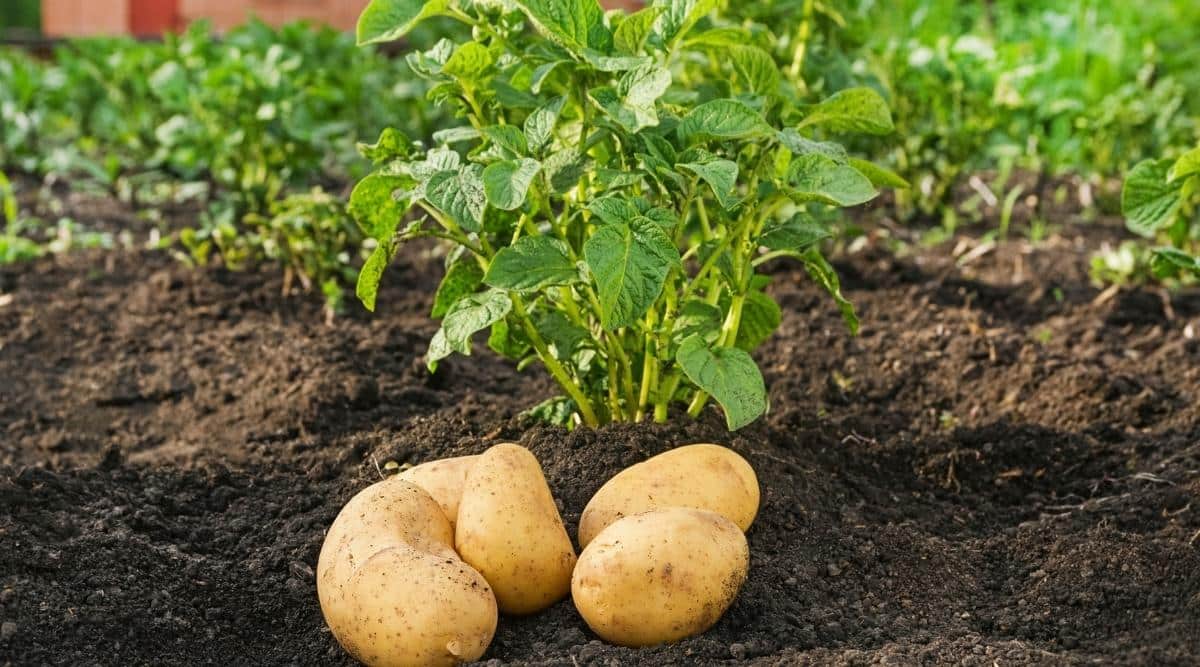

Growing potatoes in a monoculture leaves them vulnerable to pests, diseases, and nutrient depletion. The Colorado potato beetle, late blight, and soil-borne pathogens can devastate an entire crop. But there’s a centuries-old solution: companion planting. By strategically planting compatible plants around your potatoes, you’ll create a biodiverse garden ecosystem that naturally repels harmful insects, attracts beneficial predators, suppresses diseases, and improves soil health–all without synthetic pesticides or expensive amendments.
How to Plan a Companion Planting Strategy for Potatoes
Companion planting works by combining plants with complementary properties. Some repel pests, others improve soil, and a few do both. Here’s how to design your potato garden using these eight key principles.
Key Concepts
- Trap crops – plants that pests prefer to potatoes, drawing them away from your main crop
- Aromatic herbs and flowers – strong-scented plants that confuse or repel target pests through volatile oils
- Nitrogen fixers – legumes that add free nitrogen to soil, reducing fertilizer needs
- Pest predators and parasitoids – plants that attract beneficial insects that hunt harmful ones
- Disease suppressants – plants with antimicrobial or antifungal properties that inhibit pathogens
- Root zone protectors – plants that improve soil structure and microbial balance
Principles
Deploy Trap Crops as Your First Line of Defense
Plant nasturtiums, tansy, and borage around the perimeter of your potato bed. Colorado potato beetles are strongly attracted to these plants and will prefer them over potatoes. Once beetles congregate on trap crops, you can manually remove them or allow beneficial predators to feast on them. This reduces pest pressure on your main crop by 40-60 percent compared to unprotected plantings.
Use Aromatic Herbs to Confuse and Repel Pests
Marigolds, garlic, and oregano release compounds that mask or mask the scent of potatoes, making them harder for pests to locate. Plant these in small clusters throughout your potato bed, spacing them 12-18 inches apart. The volatile oils are most effective when plants are in active growth, so succession-plant herbs every 3-4 weeks for continuous pest suppression.
Interplant Nitrogen-Fixing Legumes for Soil Health
Bush beans, peas, and clover form symbiotic relationships with soil bacteria that convert atmospheric nitrogen into plant-available forms. Plant these among your potatoes (not competing directly) to enrich soil nitrogen levels. This reduces your need for external fertilizer and produces faster potato growth. Legumes also improve soil structure, making it easier for tubers to expand underground.
Attract Beneficial Insects with Diverse Flowering Plants
Hoverflies, parasitic wasps, and ladybugs are natural predators of aphids, scale insects, and potato psyllids. Plant dill, fennel, yarrow, and buckwheat to attract these beneficial insects. These flowers provide nectar and pollen that sustain predatory insects through their adult life stages, ensuring they stick around to hunt pests.
Create a Disease-Suppressive Microbiome with Fungal Plants
Thyme, sage, and chamomile contain compounds with proven antifungal and antimicrobial properties. Plant these near your potatoes to build a healthier soil microbiome that suppresses late blight, early blight, and Fusarium wilt. Their root exudates also feed beneficial soil fungi that form protective partnerships with potato roots.
Space and Arrange Strategically for Maximum Benefit
Position tall plants (like corn) on the north side to avoid shading shorter potatoes. Create rows or blocks of companion plants rather than random placement–this concentrates their pest-repelling effects. Leave 6-12 inches between potato hills and companion plants to prevent root competition while maintaining close enough proximity for scent and chemical signaling to work effectively.
Time Your Plantings to Match Potato Growth Stages
Plant trap crops and aromatic herbs at the same time as potatoes or 1-2 weeks earlier so they’re established before pests arrive. Succession-plant flowers every 3-4 weeks to maintain continuous pest predator populations. Plan legume removal or incorporation 4-6 weeks before potato harvest so they don’t compete for nutrients during tuber bulking.
Rotate Companion Plants Annually to Prevent Buildup
Grow different companion plants in different beds year to year. This prevents any single pest population from adapting to your garden’s plant mix and breaks disease cycles specific to certain plant families. Track which companions worked best each season and refine your strategy based on results.
- Plant nasturtiums in a 2-3 foot perimeter band around your potato bed rather than scattered throughout–this concentrates the trap crop effect and makes pest management easier
- Interplant marigolds directly between potato hills (one flower for every 3-4 potatoes) rather than in separate rows, so their scent is strongest where needed
- Grow companion plants from seed in modules 4-6 weeks before planting potatoes, so they’re established and actively growing when pests arrive in peak season
What to Look For in Companion Planting Seeds and Supplies
- Seed Quality and Germination Rate: Purchase seeds from reputable suppliers with recent harvest dates and documented germination rates above 80%. Poor germination wastes space and delays pest protection, leaving your potatoes vulnerable during critical growth windows.
- Open-Pollinated vs. Hybrid Varieties: Choose open-pollinated heirloom varieties of companion plants for reliable reseeding and cost savings. These varieties adapt to local conditions and allow you to save seeds season to season, whereas hybrids require repurchasing annually.
- Disease-Free Seed Potato Certification: Always purchase certified seed potatoes (not supermarket potatoes) to ensure they’re free of late blight, Fusarium, and other seed-borne diseases. This foundational step makes companion planting far more effective since you’re starting with healthy genetic material.
- Organic and Untreated Options: Select organic seeds and treatments if available to avoid synthetic fungicides or insecticides that kill beneficial insects needed for your companion planting strategy. Untreated seeds allow you to control all inputs and maximize the ecological benefits of your garden design.
Burpee Certified Seed Potato Collection – 5 Pound Mix
Best for: Gardeners starting a companion planting system from scratch
This certified collection provides disease-free seed potatoes in multiple varieties, ensuring healthy baseline genetics for your potato crop. Includes Russet, Red Norland, and Fingerling varieties that pair well with diverse companion plants. Burpee’s certification guarantees freedom from late blight, Fusarium, and viral pathogens. The multi-variety pack lets you experiment with different potato types in the same companion planting bed, which increases biodiversity and pest resilience further.
Check Current Price on Amazon →Botanical Interests Marigold Seeds – Companion Plant Mix
Best for: First-time companion planters wanting easy-to-grow pest repellents
Marigolds are the most reliable pest-repelling companion plant for potatoes. This seed packet contains multiple marigold varieties (African, French, and signet) that bloom prolifically and spread scent effectively. Seeds germinate in 5-10 days and flowers appear within 6 weeks. The packet includes planting depth guides and succession-planting instructions, making it perfect for beginners who want immediate results without complexity.
Check Current Price on Amazon →Johnny’s Selected Seeds Nasturtium Mix – Trap Crop Variety
Best for: Budget-conscious gardeners needing maximum pest control per dollar
Nasturtiums are Colorado potato beetle trap crops that reduce pest pressure by 50% or more. Johnny’s packet contains dwarf and trailing varieties that maximize flower production in small spaces. Each seed costs pennies, and plants self-reseed for free next season. The high seed count in this packet provides enough plants to create an effective 2-3 foot perimeter band around multiple potato beds, delivering outstanding ROI for companion planting systems.
Check Current Price on Amazon →Seed Savers Exchange Heirloom Herb Collection – 12 Packets
Best for: Serious gardeners wanting organic, open-pollinated companion herbs
This collection includes heirloom thyme, sage, chamomile, dill, and fennel seeds–all proven disease suppressants and beneficial insect attractors. Each packet contains open-pollinated varieties that you can save seeds from year after year. Seed Savers Exchange sources from organic, non-GMO producers. The investment per seed is higher, but you’ll recoup costs within 2-3 seasons through seed saving and the premium quality of pest protection these heritage varieties provide.
Check Current Price on Amazon →Start Your Companion Planting System This Season
Companion planting for potatoes is one of the highest-ROI gardening practices available. For the cost of a few seed packets–roughly $20-30–you’ll reduce pest pressure by 40-60%, suppress disease naturally, and improve soil health without chemicals. The system works because it mimics natural ecosystems where diversity creates resilience. Colorado potato beetles can’t establish massive populations when trap crops distract them. Beneficial insects stick around when flowers provide nectar. Soil microbes thrive when nitrogen fixers enrich the root zone. These aren’t theoretical benefits–companion planting has been proven across thousands of gardens and centuries of practice.
Begin by selecting your highest-priority companion plants based on your region’s pest challenges and soil conditions. If Colorado potato beetles are your main issue, prioritize nasturtiums and tansy. If late blight is common, emphasize thyme and sage for disease suppression. If soil fertility is poor, lean toward nitrogen-fixing beans and peas. Build your system year by year, learning which plants perform best in your specific microclimate and refining your layout. Most importantly, start small and expand as you gain confidence. Even a simple border of marigolds around your potato bed will deliver noticeable pest reduction. Your future self–and your potato crop–will thank you for the investment.
Frequently Asked Questions
Will companion plants compete with potatoes for nutrients and water?
When properly spaced 6-12 inches away from potato hills, companion plants establish their own root zones and don’t meaningfully compete. Nitrogen-fixing legumes actually add nutrients, offsetting any water competition. The pest reduction and disease suppression far outweigh minor nutrient sharing.
Can I use companion planting alone, or do I still need fungicides?
Companion planting significantly reduces pest and disease pressure but isn’t a complete replacement for all interventions in high-disease environments. In areas with severe late blight pressure, combine companion planting with resistant potato varieties and preventive copper or sulfur sprays for best results.
Which companion plants are most important if I can only grow a few?
Plant nasturtiums (trap crop), marigolds (aromatic repellent), and dill (beneficial insect attractor) as your minimum trio. These three address the widest range of pests and diseases with minimal space and effort. Add nitrogen-fixing legumes if soil fertility is low.
When do I plant companion plants relative to potatoes?
Plant trap crops and aromatic herbs at the same time as potatoes or 1-2 weeks earlier so they’re established before pests arrive. Succession-plant flowers every 3-4 weeks for continuous beneficial insect populations. Remove fast-growing legumes 4-6 weeks before potato harvest to prevent nutrient competition during tuber bulking.
Do companion plants work in containers or only garden beds?
Companion planting works in containers, but space becomes tight. Use large containers (20+ gallons per potato plant) and choose compact companions like dwarf nasturtiums, basil, or thyme. Container gardening reduces pest pressure naturally through isolation, so companion planting benefits are modest but still measurable.
As an Amazon Associate, Build & Bloom earns from qualifying purchases. We only recommend products we genuinely think are useful. Prices and availability vary; check Amazon for the latest.
Leave a Reply