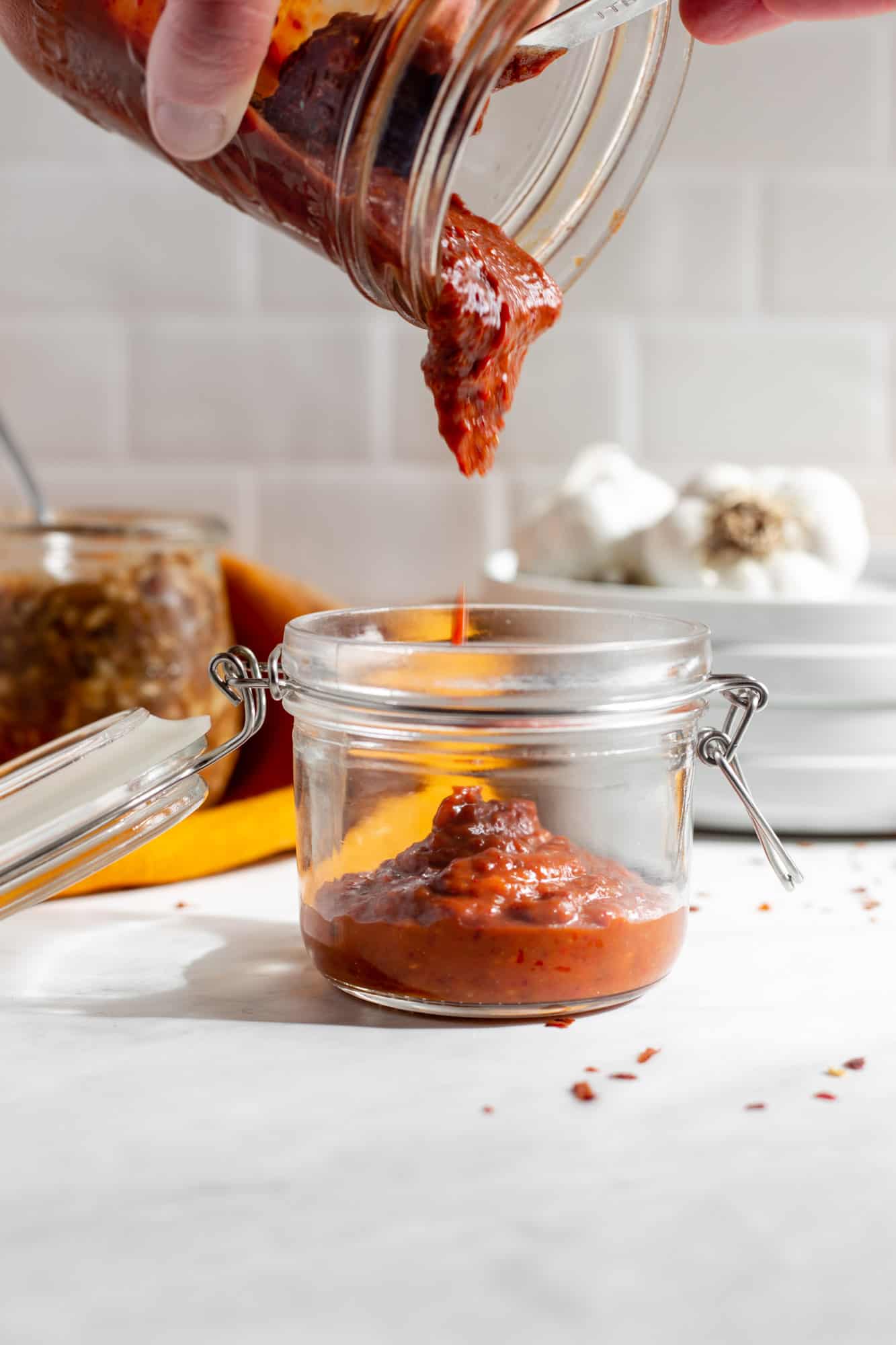

If you’re already fermenting vegetables and making your own condiments, you know that homemade hot sauce opens up entirely new flavor possibilities. Store-bought versions are often loaded with preservatives and lack the living probiotics that make fermented foods so valuable for gut health. Making black garlic gochujang hot sauce at home lets you control every ingredient while developing a deeply complex flavor profile–the umami richness of black garlic combined with the heat of gochujang and the subtle sweetness of maple creates something you simply can’t buy.
How to Make Fermented Black Garlic Gochujang Hot Sauce
This recipe creates a naturally fermented hot sauce that develops flavor over 3-5 days. The fermentation process activates beneficial bacteria while mellowing the heat and deepening the umami notes.
Ingredients
- 1 cup gochujang paste (Korean red chili paste)
- 6-8 cloves black garlic, minced or crushed
- 3 tablespoons raw maple syrup
- 2 tablespoons raw apple cider vinegar or rice vinegar
- 1 teaspoon sea salt
- Optional: 1 tablespoon honey or 1/2 teaspoon cayenne for extra depth
Method
Prepare Your Container
Use a clean glass jar with a loose-fitting lid or airlock lid designed for fermentation. Sterilize it with boiling water or a dilute vinegar solution, then dry completely. A quart-sized jar works well for this recipe and allows enough headspace for fermentation gases to escape safely.
Combine Base Ingredients
In a clean bowl, combine the gochujang paste, minced black garlic, maple syrup, vinegar, and sea salt. Stir thoroughly until the black garlic pieces are evenly distributed and the mixture reaches a uniform consistency. The gochujang should act as your binding agent, creating a thick paste-like sauce.
Transfer to Fermentation Vessel
Spoon the sauce mixture into your prepared jar, pressing it down gently so it’s compacted but not overly packed. Leave at least an inch of headspace at the top. If using a weight (like a small glass fermentation weight), place it on top to keep ingredients submerged beneath any liquid that develops during fermentation.
Create the Right Environment
Cover the jar with your lid or airlock and place it in a cool, dark corner of your kitchen or pantry. Ideal fermentation temperature is between 55-75 degrees Fahrenheit. Avoid direct sunlight, which can degrade flavor compounds and color. If your kitchen is warmer, aim for the cooler end of that range.
Monitor Fermentation Activity
Starting on day 2, you may notice small bubbles forming or a slightly tangy aroma developing. This is the desired Lactobacillus activity at work. Each day, gently stir the sauce with a clean spoon to redistribute ingredients and check for any surface mold (which would indicate contamination and require discarding the batch).
Taste for Readiness
By day 3, the sauce should have a noticeably tangier, more complex flavor than when you started. The heat should feel slightly mellowed by the fermentation process. If you prefer a more developed flavor, continue fermenting for up to 5 days. Once satisfied, seal tightly and refrigerate to slow fermentation dramatically.
Store and Use
Properly fermented sauce will keep in the refrigerator for 2-3 months. The cold slows bacterial activity, effectively pausing fermentation. Use as a condiment on grains, vegetables, proteins, or in marinades. A small spoonful delivers intense flavor, so this batch lasts remarkably well.
- If your kitchen runs cold, place the jar on a seedling heat mat set to 70 degrees Fahrenheit to accelerate fermentation without overheating the mixture.
- Save a few tablespoons of finished batch to use as a ‘starter culture’ for your next batch–this jump-starts fermentation and ensures consistent results.
- Taste on day 2 to establish your baseline, then compare each subsequent day to find your personal sweet spot between tanginess and black garlic umami.
What to Look For in Fermentation Supplies
- Glass Fermentation Jar: Choose food-grade glass with a wide mouth for easy access and cleaning. Quart-sized (32 oz) is ideal for this recipe. Look for jars that are lead-free and made from borosilicate glass, which resists thermal shock and won’t leach chemicals during fermentation.
- Airlock Lid System: An airlock lid allows fermentation gases to escape while preventing oxygen from entering, creating ideal anaerobic conditions. These are better than loose lids for preventing mold and oxidation, though traditional lids work adequately if monitored closely.
- Fermentation Weights: Glass or ceramic weights keep ingredients submerged beneath liquid throughout fermentation. Submerged ingredients ferment safely while exposed portions risk mold contamination. Weights are optional but significantly reduce risk of spoilage.
- Quality Gochujang Paste: Source traditionally fermented gochujang (look for brands that mention fermentation on the label). Authentic gochujang already contains beneficial bacteria, which enhances your hot sauce’s probiotic content. Avoid versions with added sugar or preservatives.
Fido Glass Fermentation Jar with Hinged Lid (1 Liter / 34 oz)
Best for: Home fermenters seeking reliable, durable vessels
Fido jars are the gold standard for home fermentation thanks to their thick borosilicate glass and airtight rubber-gasket lids with hinged metal clips. The wide mouth opening makes transferring hot sauce and cleaning effortless. These Italian-made jars maintain seal integrity through hundreds of fermentations and work equally well for sauces, vegetables, or beverages. At this size, you get enough capacity for multiple batches while remaining manageable for kitchen storage.
Check Current Price on Amazon →Ball Wide Mouth Quart Mason Jar with Metal Lid (32 oz)
Best for: Budget-conscious beginners
Standard Mason jars work adequately for fermentation when paired with a loose lid or cloth cover. Ball’s wide-mouth quart jars are affordable, readily available at any grocery store, and durable enough for multiple seasons of use. While not specifically designed with airlocks, these jars succeed when checked daily and work perfectly for beginners experimenting before investing in specialty equipment. Replacement lids are inexpensive and universally compatible.
Check Current Price on Amazon →Fermentation Crock Kit by Mortier Pilon (1 Liter)
Best for: First-time fermenters wanting foolproof results
This Quebec-made crock includes the jar, ceramic weights, and water-seal airlock system all in one package. The integrated water moat creates a one-way valve that’s impossible to mess up–gases escape while oxygen stays out. The included weights ensure proper submersion, and the generous size accommodates generous batches. While pricier than basic jars, the complete kit eliminates guesswork and reduces failure risk dramatically.
Check Current Price on Amazon →Glaslife Fermentation Weight Set (3 Piece Glass)
Best for: Serious fermenters wanting versatile submersion solutions
This three-piece set includes various sized glass weights to fit different jar openings and fermentation batches. Unlike plastic weights that can leach chemicals or ceramic that may crack, these borosilicate glass weights are inert and last indefinitely. They’re specifically angled to fit snugly in wide-mouth jars while holding ingredients firmly submerged. Compatible with virtually all fermentation jar sizes, these weights transform your fermentation success rate.
Check Current Price on Amazon →Start Your Fermentation Journey Today
Making black garlic gochujang hot sauce at home transforms you from a condiment consumer to a fermentation practitioner. The process is forgiving, requires minimal equipment, and rewards your patience with flavors no store-bought version can match. More importantly, you’re cultivating living food that actively supports your gut microbiome–each spoonful delivers billions of beneficial bacteria your digestive system craves. Start with a simple quart jar and loose lid, and as you gain confidence, upgrade to dedicated fermentation equipment that makes larger batches effortless.
The investment in proper fermentation vessels pays dividends across years of cooking. Whether you choose an affordable Mason jar or commit to a premium German crock, the principles remain identical: keep things submerged, maintain darkness and cool temperatures, and let time and beneficial bacteria do the work. Your first batch might surprise you with its complexity. Your second batch will be even better. By your third, you’ll understand why fermentation is woven through every traditional food culture on Earth–it’s simultaneously ancient wisdom and cutting-edge gut health science.
Frequently Asked Questions
Can I ferment black garlic gochujang hot sauce in a regular kitchen cabinet?
Yes, fermentation occurs at room temperature in a dark cabinet perfectly well. The key is avoiding direct sunlight, which degrades pigments and flavor compounds. Ideal temperature is 55-75 degrees Fahrenheit; if your cabinet runs warmer, fermentation will progress faster but may be slightly more aggressive.
What does white mold on the surface mean, and can I save the batch?
Surface mold indicates contamination and the batch should be discarded immediately. This happens when ingredients aren’t fully submerged or the jar isn’t clean enough initially. Use fermentation weights to keep everything submerged and sterilize your jar thoroughly before starting your next batch.
How long will fermented black garlic gochujang hot sauce last in the refrigerator?
Properly fermented sauce keeps 2-3 months refrigerated. The cold dramatically slows bacterial activity, essentially pausing fermentation. You’ll notice it may become slightly more sour over time, but this is safe and actually desirable for flavor development. Discard only if visible mold appears or it smells putrid.
Do I need to use organic black garlic and gochujang?
Organic versions are preferable since fermentation concentrates any pesticide residues. Look for traditionally fermented gochujang brands that don’t contain added preservatives or sugars. These brands support the fermentation process rather than inhibiting it with additives.
Can I use the finished hot sauce in cooking, or should I keep it raw?
The probiotics are destroyed by heat above 115 degrees Fahrenheit, so add the sauce after cooking for maximum gut-health benefits. However, using it in marinades or adding it to finished dishes at lower temperatures preserves the beneficial bacteria while still delivering incredible flavor.
As an Amazon Associate, Build & Bloom earns from qualifying purchases. We only recommend products we genuinely think are useful. Prices and availability vary; check Amazon for the latest.
Leave a Reply