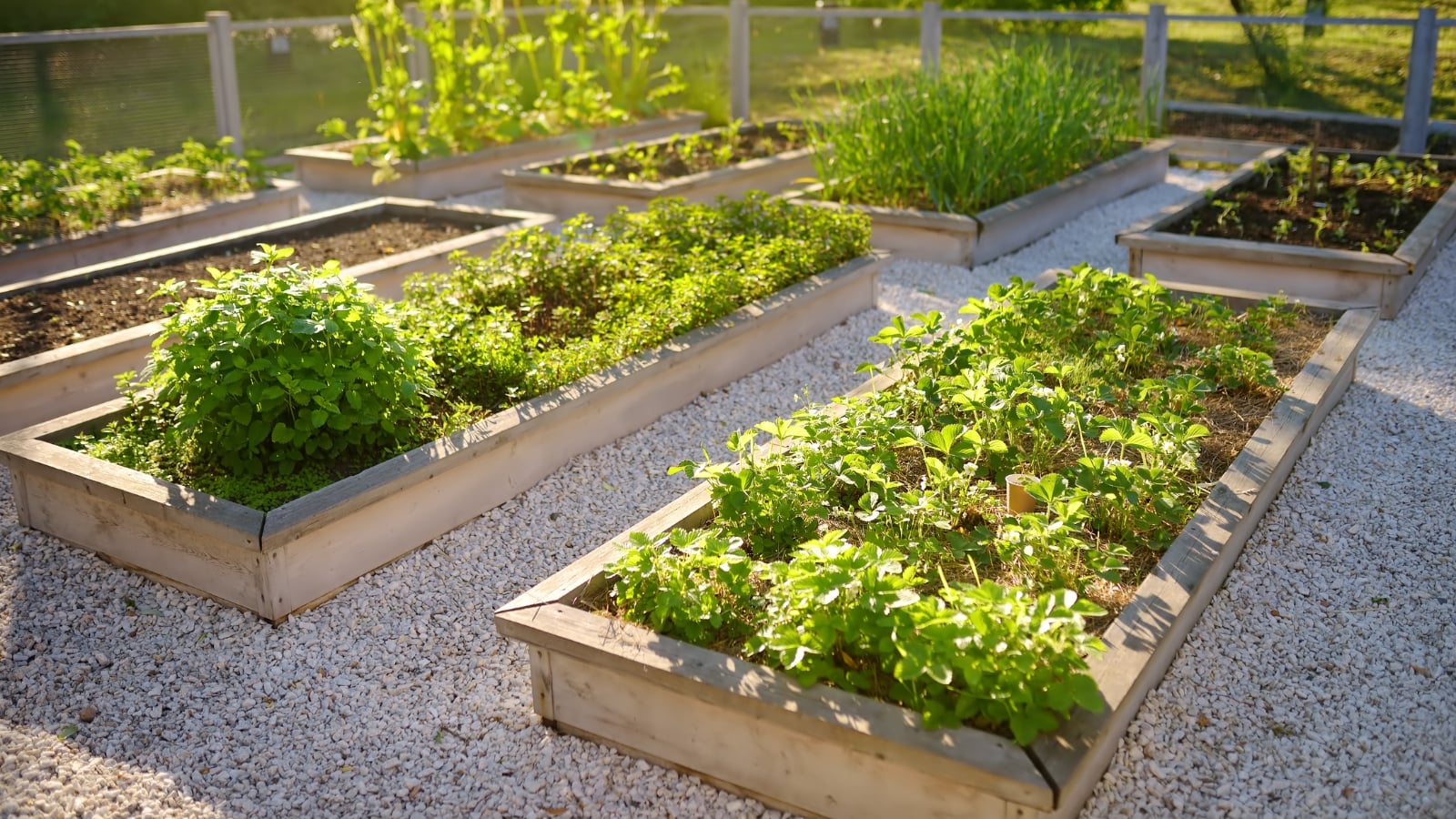

Starting a garden feels overwhelming, but raised beds remove most of the guesswork. Unlike in-ground gardens, raised beds give you complete control over soil quality, drainage, and growing conditions – all while being easier on your back during planting and harvest. Whether you’re working with clay soil, rocky ground, or a small patio space, a raised bed is the fastest path to growing success.
How to Build Your First Raised Bed in 7 Steps
Building a raised bed requires only basic materials and tools. Most beginners can complete a 4×8 foot bed in a few hours with no prior construction experience.
Materials You Will Need
- Untreated wood boards (cedar or composite material, 2×8 or 2×10 dimensions) cut to length
- Wood screws or galvanized fasteners rated for outdoor use
- A power drill or screwdriver
- A level or hand level for checking evenness
- Quality garden soil and compost mixture
- Landscape fabric (optional, for weed prevention)
Steps
Choose Your Location Wisely
Select a spot that receives at least 6-8 hours of direct sunlight daily for most vegetables. Check that water drains reasonably well and avoid areas directly beneath tree canopies. Mark out your desired bed dimensions with string or spray paint, ensuring the ground is relatively level.
Prepare the Ground Surface
Clear away grass, weeds, and large debris from the marked area. You don’t need to remove all soil – just create a clean, flat surface. Lightly rake the area to break up compacted earth, which helps the wooden frame sit securely and allows roots to penetrate downward.
Assemble the Wooden Frame
Lay your boards in a rectangle on the prepared ground. Drill pilot holes at the corners to prevent splitting, then secure the boards together with outdoor-rated fasteners, using at least two per corner. Check that all corners form right angles using a level or by measuring diagonals – they should be equal length.
Level and Square the Frame
Place your level across the frame in multiple directions and adjust by adding or removing soil beneath the boards until it sits evenly. An unlevel bed causes water to pool in low spots and drains too quickly from high areas, creating inconsistent growing conditions.
Add Landscape Fabric (Optional but Recommended)
Line the interior bottom with landscape fabric to suppress weeds and prevent grass from creeping in from below. Staple or pin it to the inside walls, leaving enough slack so it doesn’t buckle. This simple step dramatically reduces future weeding and creates a cleaner growing environment.
Fill with Premium Soil Mix
Combine garden soil and compost in roughly equal parts, filling your bed to within two inches of the top rim. Good soil is your foundation for success – it determines drainage, nutrient availability, and how easily roots spread. Water the soil thoroughly and let it settle for a few days before planting.
Test and Adjust Before Planting
Perform a simple soil test by checking drainage – pour water into your bed and observe how long it takes to drain. Ideal soil should drain within a few hours but retain moisture. If drainage is too fast, add more compost; if too slow, incorporate perlite or coarse sand to improve aeration.
- Cedar and composite materials last 10-15 years; untreated pine requires replacement every 3-4 years but is budget-friendly for beginners testing the concept
- Build your bed slightly higher (10-12 inches) than ground level for better drainage and easier access – this is especially helpful if you have mobility concerns
- Invest in high-quality topsoil and compost from a reputable supplier rather than the cheapest bagged option – your plants will show the difference dramatically
What to Look For When Building a Raised Bed
- Wood Type and Durability: Cedar and composite materials resist rot naturally and last a decade or more. Untreated pine is cheaper but requires replacement every few years. Avoid pressure-treated wood with chemicals that can leach into soil.
- Fastener Quality: Use outdoor-rated stainless steel or galvanized screws and bolts that won’t rust. Poor fasteners will corrode, weaken joints, and eventually collapse the frame.
- Depth and Dimensions: A minimum 6-8 inches deep accommodates most vegetables and herbs. Standard 4×8 feet dimensions offer easy access from both sides without overreaching. Smaller beds (3×6) work for patios and tight spaces.
- Soil Quality: Invest in premium garden soil blended with compost rather than filling with yard dirt or subsoil. Quality soil drains properly, retains nutrients, and gives plants the foundation they need to thrive from day one.
Greenes Fence Cedar Raised Garden Bed
Best for: Beginners who want durability without assembly complexity
Greenes Fence raised beds are pre-cut cedar boards that assemble in minutes with included hardware. Cedar naturally resists rot and will last 15+ years with minimal maintenance. Available in multiple sizes from 2×8 to 4×12 feet, these beds come pre-assembled or as easy DIY kits. The untreated wood is food-safe, and the natural cedar aroma is an added garden bonus. This is the industry standard that serious gardeners upgrade to after starting with budget options.
Check Current Price on Amazon →Suncast Resin Raised Garden Bed Planter
Best for: Renters and tight budgets who want portability
This composite resin planter looks like wood but requires zero maintenance and never rots. At a fraction of wood bed costs, it’s perfect for apartment patios or temporary setups. The lightweight construction lets you relocate it seasonally. While it won’t last quite as long as solid cedar, it offers excellent value for 5-7 years of use and eliminates assembly entirely. Best for herbs and shallow-rooting vegetables.
Check Current Price on Amazon →Keter Easy Grow Raised Garden Bed
Best for: First-time gardeners who want foolproof assembly
The Keter bed ships fully assembled and ready to fill – no tools or hardware required. Its dense plastic construction handles years of sun exposure without degradation. The integrated corner bracing ensures perfect squaring every time. While not as aesthetically pleasing as wood, this is genuinely the easiest option for anyone intimidated by DIY construction. Drain holes are pre-drilled, and it accepts standard landscape fabric liners.
Check Current Price on Amazon →Backyard Discovery Raised Garden Bed with Legs
Best for: Gardeners with mobility issues or those wanting elevated access
Built with premium cedar atop a sturdy frame with adjustable legs, this elevated bed eliminates bending entirely. At 30 inches high, it’s perfect for seniors, wheelchair users, or anyone with back pain. The extra height also deters some pests and makes harvesting more pleasant. This is a genuine investment but transforms gardening from painful to joyful for accessibility-conscious growers.
Check Current Price on Amazon →Yaheetech Galvanized Steel Raised Garden Bed
Best for: Long-term growers who prioritize longevity over aesthetics
Galvanized steel raised beds last 20+ years without rotting, warping, or requiring replacement. While less attractive than wood, the industrial aesthetic appeals to many modern gardeners. The metal construction is incredibly sturdy and won’t crack or split. Pre-drilled corners make assembly straightforward, and the weathered patina actually improves with age. Best value for gardeners planning to maintain the same bed for decades.
Check Current Price on Amazon →DeWalt DCD777C2 Compact Drill Driver Kit
Best for: Builders assembling beds and managing garden projects
This compact drill is lightweight and ergonomic for extended use during bed assembly. With two batteries, you won’t run out of power mid-project. The variable speed control lets you adjust for delicate pilot holes versus driving heavy screws. Perfect for pre-drilling the corner connections that prevent board splitting. Once you own a quality drill, you’ll use it for countless other garden builds.
Check Current Price on Amazon →Spear & Jackson Garden Tool Set with Spade and Level
Best for: Beginners building beds and managing the surrounding garden
This curated set includes a spade for soil preparation, a hand level for checking evenness, and essential garden tools. The spade is perfect for clearing grass and roughing up compacted soil before bed placement. The hand level ensures your frame sits perfectly. Spear & Jackson tools balance affordability with durability, making them ideal for someone building their first bed without overspending on premium gear.
Check Current Price on Amazon →Miracle-Gro Raised Bed Soil Mix Premium Potting
Best for: Perfectionists who want guaranteed results from day one
Premium bagged soil blends like this include aged pine bark, sphagnum peat moss, and perlite formulated for optimal drainage and nutrition. While bagging soil is more expensive than bulk delivery, it’s convenient for smaller beds and guarantees consistent quality. Each bag clearly states the mix composition, so you know exactly what you’re planting into. For a first bed, this eliminates soil variables that could undermine your success.
Check Current Price on Amazon →Start Your Garden This Season
Building a raised bed is the single best decision a new gardener can make. You avoid soil problems, reduce maintenance, and create perfect growing conditions from day one. Whether you choose cedar for longevity, composite for convenience, or steel for durability, the investment pays dividends in successful harvests for years to come. Start with one bed this season – most gardeners end up adding more as they experience the joy of growing their own food.
The secret isn’t expensive equipment or special techniques – it’s starting simple with a quality bed built on solid soil. Pick your location, gather your materials, and dedicate one weekend to construction. By next week, you’ll be planting seeds and watching growth happen. That’s the magic of raised beds: they make gardening accessible, forgiving, and genuinely fun for everyone.
Frequently Asked Questions
How much does it cost to build a basic 4×8 raised bed?
Cedar wood and hardware typically runs $150-250 for materials. Adding quality soil and compost brings the total to $300-500 depending on soil prices in your area. Budget options using untreated pine cost $75-150 in materials alone.
Do I need to line the bottom with landscape fabric?
It’s optional but highly recommended. Fabric prevents weeds from creeping up from below and keeps gophers and burrowing creatures out, which is especially important if your bed sits on poor soil or grass. It adds only $15-30 and saves hours of future weeding.
What vegetables should I plant in my first raised bed?
Start with forgiving crops like tomatoes, lettuce, zucchini, basil, and snap peas. These are pest-resistant, grow quickly, and handle beginner mistakes well. Avoid finicky plants like carrots and root crops until you’ve built confidence and understand your soil.
How often should I replace the soil in my raised bed?
With proper management, you don’t need to replace it entirely. Add 1-2 inches of compost annually to replenish nutrients and organic matter. Completely refresh every 5-7 years or if you notice drainage or nutrient problems.
Can I build a raised bed on a concrete patio?
Yes, but add extra drainage holes or use landscape fabric under the bed. Concrete traps water, so ensure your soil mix includes perlite or sand for drainage. Alternatively, use a planter with built-in legs to elevate it slightly off the patio.
As an Amazon Associate, Build & Bloom earns from qualifying purchases. We only recommend products we genuinely think are useful. Prices and availability vary; check Amazon for the latest.
Leave a Reply