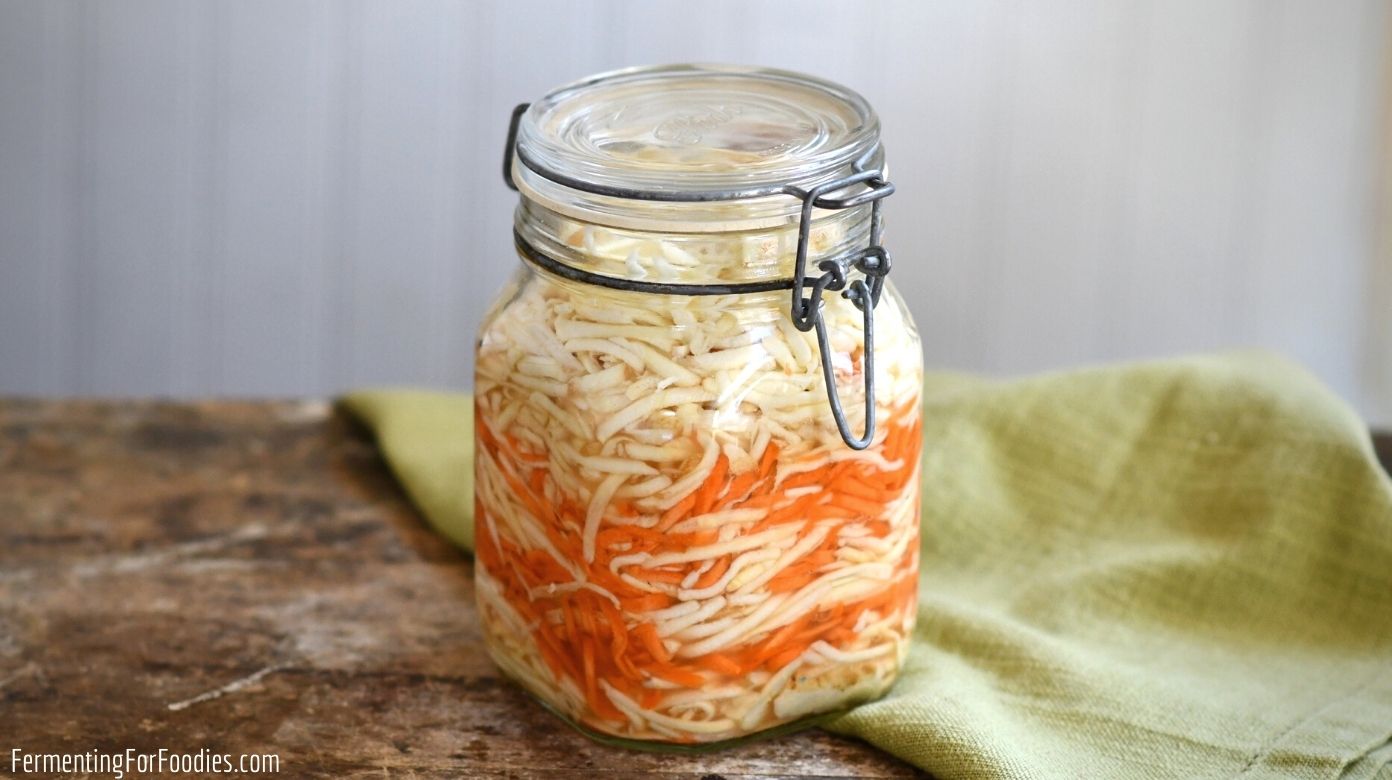

If you love sauerkraut’s gut-healing benefits but worry about cabbage’s goitrogenic compounds affecting your thyroid, there’s good news: you can ferment other vegetables instead. Hypothyroidism warriors often need to balance probiotic intake with thyroid health, making alternative fermented vegetables a smart choice. This recipe swaps cabbage for nutrient-dense greens and stems that deliver the same tangy probiotics without the thyroid concerns.
How to Make Cabbage-Free Sauerkraut at Home
This simple fermentation method creates probiotic-rich sauerkraut using thyroid-friendly vegetables. The entire process takes just minutes of active work, though the fermentation requires patience.
Ingredients
- 3 pounds mixed vegetables (broccoli stems, kale, collard greens, mustard greens, or radishes), sliced thinly
- 2-3 tablespoons sea salt (about 2% of vegetable weight)
- Filtered or dechlorinated water, as needed
- Optional flavoring: caraway seeds, juniper berries, garlic cloves, or ginger slices
Method
Prepare Your Vegetables
Wash and dry your chosen vegetables thoroughly. Remove any damaged outer leaves or woody sections. Slice greens into thin ribbons and chop stems into bite-sized pieces, aiming for uniform thickness so they ferment evenly. Thinner pieces ferment faster, typically within 5-7 days.
Layer and Salt
Place prepared vegetables in a clean bowl and sprinkle salt over them in batches, tossing gently between additions. The salt draws out the vegetable’s natural juices through osmosis, creating the brine needed for fermentation. Use about 2-3 tablespoons of sea salt per 3 pounds of vegetables.
Let Juices Release
Cover the salted vegetables with a cloth and let them sit at room temperature for 30 minutes to 2 hours. Stir occasionally and you’ll notice liquid accumulating at the bottom. This is exactly what you need for successful fermentation.
Pack Your Jar
Transfer the vegetables and all their accumulated liquid into a clean glass jar. Pack them down firmly using a clean spoon or wooden tool, pressing until the brine rises above the vegetables. Add optional aromatics like caraway seeds or garlic now if desired.
Keep Vegetables Submerged
Vegetables that float above the brine can develop mold. Use a fermentation weight, small jar, or even a clean cabbage leaf to hold everything underwater. Leave at least 2 inches of headspace in your jar for gas bubbles.
Cover Loosely
Place a cloth, coffee filter, or loose lid (not airtight) over the jar’s opening. This allows carbon dioxide from fermentation to escape while keeping dust and debris out. Secure with a rubber band if needed.
Ferment and Monitor
Set your jar on the counter away from direct sunlight at room temperature (65-75 degrees F is ideal). Check daily for taste and fizz. Broccoli stems may ferment in 5-7 days; leafy greens take 3-5 days. When you like the flavor, seal tightly and refrigerate to slow fermentation.
Store and Enjoy
Properly fermented sauerkraut keeps in the refrigerator for 4-6 months. Eat a small serving (1-3 tablespoons) with meals to support digestion and thyroid health. The probiotics remain active even when cold.
- Start with broccoli stems or kale if you’re new to non-cabbage fermentation–they’re more forgiving than delicate greens and ferment predictably within one week
- Taste your ferment every other day after day 3; remove it from the counter as soon as it reaches your preferred tartness to prevent over-fermentation
- If white mold (kahm yeast) appears on the surface, skim it off immediately with a clean spoon–it’s harmless but affects flavor. If you see fuzzy colored mold, discard the batch
What to Look For in Fermentation Equipment
- Glass Jar Quality: Choose jars made from borosilicate glass, which withstands temperature changes and won’t leach chemicals into your ferment. Wide-mouth jars make packing and removal easier than narrow bottles. A half-gallon or quart size works well for home fermentation.
- Fermentation Weights: Keeping vegetables submerged prevents mold growth. Look for weights designed specifically for fermentation–ceramic, glass, or food-grade silicone versions work best. Some come with jar kits and are reusable indefinitely.
- Airlock Lids or Cloth Covers: Proper oxygen exchange is crucial. Airlocks or breathable cloth covers allow CO2 to escape while blocking oxygen and contaminants. Avoid completely airtight lids during active fermentation, as pressure buildup can crack jars.
- Knife and Cutting Board: Sharp knives reduce cellular damage and browning. Wooden or plastic cutting boards are preferred over reactive metals. A consistent slice thickness ensures even fermentation throughout your batch.
Fido Jar Fermentation Kit with Airlock Lid and Ceramic Weight
Best for: First-time fermenters wanting a complete system
This all-in-one kit includes a 1-liter borosilicate glass jar, an airlock lid that allows CO2 to escape while preventing oxygen entry, and a ceramic fermentation weight. The airlock design eliminates guesswork–you’ll see bubble activity and know fermentation is progressing. The ceramic weight keeps vegetables perfectly submerged. This is the most foolproof setup for consistent results, especially when fermenting delicate greens that are prone to floating.
Check Current Price on Amazon →Ball Wide Mouth Mason Jar Quart Size (4-pack)
Best for: Budget-conscious fermenters with basic needs
Classic mason jars are affordable and reliable for fermentation when paired with a cloth cover. These wide-mouth quart jars (32 oz) give you room to pack vegetables comfortably and remove finished sauerkraut easily. The set of four lets you ferment multiple batches simultaneously or keep finished varieties on hand. While they lack specialty airlock lids, they work perfectly with cloth or coffee filter covers secured with rubber bands.
Check Current Price on Amazon →Harsch Fermentation Crock with Water Seal Lid
Best for: Home fermenters wanting traditional German-style fermentation
This ceramic German crock features an integrated water-seal rim that holds a moat of water, creating an airtight seal without airlocks. The heavy ceramic construction prevents light exposure and maintains consistent temperature. Built-in weights keep vegetables submerged. The water seal is self-regulating–CO2 automatically escapes while oxygen cannot enter. Available in 5-liter and 10-liter sizes for serious fermenters.
Check Current Price on Amazon →Mortier Pilon Fermentation Crock with Glass Weights
Best for: Experienced fermenters seeking heirloom quality
This Canadian-made ceramic crock combines artisanal craftsmanship with food-safe functionality. The water-seal lid creates perfect anaerobic conditions, and the kit includes weighted glass pieces that double as serving spoons. Hand-finished ceramic construction regulates temperature naturally. At the premium end of the market, it’s built to last decades and becomes increasingly valuable over time as you build a fermentation practice.
Check Current Price on Amazon →Start Your Thyroid-Friendly Fermentation Journey
Making cabbage-free sauerkraut at home is simpler than most people think. With just vegetables, salt, and patience, you create probiotic-rich food that supports gut health without the thyroid concerns of raw cruciferous vegetables. The equipment investment is minimal–even a basic mason jar and cloth cover work–but upgrading to an airlock lid or fermentation crock makes the process foolproof and more enjoyable to monitor.
Begin with broccoli stems or collard greens in a small batch to understand the process before scaling up. Within days, you’ll have a finished product that tastes homemade and nourishes your body in ways store-bought versions cannot match. Your thyroid will thank you for the probiotics, and your taste buds will appreciate the complex tang of vegetables fermented exactly how you prefer them.
Frequently Asked Questions
Is fermented broccoli stem really safe for hypothyroidism?
Yes, when properly fermented. Raw cruciferous vegetables contain goitrogens that may interfere with thyroid function, but fermentation breaks down these compounds while preserving beneficial probiotics. Cooking also reduces goitrogens. If you’re on thyroid medication, fermented greens in small portions (1-3 tablespoons daily) are generally safe, but discuss with your healthcare provider.
What vegetables work best as cabbage substitutes?
Broccoli stems, collard greens, kale, mustard greens, radishes, and carrot tops all ferment well. Broccoli stems take 5-7 days; leafy greens ferment faster in 3-5 days. For beginners, broccoli stems are most forgiving. Mix vegetables for complex flavors–try combining broccoli stems with radish slices and mustard greens.
How long does fermented sauerkraut stay fresh in the refrigerator?
Properly fermented and sealed sauerkraut keeps 4-6 months in the refrigerator. The cold temperature slows bacterial activity nearly to a halt. Always use clean utensils when scooping to avoid introducing contamination. If you notice off odors or unexpected mold growth, discard the batch.
Can I reuse the brine from finished sauerkraut for a new batch?
Yes, fermentation brine is a probiotic powerhouse. Save it and use it to start new batches, reducing fermentation time by 1-2 days. You can also drink small amounts of brine for digestive support. Store brine in sealed jars in the refrigerator for up to one month.
What does white fuzzy growth mean during fermentation?
White powdery or film-like growth is kahm yeast, which is harmless but affects flavor. Skim it off immediately with a clean spoon. If you see fuzzy colored mold (green, black, or orange), the batch has spoiled and should be discarded. Proper submersion and clean equipment prevent most mold issues.
As an Amazon Associate, Build & Bloom earns from qualifying purchases. We only recommend products we genuinely think are useful. Prices and availability vary; check Amazon for the latest.
Leave a Reply