
Canning season brings a flood of specialized gadgets promising to make preservation easier. But if you’re just starting out, most of these tools will sit unused in a drawer. The truth is simpler: successful canning depends on understanding five core pieces of equipment and mastering the fundamentals. Everything else is luxury. This guide cuts through the marketing noise and shows you exactly what belongs in your starter kit.
The Five Essential Canning Components
Rather than listing tools by category, we’ll organize them by function. Each serves a critical role in safe, reliable food preservation.
Key Concepts
- Heat source: A pot large enough to submerge jars completely with 1-2 inches of water above the lids
- Containers: Food-grade glass jars with two-piece closures (lids and bands)
- Sealing system: Two-piece metal lids designed specifically for the canning process
- Safety tools: Specialized equipment to handle hot jars and fill them precisely
- Timing device: Clock or timer to track processing time accurately
- Optional foundation: A tested recipe from a USDA or extension service source
Principles
Choose the Right Vessel for Heat Processing
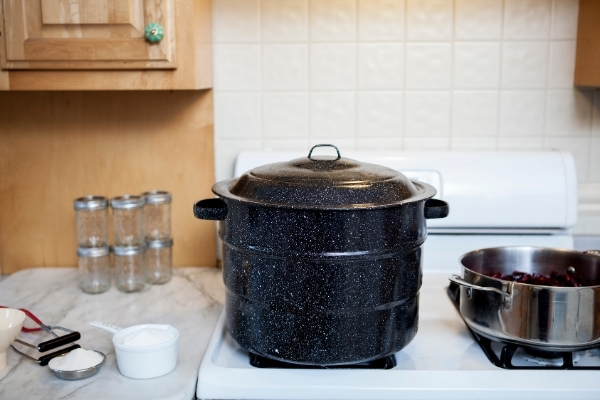
Your pot must hold enough water to cover jars by at least one inch. The vessel itself doesn’t need special features–a standard cooking pot works perfectly if it’s tall enough and conducts heat evenly. The key is volume: smaller pots force you to batch jars inefficiently, while oversized pots waste fuel. Most beginners find a 21-23 quart capacity optimal for quart-sized jars or a smaller pot for pints.
Understand Glass Jar Requirements
Mason jars are reusable indefinitely if kept free from chips and cracks. The critical detail is choosing jars designed for canning–not decorative jars or pasta sauce jars. Canning jars have a specific rim design that allows the two-piece lid system to seal reliably. Inspect the rim carefully before each use; even tiny imperfections break the seal and spoil your preservation.
Master the Two-Piece Lid System
The flat metal lid contains a sealing compound that melts under heat. The threaded band holds it in place during processing but must be removed after cooling to confirm a proper seal. This is not optional equipment–you cannot safely can food without lids designed for this specific purpose. One-piece lids or cloth covers do not provide adequate sealing for shelf-stable preservation.
Invest in a Jar Lifter
A jar lifter is the single most valuable specialty tool you’ll own. It’s simply a long-handled metal tool with rubberized grips that securely grasps hot jars without breaking them. Attempting to remove jars with kitchen tongs or your hands invites burns and broken glass. This tool pays for itself in safety and confidence on your first batch.
Add a Canning Funnel for Consistency
A wide-mouth funnel designed for canning fits the opening of standard jars and guides hot food into them without splashing or spilling. This prevents sticky messes on jar rims, which can break the seal. While technically optional, it dramatically improves your success rate and makes the entire process less frustrating.
Use a Reliable Timer or Clock
Processing times are precise because they’re calculated to reach specific internal temperatures. A timer ensures you don’t undershoot and risk spoilage, or overshoot and destroy the food’s texture. Your phone’s timer works perfectly; no specialty equipment required.
Follow Only Tested Recipes
Canning safety depends on acid levels, sugar content, and processing times that have been validated by USDA or university extension services. A recipe from a trusted source is essential equipment in every meaningful sense. Never modify times, temperatures, or ingredients based on intuition. Bad batches may show no obvious signs of spoilage while harboring dangerous pathogens.
- Buy jars once and reuse them indefinitely–only lids need replacing each season, saving 80% of future canning costs
- Start with one tested recipe you love rather than attempting five different items; mastery builds confidence and consistency
- Store lids and bands separately after use so you can inspect them for rust or damage before the next season
What to Look For in Canning Equipment
- Pot Capacity and Material: Choose stainless steel or enamel-coated steel that won’t react with acidic foods. Capacity should be 21-23 quarts for most home canners. Flat bottoms distribute heat evenly and prevent jars from tipping.
- Jar Rim Quality: Examine the sealing surface closely–it must be perfectly smooth with no chips, scratches, or uneven edges. Even microscopic flaws prevent lids from sealing. Buy from manufacturers with quality control standards.
- Lid Sealing Compound Reliability: Premium lids have consistent sealing compounds that activate at the right temperature. Cheaper lids may fail to seal or seal inconsistently. Match lids to jar manufacturer when possible for optimal compatibility.
- Handle Design and Grip Comfort: If you buy a specialty jar lifter, ensure the handles have good leverage and the rubber grips won’t slip when wet. Long handles (10-12 inches) keep hands farther from steam and heat.
Granite Ware 21.5 Quart Canning Pot with Rack
Best for: Any canner starting their first season
This large-capacity enamel-coated steel pot includes a removable wire rack that keeps jars from touching the bottom and cracking. The 21.5-quart size accommodates seven quart jars or more pint-sized jars in a single batch. Built to withstand years of use, it heats evenly and won’t react with acidic foods. The integrated handles make transport manageable, and the price point is unbeatable for a vessel you’ll use repeatedly.
Check Current Price on Amazon →Ball Mason Jars Quart 12-Pack
Best for: Beginners building their jar collection
Ball jars are the industry standard with a proven sealing surface and wide availability of replacement lids. This 12-pack of quart-sized jars gives you enough capacity to can full batches without repeating cycles. Jars are reusable for decades if handled carefully. The consistent quality means your first attempt has the best chance of success.
Check Current Price on Amazon →Presto Jar Lifter
Best for: Anyone handling hot jars safely
This stainless steel tool is specifically designed to grip canning jars securely without slipping. The rubberized handles stay comfortable even with wet hands, and the 11.5-inch length keeps your hands safely away from steam. It’s the single most important specialty tool you’ll buy, transforming a dangerous process into a manageable one.
Check Current Price on Amazon →Ball Regular Mouth Canning Lids Box of 24
Best for: Seasonal canners replacing lids annually
You’ll need fresh lids every season since the sealing compound cannot be reused after processing. This 24-pack covers most home canning projects and comes from the most trusted brand in the industry. The lids fit standard Ball jars perfectly and seal reliably when used with proper technique.
Check Current Price on Amazon →Norpro Stainless Steel Canning Funnel
Best for: Canners focused on clean processing
This wide-mouth funnel prevents hot food from dripping on jar rims, which is the most common reason seals fail. The stainless steel construction withstands repeated use and won’t absorb odors. It’s designed to fit standard canning jars perfectly, guiding food in safely without splashing.
Check Current Price on Amazon →Kerr Wide Mouth Mason Jars Quart 12-Pack
Best for: Canners processing whole fruits and vegetables
Wide-mouth jars make loading and unloading easier, especially for chunky preserves, pickles, and whole fruits. Kerr jars maintain the same quality standards as Ball and accept most standard lids. The wider opening reduces frustration when packing food, making the process faster.
Check Current Price on Amazon →Stainless Steel Kitchen Timer with Magnet
Best for: Tracking precise processing times
A dedicated timer removes guesswork from the most critical step in canning safety. This stainless steel model features large numbers and loud alerts. The magnet attaches to your pot, keeping it visible throughout the entire process.
Check Current Price on Amazon →Ball Pint Mason Jars Set of 12
Best for: Canners preserving jams, jellies, and small batches
Pint jars are ideal for jams and jellies where one jar serves multiple uses. They require less processing time and heat than larger jars, using less fuel and producing faster results. This 12-pack builds a complete collection for frequent jam makers.
Check Current Price on Amazon →Start Simple, Scale Smart
The canning industry profits from convincing you that special gadgets matter. They don’t. What matters is understanding the five essential components: a large pot, jars with proper rims, two-piece lids, a jar lifter, and a tested recipe. These five things handle 99% of home canning projects. Everything else is luxury equipment that only makes sense after you’ve completed ten successful batches and discovered which specialty tools align with your specific canning style.
Begin this season with the starter kit outlined here. Spend your money on these fundamentals rather than decorative jars, complicated recipes, or specialty equipment. Once you’ve mastered basic preservation and confirmed you’ll stick with canning year after year, then add the tools that match your preferences. Until then, simplicity is your greatest advantage.
Frequently Asked Questions
Do I need a pressure canner or water bath canner?
For most home projects (jams, jellies, pickles, and other high-acid foods), a water bath canner is sufficient and less expensive. Pressure canners are only necessary for low-acid foods like vegetables and meats. Start with water bath canning to learn the fundamentals before advancing.
Can I reuse old store-bought pasta sauce jars instead of buying mason jars?
No. Store-bought jars lack the specialized rim design that allows proper sealing with two-piece lids. They may break under the heat of processing or fail to seal, leading to spoilage or food poisoning. Invest in proper canning jars.
What happens if I skip using a jar lifter?
You risk severe burns to your hands and arms when handling jars submerged in 212-degree water. You may also drop and shatter jars, creating broken glass in your food. A jar lifter costs under fifteen dollars and eliminates these dangers entirely.
How long do mason jars last?
Jars remain safe and functional indefinitely if kept free from chips and cracks. Most home canners keep jars for decades. Only the metal lids need replacing each season since the sealing compound cannot be reused.
Can I use recipes from random websites or family members?
No. Only use recipes from USDA-tested sources or university extension services like Ball or the National Center for Home Food Preservation. Processing times and ingredients are calculated for safety, and modifications can introduce pathogens that show no obvious signs of spoilage.
As an Amazon Associate, Build & Bloom earns from qualifying purchases. We only recommend products we genuinely think are useful. Prices and availability vary; check Amazon for the latest.
Leave a Reply