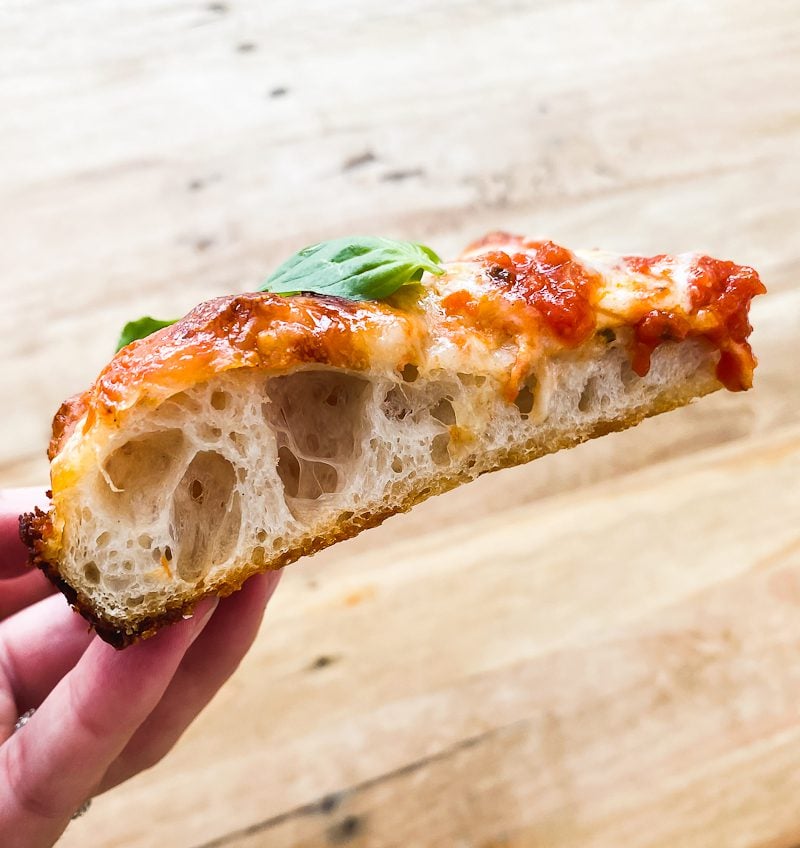

You’ve spent time nurturing your sourdough starter, but the idea of buying a baking stone or steel feels like an unnecessary expense. The good news: you don’t need specialized equipment to bake exceptional sourdough pizza with a crispy, charred crust. With proper technique and heat management, a standard pan from your kitchen cabinet delivers results that rival brick ovens. Here’s how to make it happen.
How to Make Crispy Sourdough Pizza Without Special Equipment
This method uses a long, cool fermentation to develop flavor and uses your everyday oven and cookware to achieve that coveted crispy exterior and chewy interior.
Ingredients
- 500g bread flour or all-purpose flour
- 350ml lukewarm water
- 100g active, fed sourdough starter
- 10g sea salt
- Olive oil for coating
- Your choice of pizza toppings (sauce, cheese, vegetables)
Method
Mix and autolyse your dough
Combine flour and water in a large bowl and let it rest for 30 minutes without touching it. This hydration period allows the flour to fully absorb water, resulting in better gluten development. Add your sourdough starter and salt after the rest, then mix until everything is incorporated.
Build strength with a series of folds
Over the next 2-3 hours, perform 4-6 sets of stretch-and-fold motions every 30 minutes. Wet your hand, grab one side of the dough, stretch it up and fold it over the center, then rotate the bowl and repeat. These folds create structure without aggressive kneading and are ideal for high-hydration dough.
Cold ferment overnight or longer
Divide dough into 2-4 portions depending on desired pizza size. Shape each into a tight ball, place in an oiled container, cover, and refrigerate for 12-48 hours. This extended fermentation develops complex flavor and makes the dough easier to stretch when warm.
Preheat your cooking surface at maximum heat
Remove your pizza dough from the fridge 30 minutes before baking. Place your heavy-bottomed pan or baking sheet on the lowest oven rack and preheat to the highest temperature your oven allows (typically 475-500F). The longer it preheats, the more heat it absorbs and the crispier your crust will be.
Stretch and top your pizza base
On a lightly floured work surface, gently stretch one dough ball into a thin, even round roughly 10-12 inches across. Transfer to a piece of parchment paper, then add sauce, cheese, and toppings sparingly to avoid a soggy crust. Less is more with toppings when you’re aiming for crispiness.
Transfer to hot pan and bake
Carefully slide the parchment paper with your topped pizza onto the preheated pan. Bake for 12-16 minutes until the crust is golden brown and crispy at the edges and bottom. The parchment prevents sticking and allows air circulation underneath, promoting even browning.
Cool briefly before slicing
Remove the pizza from the oven and let it rest on a wire rack for 2-3 minutes. This brief rest allows the structure to set slightly so you can slice cleanly without the cheese sliding off. Serve immediately while the crust is still warm and crispy.
- For extra crispiness, place your baking sheet on the lowest oven rack where direct heat from the heating element is strongest.
- Don’t be afraid of long cold fermentation (24-48 hours)–it dramatically improves flavor and makes the dough more extensible and forgiving to stretch.
- If your oven has a convection setting, use it for more even browning and crisper crust, but reduce temperature by 25F to prevent over-browning.
What to Look For in Sourdough Pizza Baking Equipment
- Heat capacity and material: Look for heavy-bottomed pans made of steel or cast iron that absorb and retain heat effectively. Thicker materials distribute heat more evenly and contribute to a more uniformly crispy crust.
- Size and shape compatibility: Choose a pan that fits your oven and accommodates your desired pizza size (typically 12-16 inches). Square and rectangular pans work equally well if that’s what you have available.
- Edge design for easy removal: Pans with slightly raised or rolled edges help prevent toppings from sliding off during transfer and baking. Flat-edged pans are fine but require extra care when sliding pizza on and off.
- Seasoning and maintenance requirements: Cast iron requires seasoning and regular maintenance, while steel and aluminum are lower-maintenance. Consider your willingness to maintain equipment when choosing your pan material.
Lodge Cast Iron Skillet 14 Inch
Best for: Serious home bakers who want legendary heat retention and durability
The Lodge 14-inch cast iron skillet is a kitchen workhorse that excels at pizza baking. Its 2mm-thick construction heats evenly and maintains temperature throughout baking, ensuring crispy crusts. Pre-seasoned and ready to use, it distributes heat so effectively that many users report superior browning compared to specialty pizza stones. This skillet lasts generations with minimal care.
Check Current Price on Amazon →Tramontina Steel Pizza Pan 16 Inch
Best for: Budget-conscious bakers who want a dedicated pizza pan without breaking the bank
This Tramontina steel pizza pan offers solid performance at an affordable price point. The 16-inch perforated design promotes air circulation underneath for crispier crusts, and the steel construction heats reliably. While not as heat-retentive as cast iron, it preheats quickly and produces consistently good results. Dishwasher safe and virtually maintenance-free.
Check Current Price on Amazon →OXO Nonstick Carbon Steel Baking Sheet
Best for: First-time sourdough pizza makers who want foolproof nonstick surfaces
OXO’s carbon steel baking sheet combines easy cleanup with reliable performance. The nonstick surface means you can slide pizza on and off without parchment paper if desired, and it won’t rust or require seasoning. It heats well enough for home pizza baking and is lightweight enough for easy handling. The rolled edges prevent toppings from escaping during transfer.
Check Current Price on Amazon →All-Clad Ha1, Hard Anodized Baking Sheet
Best for: Passionate home cooks who prioritize professional-grade quality and longevity
All-Clad’s hard-anodized aluminum baking sheet represents premium construction and performance. The reinforced construction prevents warping even under intense oven heat, and the dark surface promotes browning. This sheet conducts heat efficiently and maintains flatness year after year. It’s an investment piece that serious bakers will appreciate and use for decades.
Check Current Price on Amazon →T-fal Ultra Durable Non-Stick Baking Sheet
Best for: Home bakers seeking reliable performance without premium pricing
T-fal’s baking sheet balances affordability with respectable heat distribution and nonstick durability. The thermo-spot indicator shows when the surface is preheated, removing guesswork from the process. The reinforced nonstick coating resists chipping and scratching through regular use, and the pan cleans easily. It’s a solid mid-range choice for weekend pizza makers.
Check Current Price on Amazon →Smithey Ironware Cast Iron Skillet 12 Inch
Best for: Discerning home cooks who appreciate artisanal craftsmanship and heirloom quality
Smithey’s 12-inch cast iron skillet represents the pinnacle of modern cast iron manufacture. Hand-finished and polished to a silky surface, it heats beautifully and outperforms standard cast iron. The craftsmanship shows in every detail, and the smaller size makes it perfect for individual pizzas or smaller batches. A beautiful functional piece that’s as much about aesthetics as performance.
Check Current Price on Amazon →Matfer Bourgeat Black Steel Pizza Pan 12 Inch
Best for: Apartment dwellers and small-oven users who need space-saving solutions
This Matfer black steel pizza pan is compact without sacrificing performance. At 12 inches, it’s perfect for single or double pizzas and fits easily in smaller ovens. Black steel construction heats quickly and efficiently, and the material develops a natural seasoning over time like cast iron. Professional-grade equipment in a home-friendly size.
Check Current Price on Amazon →Demeyere Resto Stainless Steel Baking Sheet
Best for: Culinary enthusiasts who want restaurant-grade equipment for their home kitchen
Demeyere’s stainless steel baking sheet is constructed to withstand commercial kitchen rigors. The thick, reinforced base prevents warping, and the 18/10 stainless steel never discolors or reacts with acidic pizza sauce. It’s elegant enough to serve from directly at the table and built to last through hundreds of pizzas. A true investment in kitchen excellence.
Check Current Price on Amazon →Make Restaurant-Quality Sourdough Pizza at Home
You don’t need expensive equipment to bake exceptional sourdough pizza. A heavy pan, a properly fermented dough, and your regular oven are all you need to create crispy, flavorful pizzas that rival pizzerias. The magic happens in the fermentation and temperature control, not in specialty tools. Start with what you have, master the technique, and upgrade your pan later if you want to.
The sourdough pizza-making journey is as much about understanding your dough and oven as it is about equipment. Invest time in learning your oven’s hot spots, experimenting with fermentation times, and perfecting your stretching technique. Once you nail these fundamentals, you’ll produce pizzas so good that your friends won’t believe you made them at home without a stone. The best equipment is the one that encourages you to bake more, so choose a pan that fits your kitchen, your budget, and your baking ambitions.
Frequently Asked Questions
Do I really need to skip the baking stone if I don’t have one?
Absolutely. A heavy pan from your cabinet works nearly as well as a stone when properly preheated. The key is allowing enough preheat time (at least 20-30 minutes) for the pan to absorb maximum heat. Many home bakers find they prefer pan-baked pizza because it gives more controlled, even browning.
Why is cold fermentation so important for sourdough pizza?
Cold fermentation allows flavors to develop slowly while the sourdough cultures continue working at a reduced pace. This creates complex, tangy flavor that’s impossible to achieve with quick fermentation. Additionally, cold dough is easier to stretch and more forgiving, making it beginner-friendly.
What’s the best way to transfer my pizza dough to the hot pan?
Use parchment paper as your helper. Shape the pizza on parchment, top it there, then carefully slide the parchment and pizza together onto your preheated pan. The parchment stays under the pizza while it bakes, preventing sticking and promoting air circulation underneath. Let it bake for the full time; the parchment won’t burn at normal pizza temperatures.
How do I know when my sourdough pizza is done baking?
Look for a golden-brown to deep golden color on the crust, and check that the bottom is crispy by lifting one edge with a spatula. The cheese should be melted and lightly browned. At 475-500F, most pizzas finish in 12-16 minutes; start checking at 12 minutes to avoid over-baking.
Can I use a regular baking sheet if I don’t have a pizza pan?
Yes, regular baking sheets work fine for sourdough pizza. Choose the heaviest one you have and preheat it fully. Rimmed sheets are slightly better than rimless because they help contain any drips, but either will produce good results if the metal is sturdy and thick.
As an Amazon Associate, Build & Bloom earns from qualifying purchases. We only recommend products we genuinely think are useful. Prices and availability vary; check Amazon for the latest.
Leave a Reply