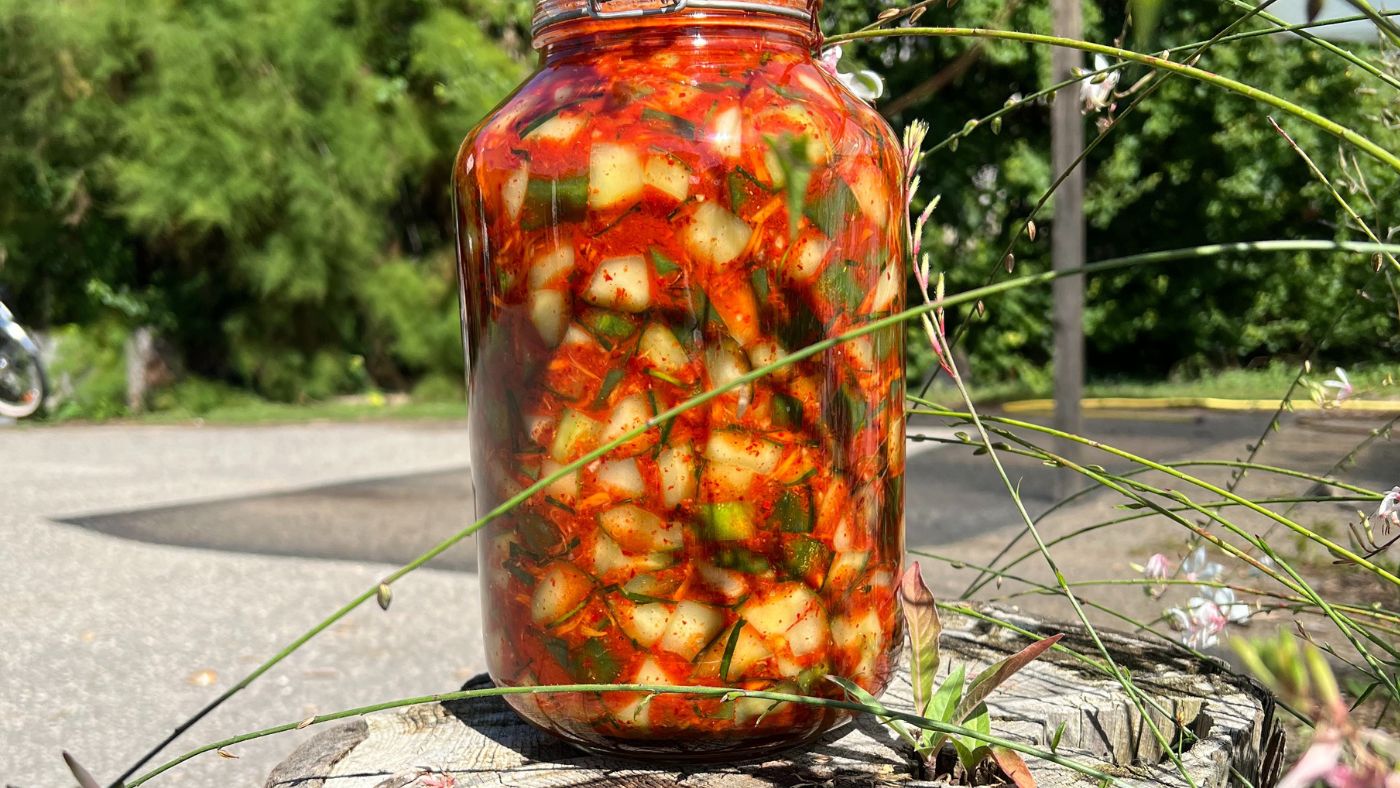

If you’ve tasted cucumber kimchi at a Korean restaurant and wondered how to recreate that addictive crunch and complex spice at home, you’re in luck. This traditional oi-sobaggi is one of the easiest fermented vegetables to make, requiring just a few fresh ingredients, minimal equipment, and a bit of patience. Unlike cabbage kimchi, cucumber kimchi ferments quickly–often ready to eat in just 24 hours–making it perfect for beginners exploring fermentation.
How to Make Cucumber Kimchi (Oi-Sobaggi)
This recipe makes a small batch perfect for a single household. The fermentation happens at room temperature and produces tangy, crunchy results in 1-3 days.
Ingredients
- 4-6 fresh cucumbers, medium size (about 2-3 pounds total)
- 3 tablespoons sea salt (divided: 2 for brine, 1 for paste)
- 4 cloves garlic, minced
- 1 tablespoon fresh ginger, minced
- 2-3 tablespoons gochugaru (Korean chili flakes), adjust to taste
- 2 teaspoons fish sauce or soy sauce
- 1 teaspoon sugar
- 2-3 green onions, cut into 1-inch pieces
- Filtered or dechlorinated water (about 4 cups)
Method
Prepare and salt the cucumbers
Rinse cucumbers thoroughly under cold water. Cut off the blossom end (the wider end), which contains enzymes that can soften the pickles. Leave cucumbers whole or cut them lengthwise into quarters. Layer cucumbers in a clean glass jar, sprinkling 2 tablespoons of sea salt between layers. Let sit for 30 minutes to 1 hour. The salt draws out water and begins curing the cucumbers.
Drain and reserve liquid
After the cucumbers have released their liquid, carefully pour off the brine into a separate container. Taste it to confirm it’s salty. You’ll use this liquid to top the jar later. The cucumbers should still be in the jar and lightly packed.
Make the seasoning paste
In a small bowl, combine minced garlic, minced ginger, gochugaru, fish sauce, sugar, and the remaining 1 tablespoon of sea salt. Mix thoroughly until you have a thick, fragrant paste. This paste will be rubbed directly onto the cucumbers, infusing them with spice and flavor.
Apply the paste to cucumbers
Using a small spoon or your hands (clean hands work best), gently coat each cucumber piece with the seasoning paste, working carefully so the paste penetrates into any cuts or crevices. Layer the coated pieces back into the jar. Don’t pack them too tightly–there should be a little space for liquid to circulate.
Add green onions and liquid
Scatter the green onion pieces among the cucumber layers. Pour the reserved salty cucumber liquid back into the jar over the top until the cucumbers are mostly submerged. If you don’t have enough liquid, make a simple brine with 1 teaspoon salt dissolved in 1 cup of filtered water and add as needed.
Weigh down and cover
Place a clean weight (such as a small glass jar filled with water, a ceramic fermentation weight, or even a clean cabbage leaf tucked under the rim) on top to keep cucumbers submerged below the brine. Cover the jar loosely with a cloth or paper towel to keep dust out while allowing gas to escape during fermentation.
Ferment at room temperature
Leave the jar on your counter away from direct sunlight at room temperature (65-72°F is ideal). After 24 hours, taste a cucumber. It should develop a tangy flavor and slight fizz. Most batches are ready in 1-3 days. If you prefer more sourness, ferment longer. Once satisfied, cap the jar tightly and refrigerate.
Store and enjoy
Refrigerated cucumber kimchi keeps for 2-3 weeks, though it will continue to ferment slowly and become progressively more sour. Serve as a side dish (banchan), chop and add to rice bowls, or use as a condiment for grilled meats. The brine is also flavorful and can be used in dressings or added to soups.
- Remove the blossom end of each cucumber before fermentation–this contains enzymes that soften the texture. The blossom end is the rounder, wider end opposite the stem.
- If your cucumbers float or keep poking above the brine, they may develop mold. Use a proper fermentation weight or a clean, food-safe object to keep them submerged throughout fermentation.
- Taste your kimchi after 24 hours and refrigerate it as soon as you like the flavor–you control the ferment time. Longer fermentation equals more sourness and deeper flavors.
What to Look For in Fermentation Equipment & Ingredients
- Glass jars (1-2 quart capacity): Wide-mouth glass jars make it easy to pack vegetables and retrieve them. Avoid metal lids for long-term storage; ceramic lids or cloth covers work better to allow gas exchange.
- Fermentation weights: Glass or ceramic weights keep vegetables submerged, preventing mold and surface spoilage. They’re small, reusable, and essential for successful fermentation.
- Sea salt or pickling salt: Use non-iodized salt without anti-caking agents. Table salt can cloud brine and interfere with fermentation; kosher salt works but varies by brand density.
- Gochugaru (Korean chili flakes): This is the signature spice for kimchi. Buy from Korean markets or online for authentic heat and flavor. Standard red pepper flakes are a poor substitute due to different texture and taste.
Bormioli Rocco Fido Glass Jar with Lid, 2-Quart
Best for: Home fermentation beginners and experienced makers
This classic Italian glass jar features a wide mouth for easy packing and a sealed hinged lid that allows gentle gas escape while preventing external contamination. The 2-quart size is ideal for a small batch of cucumber kimchi, and the clear glass lets you monitor fermentation progress. The ceramic seal and stainless steel clamp ensure a reliable, long-lasting closure. Food-safe and dishwasher-friendly.
Check Current Price on Amazon →Ball Wide Mouth Quart Mason Jar, Pack of 12
Best for: Budget-conscious fermenters and batch makers
Affordable, universally available, and reliable. These standard mason jars work perfectly for fermentation when paired with a cloth cover or airlock lid. The wide mouth makes packing easy, and the sturdy glass handles repeated use. At this price point, you can buy several jars to ferment different batches simultaneously. Note: metal screw lids trap gas, so use a cloth cover instead.
Check Current Price on Amazon →Mortier Pilon Fermenting Jar Kit with Airlock Lid
Best for: First-time fermenters wanting foolproof results
This Canadian-made kit includes a 1-liter glass jar and an airlock lid system that allows gases to escape while preventing oxygen from entering. The one-way valve eliminates guesswork about gas management, making it nearly impossible to fail. Includes glass weights and a guide booklet. Perfect for someone wanting to try fermentation without worrying about mold or improper gas exchange.
Check Current Price on Amazon →Harsch German Fermentation Crock, 5-Liter
Best for: Serious fermenters making large batches
This ceramic crock is the gold standard for traditional fermentation. The built-in water-seal design provides perfect anaerobic conditions, while the ceramic material is inert and non-reactive. At 5 liters, it’s ideal for larger batches or families. Though pricey and heavy, it’s virtually indestructible and produces superior results. Handcrafted in Germany with decades of fermentation engineering.
Check Current Price on Amazon →Final Recommendation
Making cucumber kimchi at home is one of the most forgiving and rewarding fermentation projects for beginners. With just a clean jar, a few pantry staples, and 24-48 hours of patience, you can produce crispy, tangy, deeply flavorful kimchi that rivals anything from a Korean market. The Bormioli Rocco Fido jar is your best investment–its hinged lid and wide mouth make it nearly foolproof, and it will last decades. Pair it with glass fermentation weights and proper ingredients (especially authentic gochugaru and fish sauce), and you’re set up for success.
Start with one batch to understand your kitchen’s fermentation environment and temperature patterns. Once you master the basic process, you’ll discover endless variations–add cucumbers with perilla leaves, experiment with different chili levels, or infuse the brine with additional aromatics like sesame or mustard seed. Your homemade cucumber kimchi will become a staple you’ll serve at every meal, and friends will ask for your recipe. That’s when you’ll realize fermentation isn’t just a preservation technique–it’s a gateway to understanding and celebrating traditional food wisdom.
Frequently Asked Questions
How do I know if my cucumber kimchi is fermenting properly versus growing mold?
Proper fermentation produces a slight fizz, tangy smell, and cloudy brine. Mold is fuzzy, slimy, or has a rotten smell. If you see a thin white film (kahm yeast) on the surface, it’s harmless–just skim it off. True mold requires discarding the batch. Keeping cucumbers submerged is the best prevention.
Can I use regular salt instead of sea salt?
Avoid iodized table salt, which can cloud brine and interfere with fermentation. Kosher salt or pickling salt work, though kosher salt density varies by brand. Sea salt and pickling salt are your safest choices for consistent results.
Why are my cucumbers soft instead of crunchy?
Soft cucumbers usually result from not removing the blossom end (which contains softening enzymes) or from fermenting too long at warm temperatures. Ferment at 65-72°F for maximum crispness, and use the freshest cucumbers available. Longer fermentation always reduces crunch.
How long does homemade cucumber kimchi last in the refrigerator?
Properly fermented and refrigerated cucumber kimchi lasts 2-3 weeks. It will slowly continue to sour, so taste it periodically. If you want to preserve it longer, freeze the kimchi in an airtight container for up to 3 months, though texture may soften after thawing.
Can I adjust the spice level in cucumber kimchi?
Absolutely. Reduce gochugaru to 1 tablespoon for mild heat, or increase to 4 tablespoons for very spicy. You can also substitute fresh red chili peppers or use half gochugaru and half regular paprika for milder flavor. Taste the paste before applying it to cucumbers.
As an Amazon Associate, Build & Bloom earns from qualifying purchases. We only recommend products we genuinely think are useful. Prices and availability vary; check Amazon for the latest.
Leave a Reply