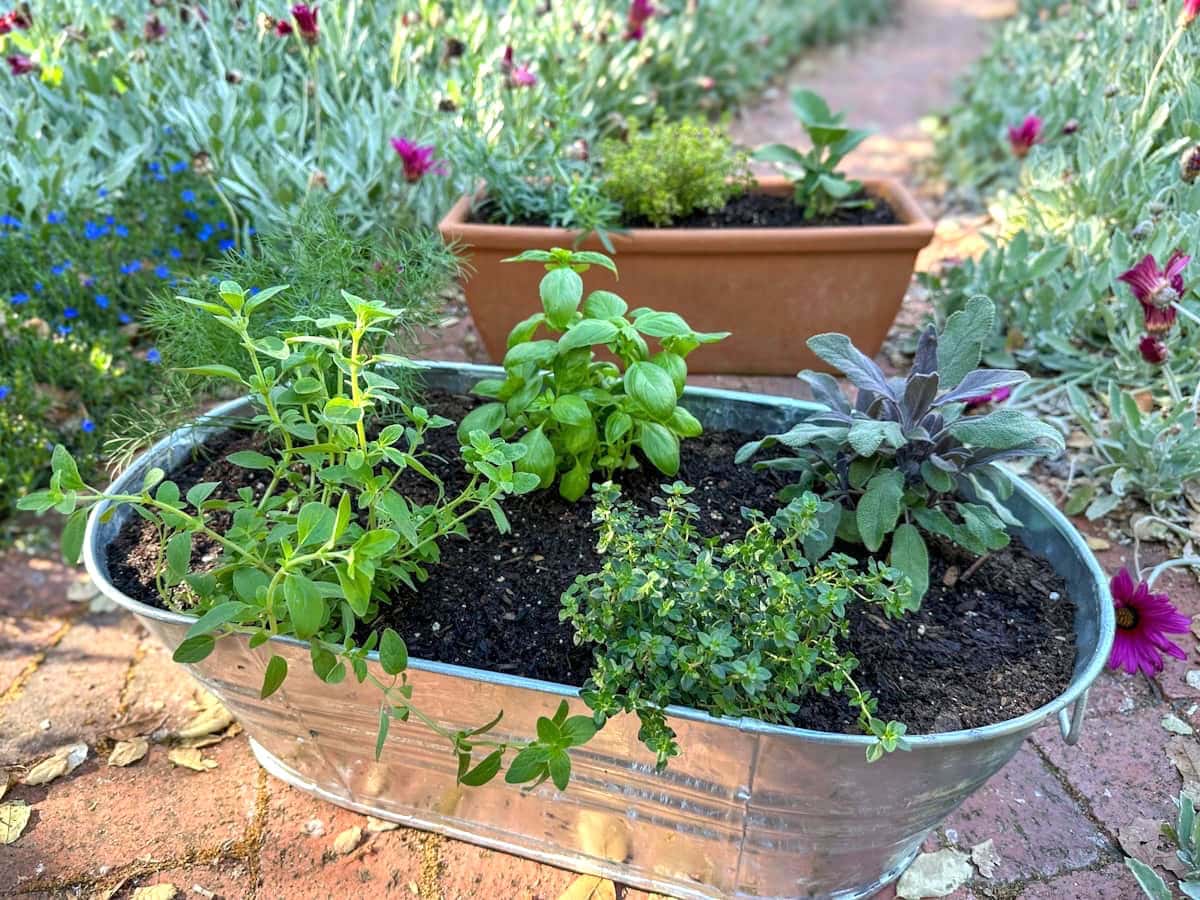

Growing fresh herbs at home doesn’t require a sprawling garden bed. A container herb garden gives you fresh basil, oregano, thyme, and mint steps away from your kitchen, and it’s simple enough for beginners. The key is choosing the right pot, understanding which herbs thrive together, and following a straightforward planting process. In this guide, we’ll walk you through building your own DIY container herb garden from scratch.
How to Build and Plant a Container Herb Garden
A thriving container herb garden starts with proper setup and thoughtful herb pairing. Follow these steps to create a garden that produces fresh herbs all season.
Materials You Will Need
- A container with drainage holes (at least 12 inches deep for multi-herb gardens)
- Quality potting soil or seed-starting mix
- Herb seedlings or seeds (basil, oregano, thyme, mint, parsley, chives)
- A small shovel or spoon for filling and planting
- Watering can with a gentle spray nozzle
- Optional: saucers or trays to catch drainage water
Steps
Choose Your Container Wisely
Select a pot that is at least 12 inches deep and has multiple drainage holes in the bottom. Drainage is critical to prevent root rot and fungal issues. If you’re planting multiple herbs, consider a rectangular container or a tiered planter that gives each herb adequate space. Avoid containers without drainage, or drill your own holes if needed.
Plan Your Herb Groupings
Before planting, decide which herbs will share your container based on water and light needs. Group together herbs that have similar requirements: Mediterranean herbs (oregano, thyme, rosemary) prefer drier soil and full sun, while leafy herbs (basil, parsley) enjoy consistent moisture. Mint should be planted separately or contained within a barrier, as it spreads aggressively and will overtake slower growers.
Fill With Quality Potting Soil
Add potting soil to your container until it reaches about two-thirds full. Gently press down to remove large air pockets, but don’t compress it excessively. Quality potting soil provides better drainage and nutrient retention than garden soil. Leave about 2 inches of space at the top for watering.
Plant Your Seedlings or Seeds
If using seedlings, dig small holes and nestle each plant into the soil at the same depth it was growing in its original pot. If starting from seed, follow packet instructions for planting depth. Space herbs according to their mature size: basil needs 6-8 inches, thyme needs 12 inches. Gently firm soil around each plant.
Water Thoroughly and Set a Schedule
Water immediately after planting until water drains from the bottom. Container herbs dry out faster than in-ground plants, so establish a consistent watering routine. Most herbs prefer soil that is moist but not waterlogged. Check soil daily during hot weather and adjust watering frequency as needed.
Position in Optimal Sunlight
Place your container where it receives at least 6-8 hours of direct sunlight daily. Most culinary herbs thrive in full sun. If you’re growing in a shadier spot, choose shade-tolerant varieties like mint and parsley. Rotate the container every few days for even growth if possible.
Pinch Stems for Bushier Growth
Once your herbs are 3-4 inches tall, pinch off the top quarter inch of the main stems. This encourages branching and creates a fuller, more productive plant. Continue pinching as the plant grows, and always pinch before the herb flowers to extend the harvest season.
Harvest Regularly for Abundance
Begin harvesting leaves once your herbs are well-established (typically 4-6 weeks after planting). Pinch or cut from the top of stems rather than pulling off individual leaves. Regular harvesting stimulates more growth and keeps plants compact. Never remove more than one-third of the plant at a time.
- Pair basil with oregano in the same pot–they have similar water needs and both love full sun, creating a classic Mediterranean combination that thrives together.
- Keep mint in its own container or use a root barrier, as it spreads aggressively through rhizomes and will choke out neighboring plants within weeks.
- Fertilize your container herbs every 2-3 weeks with a balanced, water-soluble fertilizer diluted to half strength, since frequent watering leaches nutrients from the potting soil.
What to Look For in Container Herb Garden Supplies
- Drainage Holes and Material: Ensure your pot has at least 2-3 drainage holes in the bottom to prevent waterlogging. Terracotta breathes and dries faster, while plastic retains moisture longer–choose based on your climate and watering habits.
- Container Size and Depth: A minimum of 12 inches deep accommodates most herb roots, while 14-16 inches is ideal for multi-herb plantings. Wider containers (16+ inches) allow you to plant complementary herbs side by side without competition.
- Potting Soil Quality: Look for potting mixes that include perlite or vermiculite for drainage, peat moss or coco coir for moisture retention, and added nutrients. Avoid heavy garden soil, which compacts in containers and restricts root growth.
- Herb Variety Selection: Choose seedlings over seeds if you’re a beginner, as they establish faster and produce harvestable leaves within weeks. Select disease-free plants with vibrant green foliage and no wilting or spots.
Bloem Terazzo Self-Watering Planter 14 Inch
Best for: Multi-herb container gardens with hands-off watering
This 14-inch terracotta-look planter combines functionality with style, featuring a built-in self-watering reservoir that keeps soil consistently moist for 2-3 days. The raised drainage base prevents waterlogging, and the wide opening accommodates 2-3 complementary herbs. Lightweight resin material won’t crack in winter, making it durable across seasons. The neutral color blends into any patio or kitchen windowsill aesthetic.
Check Current Price on Amazon →Riverbend Home Terracotta Pot with Saucer 12 Inch
Best for: Beginners on a tight budget
Classic terracotta offers timeless appeal and natural breathability that herbs love. This 12-inch pot set includes a matching saucer to catch excess water, making it ideal for indoor windowsill placement. Terracotta’s porous nature helps prevent root rot, though it dries faster than plastic, requiring more frequent watering. At under $15, it’s an affordable entry point for first-time herb gardeners.
Check Current Price on Amazon →Lechuza Classico 14 Planter with Drainage System
Best for: New gardeners who struggle with overwatering
Lechuza’s integrated water level indicator removes guesswork from herb care. The self-irrigating system draws water from a built-in reservoir, keeping soil moist without waterlogging. A cork insert prevents soil from falling through drainage holes, and the modern design fits contemporary kitchens. This planter virtually eliminates the most common cause of herb failure: inconsistent watering.
Check Current Price on Amazon →SIGHTLA Rectangular Herb Planter with Tray 16 Inch
Best for: Growing multiple complementary herbs in one container
This 16-inch rectangular planter maximizes space for pairing herbs like basil with oregano, or mint separately from slower growers. The included water tray catches drainage, protecting furniture and floors. Durable plastic resists cracking and fading, with adequate drainage holes pre-drilled. The elongated shape accommodates 3-4 herbs comfortably while fitting neatly on windowsills or outdoor shelves.
Check Current Price on Amazon →Start Your Container Herb Garden Today
A thriving container herb garden is one of the most rewarding DIY projects you can undertake, rewarding you with fresh basil, oregano, thyme, and mint steps away from your kitchen. The process is straightforward: choose a pot with drainage, use quality potting soil, plant complementary herbs together, and establish consistent watering habits. By following the steps outlined above and selecting herbs that share water and light requirements, you’ll create a garden that produces harvestable leaves within weeks and continues producing all season long.
The investment is minimal–many gardeners start with under $50 in supplies–and the payoff is substantial. Fresh herbs transform cooking, elevate cocktails, and fill your home with green growing life. Whether you’re working with a sunny patio, a modest kitchen windowsill, or an indoor grow light setup, the principles remain the same. Start small with 2-3 complementary herbs, refine your watering routine, and watch your confidence grow along with your plants. Your future self will thank you every time you snip fresh basil for pasta or thyme for roasted vegetables.
Frequently Asked Questions
Can I plant mint with other herbs in the same container?
Mint is highly invasive and should be planted separately or contained within a root barrier inside the pot. Its rhizomes spread aggressively and will overtake basil, oregano, and other slower-growing herbs within weeks. Plant mint in its own dedicated container for best results.
How often should I water my container herb garden?
Most container herbs prefer consistently moist (but not waterlogged) soil. Check the top inch of soil daily–if it feels dry, water until moisture drains from the bottom. During hot weather, daily watering is typical; in cooler seasons, every 2-3 days may suffice. Self-watering containers reduce this frequency to every 2-3 days.
What’s the best combination of herbs to plant together?
Pair herbs by water and light requirements: basil with oregano (both love moisture and full sun), or thyme with rosemary (both prefer drier soil and full sun). Mediterranean herbs (oregano, thyme, rosemary) thrive together, as do moisture-loving herbs like basil and parsley. Always isolate mint in its own container.
How much sunlight do container herbs need?
Most culinary herbs require 6-8 hours of direct sunlight daily to produce robust, flavorful foliage. Place your container on a south-facing or west-facing windowsill. If natural light is limited, consider a grow light. Mint and parsley tolerate partial shade (4-6 hours) better than Mediterranean herbs.
When can I start harvesting from my new herb container?
Begin light harvesting once plants reach 3-4 inches tall, typically 4-6 weeks after planting from seedlings. Pinch off the top quarter inch of stems rather than removing large amounts. Establish a pattern of regular harvesting to encourage bushier growth and continuous production throughout the growing season.
As an Amazon Associate, Build & Bloom earns from qualifying purchases. We only recommend products we genuinely think are useful. Prices and availability vary; check Amazon for the latest.
Leave a Reply