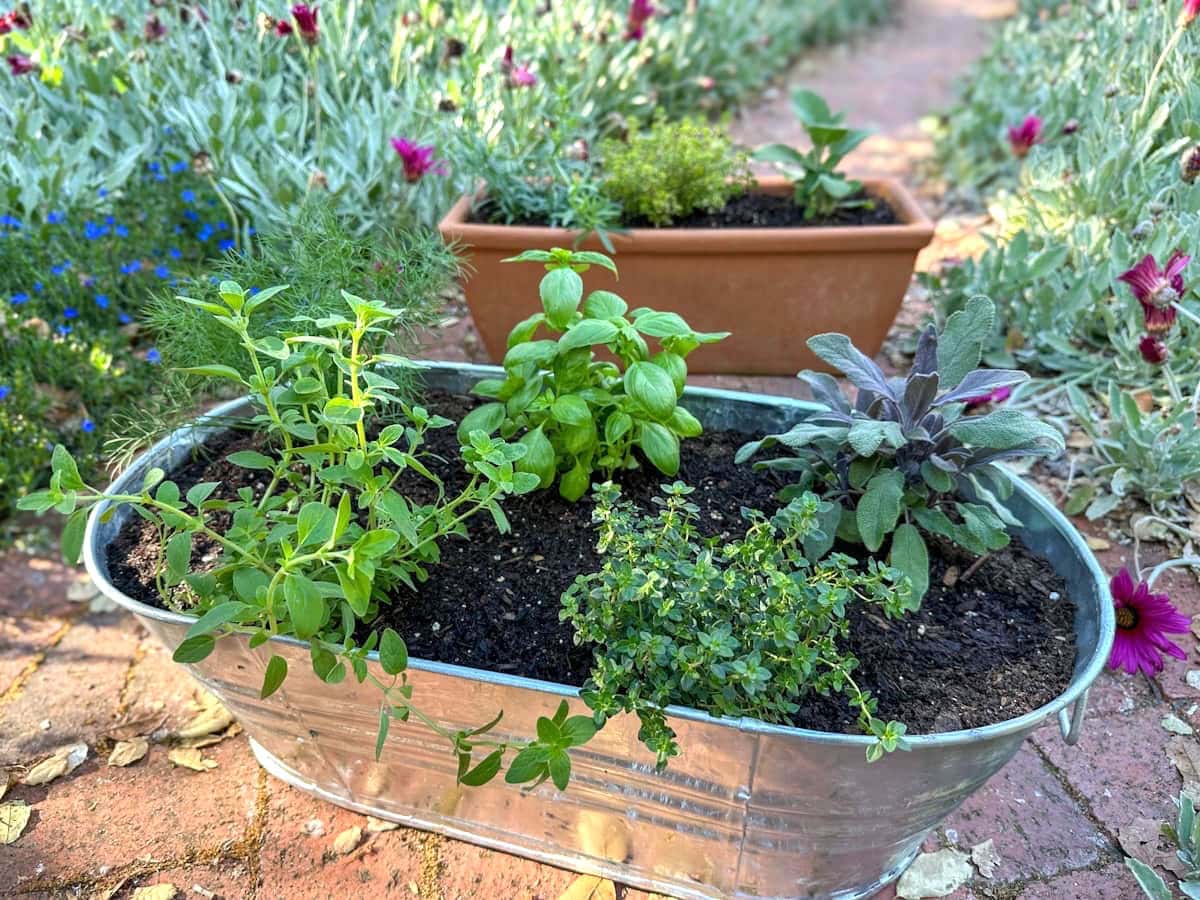

Growing herbs in containers is one of the easiest ways to have fresh seasoning at your fingertips, whether you’re working with a small balcony, patio, or kitchen windowsill. Unlike full-scale gardens, container herb gardens require minimal space, less maintenance, and can be moved indoors during harsh weather. This guide walks you through building your own container herb garden from scratch, plus reveals which herbs thrive in pots so you can start harvesting within weeks.
How to Build and Plant a Container Herb Garden
Building a container herb garden takes about an hour and requires just a few basic materials. Follow these steps to create a thriving herb garden that produces all season long.
Materials You Will Need
- A container with drainage holes (12-18 inches wide minimum)
- Quality potting soil or potting mix formulated for containers
- Herb seedlings or seeds for your chosen varieties
- A garden trowel for filling and planting
- Watering can or spray bottle for initial moisture
- Pea gravel or broken pottery shards for drainage layer (optional but recommended)
Steps
Prepare Your Container
Start by inspecting your chosen container to ensure it has adequate drainage holes in the bottom. If using a decorative pot without holes, either drill small holes or place a smaller draining pot inside it. Line the bottom with a thin layer of pea gravel or broken pottery pieces to improve water drainage and prevent soil from washing out.
Fill with Potting Soil
Pour quality potting soil into your container, filling it about three-quarters full. Gently pat down the soil to remove air pockets, but avoid compacting it too firmly. Leave about 1-2 inches of space at the top of the container so water can pool slightly without overflowing during watering.
Choose Your Herb Varieties
Select herbs based on your climate and intended use. Cool-season herbs like parsley, cilantro, and chives tolerate partial shade and cooler temperatures. Warm-season herbs like basil and oregano need 6-8 hours of direct sunlight daily. Perennial herbs like thyme and rosemary can live in containers for multiple seasons, while annuals like basil must be replanted annually.
Plant Your Herb Seedlings or Seeds
If using seedlings, gently remove them from their nursery pots and loosen the root ball. Dig small holes in the potting soil at appropriate spacing (usually 6-8 inches apart for most herbs) and nestle each plant in, pressing soil around the base. If sowing seeds directly, follow packet instructions for depth and spacing, then lightly cover with soil.
Water Thoroughly
Water your newly planted container immediately until water drains from the bottom holes. This settles the soil around the plants and eliminates air pockets. For the first week, keep soil consistently moist but not waterlogged, as seedlings are fragile and sensitive to drought stress.
Position in Proper Sunlight
Place your container herb garden in a location matching your plants’ light requirements. Most culinary herbs prefer 6-8 hours of direct sunlight daily, though some varieties like mint and parsley tolerate partial shade. If placing indoors, position near a south-facing or west-facing window for maximum light exposure.
Establish a Watering Routine
Check soil moisture daily by inserting your finger about an inch into the soil. Water when the top inch feels dry, aiming for consistent moisture without waterlogging. Container plants dry out faster than ground gardens, especially in warm weather or windy locations, so adjust watering frequency seasonally.
Harvest and Maintain
Begin pinching off leaves once plants are established (usually 3-4 weeks after planting), harvesting from the top to encourage bushier growth. Remove any yellow leaves or flower buds to redirect energy into foliage production. Fertilize monthly with a balanced, water-soluble fertilizer to replenish nutrients depleted by regular harvesting.
- Plant compatible herbs together: basil pairs well with oregano, while mint should be isolated in its own container since it aggressively spreads and dominates shared spaces.
- Use a self-watering container or add a moisture meter to prevent over- or under-watering, which are the most common causes of container herb failure.
- Rotate your container 90 degrees every 2-3 days if it’s near a window to ensure even light exposure and prevent the plant from growing lopsided toward the sun.
What to Look For in Container Herb Garden Supplies
- Container Material and Size: Choose food-safe containers with drainage holes, preferably 12+ inches in diameter to accommodate multiple herbs. Terracotta breathes well but dries quickly, while plastic retains moisture longer. Ensure containers are deep enough for herb root systems, typically at least 8-10 inches.
- Potting Soil Quality: Select premium potting mixes formulated for containers rather than garden soil, which compacts and drains poorly indoors. Look for blends containing perlite or coconut coir for aeration and moisture retention that balance drainage needs without waterlogging roots.
- Drainage Solutions: Invest in containers with pre-drilled holes or materials to create drainage layers inside decorative pots. Proper drainage prevents root rot, the leading cause of container herb failure. Consider saucers to protect surfaces while allowing excess water to escape.
- Seedling vs. Seed Starting: Beginners should purchase established seedlings from nurseries for faster harvests and higher success rates. Seeds offer more variety options but require longer germination times and more careful moisture management. Choose organic or heirloom varieties for maximum flavor and nutritional content.
Bloem Aria Self-Watering Planter with Saucer
Best for: Gardeners who want low-maintenance watering
The Bloem Aria self-watering planter eliminates daily guesswork by featuring a built-in water reservoir that gradually releases moisture as soil dries. Available in 12-inch and 14-inch sizes with attractive finishes, it combines functionality with modern aesthetics. The included saucer protects indoor and outdoor surfaces while maintaining proper drainage. Ideal for herbs, this design prevents both overwatering and drought stress, making it perfect for busy gardeners or those new to container gardening.
Check Current Price on Amazon →Terracotta Classic Clay Pot with Drainage Hole
Best for: Budget-conscious gardeners preferring traditional materials
Classic terracotta pots remain the gold standard for herb containers due to their breathability and natural aesthetics. These affordable, 10-12 inch pots feature pre-drilled drainage holes and work beautifully on patios or windowsills. Terracotta’s porous nature allows air circulation around roots and excess moisture to evaporate, reducing root rot risk. They’re extremely durable, attractive, and available in numerous sizes. Perfect for gardeners seeking traditional charm at minimal investment.
Check Current Price on Amazon →Espoma Organic Potting Mix
Best for: New gardeners requiring reliable, premium growing medium
Espoma Organic Potting Mix is specially formulated for containers with a blend of peat moss, perlite, and aged bark that provides excellent drainage while retaining necessary moisture for herbs. This OMRI-certified organic mix contains beneficial mycorrhizae and natural fertilizers, giving seedlings a nutrient boost without chemical additives. The light, fluffy texture makes planting easy and prevents compaction over the growing season. It consistently produces healthy, vigorous herb growth with minimal supplemental fertilization.
Check Current Price on Amazon →Le Tauci 12-Inch Ceramic Planter with Drainage Tray
Best for: Gardeners prioritizing style and premium construction
Le Tauci ceramic planters combine Italian-inspired design with functional engineering, featuring thick ceramic construction and color-matched saucers that complement any decor. These 12-inch premium pots include integrated drainage holes and raised saucers that prevent water damage to furniture. The professional-grade ceramic finish resists UV fading and weather exposure, lasting for years. Perfect for kitchen windowsills or living room displays where aesthetics matter as much as function.
Check Current Price on Amazon →FloraCraft Plastic Nursery Pots Set with Drainage
Best for: Gardeners managing multiple herb containers on a budget
This set of 12 durable plastic nursery pots offers exceptional value for starting a multi-herb garden. Each 4-6 inch pot features pre-drilled drainage holes and sturdy construction that withstands repeated transplanting. Food-safe plastic resists UV degradation and extreme temperatures while maintaining consistent moisture levels. The set price makes it cost-effective for establishing multiple herb collections or rooting cuttings for propagation.
Check Current Price on Amazon →Window Sill Herb Garden Kit by Hydroponics Growing System
Best for: Apartment dwellers and kitchen countertop gardeners
This compact countertop herb garden system fits on any kitchen windowsill and includes everything needed for soil-based or hydroponic growing. Pre-fitted with drainage and aeration components, it maximizes space efficiency while producing abundant fresh herbs year-round. Includes LED grow light for low-light kitchens and adjustable slots for 6-8 herb seedlings. Perfect for urban gardeners without outdoor space.
Check Current Price on Amazon →Miracle-Gro Indoor Plant Food All Purpose
Best for: Container herb gardeners needing monthly nutrient supplementation
Miracle-Gro All Purpose Indoor Plant Food is formulated specifically for container plants that deplete nutrients through regular harvesting and watering. Its balanced NPK ratio supports leafy herb growth without promoting excessive flowering. The concentrated liquid formula mixes easily with water and feeds for up to 14 days. This affordable supplemental fertilizer keeps container herbs producing vibrant, nutrient-rich leaves throughout the growing season.
Check Current Price on Amazon →Smart Garden 3 Indoor Gardening System by AeroGarden
Best for: Tech-savvy gardeners seeking fully automated herb cultivation
The AeroGarden Smart Garden 3 represents the premium option for indoor herb gardening, featuring hydroponic technology with automatic watering, built-in LED grow lights, and smartphone integration. Simply insert seed pods, fill the water reservoir, and let the system manage pH levels, nutrients, and lighting schedules. Grows six herbs simultaneously and produces harvests in 4-6 weeks. Ideal for gardeners wanting maximum yields with zero guesswork.
Check Current Price on Amazon →Start Your Container Herb Garden Today
Building a DIY container herb garden is an accessible, rewarding project that transforms a small space into a year-round fresh herb supply. Whether you choose a simple terracotta pot or invest in a premium self-watering system, the fundamental principles remain the same: proper drainage, quality soil, appropriate sunlight, and consistent moisture management. Start with easy-growing herbs like basil and mint, expand to challenging varieties as you gain experience, and soon you’ll be harvesting homegrown seasonings for every meal.
The beauty of container gardening lies in its flexibility and low barrier to entry. You can begin with a single pot on your windowsill and expand to a full patio herb garden, or maintain compact countertop varieties year-round indoors. By following this guide and selecting tools that match your space and lifestyle, you’ll enjoy the satisfaction of growing your own food while saving money on grocery store herbs. Your future self will thank you the first time you walk outside to pinch fresh basil for tonight’s dinner.
Frequently Asked Questions
Which herbs are easiest to grow in containers for beginners?
Basil, mint, parsley, and chives are the most forgiving herbs for container gardening. They tolerate varied light conditions, rarely suffer from pests, and produce abundant harvests within weeks. Start with these varieties to build confidence before trying finicky herbs like dill or tarragon.
How often should I water my container herb garden?
Check soil moisture daily by inserting your finger one inch deep. Water when the top inch feels dry, which typically means every 2-3 days in warm weather or weekly in cooler seasons. Containers dry faster than ground gardens, so consistent monitoring beats rigid schedules.
Can I grow multiple herbs in one large container?
Yes, but choose compatible varieties with similar water and light needs. Avoid mixing mint with other herbs unless isolated, as it spreads aggressively. Space plants 6-8 inches apart and select a container at least 18 inches wide to accommodate multiple root systems without competition.
What causes yellow leaves and how do I prevent it?
Yellow leaves typically indicate overwatering, nutrient deficiency, or insufficient light. Ensure your container has drainage holes, let soil dry slightly between waterings, provide 6-8 hours of daily sunlight, and fertilize monthly. Overwatering is the most common culprit with container herbs.
Can I move my container herb garden indoors for winter?
Yes, cold-sensitive herbs like basil and oregano should be brought indoors before the first frost. Place them near a sunny south-facing window or supplement with grow lights to maintain 6-8 hours of daily light. Hardy perennials like thyme and oregano can tolerate light frost but prefer protection in freezing climates.
As an Amazon Associate, Build & Bloom earns from qualifying purchases. We only recommend products we genuinely think are useful. Prices and availability vary; check Amazon for the latest.
Leave a Reply