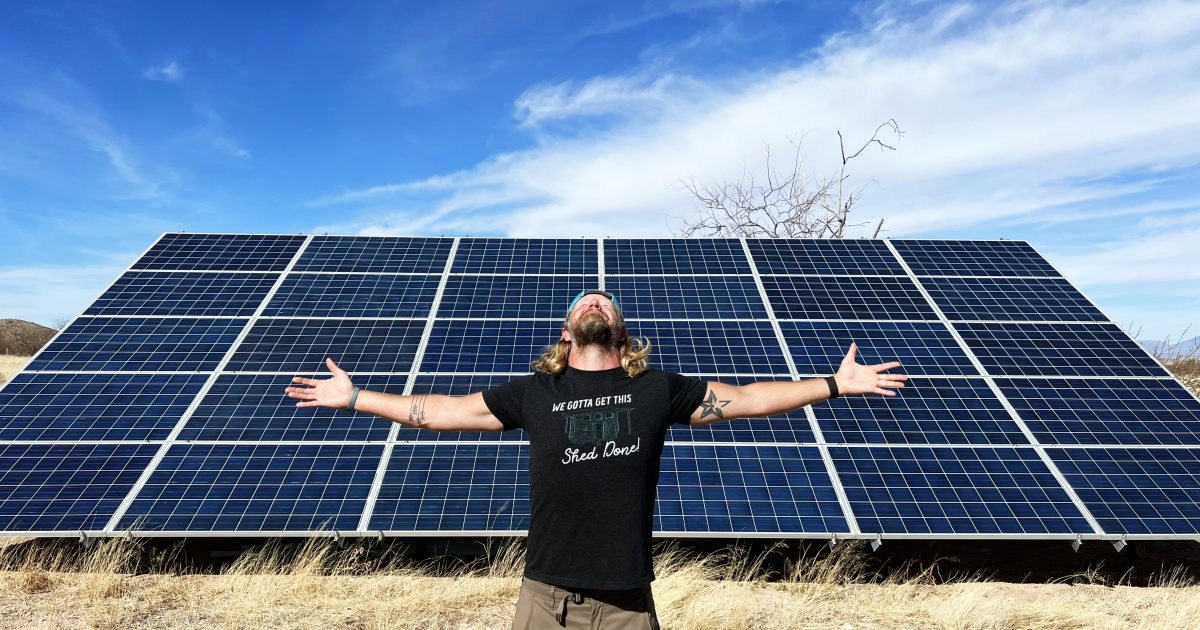

Living off-grid means generating your own electricity, and a solar-powered system gives you independence from utility companies while reducing your environmental impact. But designing a system that actually meets your household’s energy needs requires careful planning around component selection and wiring. If you’ve been wondering how to size panels, choose batteries, and wire everything together safely, this guide breaks down the complete process for building a functional 7200W system.
How to Build a 7200W Off-Grid Solar System
A complete off-grid solar setup consists of four core components working together: solar panels that generate electricity, a charge controller that manages power flow, a battery bank that stores energy, and an inverter that converts stored power for household use. Follow these steps to design and assemble your system.
Materials You Will Need
- Solar panels (typically 400-600W each, quantity depends on your location and sun hours)
- Charge controller (MPPT model recommended for efficiency, sized to handle your panel output)
- Battery bank (lithium or lead-acid, with sufficient capacity for your daily usage plus 2-3 days autonomy)
- Inverter (pure sine wave, rated for your largest appliance plus safety margin)
- Heavy-duty DC wiring and breakers (properly gauged for current flow, typically 2/0 AWG or larger)
- Disconnects and fuses (both DC and AC side for safety and system protection)
Steps
Calculate Your Daily Power Consumption
List every appliance you’ll run and estimate daily usage in watt-hours. Add your refrigerator, lights, water pump, electronics, and any power tools. Multiply watts by hours used each day. For example, a 60W light running 4 hours = 240Wh. Total all appliances to get your daily requirement, then add 20 percent for system losses and inefficiencies.
Size Your Battery Bank Capacity
Multiply your daily consumption by 3 to account for cloudy days and system autonomy. If you use 10kWh daily, size your batteries for 30kWh total capacity. This ensures you have power reserves during periods of low sunlight. Deep-cycle batteries are essential; never use car batteries, as they’re designed for different purposes and will fail quickly in this application.
Determine Your Solar Panel Array Size
Research your location’s average peak sun hours per day (typically 3-6 hours depending on latitude and season). Divide your daily energy need by your area’s peak sun hours, then add 25 percent for weather and degradation. If you need 10kWh and have 5 peak sun hours, divide 10000Wh by 5 hours = 2000W of panels needed. Round up to account for real-world conditions.
Select and Size Your Charge Controller
Choose an MPPT (maximum power point tracking) controller rated for your total panel wattage. If using 6 panels at 400W each (2400W total), select a controller rated for at least 2400W input with enough voltage handling for your panel configuration. The controller prevents overcharging your battery and optimizes the energy harvest from your panels throughout the day.
Choose an Appropriately Rated Inverter
Select an inverter with continuous output capacity 20-30 percent higher than your largest single appliance. If your largest load is a 5000W well pump, get at least a 6500W inverter. Pure sine wave inverters are required for sensitive electronics like computers and modern appliances. This prevents damage and ensures clean power throughout your home.
Plan Your Wiring Configuration
Sketch out your system layout showing panels, controller, batteries, and inverter. Plan series and parallel connections based on voltage requirements (typically 48V for larger systems). Use properly gauged heavy-duty DC wire sized for your maximum current without excessive voltage drop. Include disconnect switches and breakers at each major component for safety and maintenance access.
Install Components with Safety First
Mount panels on a south-facing structure with proper tilt angle for your latitude. Place batteries in a well-ventilated, temperature-controlled location away from living spaces. Install the charge controller near the battery bank to minimize wire runs. Connect all components starting from the battery, working outward to panels and then to the inverter, always following proper polarity and using appropriate breakers at each stage.
Test System Operation and Monitoring
Before running heavy loads, verify all connections with a multimeter and check voltage at each component. Monitor your system for the first week during normal use to ensure the charge controller is working correctly and batteries are charging as expected. Install a quality monitoring system to track daily generation and consumption, helping you optimize your energy use patterns.
- Oversize your solar array by 25-35 percent beyond calculated needs; you’ll thank yourself during winter or cloudy periods, and the additional panels provide only marginal cost increases
- Install a second charge controller and battery bank in parallel rather than exceeding one controller’s capacity; this provides redundancy and easier maintenance than a single oversized system
- Run DC wiring in separate conduit from AC wiring to prevent electromagnetic interference, and keep all wire runs as short as possible to minimize voltage drop and copper losses
What to Look For in Off-Grid Solar Components
- Solar Panel Efficiency and Durability: Look for monocrystalline panels with 18-22 percent efficiency ratings and 25-year warranties. Higher efficiency means smaller array footprint. Verify the panel can handle your local temperature extremes and UV exposure without significant degradation over time.
- Charge Controller Type and Features: MPPT controllers extract 20-30 percent more power than PWM models and are worth the investment for systems over 2kW. Choose controllers with built-in monitoring, temperature sensors, and the ability to expand capacity by adding multiple units in parallel for future growth.
- Battery Chemistry and Cycle Life: Lithium batteries offer superior cycle life (3000-5000 cycles) and faster charging but cost more upfront. Lead-acid batteries are cheaper initially but require more maintenance and deliver fewer total cycles (500-1000). For permanent off-grid living, lithium’s longer lifespan usually justifies the premium.
- Inverter Pure Sine Wave Quality: Pure sine wave inverters produce utility-grade AC power safe for all appliances and electronics. Avoid modified sine wave inverters, which can damage motors and sensitive devices. Verify continuous power rating matches your needs, not just peak rating which only lasts seconds.
Renogy 400W Monocrystalline Solar Panel
Best for: Core component for any off-grid system
Renogy’s 400W monocrystalline panels deliver industry-leading 20.5 percent efficiency with a robust aluminum frame designed for harsh weather. These panels feature bypass diodes to prevent hot-spot damage and come with a 25-year performance warranty. For a 7200W system, you’ll need approximately 18-20 of these panels depending on your location’s solar resource. They’re widely compatible with standard mounting hardware and work seamlessly with all major charge controllers.
Check Current Price on Amazon →Victron Energy SmartSolar MPPT 250/100 Charge Controller
Best for: Smaller systems and first-time installers
The Victron SmartSolar combines ease of use with sophisticated power management, handling up to 2500W of solar input. Its app-based monitoring lets you track charging in real-time from your phone, and temperature sensors automatically adjust charging curves for optimal battery health. The compact design fits easily in tight spaces, and the ability to add multiple units in parallel means you can expand your system without replacing core equipment. Includes comprehensive documentation perfect for DIY builders.
Check Current Price on Amazon →Battle Born 12V 100Ah LiFePO4 Battery
Best for: Mid-range off-grid systems needing reliability
Battle Born delivers premium lithium performance at reasonable cost with 100Ah capacity providing 1.2kWh per unit. Stack multiple units for larger systems; this flexibility lets you grow capacity incrementally. Built-in battery management system prevents overcharge and discharge, and the 10-year warranty demonstrates manufacturer confidence. These batteries can be wired in series or parallel, making them ideal for both 48V and 24V system configurations.
Check Current Price on Amazon →Outback Power Radian GS 8000W Inverter
Best for: Large homes with multiple simultaneous loads
The Outback Radian represents commercial-grade reliability in an all-in-one package, combining a pure sine wave inverter with integrated charge controller and automatic transfer switch. Its 8000W continuous rating handles demand from multiple appliances simultaneously without stuttering or voltage sag. Dual AC inputs allow generator backup, and stacking capability supports systems exceeding 16kW. This inverter is built for permanent off-grid installations where reliability isn’t negotiable.
Check Current Price on Amazon →Building Your Off-Grid Solar Future
A 7200W off-grid solar system is achievable for any homestead willing to invest in quality components and take time to understand how they work together. The key to success lies in accurate load calculations, proper component sizing, and meticulous wiring following safety standards. Start with genuine, warranty-backed components from established manufacturers rather than cutting costs on unknown brands; you’ll spend less on replacements and repairs over the system’s 20+ year lifespan.
Your first year living off-grid requires attention and learning as you adjust to your home’s energy patterns. Monitor how weather affects your generation, notice which appliances consume the most power, and gradually optimize your habits to work with solar availability rather than against it. This isn’t a sacrifice; it’s becoming conscious of your energy use in ways that grid-connected homes never experience. Within a few months, managing your solar system becomes as routine as checking your mail, and the independence you gain makes every installation hour worthwhile.
Frequently Asked Questions
How much battery capacity do I actually need for off-grid living?
A good rule of thumb is 3-5 days of autonomy: multiply your daily consumption by 3 for minimum backup during cloudy weather, or 5 if you experience extended periods without sun. A household using 10kWh daily should size batteries for 30-50kWh total capacity. This prevents deep discharge cycling that degrades batteries prematurely.
Can I use car batteries in my off-grid solar system?
No. Car batteries are designed for short, high-current bursts and cannot tolerate the frequent deep discharge cycles of off-grid living. They’ll fail within months. Use deep-cycle batteries specifically designed for renewable energy systems, either lead-acid or lithium, which handle hundreds of charge cycles reliably.
What’s the difference between MPPT and PWM charge controllers?
MPPT (maximum power point tracking) controllers extract 20-30 percent more power from your panels than PWM by constantly adjusting the electrical load to find the optimal power point. For systems over 2kW, the additional energy gained pays for the controller’s premium cost within a few years. PWM is acceptable only for very small systems under 500W.
Do I need a battery monitor, or can I just watch the inverter display?
A dedicated battery monitor is essential. Inverter displays show AC output but not battery state of charge, voltage, or current. A quality monitor gives you the data needed to adjust loads and prevent over-discharging, which extends battery life significantly and helps you understand your system’s daily patterns.
How often do off-grid solar systems need maintenance?
Minimal maintenance is required: clean panels quarterly (more often in dusty climates), check battery water levels monthly if using lead-acid, and verify all wiring connections annually. Lithium batteries require almost no maintenance beyond occasional firmware updates. System monitoring software alerts you to problems before they become serious, making preventive maintenance straightforward.
As an Amazon Associate, Build & Bloom earns from qualifying purchases. We only recommend products we genuinely think are useful. Prices and availability vary; check Amazon for the latest.
Leave a Reply