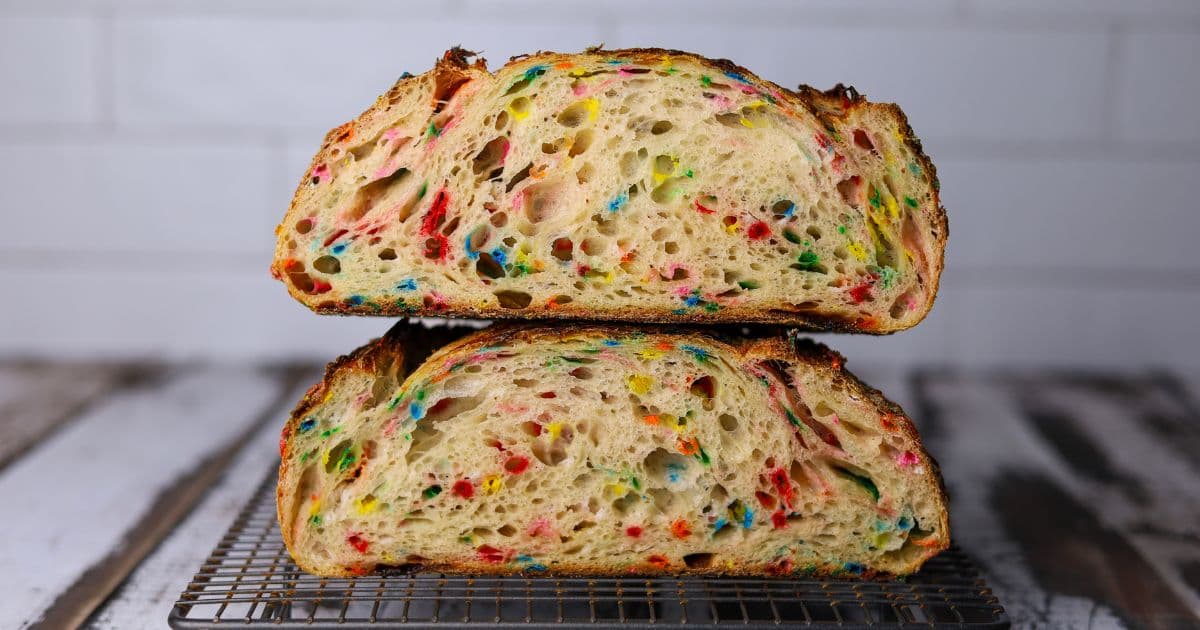

Funfetti sourdough is the perfect way to bring celebration flavors to your sourdough baking. If you’ve mastered basic sourdough but want to experiment with fun variations, this recipe bridges traditional technique with festive twist. The colorful sprinkles bake right into the dough, creating a celebratory crumb that’s perfect for weekend baking or gifting to friends.
How to Make Funfetti Sourdough Bread
This recipe combines an active sourdough starter with simple ingredients and colorful sprinkles for a fun, visually striking loaf. The fermentation process follows traditional sourdough methods while the sprinkles add whimsy.
Ingredients
- 500g bread flour (or all-purpose flour)
- 350ml water, divided
- 150g active sourdough starter at peak (bubbly and doubled)
- 10g salt
- 1 teaspoon vanilla extract
- 75g colorful sprinkles (jimmies work best)
Method
Mix the dough
In a large bowl, combine water and active sourdough starter, stirring until mostly combined. Add flour and mix until no dry flour remains. Let rest for 30 minutes (autolyse phase). After resting, add salt and vanilla extract, mixing thoroughly by hand or with a dough whisk. The dough should feel slightly sticky but manageable.
Fold in sprinkles
Once the dough is fully mixed, gently fold in the colorful sprinkles using a few slow, deliberate folds. This prevents the sprinkles from breaking up excessively. Work quickly so the dough doesn’t dry out on the surface. Some sprinkles may dissolve slightly during fermentation, which is normal.
Bulk fermentation
Cover the bowl and let rise at room temperature (68-75F) for 4-6 hours. Perform 4-6 sets of stretch-and-folds every 30 minutes for the first 2 hours. The dough should increase in volume by about 50% and feel airy with visible bubbles. You’re looking for strength and extensibility, not maximum rise.
Pre-shape and bench rest
Turn the dough onto a lightly floured surface and pre-shape gently into a round. Avoid degassing aggressively. Let rest for 20-30 minutes to relax the gluten. This makes the final shaping easier and allows the dough to continue developing flavor.
Final shape
Flip the pre-shaped dough seam-side up. Fold the edges toward the center, creating tension on the surface. Roll tightly toward you, sealing as you go. Place seam-side up in a floured banneton basket or bowl lined with a floured towel.
Cold proof overnight
Cover and refrigerate for 12-16 hours. Cold proofing develops deeper flavor and makes scoring easier. The dough can be baked directly from the cold proof or brought to room temperature for 1-2 hours first, depending on your preference.
Score and bake
Preheat your oven to 475F for 45 minutes using a Dutch oven inside. Turn the cold dough out onto parchment paper, score the top with a sharp blade in your desired pattern, and carefully transfer into the hot Dutch oven. Bake covered for 20 minutes to trap steam, then uncovered for 25-30 minutes until deep golden brown.
Cool completely
Remove the bread and let cool on a wire rack for at least 1-2 hours before slicing. The crumb continues to set during cooling, and cutting too early will result in gumminess. The sprinkles will create colorful streaks throughout the finished loaf.
- Use jimmies-style sprinkles rather than pearl sprinkles, as they hold their color and shape better during fermentation and baking.
- Keep your sourdough starter at peak activity (doubling in size within 4-8 hours of feeding) for best rise and flavor development.
- If your kitchen is cold, place the dough in a proofing box or turned-off oven with the light on to maintain consistent fermentation temperature.
What to Look For in Sourdough Baking Equipment
- Dutch oven with tight-fitting lid: Essential for trapping steam during the first stage of baking, which creates the characteristic crispy crust and open crumb structure in sourdough. Look for one that retains heat well and fits your oven safely.
- Banneton proofing basket: Supports the shaped dough during the final proof and cold fermentation without sticking. Prevents spreading and helps the loaf rise upward rather than outward for better oven spring.
- Kitchen scale for precise measurement: Sourdough baking is a science; weight-based measurements ensure consistent results. Grams are more accurate than cups, especially for flour which varies by density.
- Lame or scoring blade: Creates controlled slashes on the dough surface, allowing controlled expansion in the oven and improving the appearance of the finished loaf. A sharp blade prevents dragging and tearing.
Staub 4-Quart Round Cocotte Dutch Oven
Best for: Serious sourdough bakers
Staub’s enameled cast iron Dutch oven is the gold standard for sourdough baking. The tight-fitting lid traps steam perfectly, and the heavy construction distributes heat evenly for exceptional browning. Available in multiple colors, it’s also beautiful enough for table service. The 4-quart capacity fits most artisan loaves comfortably. Enamel coating eliminates seasoning maintenance while providing durability for decades of baking.
Check Current Price on Amazon →Lodge 5.5-Quart Enameled Cast Iron Dutch Oven
Best for: Budget-conscious bakers
Lodge’s enameled Dutch oven delivers professional baking results at a fraction of premium prices. The 5.5-quart capacity accommodates larger loaves, and the cast iron construction provides excellent heat retention and even browning. It’s American-made, widely available, and just as effective as costlier competitors for sourdough work. Enamel finish requires no seasoning and cleans easily after baking.
Check Current Price on Amazon →Banneton Proofing Basket 10-Inch Round
Best for: First-time sourdough bakers
A banneton basket is non-negotiable for preventing sticky dough disasters during final proof. This round 10-inch model accommodates most home sourdough loaves and features a traditional cane construction with linen liner. The fabric naturally prevents sticking without added flour, and the basket shape promotes even rise. Food-safe, long-lasting, and essential for consistent shaping results.
Check Current Price on Amazon →Lame Bread Scoring Tool Set Stainless Steel
Best for: Detail-oriented sourdough artists
Precision scoring requires a truly sharp blade, and this professional-grade set includes both straight and curved lame blades with ergonomic handles. Stainless steel blades stay sharper longer than disposable razors and reduce the risk of tearing. The set includes multiple blade angles for different scoring patterns. Essential for achieving that coveted ear and controlled expansion.
Check Current Price on Amazon →Final Recommendation
Funfetti sourdough is an approachable way to bring creativity to your sourdough practice while maintaining the authentic fermentation process that makes sourdough special. This recipe respects traditional technique while adding visual fun through colorful sprinkles. Whether you’re celebrating a birthday, impressing friends, or simply tired of plain loaves, funfetti sourdough delivers both flavor and nostalgia.
The equipment investment is modest if you already bake sourdough—a Dutch oven and banneton are the two essentials, and both last decades with basic care. If you’re new to sourdough entirely, starting with an established starter or purchasing dehydrated culture eliminates the barrier to entry. Bake this recipe multiple times to understand how your kitchen’s temperature and humidity affect fermentation, then adjust timing accordingly. Your second or third attempt will be significantly better than your first, which is the joy of sourdough baking.
Frequently Asked Questions
Can I make funfetti sourdough without a Dutch oven?
Yes, but with caveats. A Dutch oven traps steam for better crust development, but you can achieve decent results with a covered baking vessel or by adding a pan of boiling water to your oven. The crumb may be slightly denser and the crust less crispy without proper steam management, but the bread will still be edible and delicious.
Will the sprinkles bleed color into the dough?
Some color bleeding is normal, especially with darker sprinkles. This is why the recipe uses traditional colorful jimmies rather than gel-based sprinkles, which bleed more heavily. If color preservation is important, consider adding sprinkles only to the surface after scoring, though they won’t integrate as beautifully into the crumb.
How long does funfetti sourdough stay fresh?
Like regular sourdough, it stays fresh for 3-4 days at room temperature in a paper bag, and up to a week wrapped and refrigerated. Freezing works well for longer storage. The sourdough’s natural acidity acts as a preservative, keeping it fresher longer than standard yeasted bread.
What if my sourdough starter isn’t very active?
A weak starter will result in slow fermentation and flat bread. Feed your starter daily for 5-7 days, discarding half and feeding with equal parts flour and water, until it consistently doubles within 4-8 hours. Only use it when it’s at peak activity (fully risen, jiggly, and bubbly on top).
Can I use whole wheat flour instead of bread flour?
Yes, though the results will differ. Whole wheat absorbs more water, so reduce liquid by 25-50 grams and expect a denser, nuttier crumb. Start with a 20/80 blend of whole wheat to bread flour if you’re experimenting, then adjust based on results. The fermentation timeline may shorten slightly with whole wheat.
As an Amazon Associate, Build & Bloom earns from qualifying purchases. We only recommend products we genuinely think are useful. Prices and availability vary; check Amazon for the latest.
Leave a Reply