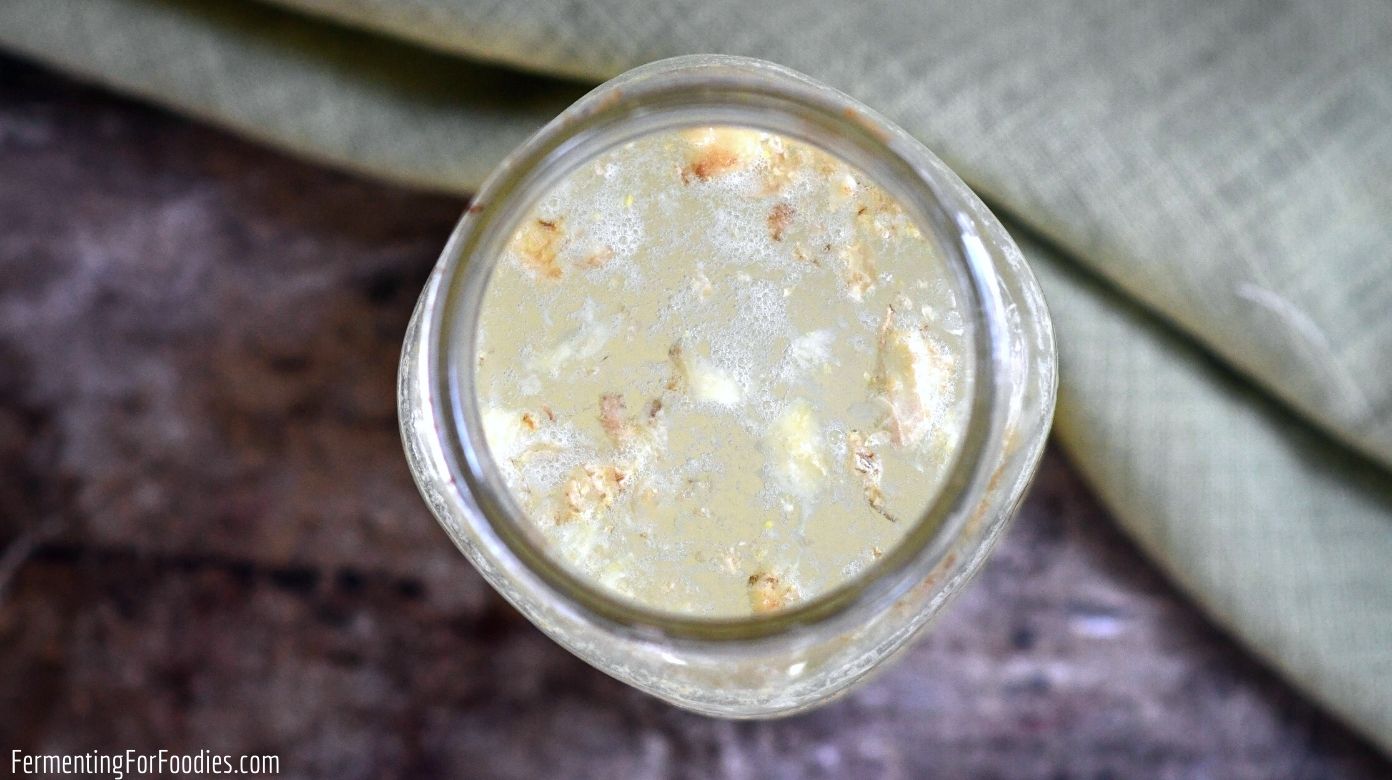

If you’ve ever wanted to make naturally carbonated ginger beer without buying expensive bottles or dealing with artificial ingredients, a ginger bug is your answer. This living culture sits quietly on your kitchen counter, bubbling to life as wild yeast and beneficial bacteria multiply. In just a week, you’ll have a powerful starter that turns simple sugar water into crisp, tangy ginger beer with real fizz. Best of all, once you’ve made your first batch, your ginger bug becomes a renewable resource you can keep feeding indefinitely.
How to Make and Ferment Your Ginger Bug Starter
A ginger bug is a simple fermented culture that develops naturally over 5-7 days. You’ll feed it daily, watch it become active, then use it to carbonate your ginger beer. The process is forgiving and requires only three basic ingredients.
Ingredients
- Fresh ginger root, 2-3 tablespoons per day (about 1 ounce), finely grated or minced
- Organic cane sugar, 2-3 tablespoons per day
- Filtered or dechlorinated water, 2 cups to start, then 2-3 tablespoons added daily
- A glass jar, 1-quart capacity or larger, with a breathable cover (coffee filter or cheesecloth works perfectly)
- A wooden spoon or non-reactive utensil for stirring
Method
Day 1: Start Your Culture Base
Pour 2 cups of filtered water into your glass jar. Add 2 tablespoons of grated ginger and 2 tablespoons of sugar, stirring well until the sugar dissolves completely. Cover the jar loosely with a coffee filter, cheesecloth, or paper towel secured with a rubber band. This allows airflow while keeping dust and insects out. Place the jar on your kitchen counter away from direct sunlight.
Days 2-5: Daily Feeding Schedule
Each morning and evening, add 1 tablespoon of grated ginger, 1 tablespoon of sugar, and 2-3 tablespoons of water to your jar. Stir gently with a wooden spoon. You should begin seeing bubbles and foam forming within 24-48 hours. The mixture will smell pleasantly spicy and slightly fermented. Continue this consistent daily feeding to strengthen the culture. The activity level may seem inconsistent, but this is normal.
Day 3-4: Watch for Vigorous Activity
By day 3 or 4, your ginger bug should show vigorous bubbling, especially within a few hours of feeding. The surface may develop a foamy layer. If you see minimal activity by day 4, ensure your kitchen is warm (ideally 65-75 degrees Fahrenheit) and that you’re using filtered water without chlorine, which can inhibit fermentation. Patience is key, but if activity remains absent after day 5, start fresh with new ingredients.
Days 5-7: Final Maturation
Continue daily feedings through day 7. By this point, your ginger bug should be very active, with vigorous bubbling within hours of each feeding. The liquid will smell strongly of ginger with fermented undertones. The starter is now ready to use when it shows consistent, rapid fermentation activity. You want a culture that visibly bubbles within 4-6 hours of feeding.
Strain and Use Your Ginger Bug
When your ginger bug is ready, strain the liquid through a fine mesh strainer or cheesecloth into a clean container, discarding the solid ginger pieces. This liquid is your active starter. Use 1 to 2 cups of ginger bug liquid per gallon of ginger beer wort (your sweetened ginger tea mixture). Bottle the finished ginger beer and allow it to carbonate at room temperature for 2-3 days before refrigerating.
Maintain Your Culture Long-Term
Your ginger bug doesn’t need to be continuously active. You can store it in the refrigerator between batches, feeding it once or twice a week with the same ratio of ginger, sugar, and water. When you’re ready to brew again, remove it from the fridge, resume daily feedings for 2-3 days until vigorous activity returns, then strain and use. A well-maintained ginger bug can last for months or years with minimal effort.
Troubleshoot Mold or Off-Odors
If you notice fuzzy mold (white, green, or black) on the surface, the batch is compromised and should be discarded. However, thin white or tan sediment at the bottom is normal yeast settlement. If the smell is unpleasant or vinegary rather than spicy-fermented, chlorinated water or contamination may be the cause. Always use filtered water and clean utensils, and start fresh if anything seems wrong.
- Use organic ginger and sugar when possible. Non-organic ginger may have been treated with sprout inhibitors that slow fermentation, and organic cane sugar ferments more predictably than refined sugar.
- Maintain a consistent daily feeding schedule at roughly the same time each day. Your ginger bug thrives on routine and will become more reliable the more consistent you are.
- Keep your starter in a warm spot (65-75 degrees F). Cold kitchens slow fermentation dramatically. If your home is cool, place the jar on top of the refrigerator or near (not touching) a heat source.
What to Look For in Fermentation Starter Supplies
- Glass Jar Quality and Size: Choose a clear glass jar (quart-sized minimum) so you can easily observe fermentation activity. Glass is inert and won’t leach chemicals like plastic. Avoid jars with narrow mouths that make daily stirring difficult.
- Breathable Covers: Your jar needs a cover that allows airflow (beneficial bacteria need oxygen) while keeping out dust and insects. Coffee filters, cheesecloth, or unbleached paper towels secured with rubber bands work perfectly and cost very little.
- Non-Reactive Utensils: Use wooden, silicone, or plastic spoons for stirring, never metal. Metal can react with acidic fermentation byproducts and introduce unwanted flavors or minerals into your culture.
- Water Quality and Storage: Filtered or dechlorinated water is essential since chlorine inhibits fermentation. If using tap water, let it sit uncovered for 24 hours to allow chlorine to evaporate, or use a pitcher filter or distilled water.
Bormioli Rocco Giara Glass Jar with Lid, 2-Liter
Best for: Home fermenters making ginger bug and other cultures
This Italian-made glass jar features a wide mouth for easy daily stirring and a secure clip-top lid that you can leave slightly loose to allow airflow during fermentation. The 2-liter capacity gives you room for healthy expansion and active bubbling. The clear glass lets you monitor fermentation progress at a glance, and the jar is durable enough to last through years of fermented batches. The lid can be tightened fully for storage or loosened for active fermentation.
Check Current Price on Amazon →Ball Wide Mouth Mason Jars, 1-Quart, Set of 6
Best for: Budget-conscious beginners and multiple batch management
These classic wide-mouth mason jars are affordable, readily available, and perfect for ginger bug fermentation. The 1-quart size is ideal for a single starter culture, and buying a set of six means you can start multiple batches simultaneously or keep backup jars on hand. You’ll need to supply your own breathable covers, but coffee filters and rubber bands cost pennies. These jars are durable, easy to clean, and work just as well as expensive specialty fermentation vessels.
Check Current Price on Amazon →Fermentools Fermenting Kit with Airlock Lids
Best for: Newcomers wanting an all-in-one system with guidance
This kit includes glass jars, airlock lids, weights, and detailed instructions, removing the guesswork from your first fermentation. The airlock design prevents dust contamination while allowing CO2 to escape, which is ideal for beginners concerned about mold or contamination. The kit comes with helpful guides specific to different fermentation projects, though for ginger bug you’ll use loose covers rather than the airlocks. The jars are high-quality borosilicate glass suitable for long-term use.
Check Current Price on Amazon →Fido Jars by Bormioli Rocco, 1.5-Liter, Clear Glass
Best for: Serious home fermenters who prioritize durability and aesthetics
These premium Italian glass jars feature a distinctive wire-bail closure system that’s both functional and beautiful. The wire bail can be left loose during active fermentation to allow airflow, then tightened for storage. The heavy-duty borosilicate glass is exceptionally durable and won’t stain or absorb odors over time. The vintage-inspired design looks attractive on an open shelf, making these jars a statement piece in your kitchen fermentation setup. They’re built to last decades with proper care.
Check Current Price on Amazon →Pyrex Glass Storage Bowls with Lids, 8-Cup
Best for: Fermenters seeking multipurpose containers beyond just ginger bug
While designed as food storage, these Pyrex glass bowls work surprisingly well for fermentation when covered with breathable cloth. The large 8-cup capacity accommodates generous ginger bug cultures with room for vigorous expansion. The glass is borosilicate and durable, and the included plastic lids can be replaced with cheesecloth for fermentation. You get a versatile container that serves multiple kitchen purposes, making this excellent value for the price.
Check Current Price on Amazon →Weck Tulip Jars, 1/2-Liter, Clear Glass
Best for: Space-conscious fermenters with limited counter or shelf space
These small German-made jars are perfect if you’re managing space or making smaller batches of ginger bug. The 1/2-liter (2-cup) size is actually ideal for a single ginger bug starter, requiring less daily feeding ingredients while still producing enough active culture for a batch of ginger beer. The Weck closure system is elegant and simple, easy to work with for daily feedings. The compact size means you can fit multiple jars on a single shelf if experimenting with different ginger varieties.
Check Current Price on Amazon →Le Parfait Super Jar, 1-Liter, French Glass
Best for: Home fermenters who appreciate European quality and design
These French glass jars combine functional excellence with elegant design. The 1-liter size is perfect for ginger bug, and the wire-clamp closure allows precise control over airflow by how tightly you seal it. The thick borosilicate glass is heat-resistant and durable, and the jars look beautiful enough to display. The closure mechanism is intuitive and requires no additional covers or supplies. These jars have become increasingly popular among serious home fermenters for their reliability and timeless aesthetic appeal.
Check Current Price on Amazon →Anchor Hocking Clear Glass Jars, 1-Quart, Wide Mouth with Screw Lids
Best for: Practical fermenters wanting simplicity and reliability
These straightforward American-made glass jars are tough, affordable, and readily available at grocery stores. The wide mouth makes daily stirring and feeding effortless, and the screw lids can be left loosely threaded to allow fermentation airflow, then tightened for storage. The glass is clear and durable, lasting through countless batches. While not fancy, these jars are beloved by practical home fermenters who prioritize function over form and appreciate that replacements are always just a store trip away.
Check Current Price on Amazon →Ready to Start Fermenting
Making a ginger bug is one of the most rewarding entry points into home fermentation. In just one week, you’ll witness wild yeast and beneficial bacteria come alive on your kitchen counter, transforming simple ingredients into a powerful starter culture. The process teaches you fermentation fundamentals while producing something genuinely useful and delicious. Once you’ve mastered ginger bug, the skills transfer directly to other fermented beverages and foods.
Start simple with a clean glass jar, good-quality ingredients, and consistent daily care. Your ginger bug will reward dedication with vigorous, reliable fermentation that makes naturally carbonated ginger beer a sustainable part of your homestead routine. Whether you choose a premium Bormioli Rocco jar or an affordable mason jar set, the magic of fermentation happens the same way—through patience, consistency, and the invisible work of billions of microorganisms. Your kitchen is about to become a little more alive.
Frequently Asked Questions
How do I know if my ginger bug is ready to use?
Your ginger bug is ready when it shows vigorous bubbling activity within 4-6 hours of feeding, typically by day 5-7. The surface may have a foamy layer, and the smell should be pleasantly spicy-fermented, not vinegary. When you see consistent, enthusiastic bubbling, it’s active enough to carbonate ginger beer.
Can I use tap water, or must I use filtered water?
Chlorine in tap water can inhibit fermentation, so filtered or dechlorinated water is strongly recommended. If you only have tap water, let it sit uncovered for 24 hours to allow chlorine to evaporate before using. This simple step makes a significant difference in fermentation success.
My ginger bug isn’t bubbling after 3 days. What went wrong?
The most common cause is chlorinated water or a cold kitchen (below 65 degrees F). Try moving the jar to a warmer spot and ensure you’re using filtered water. If using tap water, start fresh with dechlorinated water. Wild yeast fermentation can be slower in cool conditions, so patience and warmth are key.
How long does a ginger bug last, and can I keep it indefinitely?
With proper care, a ginger bug can last months or years. Simply refrigerate it between batches and feed it once or twice weekly. When you’re ready to brew again, remove from the fridge and resume daily feedings for 2-3 days until activity returns. This renewable culture is one of fermentation’s great gifts.
What’s the difference between white sediment and mold in my jar?
White or tan sediment is harmless yeast settlement and is actually a good sign. Mold appears as fuzzy growth (white, green, or black) and indicates contamination. If you see fuzzy mold, discard the batch. When in doubt, trust your nose and intuition. A healthy ginger bug smells pleasantly fermented, never musty.
As an Amazon Associate, Build & Bloom earns from qualifying purchases. We only recommend products we genuinely think are useful. Prices and availability vary; check Amazon for the latest.
Leave a Reply