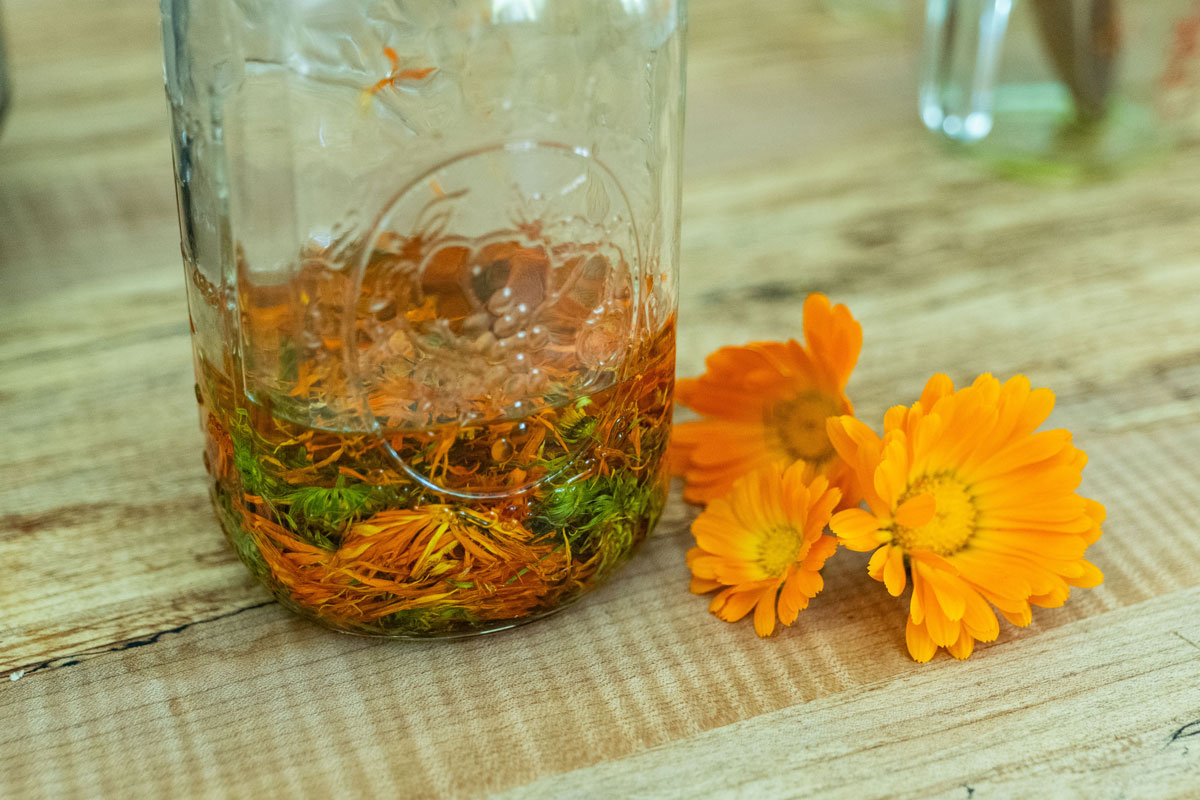

If you grow calendula in your garden or want to harness its natural healing properties, making your own calendula oil is one of the most rewarding homestead projects. This infused oil captures calendula’s soothing compounds and creates a versatile remedy for minor cuts, sensitive skin, and everyday skincare–without the cost or preservatives of store-bought versions. Whether you have fresh blooms or dried petals on hand, this guide walks you through both methods so you can choose what works for your schedule and gardening situation.
How to Infuse Calendula Oil: Two Methods
Calendula oil is created by steeping flower petals in a carrier oil, allowing the plant’s beneficial compounds to transfer into the oil. We’ll cover both a passive cold-infusion method and a faster heat-infusion method.
What You Will Need
- Dried calendula petals (1 cup loosely packed; use fresh petals if newly harvested and fully dried)
- Carrier oil such as olive, jojoba, or sweet almond oil (2 cups)
- A clean glass jar with a tight-fitting lid
- Cheesecloth or fine mesh strainer
- A heavy-bottomed pot or double boiler (for heat method only)
- Glass bottles or jars for finished oil storage
Steps
Prepare Your Petals
If using fresh calendula flowers, allow them to dry completely for at least 24-48 hours in a warm, dark location away from direct sunlight. Moisture remaining in the petals can promote mold and spoilage. Dried petals should crumble easily between your fingers and show no signs of dampness.
Cold Infusion Method: Layer Petals and Oil
Place your dried petals in the clean glass jar and pour the carrier oil over them until completely submerged. Seal the jar tightly and store it in a cool, dark cabinet or pantry. This passive method requires patience–shake the jar gently every 2-3 days for even extraction. After 2-4 weeks, the oil will have taken on a golden or amber tone from the calendula compounds.
Heat Infusion Method: Gentle Warming
If you need calendula oil quickly, use a double boiler to gently warm the oil and petals without overheating. Pour your carrier oil into the top pot, add dried petals, and heat on low (never above 150°F) for 1-2 hours, stirring occasionally. The goal is slow infusion, not cooking; high heat destroys the delicate beneficial compounds.
Strain Your Infused Oil
Once infusion time is complete, line your strainer with cheesecloth and carefully pour the oil through, catching it in a clean bowl. Gather the corners of the cheesecloth and gently squeeze to extract every drop of oil from the petals. Discard the spent plant material.
Filter for Clarity and Purity
For a cleaner final product, pour the strained oil through cheesecloth a second time or use a fine mesh strainer. This removes any remaining petal fragments or sediment that could affect shelf life. A clear, clean oil indicates successful infusion.
Bottle and Label Your Oil
Transfer the finished calendula oil into dark glass bottles or jars to protect it from light degradation. Label each bottle with the date, contents, and infusion method used. Store in a cool, dark place; properly made calendula oil remains potent for 6-12 months.
- Use dried petals rather than fresh for the cold method–fresh petals contain moisture that increases spoilage risk, while dried petals release their compounds more reliably
- For the heat method, keep a thermometer nearby to ensure oil temperature never exceeds 150°F; overheating destroys the calendula’s therapeutic compounds
- If your infused oil develops a musty smell or visible mold, discard it immediately–this indicates water contamination, and using it could irritate skin
What to Look For When Making Calendula Oil
- Quality Dried Petals: Source calendula petals from reputable herb suppliers or grow and dry your own. Quality petals should have vibrant color, no musty smell, and be completely dry with no visible moisture or mold.
- Carrier Oil Selection: Choose a high-quality, cold-pressed carrier oil like extra virgin olive oil or organic jojoba. Avoid refined oils with chemical processing, as they may interfere with calendula’s natural properties and reduce shelf life.
- Glass Storage Vessels: Use dark glass bottles or jars to protect your finished oil from light damage and oxidation. Amber or cobalt glass is ideal; clear glass requires storage in a dark cabinet to maintain potency.
- Temperature Control for Heat Method: If using the heat infusion method, invest in a reliable thermometer to monitor oil temperature. Maintaining low, even heat (under 150°F) preserves the calendula’s beneficial compounds without degrading them.
Anchor Hocking Glass Canning Jars with Lids (Quart Size, 4-Pack)
Best for: Anyone infusing calendula oil via cold method
Wide-mouth glass jars with tight-sealing lids are essential for storing your infusion during the 2-4 week steeping process. Anchor Hocking’s durable glass prevents light penetration, and the reliable lid seal keeps oxygen out, reducing spoilage risk. These quart-size jars provide ample space for petals and oil while remaining stackable for pantry storage. Perfect for both beginners and experienced herbalists.
Check Current Price on Amazon →Kirkland Organic Extra Virgin Olive Oil (25.5 oz)
Best for: Budget-conscious homesteaders making large batches
A reliable, affordable carrier oil that works beautifully for calendula infusions. Costco’s Kirkland brand offers quality cold-pressed olive oil at a fraction of specialty oil prices, making it ideal for infusing. Its robust flavor actually complements calendula’s earthy properties. Best suited for cold infusion methods; some prefer lighter oils for topical use, but olive oil remains a traditional and effective choice.
Check Current Price on Amazon →Now Foods Organic Jojoba Oil (4 oz)
Best for: First-time infusers prioritizing skincare-quality oil
Jojoba oil is lighter than olive oil and won’t stain skin or clothing, making it ideal for beginners worried about application messiness. Now Foods provides a quality organic option in a small size, perfect for testing your infusion method before committing to larger quantities. Its neutral scent doesn’t compete with calendula’s benefits, and it absorbs quickly into skin. An excellent choice for topical use on sensitive areas.
Check Current Price on Amazon →Mountain Rose Herbs Dried Calendula Petals (1 lb)
Best for: Serious herbalists who want guaranteed quality ingredients
Mountain Rose Herbs sources organic, hand-harvested calendula petals with exceptional color and potency. This 1-pound package provides enough material for multiple large batches and costs less per ounce than smaller quantities elsewhere. Their dried petals maintain vibrant golden hues indicating high concentration of active compounds. Comes in resealable packaging to maintain freshness for future infusions.
Check Current Price on Amazon →Cheesecloth Grade 90 (5 Yards)
Best for: Anyone straining oil and needing reusable filtering material
Essential for straining your finished infusion without introducing fiber into the oil. This 5-yard roll provides enough material for multiple projects and can be rinsed and reused many times before replacement. Grade 90 cheesecloth is tight enough to catch petal fragments but porous enough for smooth pouring. Far more economical than single-use coffee filters and better for the environment.
Check Current Price on Amazon →Apivita Calendula Baby Oil (500 ml)
Best for: Those who want to compare commercial calendula oil with homemade versions
A natural reference point for understanding what professional calendula oil should look, smell, and feel like. This Greek brand uses organic ingredients and minimal processing, making it an excellent benchmark before or after creating your own. While homemade oil often surpasses commercial versions in potency, having a quality store-bought alternative helps you evaluate your infusion’s success and consistency.
Check Current Price on Amazon →Thermoworks ThermoPop Instant Read Thermometer
Best for: Heat infusion method users needing precise temperature control
For the accelerated heat method, maintaining oil temperature below 150°F is critical. ThermoPop’s fast response time and backlit display make it easy to monitor your double boiler without guessing. Compact enough to keep beside your stove, waterproof, and accurate to within one degree. A worthwhile investment if you plan to make multiple batches using the heat infusion approach.
Check Current Price on Amazon →Aura Cacia Organic Sweet Almond Oil (16 oz)
Best for: Premium results and the lightest-feeling finished oil
Sweet almond oil is lighter and more elegant than olive oil, creating a calendula infusion that glides onto skin without greasiness. Aura Cacia’s certified organic formula ensures no pesticides or chemical processing interfere with your infusion. While more expensive than olive oil, the superior feel and absorption make it worth the investment for those creating oil specifically for facial skincare and sensitive areas.
Check Current Price on Amazon →Making Calendula Oil Brings Your Garden’s Healing Powers Into Your Home
Creating your own calendula oil transforms homegrown flowers into a multi-purpose remedy that costs a fraction of commercial products while offering superior potency and freshness. Whether you choose the patient cold infusion method or the quicker heat approach, you’ll end up with an oil that represents your gardening effort and care. The process itself is forgiving and intuitive–even a first attempt often yields beautiful, fragrant results that families will treasure for months to come.
Beyond the finished oil, making calendula infusions connects you to centuries of herbal tradition and home remedies. You’ll understand exactly what goes into the product touching your skin, eliminate packaging waste, and build confidence in other herbal projects. Start with the cold infusion method if you have time, use quality dried petals or grow your own, and store your finished oil in dark glass away from heat and light. Your garden’s gift of calendula deserves to be preserved and shared with everyone in your household.
Frequently Asked Questions
Can I use fresh calendula flowers instead of dried petals?
You can, but dried petals are strongly recommended. Fresh flowers contain moisture that promotes mold growth and spoilage, especially in cold infusions. If using fresh blooms, ensure they’re completely wilted and nearly dry first. For fastest, safest results, harvest flowers in the morning, allow them to dry for 24-48 hours, then proceed with either infusion method.
How long does homemade calendula oil last?
Properly made and stored calendula oil remains potent for 6-12 months. Keep it in a dark glass bottle away from direct sunlight and heat. If your oil develops a musty smell, cloudiness, or visible mold, discard it immediately. Store in a cool pantry or cupboard rather than on sunny windowsills to maximize shelf life.
What’s the difference between cold and heat infusion methods?
Cold infusion takes 2-4 weeks but preserves all of calendula’s delicate compounds. Heat infusion takes just 1-2 hours but risks damaging beneficial compounds if oil gets too hot. Cold infusion creates a more potent final product; heat infusion is faster for those who can’t wait. Both methods work well–choose based on your timeline and equipment.
Can I use calendula oil on my face or is it only for wounds?
Calendula oil is excellent for both. It soothes minor cuts and scrapes and also works beautifully as a gentle facial oil for sensitive or irritated skin. Its anti-inflammatory properties help reduce redness and support skin healing. Always patch-test on a small area first, and avoid applying near eyes unless diluted further.
Why is my infused oil cloudy instead of clear?
Cloudiness usually indicates tiny petal fragments or water content in the oil. Strain the oil again through fresh cheesecloth to remove particles. If cloudiness persists and smells normal, the oil is still usable but not as elegant. Water content signals incomplete drying of petals; ensure petals are completely dry before infusing next time.
As an Amazon Associate, Build & Bloom earns from qualifying purchases. We only recommend products we genuinely think are useful. Prices and availability vary; check Amazon for the latest.
Leave a Reply