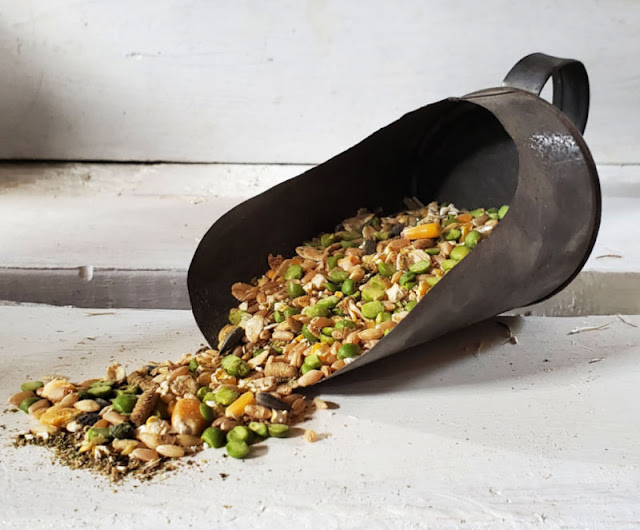

If you’re raising backyard chickens, you know that commercial layer feed can get expensive fast, especially when you’re buying multiple bags each month. Beyond cost, many homesteaders want more control over what goes into their flock’s diet and prefer whole grains and natural ingredients over processed feeds loaded with additives. Making your own chicken feed at home is simpler than you might think and gives you the satisfaction of knowing exactly what your birds are eating.
How to Make Homemade Whole Grain Chicken Feed
This whole grain blend provides essential protein, calcium, and nutrients for laying hens while remaining cost-effective and fully customizable to your flock’s needs.
Ingredients
- 4 cups whole grains (oats, barley, wheat berries, or cracked corn)
- 2 cups dried legumes (split peas, lentils, or dried beans)
- 1 cup seeds (sunflower seeds, flax seeds, or pumpkin seeds)
- 1 cup crushed oyster shells or eggshells (calcium source)
- 1/2 cup kitchen scraps (dried or dehydrated vegetable matter)
- Optional: 1 tablespoon dried herbs like oregano or thyme for immune support
Method
Measure and prepare your grains
Start by measuring out your whole grains using a measuring cup. If you’re using wheat berries or larger grains, consider cracking them slightly to improve digestibility. Pour all grains into a large mixing container and set aside.
Add your legumes and seeds
Add the dried legumes and seeds to the grain mixture. These ingredients provide essential amino acids and protein that your hens need for strong egg production and overall health. Stir well to distribute evenly.
Incorporate the calcium source
Crush your oyster shells or save eggshells by drying and crushing them into small pieces. Add these to the mixture slowly while stirring, as calcium is critical for strong eggshells. Mix until the calcium source is distributed throughout.
Add dried kitchen scraps and herbs
Include any dried or dehydrated vegetable scraps from your kitchen–carrot peels, leafy greens, pumpkin pieces work well. Add your optional herbs for immune-boosting benefits. Stir the entire mixture thoroughly for 1-2 minutes until all ingredients are evenly combined.
Store in airtight containers
Transfer your completed chicken feed blend into clean, airtight containers with secure lids. Label containers with the date and contents. Proper storage prevents moisture and pest contamination, keeping your feed fresh for up to 3 months.
Calculate daily portions
Plan to feed approximately 1/4 cup of mixed feed per chicken per day, adjusted based on their size and whether they’re also foraging. Weigh your batches to track consistency and adjust recipes based on your flock’s response.
- Buy grains and legumes in bulk from co-ops or grain suppliers to reduce costs significantly compared to bagged commercial feeds
- Rotate your grain varieties seasonally to provide diverse nutrients and take advantage of local harvest availability
- Save dried vegetable scraps year-round in a dedicated container, then grind them into your feed batch monthly for free supplements
What to Look For in Chicken Feed Storage & Mixing Equipment
- Airtight container capacity: Choose containers that hold at least 20-30 pounds of feed for multi-week storage. Ensure lids seal completely to keep out moisture and rodents.
- Mixing vessel durability: Select a container sturdy enough to handle repeated mixing without cracking. Stainless steel or heavy food-grade plastic works best for longevity.
- Easy cleaning and maintenance: Look for smooth surfaces without crevices where old feed can accumulate and spoil. Removable parts make deep cleaning between batches easier.
- Pest-resistant design: Containers should have tight-fitting lids with positive latches rather than loose-fitting covers that rodents can open.
Rubbermaid Roughneck Plastic Storage Container (50-Quart)
Best for: Homesteaders making large batches of chicken feed
This durable plastic container holds up to 50 quarts of feed and features a tight-sealing lid that keeps rodents and moisture out. The reinforced handles make it easy to transport to the coop, and the transparent design lets you monitor feed levels at a glance. Perfect for mixing and storing a month’s worth of homemade feed for a small to medium flock.
Check Current Price on Amazon →Gamma2 Vittles Vault Airtight Pet Food Container (20 lb)
Best for: Small backyard flocks on a tight budget
Designed specifically for pet and animal feed storage, this 20-pound capacity container features an airtight seal and roller base for easy movement. The clear plastic body lets you see when it’s time to refill, and the price point makes it accessible for budget-conscious homesteaders. Great for storing finished feed batches.
Check Current Price on Amazon →Lakeland Mixing Bowl Set (Stainless Steel, 3-Piece)
Best for: New chicken keepers mixing small batches of feed
This affordable three-piece stainless steel bowl set includes sizes perfect for mixing feed batches of varying quantities. Stainless steel won’t absorb odors or flavors from previous uses, and the bowls are lightweight enough for easy handling. Ideal for beginners testing recipes before committing to larger batches.
Check Current Price on Amazon →OXO Good Grips Stainless Steel Mixing Bowl Set (4-Piece)
Best for: Serious homesteaders planning long-term feed management
OXO’s premium mixing bowl set features non-slip bases that keep bowls stable during vigorous mixing, a critical feature when combining heavier grains. Stainless steel resists denting and staining, while the measurement markings on the interior help you track ingredient ratios precisely. Lifetime durability justifies the investment for dedicated chicken keepers.
Check Current Price on Amazon →Start Making Your Own Chicken Feed Today
Homemade whole grain chicken feed is one of the simplest ways to cut costs, improve flock health, and take control of what your birds eat. Once you’ve mixed your first batch using quality containers and mixing bowls, you’ll never go back to expensive commercial bags. The investment in proper storage equipment pays for itself in just a few months of feed savings, and your chickens will reward you with healthier bodies and more consistent egg production.
Start small with a single batch using the recipe above, then scale up as you get comfortable with the process. Track which grain combinations your flock prefers, experiment with seasonal additions, and fine-tune the recipe to match your local ingredient availability. With the right equipment and a little planning, you’ll become a chicken feed expert while saving money and building a more self-sufficient homestead.
Frequently Asked Questions
How long does homemade chicken feed last before spoiling?
Properly stored homemade feed in airtight containers lasts 2-3 months. Keep containers in a cool, dry location away from direct sunlight. If you notice any musty smell or visible mold, discard immediately as moldy feed can cause serious health issues in chickens.
Do I need to include oyster shells if I’m adding eggshells for calcium?
Eggshells provide some calcium, but crushed oyster shells are more concentrated and better for consistent egg production. Consider using both for optimal calcium levels, or supplement with oyster shells if your flock shows signs of thin-shelled eggs.
Can I use raw grains or do they need to be cooked first?
Chickens can digest whole raw grains without cooking. In fact, whole grains are preferable because they maintain their nutritional integrity and natural enzyme content. Only cook grains if birds have difficulty cracking them naturally.
What’s the cost comparison between homemade and commercial layer feed?
Homemade feed typically costs 40-50% less than quality bagged layer feed when you buy grains and legumes in bulk. A 50-pound bag of commercial feed costs $15-20, while homemade batches of similar size run $7-10 depending on your sourcing.
Can I adjust this recipe for broilers or meat chickens instead of layers?
Yes, broilers need higher protein (20-24%) for rapid growth. Increase legumes and seeds to 4 cups total and reduce grains slightly. Omit oyster shells since meat birds don’t need calcium for egg production.
As an Amazon Associate, Build & Bloom earns from qualifying purchases. We only recommend products we genuinely think are useful. Prices and availability vary; check Amazon for the latest.
Leave a Reply