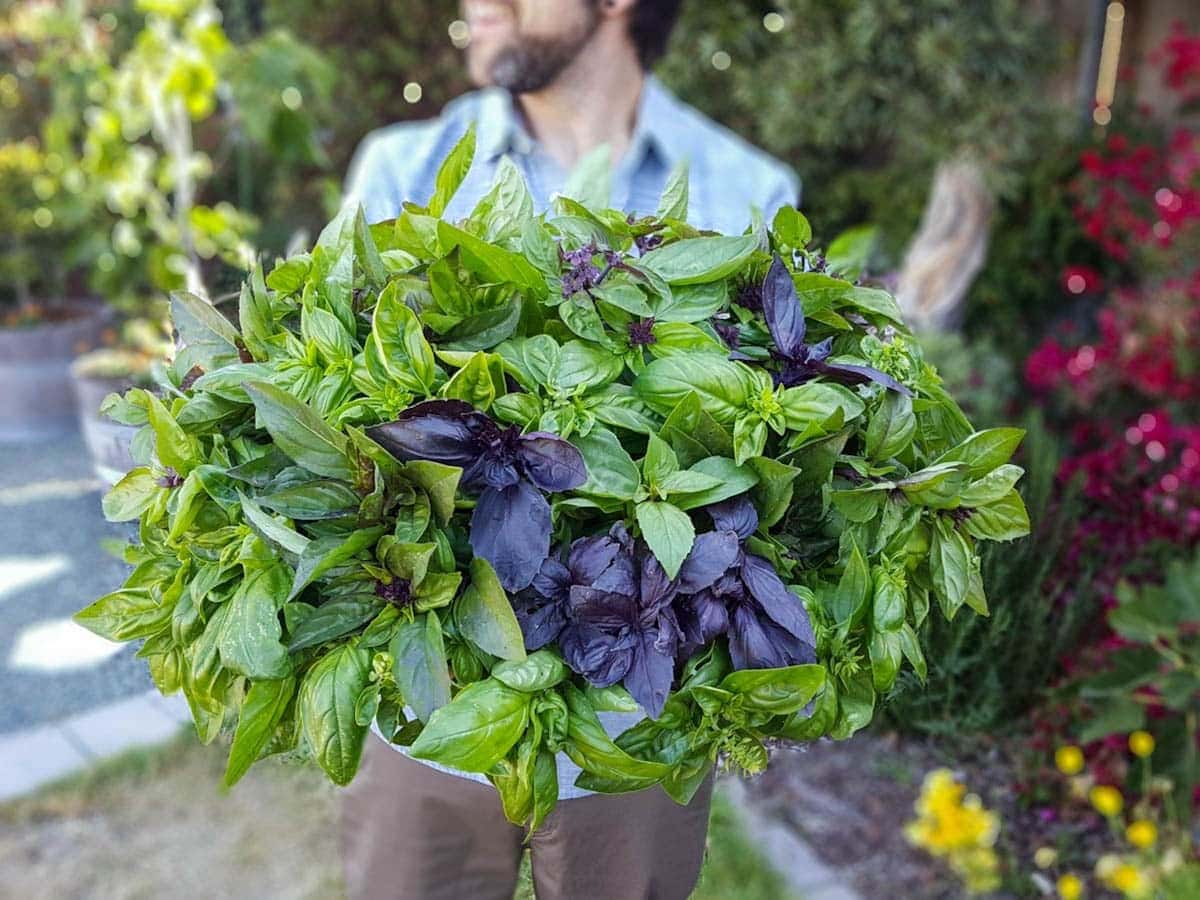

You planted basil expecting an endless summer supply, but your plants either grew tall and spindly or started flowering too early and went to seed. The problem isn’t your soil or water schedule–it’s that you’re not pruning correctly. The secret to dense, harvestable basil that produces all season is understanding how pinching works and committing to regular, strategic pruning. In this guide, you’ll learn exactly when and where to cut your basil so it branches out instead of reaching up.
How to Grow Big Bushy Basil Plants
Bushy basil is the result of consistent pruning that forces the plant to branch sideways rather than grow vertically. Follow these steps from seedling through summer harvest.
What You Will Need
- Basil seedlings or seeds (6-8 weeks old if starting from seed)
- A sunny location with 6-8 hours of direct sunlight daily
- A container or garden bed with well-draining soil
- Clean pruning shears or a sharp knife for making cuts
- Water for regular irrigation (soil should stay moist but not waterlogged)
Steps
Start Pinching Early
When your seedling is 6-8 inches tall and has developed at least 3-4 sets of leaves, begin the pinching process. Using your thumb and forefinger, remove the top 1-2 leaf pairs and any flower buds you see. This early intervention signals the plant to develop side branches instead of continuing upward growth.
Remove Flower Buds Immediately
Basil naturally wants to flower and set seed, which ends the growing season for new leaves. Scan your plants 2-3 times per week and pinch off any small flower spikes or buds forming at the top. If buds appear, remove them before they fully develop. This keeps energy directed to leaf production.
Prune Every 2-3 Weeks
Once branching has started, establish a regular pruning schedule every 2-3 weeks. Cut or pinch the top 1-2 leaf pairs from each stem, working your way around the plant. Always cut just above a leaf node (the point where leaves attach). This stimulates two new shoots to grow from that point, doubling your branch count.
Harvest from the Top Down
As the plant matures, transition from pinching to harvesting. Remove 1/3 of the plant’s foliage at a time, always starting from the top and working downward. Pinch or cut just above a set of leaves. Regular harvesting for kitchen use serves the same branching purpose as pruning–the more you harvest, the bushier it grows.
Maintain Consistent Sunlight
Basil requires 6-8 hours of direct sunlight daily to develop dense foliage and strong flavor. Place containers in a south-facing window or garden location. Insufficient light causes leggy, spindly growth even with perfect pruning. Ensure air circulation around the plant to prevent fungal issues.
Water at the Soil Level
Keep soil consistently moist but not soggy. Water at the base of the plant in early morning, avoiding wetting leaves. Proper hydration supports vigorous growth and branching. Let soil dry slightly between waterings, but don’t let it dry out completely, which stresses the plant.
Monitor and Adjust Throughout Summer
Every 4-6 weeks, step back and assess your plant’s shape. If it’s becoming asymmetrical or one side is growing faster, prune the faster side more aggressively to balance it. If it starts looking thin or recovering slowly from harvest, reduce how much you remove and let it regrow for a week or two before harvesting again.
- Pinch with your fingers rather than shears when possible–this causes less damage and actually signals branching more effectively than a knife cut.
- Never remove more than 1/3 of the plant’s total foliage at once, or you’ll shock it and slow recovery.
- Plant new basil seedlings every 3-4 weeks in succession to ensure continuous harvest even as older plants eventually decline in late summer.
What to Look For in Basil Growing Supplies
- Pruning Shears or Scissors Quality: Look for sharp, clean-cutting blades made of stainless steel to prevent crushing stems and spreading disease. Bypass pruners (where blades pass each other like scissors) work better than anvil-style for delicate herbs.
- Container Drainage: Whether using a pot or garden bed, ensure drainage holes exist at the bottom. Basil roots rot quickly in standing water. A 6-8 inch container works well for one plant; larger pots allow multiple plants with room to spread.
- Soil Quality: Use light, airy potting soil or garden soil mixed with compost. Basil prefers slightly acidic to neutral pH (6.0-7.0) and soil that retains moisture without compacting. Avoid heavy clay soils that hold too much water.
- Sunlight Access: Ensure your growing location receives at least 6-8 hours of direct sun daily. South or west-facing windows and garden spots work best. Inadequate light is the #1 reason for spindly, non-bushy basil growth regardless of pruning technique.
Felco F-6 Compact Hand Pruner
Best for: Anyone serious about herb maintenance
The gold standard for hand pruning, the Felco F-6 features a bypass blade design that makes clean cuts on delicate basil stems without crushing plant tissue. Stainless steel construction resists rust and corrosion, and the ergonomic handle fits hands of all sizes. Japanese-quality engineering ensures a precise cut every time, promoting faster healing and branching response.
Check Current Price on Amazon →Amazon Basics Stainless Steel Gardening Scissors
Best for: Beginners and budget-conscious growers
These lightweight stainless steel scissors deliver solid cutting performance at a fraction of premium pruner costs. The straight blades work well for pinching herb stems, and the comfortable grip reduces hand fatigue during regular pruning. While not as durable as professional-grade tools, they’re perfectly adequate for maintaining backyard basil through the season.
Check Current Price on Amazon →Bloem Terrapot Plastic Planter Pot 6-Inch
Best for: First-time basil growers starting with containers
This 6-inch plastic pot provides the ideal size for a single basil plant with room for branching, features drainage holes that prevent root rot, and is lightweight enough to move between sun locations. The terracotta-like appearance blends into kitchen windowsills and patios. Multiple drainage holes ensure consistent water management critical for basil success.
Check Current Price on Amazon →Espoma Organic Potting Mix
Best for: Container basil growers wanting quality soil
This OMRI-certified organic potting mix contains no synthetic chemicals, mycorrhizae, and beneficial microbes that promote root health and nutrient uptake. The light, airy texture prevents compaction while retaining moisture. Basil grown in quality soil develops stronger branching and more vibrant flavor than plants in poor soil.
Check Current Price on Amazon →Final Recommendation
Growing big, bushy basil is entirely within your control. The key is understanding that basil responds to pruning by branching, and that consistent pinching–every 2-3 weeks from the moment your plant is established–is what transforms a leggy seedling into a full, productive herb that supplies your kitchen all season. The technique itself costs nothing: simply use your fingers to remove the top leaf pairs and any flower buds. A quality pair of pruning shears speeds up the work and makes cleaner cuts, but even basic scissors will work if you’re consistent.
More important than equipment is commitment to the schedule. Set a calendar reminder for every two weeks to pinch your basil. Harvest aggressively from your mature plants once established. Provide 6-8 hours of direct sunlight daily and water consistently. Do this, and you’ll have more basil than you can use by mid-summer, forcing you to find creative ways to preserve it–basil pesto, infused oils, or dried herbs for winter. That’s the problem you want to have.
Frequently Asked Questions
When should I start pinching basil?
Begin pinching when your seedling reaches 6-8 inches tall and has developed 3-4 sets of true leaves. This typically occurs 4-6 weeks after sowing seeds. Early pinching trains the plant to branch from the start rather than growing tall first, then branching.
Will removing flower buds reduce my basil yield?
Yes, but removing them actually increases your overall yield. Once basil flowers, it stops producing new leaves and the plant declines. By pinching off buds continuously, you keep the plant in active leaf-production mode all summer, delivering far more harvestable basil than you’d get from a plant allowed to flower.
Can I grow basil indoors under lights?
Yes, basil can grow indoors under full-spectrum grow lights providing 14-16 hours of light daily. However, it won’t be as robust as outdoor basil in natural sunlight. Indoor plants grow slower and produce fewer branches, so be more conservative with your harvesting to avoid weakening them.
How often should I fertilize my basil?
If using quality potting soil, you typically won’t need to fertilize for the first 6-8 weeks. After that, apply a balanced fertilizer every 3-4 weeks, or use a slow-release fertilizer at planting. Over-fertilizing causes excessive leafy growth that’s less flavorful and more prone to pest problems.
Why is my basil getting tall and spindly despite pruning?
Insufficient sunlight is the primary cause. Basil needs 6-8 hours of direct sun; in lower light, it stretches upward searching for more light regardless of pruning. Move your plant to a sunnier location. Secondary causes include overcrowding (plants competing for light), poor air circulation, or inconsistent watering.
As an Amazon Associate, Build & Bloom earns from qualifying purchases. We only recommend products we genuinely think are useful. Prices and availability vary; check Amazon for the latest.
Leave a Reply