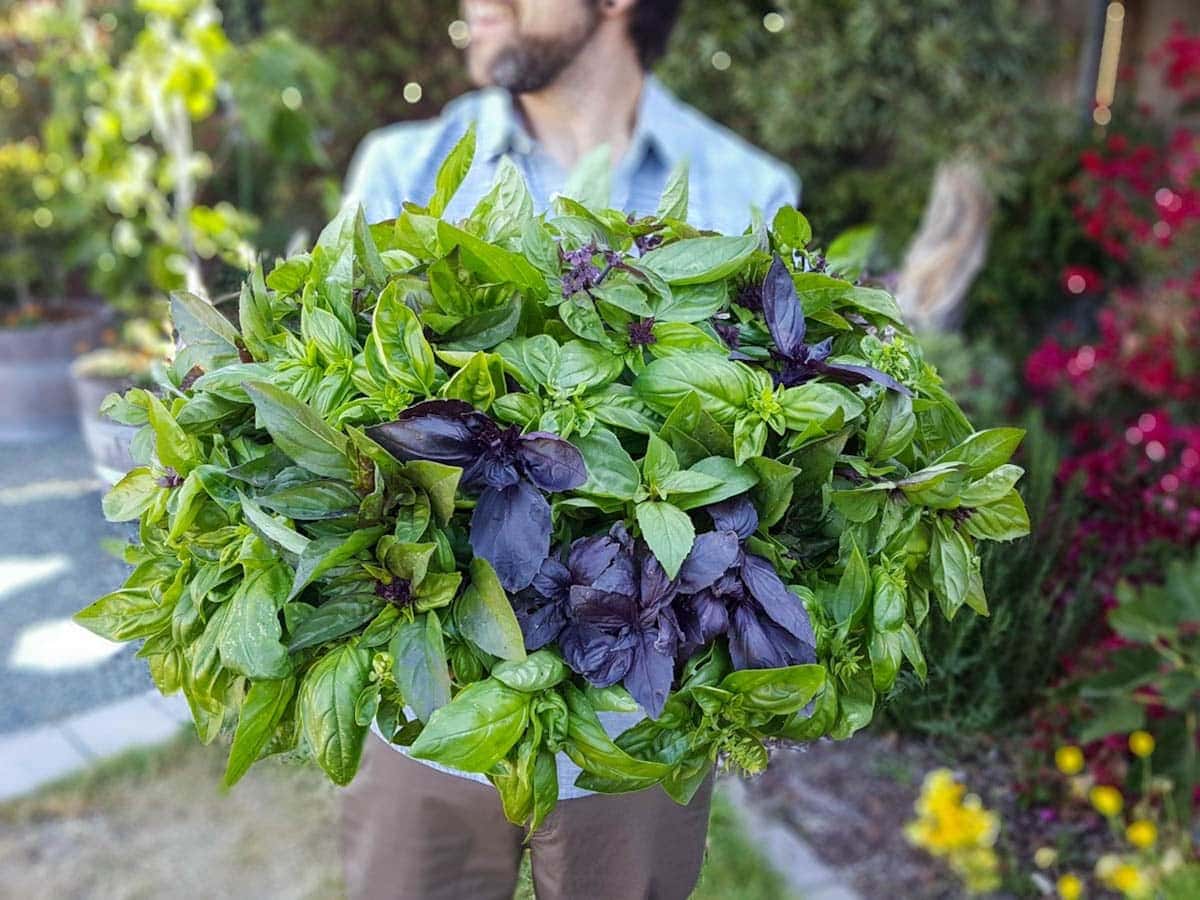

If your basil plants keep getting tall and spindly instead of full and leafy, you’re missing one critical step: strategic pinching. Most gardeners harvest randomly and wonder why their plants look sparse. The secret to massive, productive basil isn’t fancy fertilizer or special soil–it’s understanding how the plant naturally grows and working with that biology to force it to branch out instead of reaching up.
How to Grow and Maintain Bushy Basil
Basil responds dramatically to pruning and pinching. Follow these steps from planting through harvest to develop dense, vigorous plants that produce all season.
What You Will Need
- Basil seedlings or seeds (3-4 weeks old if starting from seed)
- Container or garden bed with well-draining potting soil
- Pruning shears or clean scissors for harvesting
- Watering can or hose for consistent moisture
- Sunny location with 6-8 hours of direct sunlight daily
Steps
Start with Healthy Seedlings at the Right Age
Plant basil seedlings when they have at least 3-4 sets of true leaves, typically 3-4 weeks after germination. If direct seeding, thin seedlings to 6-12 inches apart. Young plants with more developed leaf structure respond better to pinching and establish stronger root systems faster than tiny seedlings.
Pinch Out the Growing Tip Early and Often
When your basil reaches 6-8 inches tall, use your fingers or scissors to remove the uppermost 1 inch of the stem, including the small cluster of leaves at the very tip. This forces the plant to branch at lower nodes instead of continuing upward. Repeat this pinching every 2-3 weeks or whenever new growth reaches 6 inches again.
Remove Flower Buds Before They Open
The moment you see a flower bud forming at the tip of a stem, pinch it off. Flowering signals the plant to stop producing leaves and start making seeds. By continuously removing flowers, you keep the plant in vegetative growth mode, producing bushier foliage for months longer than plants allowed to flower.
Harvest From the Top Down with the Right Technique
Always pinch or cut from the top of each stem downward, removing leaves in sets. Never strip leaves from the middle or bottom of stems, as this creates bare spots. Taking from the top encourages the plant to branch at the lower leaf nodes you want to develop.
Water Consistently Without Overwatering
Keep soil consistently moist but never waterlogged. Basil prefers 1-1.5 inches of water per week. Water at the soil level in the morning to avoid wet foliage, which invites disease. Inconsistent watering stresses plants and can trigger early flowering, so set up a regular schedule or use drip irrigation.
Provide Full Sun and Warm Conditions
Basil needs minimum 6-8 hours of direct sunlight daily, ideally 10+ hours for maximum growth. It thrives in temperatures between 70-85 degrees Fahrenheit. In hot climates, afternoon shade may help prevent bolting too early. Cooler temperatures or insufficient light will result in weak, sparse growth.
Feed Lightly Throughout the Season
Basil grown in containers depletes nutrients faster than garden soil. Apply a balanced, water-soluble fertilizer every 3-4 weeks at half strength, or use a slow-release formulation at planting time. Over-fertilizing with nitrogen produces soft, less flavorful growth that attracts pests, so resist the urge to overfeed.
Replace Plants When They Show Signs of Decline
Most basil plants naturally decline after 2-3 months of continuous harvesting or when temperatures drop. Rather than fighting with weakening plants, pull them out and plant fresh seedlings for a second flush. In hot climates, succession plant every 3 weeks for continuous supply through fall.
- Pinch basil above a leaf node (where two leaves branch from the stem) to encourage two new stems to emerge from that point, doubling your branching each time.
- Harvest basil in the early morning after dew dries but before midday heat for the best flavor and longest shelf life.
- Group 3-4 plants together in a container rather than planting single specimens–they’ll shade each other’s soil slightly and create a fuller appearance faster.
What to Look For in Basil Growing Tools and Supplies
- Pruning Shears or Scissors: Choose sharp, clean cutting tools that make precise cuts without crushing stems. Dull tools create torn tissue that invites disease. Look for stainless steel blades and ergonomic handles if you’ll be harvesting frequently.
- Container Size and Drainage: Basil needs containers at least 6-8 inches deep with drainage holes. Wider pots (10+ inches) produce bushier plants than tall narrow containers. Ensure drainage is adequate to prevent root rot in consistently moist soil.
- Soil Quality: Use light, well-draining potting soil designed for vegetables or herbs, not heavy garden soil. Quality potting mixes retain moisture while preventing waterlogging, essential for consistent basil growth.
- Sunlight Access: Position plants where they receive 6-8 hours of direct sunlight daily. South-facing windowsills or outdoor locations without afternoon shade obstruction work best. Insufficient light creates weak, spindly growth no amount of pinching can fix.
Felco F-2 Bypass Hand Pruner
Best for: Regular basil harvesters wanting precision cuts
The Felco F-2 is the gold standard for hand pruning in professional and home gardens alike. Its sharp bypass blade cuts cleanly without crushing delicate basil stems, the stainless steel construction resists rust, and the ergonomic design reduces hand fatigue during frequent harvesting. Many gardeners report using the same pair for 10+ years. The precision is unmatched for pinching off flower buds and harvesting leafy stems without damage.
Check Current Price on Amazon →AmazonBasics Stainless Steel Pruning Shears
Best for: Budget-conscious gardeners new to basil growing
These affordable pruning shears offer reliable cutting performance at a fraction of premium prices. The stainless steel blades stay sharp through normal use, they’re lightweight and comfortable for extended harvesting sessions, and replacements are inexpensive if they wear out. Ideal for beginners testing their basil-growing commitment before investing in premium tools.
Check Current Price on Amazon →Fiskars Softtouch Herb Scissors
Best for: Gardeners preferring scissors over traditional pruners
These spring-loaded herb scissors are specifically designed for cutting soft growth like basil leaves. The curved blades work like kitchen scissors for an intuitive cutting motion, the soft-grip handles are comfortable for extended use, and the spring action reduces hand strain. Many home gardeners find scissors easier to control than pruners when pinching delicate growing tips.
Check Current Price on Amazon →Gardena Comfort Bypass Pruner
Best for: Gardeners wanting quality without premium pricing
Gardena’s Comfort line balances performance and affordability, offering smooth cutting action and ergonomic handles at mid-range prices. The precision bypass blade handles basil stems cleanly, and the tool is durable enough for years of regular use. Customer reviews consistently praise the quality-to-price ratio, making it popular with vegetable and herb gardeners.
Check Current Price on Amazon →Okatsune 111 Bypass Secateurs
Best for: Serious gardeners harvesting basil multiple times weekly
Japanese-engineered Okatsune secateurs deliver surgical precision and exceptional durability. The lightweight design and smooth cutting action make them ideal for frequent harvesting without hand fatigue. Professional growers and serious home gardeners prefer these for delicate work where clean cuts prevent disease and encourage regrowth.
Check Current Price on Amazon →OptimaGarden Precision Pruning Snips
Best for: Container gardeners and window sill harvesters
These compact pruning snips are perfect for the basil gardener with limited space. Small enough to fit in a pocket, they deliver precise cuts despite their size, and the lightweight build makes them ideal for harvesting from containers or hanging baskets. The stainless steel blades resist rust from repeated watering and cleaning.
Check Current Price on Amazon →Corona ClassicCUT Bypass Pruner
Best for: Gardeners investing in lifetime tools
Corona’s premium bypass pruners combine American manufacturing with Japanese-inspired design. The precision-honed blade stays sharp longer than budget alternatives, the stainless steel handles won’t corrode, and the tool is backed by a lifetime warranty. Serious gardeners consider this an investment tool that becomes more valuable with age.
Check Current Price on Amazon →Draper Expert Bypass Secateurs
Best for: Professional and expert home gardeners
Draper Expert secateurs are trusted by professional horticulturists and intensive home gardeners. The precision engineering delivers clean cuts that heal quickly, reducing disease risk on delicate basil stems. Built in the UK with premium materials, these tools handle thousands of cuts without losing their edge, justifying the investment for serious herb producers.
Check Current Price on Amazon →Growing Basil Like a Professional
The difference between sparse, disappointing basil and abundant harvests comes down to understanding one principle: pinching forces branching. Most home gardeners treat basil like lettuce, harvesting randomly and wondering why their plants look ragged. Professional growers and serious home gardeners know that consistent pinching of the growing tip, removal of flower buds, and top-down harvesting techniques transform skinny plants into dense, productive workhorses. Combined with adequate sunlight, consistent watering, and the right tools, you’ll have more basil than you can use all summer long.
Start with quality pruning shears that make clean cuts without crushing delicate stems–this prevents disease and keeps your plants vigorous. Then commit to the pinching habit: every time you see new growth reaching 6 inches, remove the top inch to force branching. Within a few weeks, you’ll see the transformation as your basil transforms from a single tall stem into a full, bushy plant with dozens of harvestable leaf clusters. The techniques in this guide work equally well in containers on a patio, raised beds, or in-ground gardens, making abundant basil achievable for any gardener willing to learn proper pruning strategy.
Frequently Asked Questions
How often should I pinch basil to keep it bushy?
Pinch basil every 2-3 weeks as new growth reaches 6 inches tall, or whenever you see flower buds forming. The more consistently you pinch, the bushier the plant becomes. Some gardeners pinch twice weekly during peak season for maximum density and productivity.
Will basil regrow after I harvest leaves?
Yes, basil regrows prolifically when you harvest from the top down above leaf nodes. The plant will branch at those nodes and produce two new stems. Expect new harvestable growth within 1-2 weeks of pinching, making basil one of the most productive herbs to grow.
What causes basil to get tall and skinny instead of bushy?
Spindly basil usually results from insufficient pinching, too little sunlight, or crowded spacing. Plants not pinched regularly will always shoot upward toward light. Ensure at least 6-8 hours of direct sun daily and pinch the growing tip regularly to force branching instead of vertical growth.
Can I grow basil indoors year-round?
Yes, but you’ll need a grow light providing 12-16 hours of light daily since window light rarely meets basil’s 10+ hour preference. Indoor basil grows slower and produces less than outdoor plants, but consistent temperatures and controlled conditions can produce harvests year-round with proper care.
When should I replace my basil plants?
Most basil plants decline after 2-3 months of intensive harvesting or when temperatures drop below 50 degrees Fahrenheit. Rather than fighting tired plants, pull them out and start fresh seedlings for a second flush. In hot climates, succession plant every 3 weeks for continuous supply.
As an Amazon Associate, Build & Bloom earns from qualifying purchases. We only recommend products we genuinely think are useful. Prices and availability vary; check Amazon for the latest.
Leave a Reply