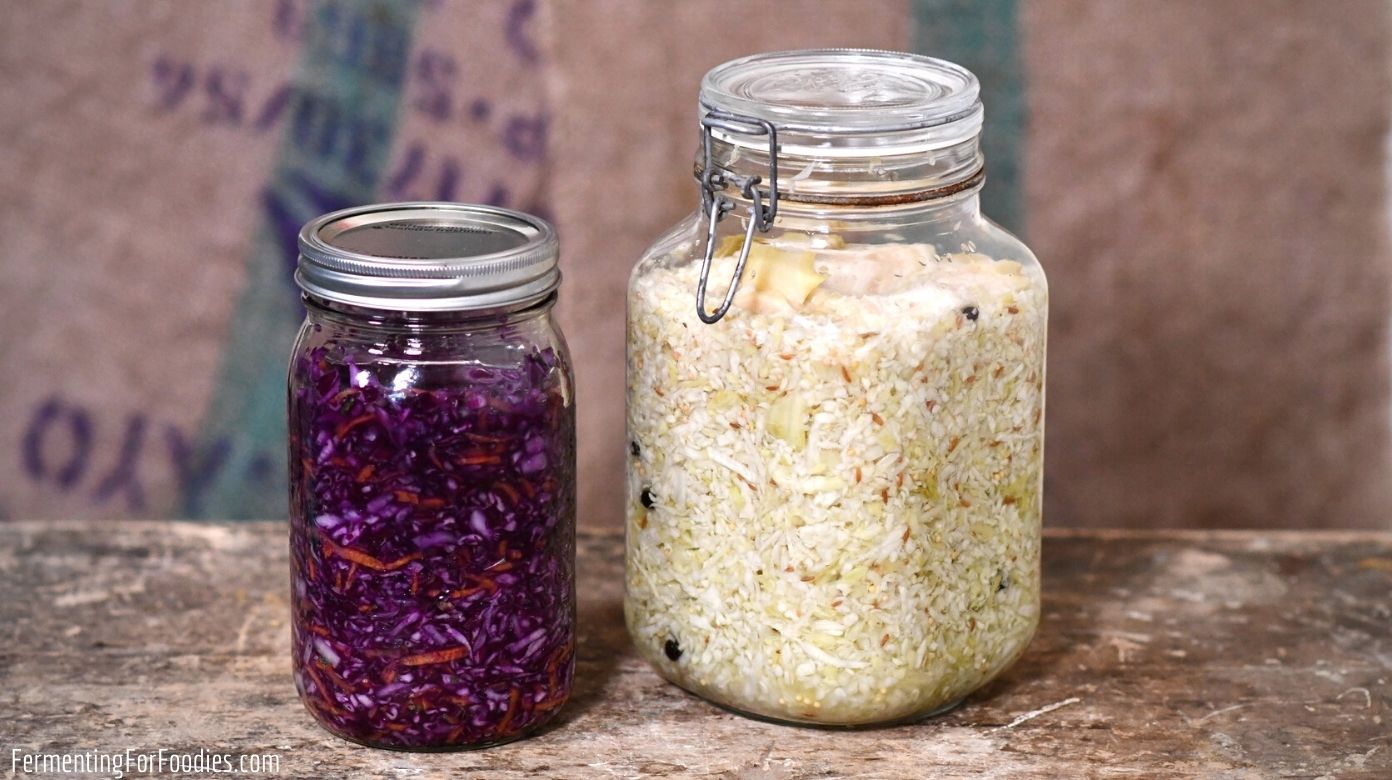

Making sauerkraut at home is one of the easiest fermentation projects for beginners, yet it delivers complex flavors and gut-healthy probiotics that store-bought versions often lack. Whether you’re new to fermentation or looking to expand beyond plain cabbage, this guide walks you through the basic method and ten delicious flavor variations you can start today with just a few common pantry ingredients.
How to Make Sauerkraut: Basic Method + 10 Flavor Ideas
Sauerkraut relies on salt to draw out cabbage’s natural juices, creating a brine that protects beneficial lactobacillus bacteria while they ferment. The process takes just minutes of prep work, then patience does the rest.
Ingredients
- 1 medium head of green or red cabbage (about 2 pounds)
- 2-3 tablespoons of non-iodized salt (about 2% of cabbage weight)
- Optional flavor additions: caraway seeds, dill, juniper berries, ginger, turmeric, garlic, hot peppers, or apple
- Filtered or dechlorinated water if needed
- A clean glass fermentation jar (quart-sized or larger)
Method
Prepare Your Cabbage
Remove the outer leaves and set aside. Slice the cabbage thinly using a knife or mandoline, discarding the core. Place sliced cabbage in a large mixing bowl.
Add Salt and Mix Thoroughly
Sprinkle salt over the cabbage and massage it with your hands for 5-10 minutes. The salt draws out the cabbage’s natural liquid, creating brine. You should see liquid pooling at the bottom of the bowl.
Add Flavor Variations
This is where you customize your batch. Add any combination of optional ingredients: for dill sauerkraut, use fresh dill and caraway seeds; for spiced versions, add turmeric and ginger; for heat, add sliced hot peppers. Mix gently with the cabbage.
Pack Into Your Jar
Transfer the cabbage and all its brine into your clean jar, pressing down firmly with your fist or a spoon. The brine should rise above the cabbage level by at least 1 inch. If you don’t have enough brine, make a quick saltwater solution (1 tablespoon salt per cup of water) and add just enough to cover.
Keep Cabbage Submerged
Cabbage exposed to air can develop mold. Use a reserved outer cabbage leaf to weigh everything down, tucking it between the shredded cabbage and the jar’s sides. You can also use a glass weight or clean fermentation lid designed for this purpose.
Cover and Ferment at Room Temperature
Secure a loose cloth or coffee filter over the jar’s mouth with a rubber band—this allows gases to escape while keeping dust and insects out. Place the jar on a kitchen counter away from direct sunlight. Taste after 3 days, then every 2-3 days until flavor reaches your preference (typically 1-4 weeks depending on temperature).
Bottle and Refrigerate
Once fermented to your liking, transfer to airtight bottles or containers and refrigerate. Cold stops fermentation. Your sauerkraut will keep for several months in the refrigerator and may continue developing subtle flavor changes over time.
- Use non-iodized sea salt or kosher salt; iodized salt can interfere with fermentation and cloud your brine.
- Warmer kitchens (65-75F) ferment faster than cool ones. In winter, fermentation may take 2-4 weeks; in summer, 5-7 days is possible.
- Tasting as you go helps you dial in flavor. Some prefer a tangy bite after 1 week; others want deeper funk and want to wait 4 weeks.
What to Look For in Fermentation Equipment
- Fermentation Jar Size and Material: Glass jars in quart (32 oz) to half-gallon sizes work best for sauerkraut batches. Avoid metal lids that will corrode from acidic brine. Wide-mouth jars make packing easier than narrow designs.
- Weight or Follower System: You need something to hold cabbage below the brine surface. Purpose-built glass weights are ideal, but cabbage leaves and even small jars work. Airlock lids with built-in follower systems eliminate guesswork.
- Salt Quality: Non-iodized salts (sea salt, kosher salt, pickling salt) allow fermentation to proceed cleanly. Iodized table salt contains additives that cloud brine and inhibit beneficial bacteria.
- Breathable Covering: A cloth, coffee filter, or breathable fermentation lid allows carbon dioxide to escape while blocking dust and insects. Tight-fitting lids trap gas and risk jar explosion or flavor off-notes.
Fido Glass Fermentation Jar (1-Quart)
Best for: All sauerkraut makers who want reliability
The Fido jar features a hinged glass lid with a built-in rubber gasket that seals tightly yet allows fermentation gases to burp out as needed. Its wide 3-inch mouth accommodates thick cabbage slices easily, and the 1-quart size is perfect for single household batches. The glass weight sits perfectly inside the jar to keep cabbage submerged without extra purchases. Trusted by fermentation enthusiasts worldwide.
Check Current Price on Amazon →Ball Wide-Mouth Mason Jar (Quart Size, 6-Pack)
Best for: Beginners and frugal fermenters
Standard canning jars cost just pennies per jar when bought in bulk. The wide mouth is sauerkraut-friendly, and you can cover each with a cloth and rubber band. No fancy lids needed. The downside is that you must remember to ‘burp’ tight lids daily to release pressure, or use an airlock lid separately. An economical starter choice for testing the hobby.
Check Current Price on Amazon →Cultures for Health Fermentation Starter Kit
Best for: First-time fermenters who want guidance
This kit includes a 1-quart fermentation jar, glass weight, cloth cover, and a clear instruction booklet with troubleshooting. The jar’s airlock-style lid removes guesswork about proper burping. Everything you need arrives together, making setup foolproof. Ideal if you’re nervous about fermentation and want a foolproof system.
Check Current Price on Amazon →Fermentationculture.eu Airlock Fermentation Jar (2-Liter)
Best for: Serious fermenters who want one premium vessel
European-made precision fermentation jar with an integrated airlock valve that prevents mold while releasing gases. The 2-liter capacity suits larger households or multiple batches at once. Weighted follower included. Heavier glass and premium gaskets ensure years of reliable use. The airlock design requires zero guesswork.
Check Current Price on Amazon →Anchor Hocking Wide-Mouth Apothecary Jars (Set of 2, Quart)
Best for: Home fermenters wanting quality at fair price
Anchor Hocking’s glass apothecary jars are food-grade and considerably less expensive than specialty fermentation jars, yet they feature straight sides and wide mouths ideal for cabbage. The rubber seal lid burps easily when needed. Two-jar sets let you run parallel batches with different flavors simultaneously.
Check Current Price on Amazon →Redmond Real Salt (Fine, 26 oz)
Best for: Fermenters prioritizing mineral-rich, additive-free salt
Redmond real salt is mined from an ancient sea bed and contains trace minerals that enhance fermentation while adding subtle mineral notes to sauerkraut. Non-iodized and free from anti-caking agents. The fine grain dissolves evenly. At just 2-3 tablespoons per batch, one box provides 20+ fermentations. Makes an observable difference in brine clarity and taste.
Check Current Price on Amazon →Kilner Glass Fermentation Jar with Lid (1-Liter)
Best for: Regular fermenters who want durability
Kilner jars are British-made workhorses designed for daily fermentation work. This 1-liter size is manageable yet productive. The clip-lock lid with rubber gasket prevents mold while allowing easy daily inspection. Sides are graduated for tracking liquid levels. Affordable enough to own multiple sizes for different projects.
Check Current Price on Amazon →Pyrex Glass Fermentation Weight Set (Includes 2 Weights and Cloth)
Best for: Fermenters who already own jars and need weights
Pyrex glass weights sit inside your existing jars to hold cabbage below brine. This two-piece set with bonus cloth cover works with any standard quart or pint jar you may already own. No need to buy a whole new system. Boil-safe glass ensures sanitation before use.
Check Current Price on Amazon →Make Your First Batch Today
Sauerkraut is one of fermentation’s greatest gifts: a living food that costs pennies to make, requires no special equipment beyond a jar and salt, and fills your gut with probiotics while delivering bold, complex flavor. Starting with the basic cabbage-and-salt method takes just 10 minutes of hands-on work. Once you’ve tasted your own fermented creation—whether it’s a simple dill variation or a spiced turmeric version—you’ll understand why fermentation enthusiasts get obsessed. The Fido jar above is the single best investment if you plan to ferment regularly, but honestly, a mason jar and cloth work beautifully too.
Don’t overthink it. Grab a head of cabbage, your preferred salt, and a jar from your kitchen right now. In 5 days to 4 weeks, you’ll have tangy, alive sauerkraut that tastes nothing like the pasteurized grocery store version. Make a batch with dill this week, caraway the next, and ginger the week after. Your digestion will thank you, and you’ll be well on your way to mastering fermentation itself.
Frequently Asked Questions
What does sauerkraut taste like, and how will I know when it’s done fermenting?
Finished sauerkraut has a tangy, complex sour flavor from lactic acid. Taste your batch every 2-3 days starting on day 3. When it reaches the sourness you enjoy, it’s done. Some prefer a mild tang (5-7 days), while others want a funky punch (3-4 weeks). There’s no single ‘done’ point—it’s your preference.
Can I reuse the brine from finished sauerkraut to start a new batch?
Yes, and it often ferments faster. The liquid already contains active lactobacillus colonies, so new cabbage ferments in 3-7 days instead of 1-4 weeks. Simply pack fresh sliced cabbage and flavoring into a jar, top with reserved brine, and let it go.
What’s the white film that sometimes appears on top, and is it mold?
That’s usually kahm yeast, which is harmless but can impart off-flavors. Skim it off with a spoon. True mold appears fuzzy and colored (pink, black, orange). If you see true mold, discard the batch. Kahm forms when cabbage peeks above brine, so keeping everything submerged prevents it.
Do I need to use a special fermentation jar, or can any glass jar work?
Any clean glass jar with a wide mouth will work. The only critical part is keeping cabbage submerged and covering it with a breathable cloth to prevent dust. Specialty jars with airlocks or weighted followers are convenient but optional. A mason jar, cloth, and rubber band cost almost nothing.
Can I ferment sauerkraut in a cold kitchen, and how does temperature affect timing?
Yes, but it ferments slower. Ideal fermentation happens at 65-75F. In winter kitchens (55-60F), expect 3-4 weeks. In warm summer kitchens (75-80F), ferment 5-10 days. A slightly warm shelf or kitchen cupboard speeds things up. Cold temperatures don’t spoil it—they just pause fermentation.
As an Amazon Associate, Build & Bloom earns from qualifying purchases. We only recommend products we genuinely think are useful. Prices and availability vary; check Amazon for the latest.
Leave a Reply