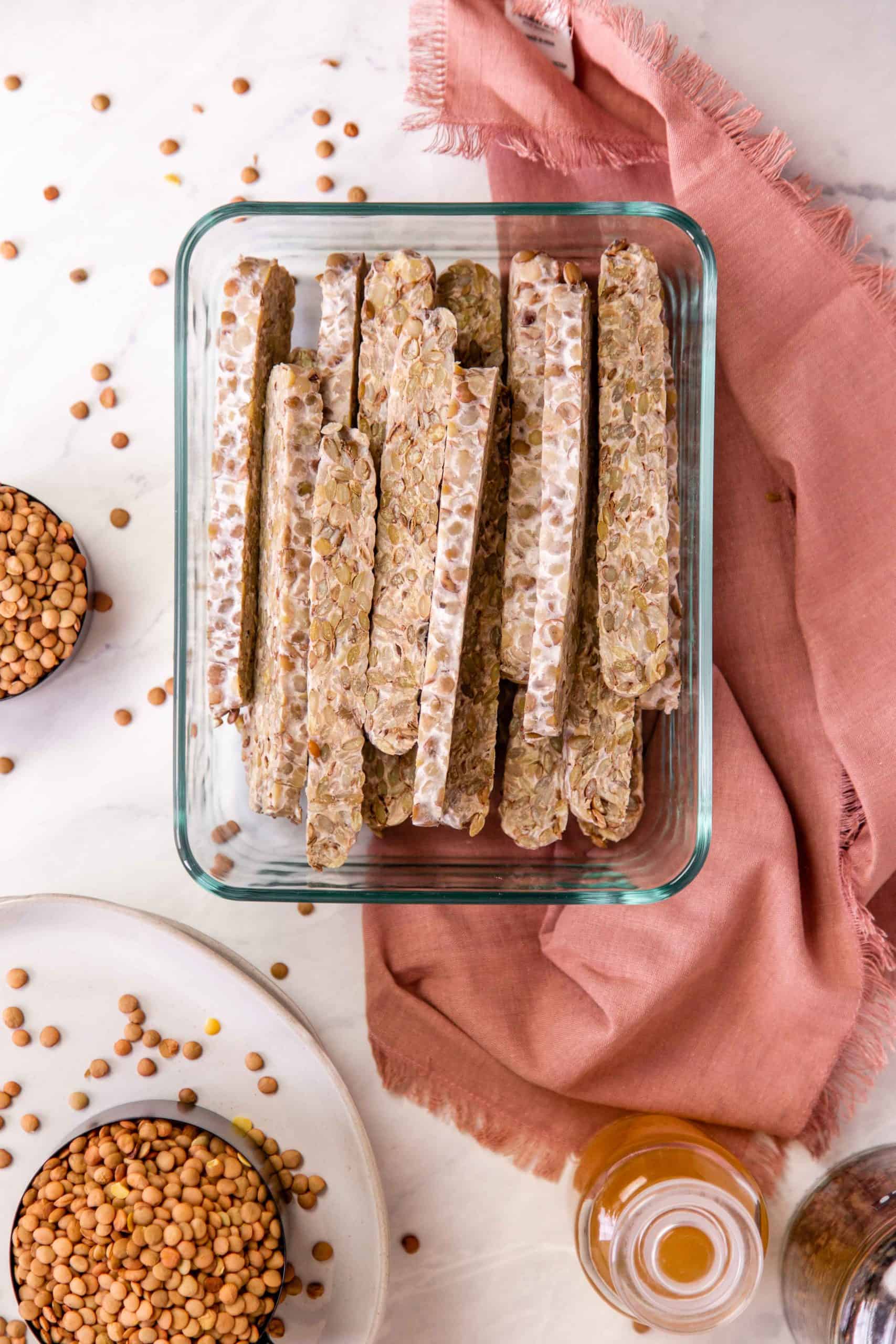

Making tempeh at home is easier than you might think, and it opens up possibilities beyond soybeans. Whether you’re avoiding soy for allergies, preference, or just want to experiment with chickpeas, lentils, or other legumes, homemade tempeh delivers superior flavor, texture, and nutritional control compared to store-bought versions. In about 24 hours, you’ll have a versatile fermented protein ready for stir-fries, sandwiches, and Buddha bowls.
How to Make Tempeh at Home
Tempeh fermentation relies on introducing beneficial mold spores to cooked legumes, which bind them together into a firm cake. The process takes minimal hands-on time but requires attention to temperature and humidity.
Ingredients
- 2 cups dried legumes or grains (soybeans, chickpeas, black beans, lentils, or sunflower seeds), soaked and cooked until tender but not mushy
- 1/4 to 1/2 teaspoon tempeh starter culture (live mold spores)
- Filtered or distilled water for soaking
- Salt (optional, for flavor)
- Vinegar or lemon juice (1-2 tablespoons to lower pH after cooking)
Method
Soak and Cook Your Legumes
Soak dried legumes overnight, then drain and cook until tender (usually 45-90 minutes depending on variety). The beans should be soft enough to crack between your fingers but still hold their shape. Drain thoroughly in a colander and spread on a clean towel to dry completely. Pat away excess moisture with paper towels, as this helps the starter culture inoculate more effectively.
Cool to Room Temperature
Allow the cooked and drained legumes to cool to 75-85°F before adding the starter culture. Hot legumes will kill the beneficial mold spores. This usually takes 30-60 minutes at room temperature. You can speed this up by spreading the beans on a baking sheet.
Inoculate with Tempeh Starter
Sprinkle the tempeh starter culture evenly over the cooled legumes and mix gently but thoroughly with clean hands or a spoon. Use the full amount recommended on your starter package, as underinoculation can lead to mold contamination. The goal is even distribution so fermentation happens uniformly throughout the batch.
Pack Into an Incubation Container
Transfer the inoculated legumes into a perforated or breathable container (like a zip-top bag with holes punched in it, or a specialized tempeh box). Press firmly into a 1-2 inch layer, ensuring good contact between beans. The container needs air circulation but should retain some moisture. Leave it unpacked or loosely covered to allow oxygen flow.
Maintain Temperature for 24-48 Hours
Place the container in a warm, dark location maintaining 75-88°F (24-31°C). An oven with the light on, a heating pad set to low, a dehydrator turned off but with retained warmth, or a yogurt maker all work well. Check after 18-24 hours. The tempeh is ready when the beans are bound together by white mycelium (the mold’s thread-like growth), forming a firm cake.
Recognize Doneness and Stop Fermentation
Your tempeh is complete when the beans are completely bound together, the surface shows white fuzzy growth, and it smells pleasantly earthy or nutty (not ammonia-like or sour). Refrigerate immediately to slow fermentation. If you see any green, black, or pink mold, discard the batch—it’s contaminated and unsafe to eat.
Steam or Blanch for Storage
Optional but recommended: Steam the finished tempeh cake for 10 minutes or blanch in boiling water for 5 minutes. This halts fermentation, extends shelf life to 1-2 weeks in the fridge, and reduces any slight bitterness. Let cool before slicing and storing in an airtight container.
Slice, Cook, and Enjoy
Cut the tempeh cake into 1/4-inch slabs and pan-fry, bake, steam, or crumble into dishes. Raw tempeh is safe but has a slightly bitter taste; cooking mellows it and improves digestibility. Use in stir-fries, salads, grain bowls, or as a plant-based protein substitute.
- Use a thermometer to monitor incubation temperature precisely. Tempeh fermentation slows dramatically below 75°F and risks contamination above 90°F. A consistent 80-85°F produces the best results.
- Soy-free tempeh tastes best when made from chickpeas, black beans, or a blend of legumes and grains (try 1 cup lentils + 1 cup barley). Avoid very starchy grains alone, as they don’t bind as firmly.
- If your tempeh smells strongly of ammonia, fermentation likely went too long or temperature was too high. Discard and start over, reducing fermentation time by 6-12 hours next batch.
What to Look For in Tempeh-Making Supplies
- Quality Tempeh Starter Culture: The live mold culture is non-negotiable for success. Look for freeze-dried or desiccated starter with a recent harvest date and proper storage instructions. Reputable suppliers sell cultures specifically labeled for tempeh, not koji or other fermentation types. Check reviews confirming reliable fermentation and contamination rates.
- Reliable Temperature Control: Fermentation success depends on maintaining 75-88°F consistently. A dedicated heating pad, heat mat, or small incubator is far more effective than hoping your kitchen stays warm. Look for devices with thermostat controls or adjustable heat settings so you can dial in the exact temperature your batch needs.
- Breathable Incubation Container: The container must allow oxygen flow while retaining some moisture. Perforated bags, bamboo steamers, or specialized tempeh boxes work better than sealed containers. Choose something easy to clean and reuse, as you’ll be making tempeh regularly once you master the process.
- Accurate Kitchen Thermometer: Monitor both the cooked legumes before inoculation and the incubation temperature throughout fermentation. A quick-read or digital probe thermometer helps you hit the ideal 75-85°F range for starter addition and maintain proper incubation heat. Avoid guessing or relying on oven temperature alone.
Pangea Cultures Tempeh Starter
Best for: Home fermenters seeking reliable, consistent results
Pangea Cultures delivers freeze-dried tempeh mold in single-batch packets, eliminating guesswork about inoculation rates. Each packet contains enough culture for 2-3 batches of tempeh, with clear instructions and reliable germination rates. The starter is specifically selected for home use and produces consistently well-bound tempeh with minimal contamination risk. Customers praise the customer service and detailed guidance included with each order.
Check Current Price on Amazon →GEM Cultures Tempeh Spore Mix
Best for: Cost-conscious fermenters making large batches
GEM Cultures offers tempeh starter at a lower per-batch cost by selling larger quantities. The freeze-dried mold is equally effective as premium options but comes in bulk, making it ideal if you plan to make tempeh regularly. Requires measuring small amounts per batch but offers excellent value over time. Includes basic fermentation guidance and reliable customer support for troubleshooting.
Check Current Price on Amazon →Cultures for Health Tempeh Starter Kit
Best for: First-time tempeh makers wanting a complete system
This kit bundles starter culture with a woven bamboo incubation container, detailed instructions, and troubleshooting tips. The all-in-one approach removes the uncertainty of sourcing individual components. The bamboo container provides perfect breathability and heat retention for consistent fermentation. Ideal for beginners who want to reduce decision fatigue and jump straight to successful tempeh production.
Check Current Price on Amazon →Fermentationculture.eu Rhizopus Oligosporus Spore
Best for: Advanced fermenters wanting laboratory-grade starter
This European supplier provides pure Rhizopus oligosporus spore culture, the exact mold species used in commercial tempeh production. Higher potency and purity than many consumer products means reliably vigorous fermentation and superior binding. Best for experienced fermenters comfortable measuring smaller inoculation rates. Includes detailed fermentation science and optimization guidance for customized batches.
Check Current Price on Amazon →Start Your Tempeh Fermentation Today
Homemade tempeh is within reach for any home gardener or homesteader already familiar with fermentation. The process requires just one critical ingredient (quality starter culture), a warm spot in your kitchen, and basic patience. Whether you choose traditional soybeans or explore chickpea, lentil, and grain-based versions, you’ll soon have a protein-rich superfood that tastes infinitely better than store-bought alternatives and costs a fraction of the price.
Begin with a reliable tempeh starter culture and a simple heating solution, then refine your technique over 2-3 batches as you learn your kitchen’s quirks. Many fermenters find tempeh easier and faster than kombucha or sauerkraut, making it perfect for scaling production alongside your garden harvests and preservation routine. Once you’ve mastered the basic process, you’ll unlock a world of flavor combinations and soy-free options that commercial tempeh makers rarely explore.
Frequently Asked Questions
Can I make tempeh without a starter culture?
No, you need live tempeh mold (Rhizopus species) to create tempeh. You cannot simply let cooked legumes sit and hope wild fermentation happens–this risks contamination. Always use a reliable commercial starter culture from a reputable supplier.
What legumes work best for soy-free tempeh?
Chickpeas, black beans, lentils, and kidney beans all make excellent tempeh. Many fermenters blend 1-2 cups legumes with 1 cup grains (barley, millet, or brown rice) for better binding and creamier texture. Avoid very starchy grains alone, as they don’t hold together as firmly.
How do I know if my tempeh is contaminated?
Safe tempeh shows white mycelium (fuzzy mold growth) and smells earthy or nutty. Discard immediately if you see green, black, pink, or orange mold, or if the tempeh smells strongly of ammonia or vinegar. When in doubt, throw it out–fermentation contamination is not worth the food-safety risk.
How long does homemade tempeh last in the fridge?
Unsteamed tempeh lasts 5-7 days refrigerated; steamed tempeh lasts 1-2 weeks. For longer storage, slice and freeze tempeh in freezer bags for up to 3 months. Thaw at room temperature before cooking. Freezing actually improves digestibility for some people.
Can I make tempeh in my regular oven?
Yes, if you can keep the oven light on and door cracked to maintain 75-88°F. Place a thermometer inside to monitor. A heating pad under your incubation container works better and is more energy-efficient than oven heat.
As an Amazon Associate, Build & Bloom earns from qualifying purchases. We only recommend products we genuinely think are useful. Prices and availability vary; check Amazon for the latest.
Leave a Reply