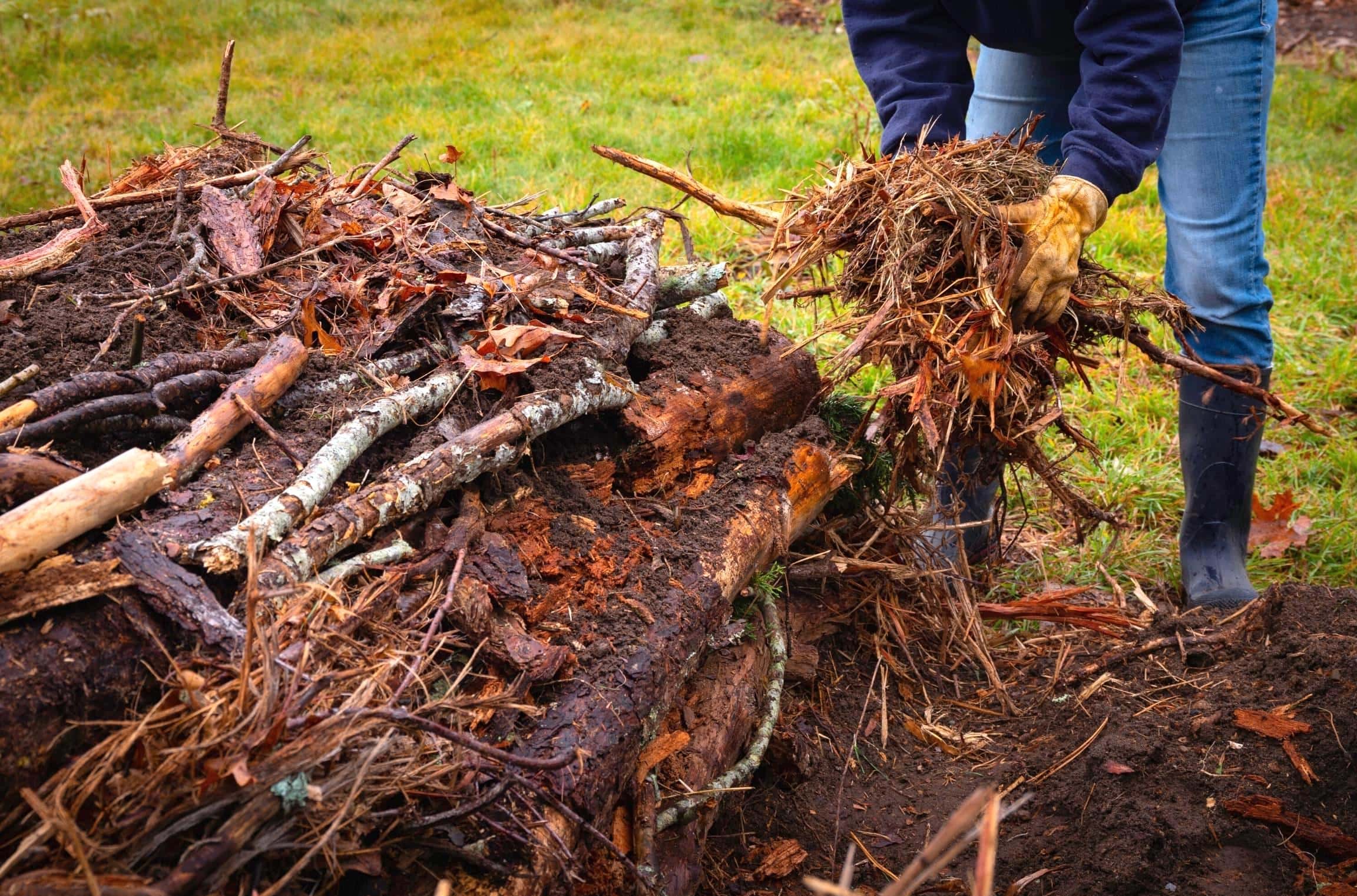

If you’re tired of replacing your garden soil every few years and want a self-improving growing space, hugelkultur offers a solution that works harder the longer you maintain it. This German gardening technique uses the natural decomposition of wood and organic matter to create a permanently fertile bed that becomes richer with age.
How to Build Your First Hugelkultur Raised Bed
A hugelkultur combines the benefits of a raised bed with composting in place. By layering wood and organic material, you create a self-feeding system that improves for years.
Materials Needed
- Large logs and branches (6-12 inches diameter), ideally hardwood or half-rotted wood
- Smaller twigs, wood chips, and garden waste material
- Well-aged compost or rotted manure (roughly 2-3 cubic feet per bed)
- Quality topsoil or garden soil (roughly 4-6 cubic feet per bed)
- A level or slope measurement tool to check grade
- A shovel or spade for digging and layering
Steps
Choose Your Location and Mark the Footprint
Select a spot that receives at least 6-8 hours of sunlight daily. Mark out a rectangular or mounded area roughly 3-4 feet wide and 4-6 feet long. Slightly sloping the bed toward the south helps with drainage and sun exposure. You don’t need to remove existing grass or dig below the surface level.
Layer the Large Wood Base
Lay your largest logs and branches horizontally on the ground as your foundation layer. Arrange them tightly together, creating a solid base that will eventually decompose and create air pockets. This layer anchors the entire structure and takes the longest to break down, providing years of biological activity underneath.
Add Smaller Wood and Twigs
Layer smaller branches, twigs, and wood chips on top of the logs, filling gaps and creating a structure that encourages air flow. This middle layer breaks down faster than the base logs but slower than fine compost, providing a gradual nutrient release over multiple seasons. Pack it moderately tight without crushing the material.
Spread Aged Compost and Garden Waste
Add a 6-12 inch layer of well-decomposed compost, aged manure, or garden waste material. This layer feeds your plants in year one while continuing to break down. Avoid fresh manure or hot compost, which can burn tender roots and create excessive heat.
Crown with Quality Topsoil
Finish with a 4-6 inch layer of rich topsoil or quality garden soil. This is where your plants root immediately, so use your best soil. The height difference between the edge and the center creates the characteristic mound shape that drains well and maximizes planting space.
Water and Allow Settlement
Water the entire structure thoroughly so it settles and the layers bond together. The bed will naturally compress over a few weeks. Don’t be alarmed if it drops 6-12 inches in the first month—this is normal as decomposition begins. You can add more soil if needed after settling.
Plant Immediately or Wait
You can plant into a freshly built hugelkultur immediately, though settling may continue. For spring-built beds, planting right away is ideal. For fall builds, waiting until spring allows more decomposition. Either way, the bed is ready for immediate use.
- Source free materials from local tree services, arborists, or construction sites for large logs and wood chips—this cuts costs significantly and solves waste disposal for others.
- Build your hugelkultur in fall to allow winter decomposition and settling before spring planting; the bed will be more stable and nutrient-rich.
- Layer some shredded newspaper or cardboard between the wood and compost layers to slow decomposition slightly and retain moisture longer.
What to Look For in Hugelkultur-Building Tools
- Shovel or Spade Quality: You’ll move heavy compost, soil, and wood pieces repeatedly. A sturdy shovel with a reinforced handle and comfortable grip prevents fatigue and tool failure during the build.
- Bed Lining (Optional): Hardware cloth or landscape fabric prevents burrowing pests from tunneling into your bed from below while allowing water and microorganism movement. This protects root vegetables and prevents mole damage.
- Soil Testing Kit: Understanding your initial soil pH and nutrient levels helps you amend appropriately and predict how your hugelkultur will evolve year to year as decomposition changes the chemistry.
- Wood Chip Sourcing: Having access to inexpensive or free wood chips from local tree services reduces material costs dramatically and ensures you have enough volume to build a truly productive bed.
Fiskars 46 Inch D-Handle Spade
Best for: Anyone building hugelkultur beds who needs a reliable workhorse tool
The long handle and comfortable D-grip reduce back strain during extended digging, layering, and soil moving. Fiskars’ reinforced blade handles the repetitive work of moving compost, soil, and wood chips without fatigue or breakage. The 46-inch length gives you leverage for deep digging while the lightweight design keeps fatigue manageable across a full project day.
Check Current Price on Amazon →Scotts Outdoor Power Tools Garden Soil Shovel
Best for: Budget-conscious gardeners building their first bed
A no-frills but effective shovel with a straight handle and steel blade. It handles soil and compost moving without the premium price tag. While not as ergonomic as long-handled versions, it works well for smaller hugelkultur projects and general garden maintenance tasks.
Check Current Price on Amazon →Woodland Scenics Fine-Texture Soil and Ballast
Best for: First-time builders unsure about compost quality
Provides pre-mixed, properly aged compost material ready to layer into your bed without uncertainty. The fine texture integrates smoothly between wood layers and topsoil. This removes guesswork about compost maturity and ensures consistent nutrient availability in year one.
Check Current Price on Amazon →Radius Garden Ergonomic Spade Pro
Best for: Serious gardeners building multiple beds or working on large projects
Premium ergonomic design with a fiberglass handle and specially angled blade reduces strain on wrists and back during extended use. The lighter weight and superior balance make moving heavy compost and soil surprisingly efficient. Worth the investment if you’re building multiple beds or have physical limitations.
Check Current Price on Amazon →Zoro Hardware Grade Stainless Steel Shovel
Best for: Gardeners who want durability without paying premium prices
Stainless steel construction prevents rust and maintains a sharp edge through seasons of use. The competitive price point doesn’t sacrifice quality or functionality. Excellent for repeated soil and compost work where durability matters long-term.
Check Current Price on Amazon →Snow Joe 6.5-Inch Garden Soil Auger
Best for: Mixing layers and testing soil composition during and after building
Electric-powered auger attachment mixes compost layers and samples soil at various depths without exhausting manual labor. Particularly useful for testing hugelkultur evolution in subsequent years. The cordless model provides flexibility around your garden space.
Check Current Price on Amazon →True Temper Polished Spade Shovel 29 Inch
Best for: Gardeners with limited space or smaller hugelkultur projects
The shorter 29-inch handle fits compact garden layouts and is easier to maneuver in tight spaces. True Temper’s polished blade sheds soil naturally, reducing drag and fatigue. Perfect for container gardens that incorporate hugelkultur principles or apartment gardeners.
Check Current Price on Amazon →Garrett Wade Professional Grade Stainless Spade
Best for: Serious gardeners and landscape professionals
Handcrafted in the UK with premium stainless steel and custom handles. This is a lifetime tool that becomes more balanced with use. The craftsmanship and materials justify the high price for someone building a permanent garden legacy.
Check Current Price on Amazon →Your Hugelkultur Investment Pays Dividends for Years
Building a hugelkultur is genuinely one of the best long-term investments you can make in your garden. Unlike traditional raised beds that deplete over time, a hugelkultur actually improves year after year as the wood decomposes and feeds your plants continuously. The first year produces incredible harvests thanks to the rich compost layer, and subsequent years only get better as that decomposition process cascades through the profile. You’ll find yourself needing less external compost, enjoying better water retention during dry spells, and growing noticeably healthier plants without extra fertilizer inputs.
The initial effort—gathering materials, layering everything properly, and moving soil—pays back dividends that compound every single season. Whether you’re starting with salvaged logs from a local arborist or sourcing premium materials, the structure you build will be working in your favor for a decade or more. This is permaculture thinking at its most practical: work with natural decomposition rather than against it, and your garden becomes more self-sufficient with each passing year.
Frequently Asked Questions
How long until a hugelkultur stops improving and reaches equilibrium?
Most hugelkultur beds reach peak fertility and stability between 5-8 years as the wood base decomposes fully. However, they continue improving indefinitely as you add compost annually. The initial dramatic nutrient surge from active decomposition levels off, but the bed remains more fertile than traditional raised beds because organic matter keeps building.
Can I build a hugelkultur without large logs?
Yes, you can use smaller branches, twigs, and wood chips as your entire base layer. The result works identically but decomposes faster (3-5 years instead of 5-8). The advantage of large logs is longevity and sustained aeration, but smaller wood still creates a functional, self-improving bed.
Will my hugelkultur attract termites or other wood-eating pests?
The decomposing wood is attractive to termites and carpenter ants, but they rarely spread to structures from a garden bed. Using hardwood instead of softwood softens this risk. Regular compost additions and good drainage discourage pest establishment. If termites become problematic, replace the top layers rather than abandoning the system.
How much will my hugelkultur settle after building?
Expect 6-18 inches of settlement depending on initial moisture and material compaction. The first month sees the most dramatic drop as decomposition begins and layers compress. Add supplemental soil as needed to maintain planting depth. This settling actually indicates healthy biological activity.
Can I build a hugelkultur in a container or raised frame?
Yes, the principles work at any scale. A wooden raised bed frame containing hugelkultur layers works well and looks finished. Contained versions dry faster than open mounds, so mulch heavily and water more frequently. The layering and decomposition benefits remain identical.
As an Amazon Associate, Build & Bloom earns from qualifying purchases. We only recommend products we genuinely think are useful. Prices and availability vary; check Amazon for the latest.
Leave a Reply