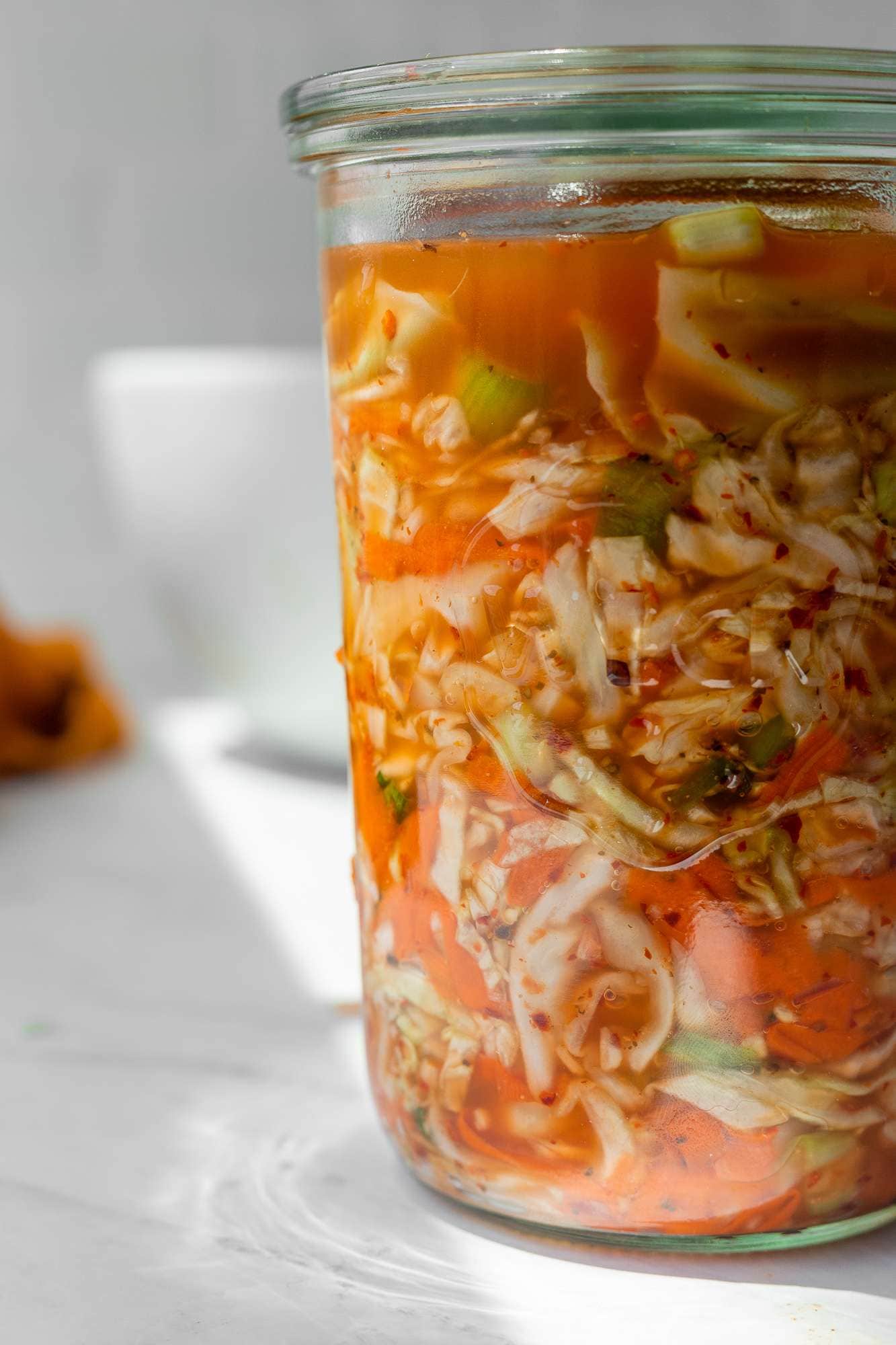

If you’re looking to boost your gut health while enjoying bold, complex flavors, fermented sauerkraut with kimchi-inspired spice is a game-changer. Unlike store-bought versions, homemade batches let you control sodium levels, customize heat levels, and create a living probiotic food packed with beneficial bacteria. The process is simpler than you’d think, requiring just cabbage, salt, and a few aromatic additions.
How to Make Kimchi-Inspired Spicy Sauerkraut
This recipe transforms fresh cabbage into a complex, gut-friendly condiment through salt-brine fermentation. The process takes 5-7 days and requires minimal active work.
Ingredients
- 1 head of napa cabbage (about 2 pounds), cored and sliced into 1-inch strips
- 2-3 tablespoons of sea salt (non-iodized)
- 3-4 tablespoons of Korean red chili flakes (gochugaru), adjusted for heat preference
- 6 cloves of garlic, minced
- 1 tablespoon of fresh ginger, minced
- 2 teaspoons of sugar (optional, helps fermentation)
- 1/4 cup of scallions or onion, sliced thin
Method
Salt and massage the cabbage
Place sliced cabbage in a large bowl and sprinkle with salt (use about 2% of the cabbage weight). Massage vigorously for 5-10 minutes until the cabbage releases its liquid and becomes limp. This brine will be your fermentation medium.
Prepare the spice mixture
In a small bowl, combine gochugaru, minced garlic, ginger, sugar, and scallions. Mix well to create an even spice paste that will distribute throughout the sauerkraut.
Layer cabbage and spices
In your fermentation vessel, alternate layers of massaged cabbage and the spice mixture, pressing down firmly after each addition. The cabbage’s brine should rise above the mixture as you layer.
Submerge fully and weight down
Ensure all cabbage stays below the brine line using a weight or follower. Submerged vegetables won’t develop mold. Leave 1-2 inches of headspace at the top for bubbling during fermentation.
Cover and set at room temperature
Use an airlock lid or cover loosely with a cloth to prevent dust and insects while allowing gas to escape. Place in a spot away from direct sunlight, ideally between 60-75 degrees Fahrenheit.
Monitor and taste daily from day 3
Bubbles will appear within 24-48 hours. Starting on day 3, taste daily to find your preferred sourness level. Fermentation typically completes in 5-7 days, but you can continue longer for tangier results.
Transfer to storage jars
Once fermented to your liking, pack the sauerkraut into clean jars with brine and refrigerate. Cold storage dramatically slows fermentation, preserving your sauerkraut for 4-6 months.
- Use non-iodized salt only; iodine inhibits fermentation and clouds the brine
- Keep fermentation temperature consistent (60-75°F is ideal); warmer temperatures speed fermentation but may produce softer texture
- If white film (kahm yeast) appears on surface, skim it off immediately—it’s harmless but affects flavor if left too long
What to Look For in Fermentation Equipment
- Airlock lids and weights: Quality airlocks allow carbon dioxide to escape while preventing oxygen and contaminants from entering. Look for glass or food-grade silicone designs that fit standard jar sizes and are easy to clean.
- Glass jar capacity and material: Wide-mouth jars (1-2 quart size) make packing and retrieving sauerkraut easier. Borosilicate glass withstands temperature changes and won’t leach chemicals into your ferment.
- Follower or lid design: A follower keeps vegetables submerged without needing external weights. Look for designs that fit snugly inside your jar and allow easy removal for tasting and monitoring.
- Seal quality and reusability: Fermentation lids should create an anaerobic environment while being reusable for dozens of batches. Check that gaskets are food-grade and replaceable if needed.
Fermentanium Wide Mouth Fermentation Jar Kit (2 Quart)
Best for: Home fermenters starting their first batch
This comprehensive kit includes a borosilicate glass jar, airlock lid with rubber gasket, glass follower, and detailed instruction guide. The wide mouth design makes filling, monitoring, and retrieving your sauerkraut effortless. The passive airlock prevents oxygen infiltration while allowing gas to escape naturally. Perfect for batch sizes of 3-5 pounds of cabbage. Customers praise the clarity of the glass for watching fermentation progress and the durability of the components across multiple ferments.
Check Current Price on Amazon →Masontops Fermentation Lid Set (2-pack, Regular Mouth)
Best for: Those using existing mason jars
Transform standard mason jars into fermentation vessels with this affordable airlock lid system. Fits regular-mouth quart jars you likely already own, saving money while adding functionality. The silicone gasket creates a reliable seal, and the two-pack lets you ferment multiple batches simultaneously. Installation takes seconds, and cleaning is straightforward. This solution works particularly well if you have a cabinet of existing jars gathering dust.
Check Current Price on Amazon →Freshly Fermented Glass Fermentation Starter Kit
Best for: Complete beginners wanting guided instruction
This kit combines two 32-ounce wide-mouth jars with airlock lids, glass weights, and a comprehensive recipe booklet featuring kimchi, sauerkraut, and other vegetable ferments. The visual instruction guide removes guesswork from the process. Glass weights prevent vegetables from floating, reducing mold risk significantly. The included recipes scale easily, and customer testimonials highlight how the kit transforms hesitant beginners into confident fermenters within their first month.
Check Current Price on Amazon →Mortier Pilon Fermentation Set (Premium Stainless Steel Weighted Crock)
Best for: Serious fermenters making large batches
This traditional ceramic crock paired with stainless steel weights and custom-fitted airlock lid offers restaurant-quality fermentation. The 3-quart capacity handles 5-7 pounds of cabbage in a single batch. Ceramic distributes temperature evenly, promoting consistent fermentation. The integrated follower design keeps vegetables submerged without external equipment. While pricier, the heirloom-quality construction lasts decades, and the aesthetic fits any kitchen decor beautifully.
Check Current Price on Amazon →Start Your Fermentation Journey Today
Making kimchi-inspired spicy sauerkraut is one of the most accessible fermentation projects for home cooks. You need just one quality vessel with an airlock lid, basic pantry ingredients, and patience. The Fermentanium 2-quart kit remains our top recommendation because it combines affordability with durability and includes everything needed for consistent success. Whether you choose to upgrade to a premium crock later or stick with budget-friendly mason jar conversions, the core process remains the same and produces living, probiotic-rich food worth far more than store-bought versions.
The beauty of homemade fermentation is that each batch teaches you something about temperature, timing, and personal taste preferences. Your first batch might be slightly different from your fifth, and that’s not failure—it’s adaptation. Start with the simple recipe above, invest in one quality airlock lid system, and you’ll have the foundation for years of experimentation with sauerkrauts, kimchis, pickles, and beyond. Your gut microbiome (and your taste buds) will thank you.
Frequently Asked Questions
How do I know when my sauerkraut is done fermenting?
Taste it starting on day 3. You’ll notice increasing sourness and complexity as days pass. When it reaches your preferred level of tang and spice intensity, it’s ready. Most people find 5-7 days optimal, but you can ferment longer for stronger flavor. Once satisfied, move it to the refrigerator to slow fermentation dramatically.
Can I use regular table salt instead of sea salt?
No—table salt contains iodine and anti-caking agents that inhibit fermentation and cloud your brine. Use non-iodized sea salt, pickling salt, or kosher salt specifically. This is one of the few non-negotiable ingredients in successful fermentation.
What’s the white fuzzy stuff on top of my ferment?
That’s kahm yeast, a harmless surface mold common in fermentation. Skim it off immediately with a clean spoon—it won’t harm your sauerkraut but affects flavor if left. This is why keeping vegetables fully submerged is critical; it dramatically reduces kahm yeast formation.
How long does homemade sauerkraut stay fresh in the fridge?
Properly fermented and refrigerated sauerkraut lasts 4-6 months, sometimes longer. The cold halts fermentation, preserving your batch indefinitely as long as it stays submerged in brine. Many people find flavor actually improves over the first 2-3 months.
Is it normal for bubbles to appear during fermentation?
Absolutely—bubbles are a sign healthy fermentation is happening. Beneficial bacteria are consuming sugars and creating carbon dioxide. Expect bubble activity to peak around days 2-4, then gradually subside. This is why an airlock lid is valuable; it safely releases gas while preventing oxygen from entering.
As an Amazon Associate, Build & Bloom earns from qualifying purchases. We only recommend products we genuinely think are useful. Prices and availability vary; check Amazon for the latest.
Leave a Reply