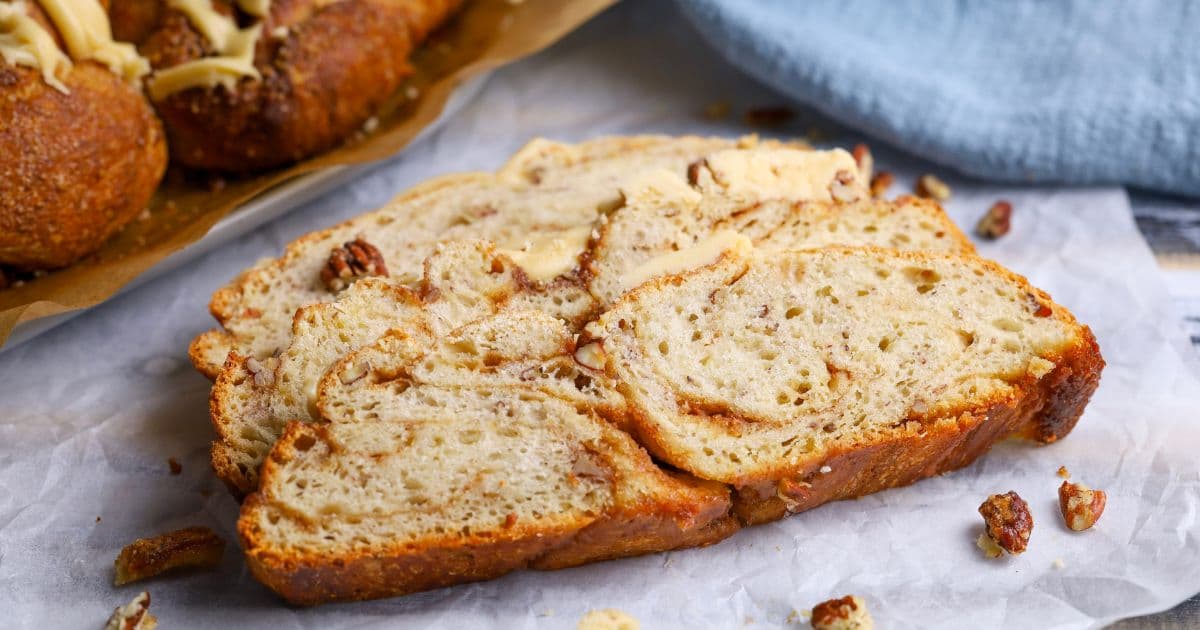

If you’ve mastered basic sourdough but crave something with more personality, a maple pecan twist loaf delivers restaurant-quality results in your own kitchen. The combination of deep, nutty pecans with subtle maple sweetness transforms ordinary sourdough into a stunning loaf that’s equally at home on a breakfast table or as an artisanal gift. This recipe walks you through shaping a dramatic twisted design while keeping the process approachable for intermediate bakers.
How to Make Maple Pecan Sourdough Twist Loaf
This recipe yields one large twist loaf with a perfect balance of tangy sourdough flavor, toasted pecan crunch, and warming maple notes. The dough develops overnight, making it ideal for hands-off scheduling.
Ingredients
- 3 cups bread flour or all-purpose flour
- 1 cup active sourdough starter (fed 4-8 hours prior)
- 3/4 cup warm water
- 1.5 teaspoons salt
- 1/2 cup raw or toasted pecans, roughly chopped
- 3 tablespoons maple syrup, divided
Method
Mix and autolyse your dough
Combine flour, water, and sourdough starter in a large mixing bowl. Stir until a shaggy dough forms with no dry flour remaining. Let rest uncovered for 30 minutes. This resting period allows the flour to fully hydrate and begins gluten development naturally.
Incorporate salt and perform stretch-and-fold
Sprinkle salt over the rested dough and wet your hand slightly to incorporate it fully. Perform four sets of stretch-and-fold motions (pulling the dough up and folding it over itself) at 30-minute intervals over the next two hours. This builds strength without vigorous kneading.
Add pecans and maple during final folds
During your third set of stretch-and-fold, gently distribute chopped pecans and 2 tablespoons of maple syrup throughout the dough, folding them in carefully. The dough should feel tacky but hold its shape. Continue with the fourth stretch-and-fold 30 minutes later.
Cold ferment overnight
Transfer the dough to a lightly oiled container or bowl, cover with a damp towel, and refrigerate for 12-16 hours. Cold fermentation develops complex flavor and makes shaping easier. The dough will nearly double in size.
Shape the twist loaf
Remove dough from the refrigerator and turn onto a lightly floured work surface. Using your hands or a rolling pin, gently stretch the dough into a long rectangle roughly 12 by 8 inches. Lightly brush the surface with the remaining maple syrup. Fold the rectangle in half lengthwise and then cut lengthwise into two long strips, keeping them connected at one end. Twist the strips around each other in a spiral pattern and coil the twist into a round shape, tucking the end underneath.
Final rise in a banneton
Place the shaped dough seam-side up in a floured banneton basket (or a bowl lined with a well-floured kitchen towel). Cover loosely with plastic wrap or a damp towel and let proof at room temperature for 2-4 hours, until the dough is puffy but still springs back slightly when poked.
Score and bake with steam
Preheat your oven to 475°F with a Dutch oven inside for 45 minutes. Turn the proofed dough onto parchment paper, score the top with a sharp blade in a decorative X or cross pattern, and carefully transfer to the preheated Dutch oven. Bake covered for 20 minutes to trap steam, then uncovered for 25-30 minutes until deep golden brown.
Cool completely before slicing
Remove the loaf to a wire rack and let cool for at least one hour before slicing. This resting period allows the crumb structure to set completely. Slice with a serrated knife using a gentle sawing motion to preserve the beautiful twisted structure.
- If your kitchen is cool, extend fermentation times by 1-2 hours. Sourdough is forgiving–follow dough readiness cues (puffiness, wiggle test) rather than strict timing.
- Toast your pecans lightly in a dry skillet for 5 minutes before adding to the dough to deepen their nutty flavor without burning them.
- Save a piece of dough before shaping to test doneness–drop it in water. If it floats, cold fermentation is complete; if it sinks, ferment longer.
Essential Tools for Maple Pecan Sourdough Baking
- Dutch Oven or Covered Baking Vessel: Traps steam during the initial bake, creating a crispy, caramelized crust with excellent oven spring. A heavy pot with a tight-fitting lid or preheated covered baking stone is essential for this recipe.
- Banneton Proofing Basket or Cloth-Lined Bowl: Supports the shaped dough during final proofing without sticking. Allows you to transfer directly to hot cookware with confidence. A properly floured banneton prevents mishaps during the critical final rise.
- Digital Kitchen Scale: Ensures consistent dough hydration and ingredient ratios for reproducible results. Sourdough baking benefits greatly from precision, especially when scaling recipes up or down.
- Bread Lame or Sharp Serrated Knife: A clean, controlled score determines how the loaf expands in the oven and affects the final shape and crumb exposure. A proper scoring tool prevents ragged cuts that compromise appearance and crust quality.
Staub 5.5-Quart Round Enameled Cast Iron Dutch Oven
Best for: Serious sourdough bakers
Staub’s heavy-duty enameled cast iron Dutch oven retains heat exceptionally well and features a self-basting lid that recirculates steam perfectly for maximum oven spring. The 5.5-quart capacity accommodates large artisan loaves with room to spare. Its superior heat distribution and retention produce restaurant-quality crusts with deep caramelization and that coveted crackling sound. The black enamel interior hides stains and develops seasoning naturally over time.
Check Current Price on Amazon →Tramontina 6.5-Quart Enameled Cast Iron Dutch Oven
Best for: Budget-conscious home bakers
Tramontina delivers reliable heat retention at a fraction of premium brand costs. This 6.5-quart Dutch oven handles large sourdough loaves beautifully and produces excellent crust development through proper steam circulation. The tight-fitting lid and heavy cast iron core perform as well as much pricier competitors. It’s an excellent entry point for bakers testing Dutch oven baking before investing in premium options.
Check Current Price on Amazon →Le Creuset 5.3-Quart Round Enameled Cast Iron Dutch Oven
Best for: Collectors and professional home bakers
Le Creuset represents the gold standard in enameled cast iron, with exceptional build quality and a lifetime warranty. The iconic design heats evenly and maintains temperatures with precision that serious sourdough enthusiasts appreciate. Available in numerous color options, it doubles as beautiful cookware for stovetop use. Lifetime durability makes it a worthwhile investment for dedicated bakers who appreciate heirloom-quality tools.
Check Current Price on Amazon →Pyrex 4-Quart Glass Mixing Bowl with Lid
Best for: New bakers building sourdough confidence
While not a substitute for a Dutch oven, this glass bowl with vented lid serves as an excellent cold fermentation vessel that lets you monitor dough development visually. The 4-quart size fits typical sourdough recipes comfortably. Borosilicate glass withstands temperature changes and displays the beautiful transformation of your dough over 12-16 hours of cold ferment. Pair with a Dutch oven for baking, or use alone to master fermentation timing.
Check Current Price on Amazon →Bake Your Best Maple Pecan Sourdough Twist
The maple pecan sourdough twist loaf represents the sweet spot between sourdough mastery and creative flavor combinations. With proper equipment–especially a quality Dutch oven for steam control and a banneton for reliable shaping–you’ll produce loaves that rival your favorite artisan bakery. The overnight cold fermentation fits naturally into busy schedules, allowing you to bake on your own timeline without rushing the process.
Invest in a few key tools, follow the detailed steps above, and trust your dough’s development cues rather than strict timing. Each bake teaches you something new about fermentation and your kitchen’s unique temperature patterns. The beautiful twisted shape and irresistible maple-pecan flavor combination make this loaf a showstopper for weekend baking, weekend gifting, or simply elevating your daily bread ritual. Start today with what you have, upgrade your equipment as your skills grow, and join the community of home bakers creating extraordinary sourdough.
Frequently Asked Questions
Can I make this recipe without a Dutch oven?
Yes, though results may vary. Place a shallow baking pan on the oven floor to create steam, or use a covered baking stone. The Dutch oven’s seal is superior, but these alternatives work in a pinch. You’ll likely achieve less dramatic oven spring without perfect steam retention.
What if my sourdough starter isn’t active or bubbly?
Feed your starter and wait 4-8 hours until it shows clear bubbles and doubles in volume. Inactive starter won’t provide adequate leavening, resulting in dense crumb. A good test: float a spoonful of starter in water–it should bob on the surface when ready.
How do I store leftovers after baking?
Wrap the cooled loaf in paper, then place in a paper bag at room temperature for up to three days. For longer storage, slice and freeze individually for up to one month. Toast from frozen for best texture recovery.
Can I substitute different nuts for the pecans?
Absolutely. Walnuts, hazelnuts, or almonds work beautifully with maple syrup. Toast them lightly beforehand to enhance their flavors. Use the same weight as pecans called for in the recipe.
Why is my loaf spreading instead of rising?
Overproofing during the final rise is the most common cause. The dough loses strength and flattens. Next time, reduce final proofing time by 30-60 minutes or retard the dough in the refrigerator before shaping to rebuild tension.
As an Amazon Associate, Build & Bloom earns from qualifying purchases. We only recommend products we genuinely think are useful. Prices and availability vary; check Amazon for the latest.
Leave a Reply