
If you’re building an off-grid homestead or want independence from refrigeration, food preservation is non-negotiable. Without electricity, you can’t rely on freezers or modern appliances–but humans preserved food successfully for thousands of years before fridges existed. The good news: these proven methods work beautifully, require minimal equipment, and give you complete control over what goes into your food. Let’s explore the core techniques that will keep your harvest safe and nutritious through winter.
5 Core Off-Grid Food Preservation Techniques
Each method works with natural processes to inhibit bacterial growth and extend shelf life. Master these five approaches, and you’ll have a complete food preservation toolkit.
Key Concepts
- Canning: Uses heat and sealed containers to create an anaerobic environment where pathogens cannot survive
- Fermentation: Salt and beneficial bacteria create an acidic environment that preserves vegetables naturally
- Root cellar storage: Cool, dark, humid conditions slow ripening and bacterial growth for months
- Drying: Removes moisture that bacteria and mold need to grow, concentrating flavors
- Salt curing: Salt draws out moisture and prevents microbial growth, creating shelf-stable preserved meats and vegetables
- Cold smoking: Combines salt, smoke, and low temperatures to preserve proteins without cooking them
Principles
Canning: Heat Sealing for Long-Term Storage
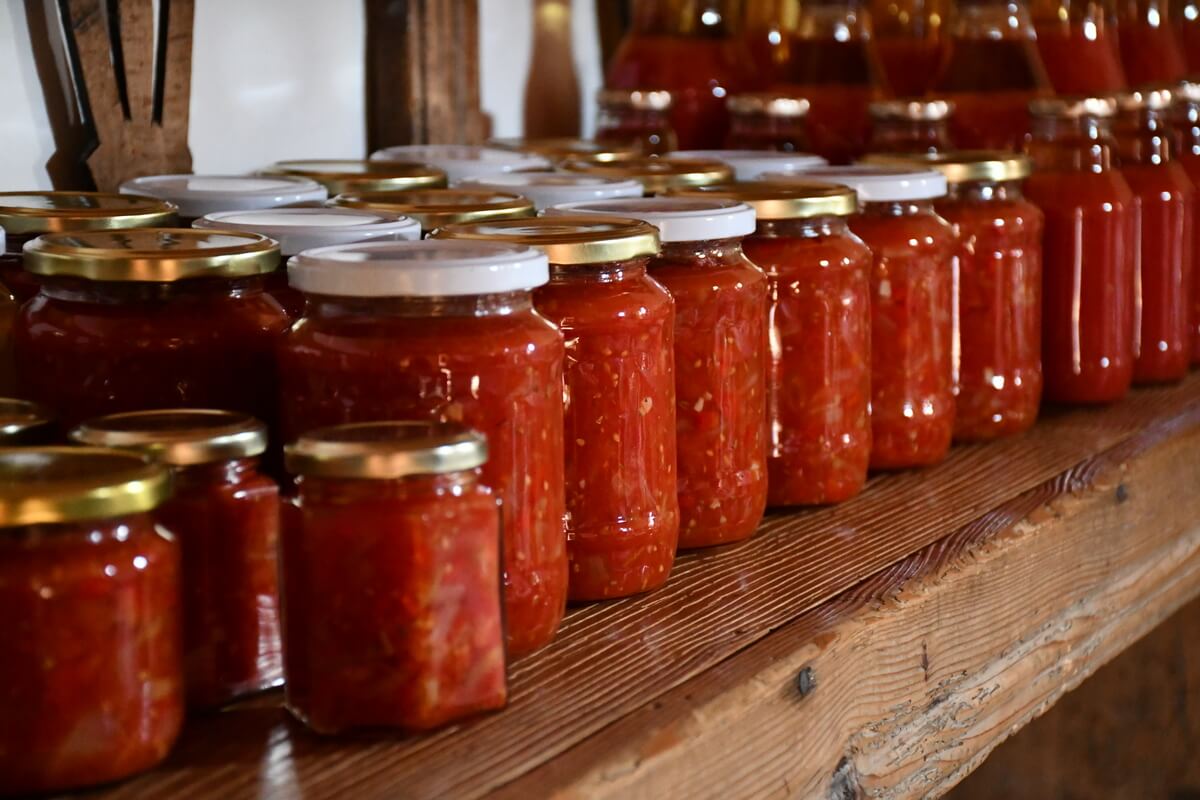
Boil food in glass jars submerged in hot water for a time appropriate to the food type (usually 10-45 minutes). The heat kills pathogens and drives out air, allowing the lid to seal as contents cool. Once sealed, the jar creates a vacuum that prevents new contamination. This method works exceptionally well for jams, pickles, tomato sauces, and high-acid foods, and sealed jars remain safe for 1-5 years in a cool, dark pantry.
Fermentation: Using Salt and Time
Pack vegetables into a container with salt (typically 2-5% by weight) and press them below their own brine. Cover loosely to allow gases to escape while keeping oxygen out. Beneficial bacteria consume sugars and create lactic acid, lowering pH and preserving the vegetables. In 3-10 days to several weeks depending on temperature, you’ll have tangy, probiotic-rich fermented vegetables that last months in cool storage without any heat processing.
Root Cellar Storage: Passive Temperature Control
Create or find a space that stays between 32-50 degrees Fahrenheit with 85-95% humidity–typically a basement corner, underground room, or buried storage box. Store roots (carrots, potatoes, beets), squash, and apples in sand, sawdust, or burlap to prevent them touching each other. Check regularly for spoilage and remove any damaged items immediately. Properly stored crops can last 4-8 months, providing fresh produce through winter without processing.
Drying: Removing Moisture
Slice fruits, vegetables, or herbs thin and arrange on screens or cloth in direct sunlight, a well-ventilated room, or a passive solar dryer. Allow 3-14 days for complete drying depending on thickness and humidity–the food should feel brittle with no moisture when squeezed. Store dried goods in airtight containers in a cool, dark place. Dried foods last 6-12 months and require no equipment beyond sunlight and air circulation.
Salt Curing: Ancient Preservation
Rub meat or fish thoroughly with salt (roughly 25% of the weight) and layer in a container, adding more salt between layers. The salt draws out moisture and prevents bacterial growth. Leave at cool room temperature for 2-4 weeks, draining liquid regularly. Once fully cured and dried, wrap in cloth and hang in a cool space. Salt-cured meats remain edible for months or years and develop deep, complex flavors as they age.
Cold Smoking: Flavor with Preservation
Build or use a smokehouse where smoke temperature stays below 90 degrees Fahrenheit–achieved by running smoke through a long pipe before reaching the food. Cure meat or fish with salt first, then expose to smoke for 12-24 hours or longer. The smoke deposits antimicrobial compounds and flavors while low temperature prevents cooking. Cold-smoked foods develop a shelf-stable exterior while staying moist inside and can last several months.
- Start with fermentation and root cellar storage–they require the least equipment and are nearly impossible to fail at. Build confidence before tackling water-bath or pressure canning.
- Keep detailed notes on every batch: dates, quantities, temperatures, and results. This transforms your failures into data and your successes into repeatable recipes.
- Test your root cellar’s temperature and humidity for a full season before trusting it with your entire harvest. A cheap wireless thermometer and hygrometer will reveal problem times.
What to Look For in Off-Grid Preservation Equipment
- Jar Quality and Sealing Reliability: Choose thick glass canning jars with reliable lids that create an airtight seal. Look for brands with consistent manufacturing and replacement lid availability, since you’ll reuse jars for years.
- Heat Source Compatibility: Your canning pot and equipment must work with whatever heat source you have: wood stove, propane burner, or rocket mass heater. A wide, flat-bottomed pot distributes heat evenly and works across fuel types.
- Durability for Repeated Use: Off-grid equipment gets heavy use and repairs are harder to access. Prioritize stainless steel and cast iron over plastic or aluminum–they last decades and improve with age.
- Space and Storage Efficiency: Off-grid homes often have limited space. Choose multi-purpose tools: a pot that works for canning and cooking, a thermometer that reads both fermentation and curing temperatures, a scale for both ingredients and salt ratios.
Granite Ware Canning Kettle 21.5 Quart
Best for: Home canners using water-bath method
This large-capacity canning pot accommodates seven quart-sized jars or twelve pint jars simultaneously, making batch processing efficient. The sturdy enamel-coated steel construction distributes heat evenly across gas, electric, and wood stoves. The flat bottom sits stable on any cooking surface, and the capacity means fewer batches when processing larger harvests. At an affordable price point, it’s the single most important piece of equipment for off-grid canners using the water-bath method.
Check Current Price on Amazon →Ball Wide Mouth Quart Mason Jars 12-Pack
Best for: First-time canners and fermenters
Wide-mouth design makes filling, packing, and retrieving food easy for beginners. The 32-ounce quart size balances usability with manageable weight when full. Ball jars are the reliability standard with consistent sealing performance and readily available replacement lids. This 12-pack provides enough jars to start learning without overwhelming investment, and you can expand the collection as your skills grow.
Check Current Price on Amazon →Victorinox Canning Crock Pot 5-Quart
Best for: Fermenting vegetables at scale
This glazed ceramic crock holds large batches of fermenting vegetables with a wide opening for easy packing and removal. The natural ceramic material doesn’t interact with salt or acidic brines like metal can, and maintains proper fermentation temperatures in root cellars or cool basements. At mid-range pricing, it’s more affordable than stainless fermentation crocks while delivering professional results for years.
Check Current Price on Amazon →Salter Digital Food Scale Stainless Steel
Best for: Precise salt and seasoning ratios
Accurate to 0.1 ounces across a 22-pound capacity, this digital scale removes guesswork from curing and salt-fermentation recipes where precise percentages matter. The stainless steel platform resists corrosion from salt and moisture, crucial in damp off-grid kitchens. Compact size stores easily in tight spaces, and the bright LCD display reads clearly in low light conditions.
Check Current Price on Amazon →Presto Pressure Canner 23-Quart
Best for: Pressure canning low-acid foods
Enables safe canning of low-acid foods like meats, beans, and vegetables that require higher temperatures than water-bath methods achieve. The 23-quart capacity processes seven quart jars per batch, cutting processing time significantly. Heavy-gauge aluminum construction conducts heat efficiently on any stovetop, and the simple dial gauge requires no electricity. Essential for off-grid homesteaders preserving protein sources.
Check Current Price on Amazon →ThermoPro Wireless Meat Thermometer Digital
Best for: Monitoring curing and fermentation temperatures
This dual-probe thermometer monitors both cold-smoking temperatures and fermentation conditions simultaneously using wireless sensors placed in different locations. The easy-to-read display shows current and preset temperature ranges, alerting you if conditions drift. Battery-powered with a simple interface, it eliminates guesswork when preserving meats or managing fermentation that requires stable cool temperatures.
Check Current Price on Amazon →Le Creuset Enameled Cast Iron Dutch Oven 5.5-Quart
Best for: Multi-purpose cooking and curing
Heavy enameled cast iron distributes heat evenly for cooking and doubles as a superior salt-curing vessel. The 5.5-quart capacity handles large batches of cured meats, and the enamel coating prevents salt from reacting with bare iron. Works on any heat source and improves with decades of use. At premium pricing, it’s an investment that serves your off-grid kitchen for cooking, curing, and water heating.
Check Current Price on Amazon →Norpro Stainless Steel Canning Funnel
Best for: Mess-free jar filling
Simple stainless steel funnel sizes perfectly for regular and wide-mouth jars, reducing spills and cleanup during canning runs. The sturdy metal construction resists bending and lasts indefinitely, and at minimal cost it saves time and product loss. Essential accessory that protects valuable preserved food during the filling process and makes the whole operation cleaner and faster.
Check Current Price on Amazon →Start Your Off-Grid Preservation Journey Today
Food preservation is one of the most rewarding homesteading skills you can develop. Start small with fermentation or root cellar storage–both forgive mistakes and require minimal equipment. As your confidence grows, move into canning and then smoke curing. Each method builds on previous knowledge, and within a year you’ll have the skills to preserve an entire harvest using techniques that have fed families for generations.
The beautiful part about off-grid preservation is that it gets easier, not harder, with time. Your equipment lasts decades. Your fermentation crocks improve with age. Your canning jars become trusted friends. Unlike electricity-dependent systems that fail when the power goes out, these methods strengthen your food security and independence while tying you deeper to the seasons and rhythms of growing and preserving. Your future self will thank you for building these skills now.
Frequently Asked Questions
Can I can food without electricity at all?
Yes, absolutely. Water-bath canning and pressure canning work perfectly on wood stoves, propane burners, and any heat source. The only requirement is reaching specific temperatures, which any flame or heat source can achieve.
How long do fermented foods actually stay fresh?
Properly fermented vegetables in cool storage (50-65 degrees) remain safe and delicious for 4-6 months, and often much longer. The acidic environment created by fermentation is remarkably stable, preventing spoilage.
Is a root cellar expensive to build?
Not necessarily. A basement corner sealed with plastic and fitted with shelving costs nearly nothing. Underground root boxes built from cinder blocks or buried coolers work for under $200. Even a buried ceramic pot with a cool box above ground preserves food adequately.
What’s the most common reason home-canned food spoils?
Improper sealing accounts for the vast majority of failures. Jars that don’t seal properly, or that lose seals during storage, allow mold and bacteria to enter. Always check seals 24 hours after processing and discard any jars that didn’t seal completely.
Can I preserve meat without salt curing or smoking?
Canning is the safest method for preserving meat without salt. Pressure canning heats meat to temperatures that kill all harmful pathogens, and sealed jars stay safe for years. Canned meat requires no salt, smoking, or special storage conditions beyond keeping jars cool and dark.
As an Amazon Associate, Build & Bloom earns from qualifying purchases. We only recommend products we genuinely think are useful. Prices and availability vary; check Amazon for the latest.
Leave a Reply