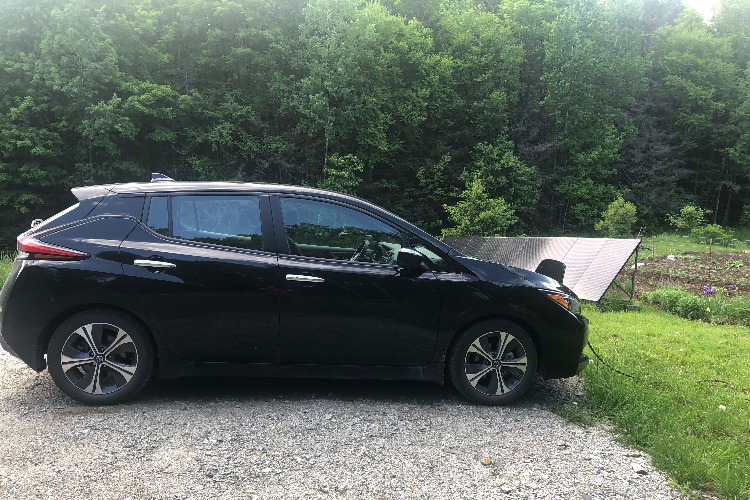

The idea of going off-grid while owning an electric vehicle seems contradictory at first—after all, EVs need reliable electricity, and off-grid living means generating your own power from limited renewable sources. But thousands of homesteaders are proving it works. The key is understanding your energy budget, right-sizing your solar and storage systems, and developing smart charging habits that align with your renewable generation patterns.
Key Principles for Off-Grid EV Success
Making an electric vehicle work on an off-grid homestead requires mastering five core concepts that determine whether your renewable energy system can handle both household needs and vehicle charging.
Key Concepts
- Daily energy consumption calculation (household baseline in kWh)
- Vehicle charging requirements (typical EV uses 3-6 kWh per 10 miles driven)
- Solar array capacity (measured in kilowatts of installed capacity)
- Battery storage system (measured in kilowatt-hours of usable capacity)
- Load management and timing strategy (when to charge relative to solar production)
Principles
Calculate Your Total Daily Energy Demand
Start by determining your household’s baseline electricity consumption without the EV—this includes lighting, heating, cooling, appliances, and water pumping. Then add your estimated EV charging needs based on how many miles you typically drive daily. Most off-gridders find that EV charging adds 15-30 kWh to their daily demand, meaning a system that previously needed 25 kWh per day now needs 40-55 kWh total. Document this number; it becomes the foundation for all other sizing decisions.
Size Your Solar Array for Year-Round Needs
Your solar capacity must generate enough power to cover your total daily demand PLUS recharge your battery bank, accounting for seasonal variation and weather losses. Most off-grid designers use a 1.5x to 2x multiplier on daily demand to account for winter production losses, cloudy days, and system inefficiencies. If your total demand is 50 kWh daily, plan for a 75-100 kW solar array. This oversizing ensures you’re producing surplus energy during summer months to bank for winter use.
Install Adequate Battery Storage for Multi-Day Autonomy
Your battery bank must store enough energy to carry your household (plus EV charging) through days with poor solar production. Industry standard is 3-5 days of autonomy for off-grid systems, meaning your usable battery capacity should be 3-5 times your daily demand. For a 50 kWh daily need, plan for 150-250 kWh of usable storage. This is substantial and expensive, but it’s the only way to reliably support EV charging when weather reduces solar production.
Implement Smart EV Charging Timing
Rather than charging your vehicle whenever you arrive home, program charging to occur during peak solar production hours (typically 10 AM to 3 PM). This direct-use strategy pulls charging power directly from solar panels rather than from battery storage. Many off-gridders charge during midday when household demand is lower and solar output is highest, reserving evening battery power for household needs. This timing-based approach can reduce required battery capacity by 20-30%.
Use Load Management and Backup Strategy
Identify which household loads are flexible and which are fixed. Non-essential loads—like water heating, refrigeration, and EV charging—can be managed based on available solar production. On low-production days, delay EV charging until the next day and reduce discretionary loads. Some systems include a small backup generator for extended cloudy periods to prevent deep battery discharge. This layered approach ensures your vehicle rarely becomes stranded while protecting your battery investment.
Account for Seasonal Variation in Production
Solar production varies dramatically between summer and winter at most latitudes. Summer may produce 3-4x the daily output of winter, meaning your summer surplus must fuel winter shortages. Plan your EV usage patterns accordingly—maximize driving in summer when solar is abundant, and consolidate longer trips during high-production months. This seasonal awareness prevents over-reliance on battery storage and aligns your lifestyle with renewable generation rhythms.
- Monitor your solar production data daily and adjust EV charging timing based on weather forecasts. A 3-day cloudy forecast means delaying non-essential charging until production improves.
- Consider a second vehicle powered by liquid fuel for winter months or times when off-grid solar production is consistently low. This hybrid approach reduces the burden on your renewable system.
- Install a home energy monitor that shows real-time solar production, battery state of charge, and household demand. This visibility helps you make informed decisions about when charging is sustainable.
What to Look For in Off-Grid Solar + Storage Systems
- Solar Array Capacity and Type: Choose between monocrystalline panels (higher efficiency, better space utilization) or polycrystalline (lower cost). Total capacity should be 75-100 kW minimum for EV-capable systems. Verify that panels are rated for your climate’s temperature extremes and that the mounting system handles seasonal angle adjustments.
- Battery Storage Type and Usable Capacity: Lithium-iron-phosphate (LiFePO4) batteries are now standard for off-grid systems, offering 10-15 year lifespans and 80-90% usable capacity. Lead-acid alternatives are cheaper but require more space and maintenance. Calculate total kWh needed based on daily demand multiplied by days of autonomy (typically 3-5 days minimum for EV compatibility).
- Charge Controller and Inverter Sizing: Use Maximum Power Point Tracking (MPPT) charge controllers sized to handle your solar array output (not undersized). Inverters should have 1.5x to 2x capacity of your largest expected simultaneous load. For EV charging systems, expect simultaneous loads of 5-7 kW during peak household usage plus charging.
- EV Charging Equipment Compatibility: Install a Level 2 home charger (240V) rather than standard household outlets for safety and charging speed. Ensure your charge controller and inverter can handle the 6-7 kW sustained draw during charging. Some advanced systems include separate circuits and smart relays that pause EV charging if battery state of charge drops below safe thresholds.
LG Chem RESU 10H Lithium Battery System
Best for: Off-grid homesteads with EV charging needs
The LG Chem RESU 10H offers 9.8 kWh of usable capacity per unit with stackable design allowing total systems of 100+ kWh. Its integrated battery management system protects against overcharge and deep discharge, extending lifespan to 10+ years. Perfect for mid-to-large off-grid installations requiring reliable EV charging support. Efficiency rating of 94% ensures minimal energy loss during charge-discharge cycles.
Check Current Price on Amazon →Renogy 100W Monocrystalline Solar Panel Bundle
Best for: Small-scale off-grid systems or expansion
Renogy’s 100W panels are affordable entry-level solar modules with 21% efficiency. This 6-panel bundle (600W total) works well for expanding existing systems or supplementing a larger array. Includes mounting hardware and connectors. Temperature coefficient of -0.38%/C ensures decent performance in hot climates. Great for homesteaders looking to incrementally build solar capacity.
Check Current Price on Amazon →Victron SmartSolar MPPT 250/100 Charge Controller
Best for: New off-gridders managing mid-size arrays
The Victron SmartSolar is industry-leading for its ease of use and smartphone monitoring via Bluetooth. 250V input and 100A output handles arrays up to 35 kW. Multiple MPPT inputs let you connect panels with different orientations. The smartphone app displays real-time power flow, battery state of charge, and system performance. Essential for learning how your system responds to weather and load changes.
Check Current Price on Amazon →Tesla Powerwall 2 Home Battery
Best for: Off-gridders wanting integrated smart home features
The Tesla Powerwall 2 provides 13.5 kWh usable capacity with built-in inverter, eliminating need for separate equipment. Compact wall-mounted design suits homes with limited space. Integrated software learns usage patterns and optimizes charging timing. Grid-connected systems can use it for backup; off-grid installations can stack multiple units. Premium pricing justified by durability and 10-year warranty.
Check Current Price on Amazon →Making Off-Grid EV Living a Reality
Off-grid living with an electric vehicle is absolutely achievable—thousands of homesteaders are doing it successfully. The formula is straightforward: correctly calculate your total energy demand (household plus EV), then install solar capacity 1.5-2x that demand, and battery storage 3-5x your daily needs. The system works when you charge strategically during peak solar production hours and accept that your driving patterns may need seasonal adjustment. Winter means consolidating longer trips; summer means maximizing EV miles when renewable production is abundant.
The investment is substantial—expect $80,000-120,000 for a complete system that supports both homestead and EV charging—but the result is genuine energy independence. You’ll generate your own fuel from solar panels, eliminate monthly utility bills, and reduce transportation emissions to near-zero. Start by calculating your current household consumption, then add realistic EV charging needs based on your typical driving. Work with an experienced off-grid installer to right-size components, and don’t undersized battery storage assuming you’ll “do fine with less.” The reliability of your vehicle and home depends on getting the energy math right from the beginning.
Frequently Asked Questions
Can I charge my EV every day on an off-grid system?
Yes, but only if your solar array and battery capacity are sized appropriately—typically 75-100 kW solar minimum with 150-250 kWh storage. Charging should occur during peak solar production hours (10 AM-3 PM). In winter or cloudy periods, you may need to limit daily charging or rely on a backup generator. Most off-gridders charge daily in summer but consolidate trips in winter.
How much does it cost to add EV capability to an off-grid system?
Adding EV charging increases total system cost by 25-40% compared to household-only systems. Expect $15,000-25,000 in additional solar panels, battery storage, and charging infrastructure on top of a baseline $50,000-80,000 off-grid installation. Some of this cost is offset by federal tax credits (ITC) and state EV incentives that may apply even to off-grid systems.
What happens if my batteries run low and I need to charge my EV?
A properly designed off-grid system includes a backup generator that automatically starts if battery state of charge drops below a safe threshold (typically 30-40% usable capacity). This prevents battery damage while allowing emergency EV charging. Some systems also feature vehicle-to-home (V2H) capability, letting you draw power from the EV’s battery to power the home during extended outages.
Do I need special wiring or equipment for off-grid EV charging?
Yes. Install a dedicated 240V Level 2 charger on a separate circuit from other loads. This circuit should have its own breakers and may include a load management relay that pauses charging if household demand spikes. Smart chargers with solar-aware features are ideal—they automatically limit charging speed based on available solar production.
How often do I need to maintain an off-grid EV charging system?
Annual inspection of solar panels (cleaning if dusty), battery terminal checks quarterly, and charge controller monitoring via app are typical. Modern lithium batteries require minimal maintenance. EV charger itself needs little attention beyond occasional firmware updates. Plan for component replacement: inverters every 10-15 years, batteries every 10-20 years depending on chemistry.
As an Amazon Associate, Build & Bloom earns from qualifying purchases. We only recommend products we genuinely think are useful. Prices and availability vary; check Amazon for the latest.
Leave a Reply