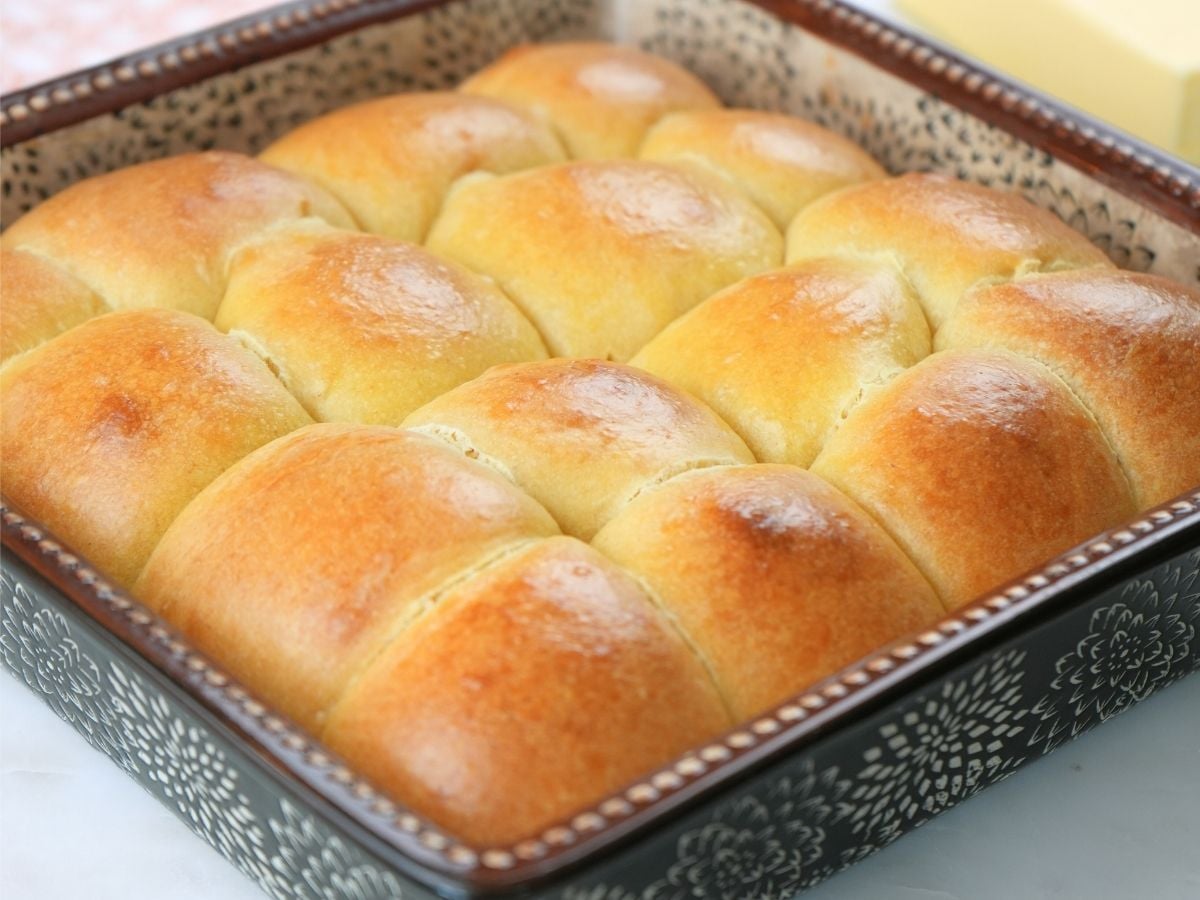

If you’ve been scrolling through sourdough recipes and dreaming of something richer and more indulgent than standard loaves, pull-apart brioche rolls might be exactly what you’re craving. These rolls deliver the complex flavor of sourdough with the luxurious, buttery crumb of brioche–and the pull-apart format makes them irresistible at the table. The good news? You don’t need fancy equipment or years of baking experience to nail this recipe at home.
How to Make Pull-Apart Sourdough Brioche Rolls
This recipe yields approximately 12 rolls with a soft, custardy interior and a tender crust. Most of the work involves letting time and fermentation do the heavy lifting.
Ingredients
- 1 cup active sourdough starter (fed 4-8 hours prior)
- 3/4 cup whole milk, warmed
- 4 tablespoons unsalted butter, melted
- 3 cups all-purpose flour
- 2 tablespoons granulated sugar
- 1.5 teaspoons salt
- 2 egg yolks plus 1 whole egg for egg wash
Method
Mix the wet ingredients
In a large mixing bowl, combine your active sourdough starter with the warmed milk and melted butter. Stir until evenly combined. This creates the flavorful base for your dough and ensures the butter distributes throughout.
Add dry ingredients and form shaggy dough
Add the flour, sugar, and salt to the wet mixture. Stir with a wooden spoon or dough whisk until a rough, shaggy dough forms with no visible dry flour. Don’t worry about smoothness at this stage; you’re just bringing everything together.
Knead and incorporate egg yolks
Turn the dough onto a lightly floured surface and knead for 8-10 minutes until the dough becomes smoother and slightly elastic. Then work in the two egg yolks, one at a time, kneading until fully incorporated. This enriches the dough and creates that brioche tenderness.
First rise in a covered bowl
Place the dough in a lightly oiled bowl, cover with a damp cloth or plastic wrap, and let it rise at room temperature for 3-4 hours until roughly doubled. The sourdough culture and time are doing the work here, building flavor.
Shape individual rolls
Turn the dough onto a work surface and divide it into 12 equal pieces. Roll each piece into a tight ball by pulling the surface toward the underside, creating surface tension. Arrange these balls in a buttered 9×13-inch baking dish, clustered together so they’ll pull apart.
Cold overnight proof
Cover the shaped rolls with plastic wrap and refrigerate overnight (or up to 16 hours). This slow, cold fermentation deepens the sourdough flavor while the rolls gradually rise. You can bake them straight from the fridge in the morning.
Bring to room temperature and finish
Remove the rolls from the refrigerator 1-2 hours before baking, allowing them to come to room temperature and continue rising slightly. Brush with an egg wash made from the whole egg beaten with 1 tablespoon water.
Bake until golden
Preheat your oven to 375 degrees Fahrenheit. Bake the rolls for 20-25 minutes until the tops are deep golden brown and a toothpick inserted into the center comes out clean. The rolls should be soft inside with a gentle crust.
- Use a sourdough starter that’s been fed 4-8 hours before mixing so it’s at peak activity with plenty of yeast and bacteria ready to ferment your dough.
- Don’t skip the overnight cold proof–this extended fermentation is what develops the complex sourdough tang while the brioche-style dough stays tender and rich.
- If your dough seems sticky during shaping, work on a damp surface rather than a heavily floured one, which prevents excess flour from being incorporated.
What to Look For in Sourdough Baking Equipment
- Mixing capacity and control: A stand mixer that can handle enriched doughs with eggs and butter saves significant arm effort. Look for a 5-6 quart capacity that can knead without overheating the motor or dough.
- Accurate temperature control: An oven thermometer ensures your bake temperature is truly 375 degrees, preventing under or overbaking. Sourdough bakes are sensitive to heat accuracy.
- Proper proofing environment: A banneton or proofing basket shaped for round rolls holds them securely during bulk fermentation and helps them maintain structure when transferred to the baking dish.
- Egg wash application: A pastry brush with natural bristles applies egg wash evenly and creates a professional golden appearance without dripping or pooling.
KitchenAid Artisan Stand Mixer (5-Quart)
Best for: Home bakers making enriched doughs regularly
The Artisan stand mixer is the workhorse for sourdough brioche production. Its powerful 325-watt motor handles heavy, enriched doughs with eggs and butter without strain. The flat mixing paddle and spiral dough hook knead efficiently, and the 5-quart stainless steel bowl has ample capacity for batch production. The tilt-head design makes adding ingredients and scraping simple, and its consistent performance across hundreds of bakes makes it an investment that pays dividends.
Check Current Price on Amazon →Cuisinart Stand Mixer (7-Cup)
Best for: Beginning bakers on a budget
This accessible stand mixer delivers solid performance without the premium price tag. The 7-cup capacity handles most home sourdough recipes, and its three-piece head assembly (flat mixing paddle, dough hook, and whip) covers all your mixing needs. While not as powerful as commercial-grade machines, it performs reliably for weekly baking and costs roughly half the price of premium alternatives.
Check Current Price on Amazon →ThermoPro Digital Oven Thermometer
Best for: Bakers new to sourdough who need temperature accuracy
Many home ovens run 25-50 degrees hotter or cooler than their dial indicates, sabotaging otherwise perfect sourdough bakes. This digital thermometer displays exact interior temperature with a clear LCD screen and hanging hook for easy oven placement. It takes the guesswork out of baking, ensuring your rolls bake at the precise temperature the recipe requires. At minimal cost, it’s one of the highest-impact tools for consistency.
Check Current Price on Amazon →Banneton Proofing Basket (Round, 10-inch)
Best for: Shaping and proofing sourdough rolls
A banneton basket specifically designed for round loaves or clustered rolls supports your shaped dough during fermentation and prevents spreading. The 10-inch round size fits a dozen rolls comfortably, and the natural rattan construction allows air circulation for a light skin formation. The included cloth liner is removable for easy cleaning, and the shallow-to-medium depth works perfectly for overnight cold proofs.
Check Current Price on Amazon →Final Recommendation
Pull-apart sourdough brioche rolls are an achievable, show-stopping project for any home baker willing to embrace overnight fermentation. The combination of tangy sourdough and rich brioche creates something genuinely special–complex enough to impress at a holiday table yet approachable enough for a weeknight bake. The cold overnight proof removes time pressure from your weekend, letting fermentation happen while you sleep.
Start with quality equipment: a stand mixer to handle the enriched dough without exhausting your arms, an accurate oven thermometer to ensure proper baking, and a proofing basket or cloth to support your shaped rolls. With these basics and a fed, active sourdough starter, you’re ready to produce rolls that rival the finest bakeries–with the satisfaction of having made them yourself.
Frequently Asked Questions
Can I use a sourdough starter that’s been in the refrigerator?
Yes, but feed it 4-8 hours before using so it reaches peak activity. Cold starters wake up slowly and may not have enough yeast and bacteria for vigorous fermentation. A well-fed starter at room temperature will deliver the best rise and flavor.
What if I don’t have time for an overnight proof?
You can do a room-temperature proof instead, which takes 4-6 hours total (2-3 hours after shaping). The overnight cold proof develops deeper sourdough flavor, but a faster proof still produces delicious rolls with less tang.
Why does my dough stick to my hands during shaping?
Enriched brioche doughs are naturally stickier than lean doughs due to eggs and butter. Lightly dampen your hands rather than dusting with flour, which prevents excess flour incorporation. Work quickly and confidently rather than overhandling.
Can I freeze the shaped rolls before the overnight proof?
Yes, you can freeze them immediately after shaping (before proofing). Thaw overnight in the refrigerator the day before baking, which combines the freezing benefit with a cold proof. Alternatively, freeze baked rolls and reheat them in a low oven.
What’s the difference between this recipe and standard brioche?
Standard brioche relies entirely on commercial yeast for rise and uses no sourdough starter. This version substitutes sourdough starter for some commercial yeast, developing complex tangy flavor while maintaining brioche’s signature soft, custardy crumb from eggs and butter.
As an Amazon Associate, Build & Bloom earns from qualifying purchases. We only recommend products we genuinely think are useful. Prices and availability vary; check Amazon for the latest.
Leave a Reply