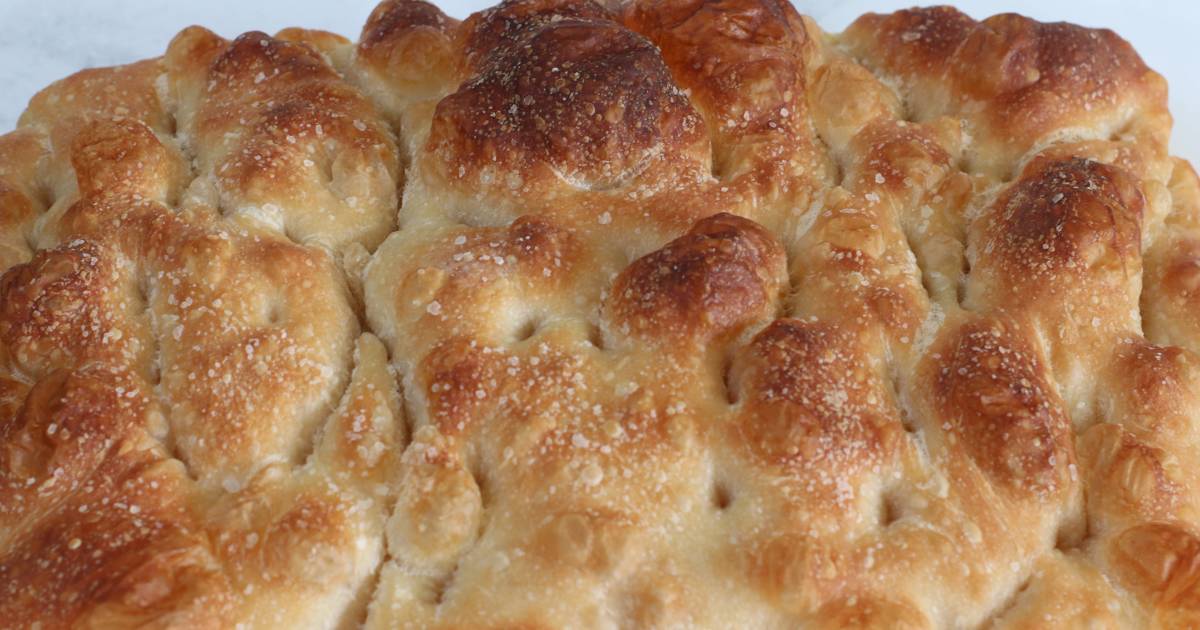

You’ve got a active sourdough starter and a craving for focaccia, but you don’t have overnight to wait. Same-day sourdough focaccia solves this problem by using warmth and an energized starter to complete full fermentation in 3-4 hours instead of 12-24. The result is the same open crumb and complex flavor you love, without the advance planning. Whether you’re new to sourdough or a seasoned baker, this method delivers impressive results on your timeline.
How to Make Same-Day Sourdough Focaccia
This recipe yields one large sheet pan focaccia with a tender, airy interior and crispy, dimpled top. Total time is approximately 3.5 to 4 hours from mix to oven.
Ingredients
- 500g bread flour or all-purpose flour
- 350ml warm water
- 100g active sourdough starter (fed 4-8 hours prior, at peak bubbles)
- 10g fine sea salt
- 30ml olive oil, divided for dough and topping
- Fleur de sel or coarse sea salt and fresh rosemary for finishing
Method
Mix the dough
Combine flour and warm water in a large bowl and let rest for 30 minutes (this is called autolyse and helps gluten develop). After resting, add your active starter, salt, and 15ml of olive oil. Mix thoroughly with a spoon or your hands until all flour is hydrated and a shaggy dough forms. The dough should feel slightly sticky but manageable.
Bulk fermentation with folds
Place dough in a lightly oiled container and perform stretch-and-fold motions every 30 minutes for the first 2 hours. Simply grab one side of the dough, stretch it up and fold it over itself, rotating the container 90 degrees and repeating four times per fold session. This builds strength without kneading. After two hours of folds, let the dough rest undisturbed for 30-45 minutes at room temperature (ideally 75-78F for faster fermentation).
Pre-shape and transfer
Turn the dough out onto a lightly oiled sheet pan or rectangular baking vessel. Using oiled hands, gently stretch and shape the dough to fill your pan, working from the center outward. Try not to deflate all the gas bubbles; gentle handling preserves the open crumb structure you’ve built during fermentation.
Final proof
Cover the pan loosely with a damp cloth or plastic wrap and let the shaped dough rest for 45-60 minutes at room temperature until it’s puffy and holds a slight indent when poked gently. The dough should feel airy but not overly jiggly. Check for readiness at the 45-minute mark; do not over-proof or you’ll lose rise in the oven.
Dimple and oil
Using oiled fingertips, gently press dimples all over the surface of the focaccia, creating the characteristic texture. Drizzle the remaining 15ml of olive oil over the top, letting it pool slightly in the dimples. This oil prevents a thick crust from forming and creates a tender crumb.
Season generously
Sprinkle coarse sea salt and fresh rosemary (or your preferred herbs) liberally over the oiled surface. Don’t hold back; focaccia is meant to be well-seasoned. A traditional approach uses just salt and rosemary, but you can also add olives, caramelized onions, or garlic.
Preheat and bake
While the dough does its final proof, preheat your oven to 450F (230C) with a rack positioned in the middle-upper section. Once the dough is ready, bake for 20-25 minutes until the top is deep golden brown and the focaccia sounds hollow when tapped on the bottom.
Cool and serve
Remove focaccia from the oven and let it cool on the pan for 5 minutes, then transfer to a wire rack to cool for at least 15 minutes before slicing. Focaccia is best eaten warm or at room temperature the same day, though it stores well for 2-3 days wrapped in foil.
- Feed your starter 4-8 hours before mixing to ensure it’s at peak activity with lots of bubbles on top and a pleasant sour smell; a weak starter will slow fermentation dramatically on a tight same-day schedule.
- Water temperature matters: use 80-90F water to maintain a dough temperature of around 75-78F, which speeds fermentation without over-fermenting. Cold water will extend your timeline; hot water risks killing the starter.
- If your kitchen is cool, place the dough on top of a gently warming oven or in an oven with the light on to maintain optimal temperature; bulk fermentation should complete in 2-3 hours total for same-day success.
Essential Tools for Sourdough Focaccia
- A reliable kitchen scale: Precision with gram measurements is crucial for consistent sourdough results. Digital scales eliminate guesswork and make recipes reproducible every time.
- Quality sheet pans with edges: Focaccia is shaped and baked in a rectangular pan; rimmed sheet pans contain the oil and toppings while allowing even heat circulation for crispy bottoms and tender interiors.
- A wire cooling rack: After baking, focaccia must cool on a rack to prevent steam from sogging the bottom. A sturdy rack allows air circulation and lets you check color and crispness from underneath.
- Dough scrapers or bench knives: These flexible tools help shape dough, transfer it to pans, and perform stretch-and-fold motions cleanly. They reduce the need for excess flour and give you better control.
Hario V60 Scale Drip Scale – Precision Kitchen Scale
Best for: Sourdough bakers who need precision
The Hario scale combines accuracy to 0.1g with a timer function, making it ideal for sourdough recipes where exact ingredient ratios determine success. Waterproof design handles flour dust and water splashes, while the clear LCD display remains readable even with damp hands. Its compact footprint suits smaller countertops, and the USB rechargeable battery lasts weeks between charges.
Check Current Price on Amazon →OXO Good Grips 3-Piece Baking Sheet Set
Best for: Home bakers needing reliable sheet pans
This three-pan set ensures you always have a clean focaccia pan ready while others cool or wash. The heavy-gauge steel construction distributes heat evenly, preventing hot spots that burn focaccia bottoms. Silicone handles stay cool longer than traditional rolled edges, and the raised sides contain oils and toppings without interfering with shaping.
Check Current Price on Amazon →Ateco Stainless Steel Bench Scraper
Best for: First-time focaccia bakers
This simple yet versatile tool has a flat rectangular blade perfect for stretch-and-fold motions and transferring sticky dough to sheet pans. Unlike knives, the dull edge won’t accidentally tear dough, making it forgiving for beginners still learning technique. The handle is ergonomic for extended use during the multi-hour fermentation window.
Check Current Price on Amazon →KitchenAid Architect Series Digital Scale
Best for: Serious home bakers seeking advanced features
This commercial-grade scale weighs up to 11 pounds with 0.1g accuracy and includes a timer, hold function, and tare memory for rapid-fire ingredient weighing. Stainless steel platform resists staining from olive oil and flour, while the backlit display works in all lighting conditions. Its performance justifies the premium price for bakers who mix multiple focaccia batches weekly.
Check Current Price on Amazon →Make Same-Day Focaccia Confidently
Same-day sourdough focaccia is absolutely achievable at home when you use an active, healthy starter and maintain proper fermentation temperature. The recipe in this guide eliminates guesswork by providing exact timing and clear visual cues, so you’ll recognize readiness at each stage. A good kitchen scale ensures your starter and flour ratio is spot-on every time, while quality sheet pans and a cooling rack round out the essential equipment for consistent results.
The beauty of this method is that you can enjoy restaurant-quality focaccia on your own timeline without sacrificing flavor or texture. Once you’ve successfully baked one batch using our step-by-step approach, you’ll develop an intuition for the dough and be able to adjust fermentation times based on your kitchen’s conditions. Keep your starter strong, measure precisely, and trust the process. Fresh, warm focaccia at dinner is closer than you think.
Frequently Asked Questions
Can I use a weaker starter or starter that’s not at peak?
Not recommended for same-day focaccia. An under-fermented or weak starter will significantly extend fermentation time, potentially ruining your same-day timeline. Always feed your starter 4-8 hours before baking and wait until it shows obvious signs of activity: visible bubbles, dome shape, and a pleasant sour aroma. If your starter isn’t strong, build it over 1-2 weeks with daily feedings before attempting this recipe.
What if my kitchen is very cold (below 68F)?
Fermentation will slow considerably. Create a warm proof box by turning on your oven light, placing a pan of hot water inside, or using a proofing box. Aim to maintain 75-78F dough temperature throughout. You may need to extend fermentation times by 30-60 minutes, so plan accordingly and monitor the dough visually rather than strictly following timings.
Can I refrigerate the focaccia dough overnight instead?
Absolutely. Shape the dough after the first bulk fermentation, cover it tightly with plastic wrap, and refrigerate overnight or up to 24 hours. Cold fermentation actually develops deeper flavor and makes the dough easier to handle. Simply remove from the fridge 30-45 minutes before baking to let it come to room temperature, then proceed with dimpling and baking.
Why is my focaccia dense instead of airy?
Dense focaccia usually results from weak starter, insufficient fermentation, over-kneading during stretch-and-folds, or dough that’s too cold. Ensure your starter is strong and active, maintain proper dough temperature, and use gentle folds. Avoid deflating the dough during shaping and proofing, as trapped gas bubbles create the characteristic open crumb.
Can I use all-purpose flour instead of bread flour?
Yes, all-purpose flour works fine and produces softer, more tender focaccia compared to bread flour. Bread flour has slightly higher protein content, which strengthens gluten and can make the crumb chewier. Either produces delicious focaccia; choose based on your texture preference. Adjust hydration slightly if needed, as different brands absorb water differently.
As an Amazon Associate, Build & Bloom earns from qualifying purchases. We only recommend products we genuinely think are useful. Prices and availability vary; check Amazon for the latest.
Leave a Reply