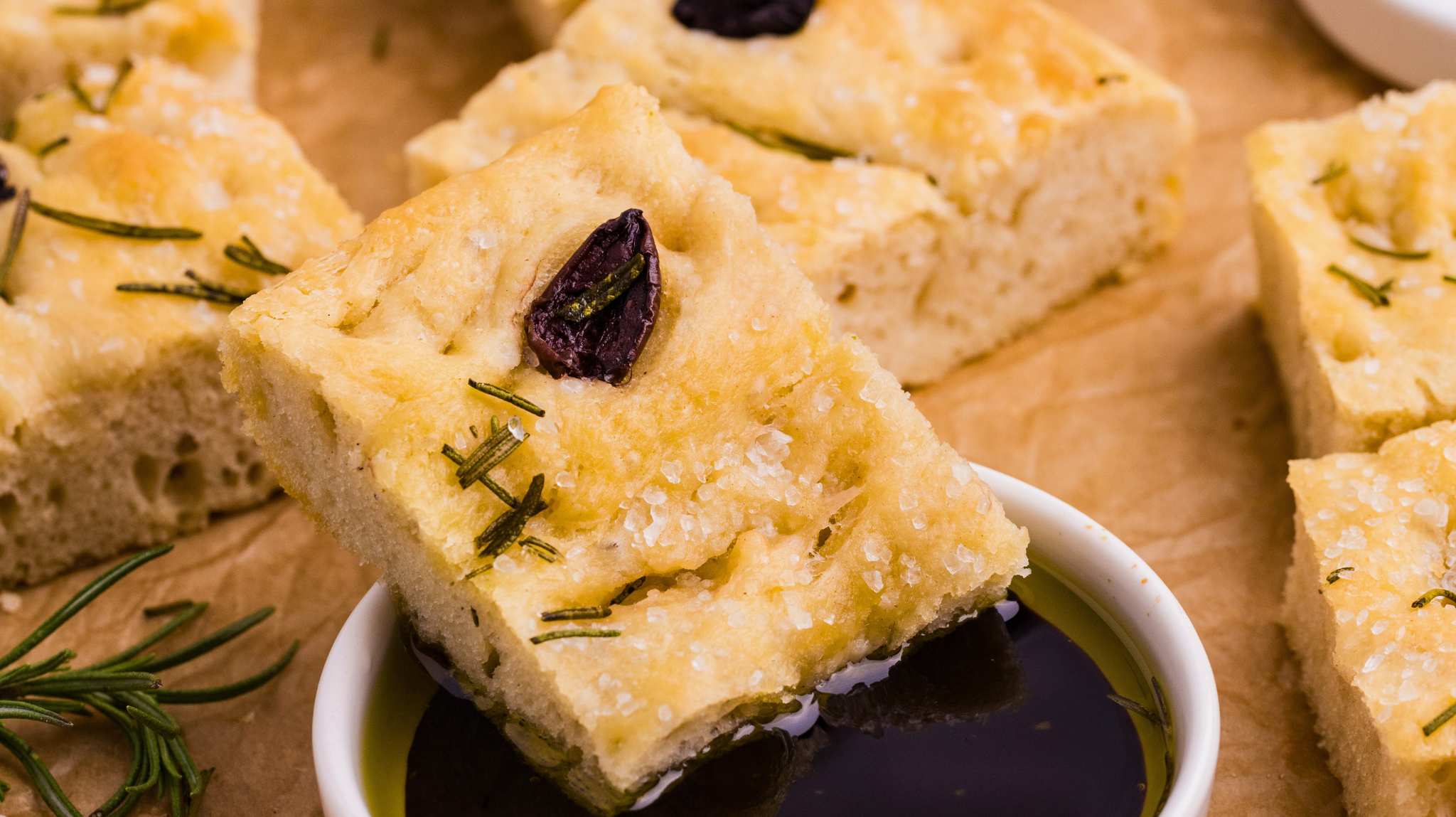

Sourdough focaccia is the gateway bread for anyone intimidated by complex baking. Unlike traditional loaves, focaccia is forgiving, requires minimal shaping skill, and comes together in two simple stages: a long overnight rise that does most of the work for you, then a quick bake. Whether you’re a seasoned sourdough baker looking for a faster project or someone wanting to use up starter between feedings, this recipe delivers bakery-quality results with an irresistibly crispy crust and tender crumb inside.
How to Make Simple Sourdough Focaccia
This focaccia uses a single overnight fermentation for maximum flavor with minimal hands-on time. The result is a rustic, pillowy flatbread perfect for sandwiches, dipping, or enjoying plain.
Ingredients
- 1 cup active sourdough starter (fed 4-8 hours prior, bubbly and doubled)
- 2.5 cups bread flour or all-purpose flour
- 1 cup lukewarm water
- 2 teaspoons salt
- 3 tablespoons olive oil (plus extra for topping)
- Coarse sea salt and fresh rosemary for garnish
Method
Mix the dough
In a large mixing bowl, combine your active starter with lukewarm water and stir until mostly dissolved. Add flour and mix with a fork or dough whisk until no dry flour remains. Let this mixture rest (called autolyse) for 30 minutes, uncovered at room temperature. This hydrates the flour fully and develops gluten naturally.
Add salt and oil
After the rest, sprinkle salt over the dough and drizzle with olive oil. Using wet hands or a bench scraper, incorporate the salt and oil by folding the dough onto itself repeatedly for about 2 minutes. The dough will feel sticky and loose, which is correct for focaccia.
Bulk ferment with folds
Transfer dough to a lightly oiled container. Over the next 4 hours at room temperature (70-75°F), perform 4 sets of stretches and folds at 30-minute intervals. With wet hands, grab one side of the dough, stretch it up and fold it over the center. Rotate the bowl 90 degrees and repeat 4 times per set. You’ll notice the dough becoming smoother and more cohesive.
Cold overnight ferment
After bulk fermentation, cover the container and place it in the refrigerator for 8-16 hours. This long, cold ferment develops flavor complexity and makes the dough easier to shape. The dough should be puffy but not overproofed when you remove it.
Shape and proof
Preheat your oven to 450°F. Gently turn the cold dough onto a lightly oiled 9×13-inch baking pan. Using oiled hands, gently stretch it to fill the pan, working from the center outward. Don’t deflate it completely; aim to maintain airiness. Cover loosely with plastic wrap and let it proof at room temperature for 1-2 hours until visibly puffy.
Dimple and top
Using your fingertips (keep them oiled), create deep dimples all over the dough surface, pressing down but not punching through. Drizzle generously with olive oil and sprinkle with coarse sea salt and fresh rosemary or other toppings of choice.
Bake until golden
Place the pan in the preheated oven and bake for 20-25 minutes until the focaccia is golden brown on top and the edges pull away slightly from the pan. A light tap on the bottom should sound hollow. Cool on a wire rack for at least 10 minutes before slicing.
- Keep your starter at peak activity (doubled in volume with visible bubbles) before mixing. A sluggish starter will extend fermentation times or produce dense focaccia.
- The cold overnight ferment is not optional–it’s when flavor develops. Skipping it or shortening it will result in bland, less interesting bread.
- Use an instant-read thermometer to check dough temperature. Aim for 75-78°F after mixing; warmer kitchens may need cooler water, colder kitchens warmer water.
What to Look For in Sourdough Baking Equipment
- Dough container size: Choose a container that holds at least 2-3 liters and has clear volume markings. You need room for the dough to expand during bulk fermentation without overflowing. Glass or silicone allows easy visibility of fermentation progress.
- Mixing vessel shape: A wide, shallow mixing bowl makes folding and stretching easier than tall narrow bowls. The dough needs horizontal surface area to work with comfortably during fermentation.
- Thermometer accuracy: Temperature control is critical for consistent fermentation. An instant-read digital thermometer lets you monitor dough temperature and room temperature, ensuring predictable rise times and avoiding over- or under-proofing.
- Pan material and size: A light-colored aluminum or steel pan (9×13 inches) bakes focaccia evenly without excessive browning. Dark pans can overbake the bottom. Avoid glass, which heats too quickly and can create hard crusts.
Pyrex 9×13 Inch Baking Dish
Best for: Sourdough focaccia bakers wanting reliable, even baking
This classic 9×13-inch glass baking dish is ideal for focaccia because it allows you to monitor browning from both sides and distributes heat evenly. The durable borosilicate glass won’t warp over time, and the generous size accommodates high-rise doughs without overflow. The familiar measurement matches most focaccia and sheet cake recipes, making it a workhorse kitchen staple.
Check Current Price on Amazon →OXO Good Grips 3-Liter Glass Mixing Bowl
Best for: Budget-conscious bakers needing reliable bulk fermentation vessels
This affordable glass bowl has volume markings up to 3 liters, perfect for monitoring dough expansion during bulk fermentation. The wide mouth makes stretching and folding easier than narrow bowls. OXO’s signature non-slip base keeps it stable while working, and glass lets you observe fermentation without removing the cover.
Check Current Price on Amazon →Rubbermaid Brilliance Clear Food Storage Container 6.3-Cup
Best for: First-time sourdough bakers wanting affordable, practical fermentation vessels
Rubbermaid’s clear plastic containers are lightweight, affordable, and feature graduated measurements so you can track dough growth at a glance. The airtight lids seal in moisture during long ferments, and the wide opening accommodates generous stretching and folding. Available in multipacks, they’re ideal for keeping multiple starters or test batches.
Check Current Price on Amazon →Emile Henry Ceramic Mixing Bowl 3.5 Liters
Best for: Serious home bakers who want beautiful, heirloom-quality fermentation vessels
This French-made ceramic bowl combines functionality with aesthetics. The superior heat retention helps maintain stable fermentation temperatures, while the wide, sloped design facilitates effortless folding and stretching. Emile Henry’s porous ceramic naturally prevents dough from sticking without constant oiling, and the bowl transitions seamlessly from kitchen to table for elegant serving.
Check Current Price on Amazon →Final Recommendation
Sourdough focaccia is genuinely one of the easiest ways to impress with homemade bread. The overnight fermentation does the hard work while you sleep, and the final assembly takes minutes. Whether you’re a sourdough veteran looking for a quick bake or a beginner wanting to use starter between feedings, this recipe delivers bakery-quality results with minimal intervention. Start with essential equipment–a mixing bowl, fermentation container, thermometer, and baking pan–and you’re ready to succeed.
The best part? Once you master the basic formula, focaccia becomes your blank canvas. Vary toppings seasonally, adjust fermentation times to your kitchen temperature, and experiment with hydration levels as your confidence grows. Each bake teaches you something about your starter’s behavior and your kitchen’s unique conditions. Within a few tries, you’ll be making focaccia that rivals Italian bakeries at a fraction of the cost. Your reward is warm, pillowy bread that’s perfect for breakfast, lunch, or dinner.
Frequently Asked Questions
Can I use unfed starter or discard for this recipe?
No. Unfed or sluggish starter won’t provide enough leavening power and will extend fermentation times unpredictably. Always use peak activity starter (doubled, bubbly, and visibly rising) that was fed 4-8 hours before mixing. If timing doesn’t work, keep your starter at room temperature and delay baking until it reaches peak activity.
What if my kitchen is cold and fermentation is slower?
Slower fermentation is not a failure; it simply develops more flavor. Extend bulk fermentation or overnight rest as needed until the dough shows visible rise and gas pockets. Use a dough thermometer to track progress. In very cold kitchens (below 65°F), place dough in an oven with the light on, or use a proofing box to maintain 75-78°F.
Why is my focaccia dense instead of airy?
Dense focaccia usually results from underproofing (insufficient rise before baking), using weak starter, or overworking the dough during shaping. Ensure your starter is genuinely active, give adequate bulk fermentation time, and handle the dough gently during shaping. Avoid pressing out all gas during dimpling.
Can I skip the overnight cold ferment?
Not recommended. The cold ferment develops complex sourdough flavor and makes shaping easier. If you must skip it, extend the room-temperature bulk fermentation by 2-4 hours and watch for visual cues (puffy, airy dough with visible bubbles) rather than relying on timing.
What topping variations work best?
Classic fresh rosemary and sea salt are traditional, but try caramelized onions, garlic confit, za’atar, olives, or cherry tomatoes. Add soft toppings (tomatoes, fresh herbs) after the first 10 minutes of baking to prevent burning. Keep toppings light; heavy loads can weigh down the dough and create dense bottoms.
As an Amazon Associate, Build & Bloom earns from qualifying purchases. We only recommend products we genuinely think are useful. Prices and availability vary; check Amazon for the latest.
Leave a Reply