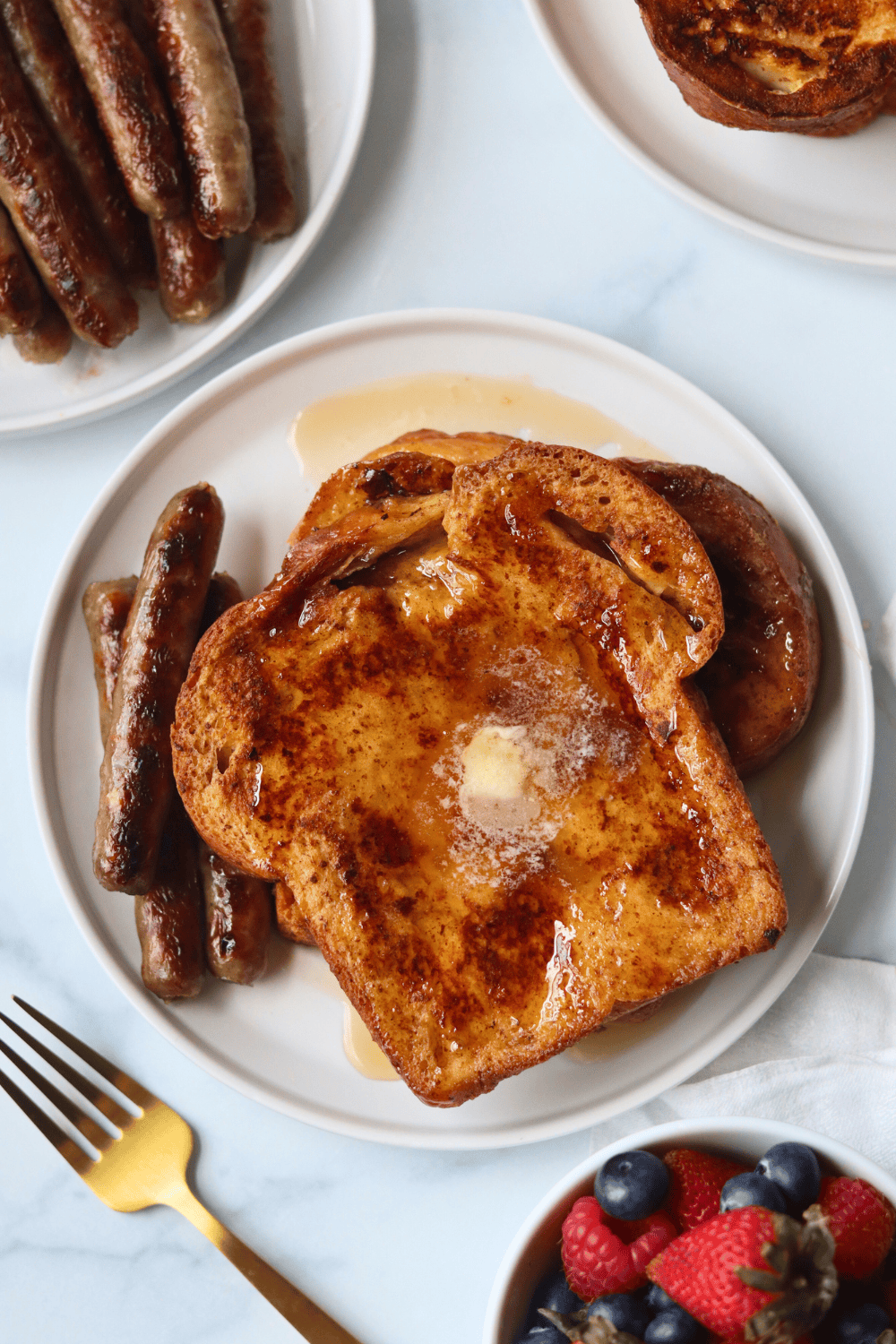

French toast is comfort food done right, but regular white bread gets soggy and bland. When you make it with tangy sourdough, something magical happens: the bread’s natural fermentation creates depth of flavor that pairs beautifully with cinnamon, vanilla, and eggs. Whether you’re a sourdough baker looking to use up day-old loaves or someone new to sourdough entirely, this recipe transforms humble ingredients into a breakfast that tastes like a local bakery cafe made it for you.
How to Make Sourdough French Toast
This recipe yields four generous servings in about 25 minutes total. The key is using slightly stale sourdough (one day old) so it absorbs the custard without falling apart.
Ingredients
- 1 loaf day-old sourdough bread, cut into 3/4-inch thick slices
- 4 large eggs
- 1/2 cup whole milk or half-and-half
- 1 tablespoon vanilla extract
- 1 teaspoon ground cinnamon
- Butter for cooking
- Maple syrup, powdered sugar, and fresh berries for topping
Method
Prepare your custard mixture
In a shallow bowl, whisk together eggs, milk, vanilla extract, cinnamon, and a pinch of sea salt. Whisk until the mixture is completely smooth with no streaks of egg white visible. Let the custard rest for 2 minutes so the cinnamon fully dissolves.
Heat your cooking surface
Place a heavy skillet or griddle over medium-high heat and allow it to preheat for 2-3 minutes. Add about a tablespoon of butter and let it melt until it’s foaming but not browning. This prevents sticking and creates a golden crust.
Soak each bread slice
Working with one slice at a time, dip both sides of the sourdough into the custard mixture. Count to two on each side–you want the bread saturated but not waterlogged. Excess custard will slide off. This balance prevents a soggy interior while ensuring the egg mixture sets.
Cook the first batch
Place soaked slices onto the hot buttered skillet, working in batches that don’t overcrowd the pan. Cook for 3-4 minutes on the first side until the bottom is deeply golden brown and crispy. You should hear a gentle sizzle, not aggressive popping.
Flip and finish cooking
Using a wide spatula, carefully flip each slice and cook the second side for 2-3 minutes until it matches the golden color of the first side. The exterior should be caramelized while the interior stays custardy and soft.
Rest briefly before serving
Transfer the cooked French toast to a warm plate and let it rest for one minute. This allows the residual heat to set the custard center without making the outside tough. Repeat steps 3-5 with remaining bread slices.
Top and serve immediately
Arrange the warm French toast on serving plates and top with your preferred garnishes: maple syrup, powdered sugar dusted over the top, fresh berries, whipped cream, or a touch of cinnamon. Serve immediately while the exterior is still crispy.
- Use sourdough that’s at least one day old; fresh bread absorbs too much custard and becomes mushy. Slightly stale bread maintains structure while still absorbing flavor.
- Don’t skip the butter foaming step–clarified butter or ghee creates better browning and crisping than oil, which can make the toast greasy.
- If you’re cooking for a crowd, keep finished slices warm on a baking sheet in a 200°F oven rather than stacking them on a plate, which traps steam and softens the crust.
What to Look For in French Toast Cooking Equipment
- Skillet or Griddle Material: Stainless steel, cast iron, and non-stick all work for French toast. Cast iron holds heat most evenly for consistent browning; non-stick requires less butter and is easiest to clean; stainless steel offers durability and browning control. Choose based on your cooking habits and cleanup preferences.
- Size and Surface Area: A 12-inch skillet or griddle fits 2-3 slices comfortably without crowding. Crowding drops temperature and causes steaming instead of browning. Larger griddles let you cook more slices at once, cutting total cooking time significantly.
- Heat Distribution: Look for cookware with thick bottoms (at least 1/8-inch) that distributes heat evenly. Thin pans create hot spots that brown unevenly. Premium cookware distributes heat faster and more uniformly, reducing the risk of burning the exterior while the interior stays undercooked.
- Spatula Compatibility: If using non-stick, use soft silicone or wooden spatulas to avoid scratching. For cast iron and stainless steel, metal spatulas work fine and offer better flipping control. A wide, thin spatula (at least 3 inches wide) makes it easier to support the bread while flipping.
Lodge Cast Iron 12-Inch Skillet
Best for: Home cooks who want consistent browning and long-term investment
Lodge’s cast iron skillet is the gold standard for French toast cooking. Its thick bottom distributes heat evenly and retains warmth perfectly for the consistent browning this recipe demands. Pre-seasoned and ready to use, it improves with age and will last for decades. The 12-inch size fits 2-3 slices comfortably without crowding, and the sloped sides make flipping effortless. Cast iron is forgiving with butter and creates that restaurant-quality golden crust sourdough French toast deserves.
Check Current Price on Amazon →Tramontina Stainless Steel 12-Inch Skillet
Best for: Budget-conscious cooks seeking reliable non-stick performance
Tramontina delivers restaurant-grade stainless steel at a fraction of premium prices. Its hard-anodized non-stick coating prevents sticking without requiring seasoning like cast iron. The flat bottom sits flush on all stovetop types, and the riveted handle stays cool during cooking. Heat distributes evenly across the cooking surface for consistent browning. This skillet is dishwasher safe and requires minimal maintenance, making it ideal for busy home cooks who want quality without the learning curve.
Check Current Price on Amazon →T-fal Ultimate Hard Anodized 12-Inch Non-Stick Skillet
Best for: First-time French toast makers who want foolproof non-stick performance
T-fal’s hard-anodized non-stick coating is practically indestructible and requires only a light coating of butter. The skillet heats quickly and distributes temperature evenly, eliminating hot spots that cause uneven browning. Its thermo-spot heat indicator shows when preheating is complete, removing guesswork. The lightweight design and ergonomic handle make it comfortable to use for extended cooking sessions, and cleanup requires only warm soapy water. The sloped sides accommodate a wide spatula perfectly for confident flipping.
Check Current Price on Amazon →All-Clad Ha1 Hard Anodized 12-Inch Skillet
Best for: Serious home cooks who value precision and professional-grade materials
All-Clad represents the pinnacle of cookware engineering. Its hard-anodized aluminum construction heats faster than cast iron while distributing heat with precision, giving you complete control over browning. The proprietary non-stick coating outperforms competitors and releases food effortlessly. The stainless steel handle is oven-safe to 500°F, and the skillet works on all stovetop types including induction. While the investment is significant, this skillet will perform flawlessly for decades and justify its cost through years of reliable use.
Check Current Price on Amazon →Start Cooking Sourdough French Toast Today
Sourdough French toast is a simple recipe that delivers restaurant-quality results at home. The tangy depth of sourdough bread combined with the custardy interior and crispy exterior creates something special that regular French toast simply can’t match. You need just a few ingredients, a good skillet, and about 25 minutes. Whether you’re using sourdough bread from a local bakery or your own homemade loaf, this recipe transforms humble ingredients into a memorable breakfast that tastes like you spent hours in preparation.
The equipment matters more than you’d expect. A properly heated skillet with even heat distribution is what separates mediocre French toast from exceptional French toast. Invest in a quality 12-inch skillet whether you choose cast iron for long-term durability, non-stick for ease of cleanup, or stainless steel for balanced performance. Once you nail this recipe, you’ll find yourself making sourdough French toast regularly, and quality cookware pays dividends through years of use. Make your next breakfast something worth celebrating.
Frequently Asked Questions
Can I make sourdough French toast without a sourdough starter?
Absolutely. You can use any sourdough bread from your local bakery. The recipe only requires sliced sourdough bread; you don’t need an active starter to enjoy the tangy flavor sourdough bread brings to French toast.
What if my sourdough bread is too fresh?
Fresh sourdough is too moist and absorbs the custard unevenly, resulting in a soggy interior. Let your loaf sit on the counter for one full day, or slice it and let the slices air-dry on a rack for 2-3 hours before making French toast.
Can I make the custard mixture ahead of time?
Yes. Mix the custard in a shallow bowl, cover it with plastic wrap, and refrigerate for up to 24 hours. Bring it to room temperature for 15 minutes before dipping bread to ensure even custard absorption.
What’s the best topping for sourdough French toast?
Maple syrup is traditional, but the tangy sourdough pairs beautifully with fresh berries, whipped cream, Greek yogurt, or even a savory approach with smoked salmon and cream cheese. Experiment to find your favorite.
How do I prevent my French toast from getting soggy while I cook multiple batches?
Keep finished slices on a baking sheet in a 200°F oven rather than stacking on a plate. This maintains warmth without trapping steam that softens the crispy exterior. Serve immediately once everyone’s portion is cooked.
As an Amazon Associate, Build & Bloom earns from qualifying purchases. We only recommend products we genuinely think are useful. Prices and availability vary; check Amazon for the latest.
Leave a Reply