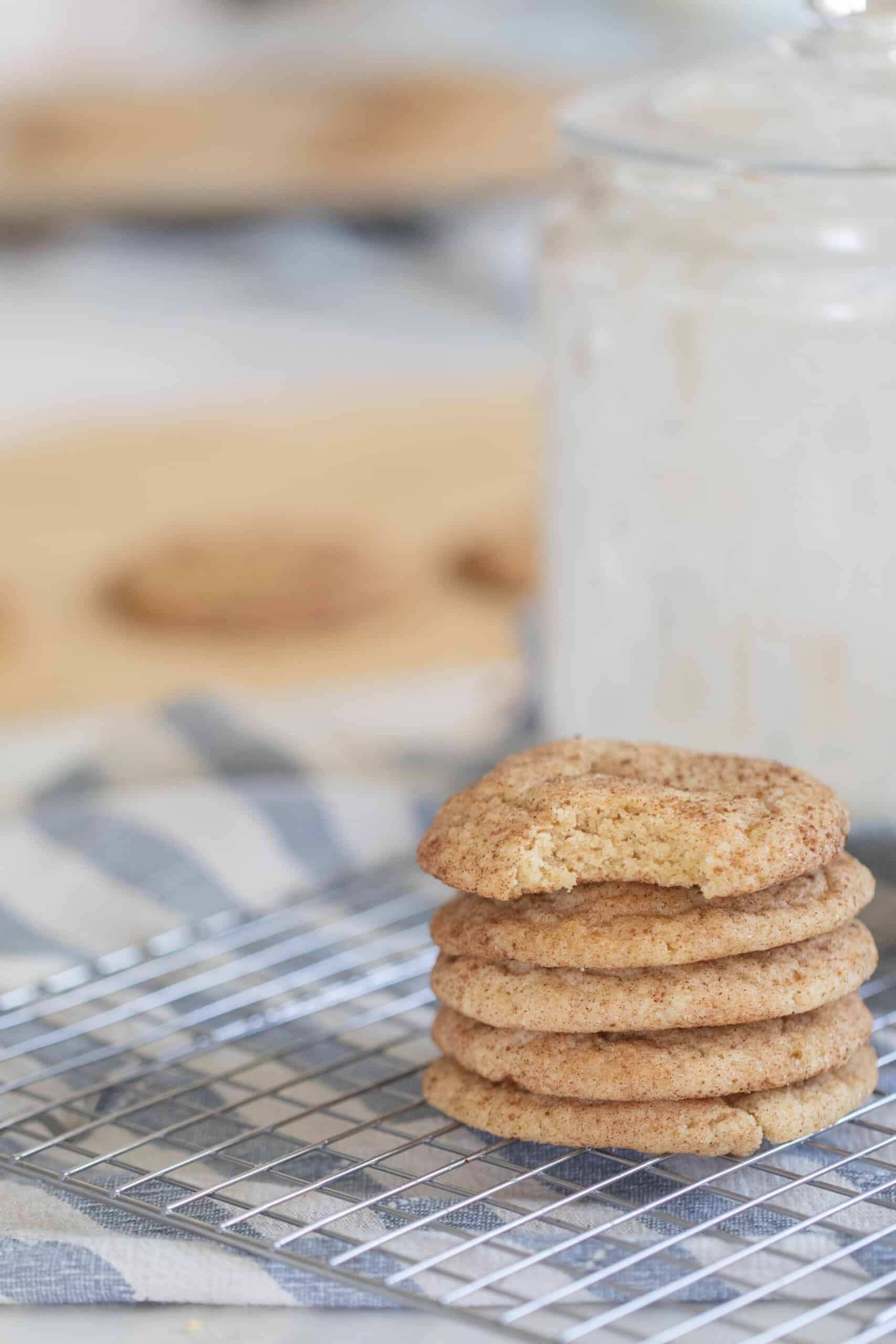

If you have a bubbling sourdough starter on your counter, you’ve probably wondered how to use it in desserts beyond bread. Sourdough snickerdoodles are a revelation—the starter adds a subtle tang and incredible tenderness that takes these cinnamon-sugar cookies beyond ordinary. The good news: the recipe uses the same basic snickerdoodle method you already know, with one smart swap that transforms the final result.
How to Make Sourdough Snickerdoodles
These cookies rely on active sourdough starter to provide moisture, structure, and that distinctive fermented flavor. The process takes about 30 minutes of hands-on time plus chilling.
Ingredients
- 1 cup active sourdough starter (fed and bubbly, room temperature)
- 3/4 cup butter, softened
- 1 cup granulated sugar
- 1 egg
- 1 3/4 cups all-purpose flour
- 1/4 teaspoon cream of tartar
- 1/2 teaspoon baking soda
- 1/4 teaspoon salt
- 2 tablespoons cinnamon mixed with 3 tablespoons sugar (for rolling)
Method
Prepare Your Starter
Use sourdough starter that has been fed 4-8 hours prior and shows visible bubbles throughout. It should be at peak activity—bubbly and risen but not yet collapsed. This ensures maximum leavening power and tangy flavor in your cookies.
Cream Butter and Sugar
In a large mixing bowl, beat softened butter with granulated sugar until the mixture is light, fluffy, and pale—about 3 minutes of beating. This incorporates air and creates the tender crumb structure the cookies need.
Incorporate Starter and Egg
Add the active starter and egg to the butter mixture, beating until fully combined. The batter will look slightly loose and textured from the starter; this is correct. Mix for about 1 minute until no dry streaks remain.
Combine Dry Ingredients
In a separate bowl, whisk together flour, cream of tartar, baking soda, and salt. The cream of tartar is essential—it reacts with the baking soda to create lift and contributes to the classic snickerdoodle tang.
Mix Wet and Dry
Pour the dry mixture into the wet ingredients and fold together with a spatula until just combined. Do not overmix; the dough should come together without visible flour streaks but remain slightly shaggy. Overmixing develops gluten and creates tough cookies.
Chill the Dough
Cover the dough and refrigerate for at least 30 minutes, preferably 1-2 hours. Chilled dough spreads less during baking, creating thicker cookies with chewy centers. This resting also allows flavors to meld.
Roll and Coat
Preheat your oven to 350 degrees F. Scoop dough into tablespoon-sized balls, then roll each in the cinnamon-sugar mixture until fully coated. Place cookies on a parchment-lined baking sheet about 2 inches apart.
Bake Until Set
Bake for 12-15 minutes until the edges are lightly golden but the centers still look slightly underdone. The cookies will continue cooking on the hot pan for 2-3 minutes after removal. They should be chewy inside with crispy, sugared edges.
- If your starter is very thick, thin it slightly with water before mixing. The dough should be soft but not sticky—easier to work with than traditional snickerdoodles.
- Don’t skip the chill time. Sourdough dough spreads more than regular cookie dough, and chilling prevents flat cookies.
- For extra tang, use starter that’s been sitting at room temperature for 24+ hours after feeding. Older starter develops more sour flavors.
What to Look For in Cookie-Making Equipment
- Mixing Bowls: Look for stainless steel or glass bowls in graduated sizes. You’ll need at least two—one large for wet ingredients and one for dry. Stainless steel is durable; glass lets you see the dough at a glance.
- Electric Mixer: A stand mixer or handheld mixer significantly reduces arm fatigue when creaming butter and sugar. Stand mixers free your hands for measuring other ingredients; handheld models are more compact.
- Baking Sheets: Professional-grade aluminum sheets with a slight rim distribute heat evenly without warping. Look for 16 x 12 inch dimensions—the standard size that fits most ovens.
- Parchment Paper: Prevents sticking and ensures even browning underneath. Unbleached parchment is preferable to bleached versions, and pre-cut sheets are more convenient than roll-format.
KitchenAid Artisan 5-Quart Stand Mixer
Best for: Serious bakers who make cookies regularly
The gold standard for cookie making, this stand mixer creams butter and sugar to perfect fluffiness without manual effort. The flat beater, dough hook, and whip attachment handle any mixing task. Its 5-quart bowl accommodates large batches, and the tilt-head design makes adding ingredients effortless. The motor is powerful enough for thick doughs without stalling.
Check Current Price on Amazon →Sunbeam MixMaster Hand Mixer
Best for: Budget-conscious bakers or small batches
This compact handheld mixer delivers solid performance at a fraction of stand mixer cost. The dual beaters rotate in opposite directions for thorough mixing, and it’s lightweight enough for extended creaming without fatigue. Perfect for single-batch cookie recipes and easy to store. The cord is long enough to reach across most countertops.
Check Current Price on Amazon →Pyrex Mixing Bowl Set (4-piece)
Best for: Home bakers building their kitchen toolkit
This four-piece glass bowl set provides graduated sizes for any mixing task. Glass construction lets you monitor dough progress visually, and the bowls nest for compact storage. The wide rims prevent spilling during hand mixing, and the smooth surface cleans easily. Durable enough to last decades with proper care.
Check Current Price on Amazon →Vollrath Aluminum Baking Sheet Professional
Best for: Bakers seeking restaurant-quality results
Heavy-gauge aluminum construction resists warping even after years of use at high temperatures. The professional-weight material distributes heat evenly for consistent browning on all cookies. The rolled rim prevents spills, and the size accommodates standard parchment paper without cutting. This is the sheet used in commercial kitchens.
Check Current Price on Amazon →Final Recommendation
Sourdough snickerdoodles are a brilliant way to use your sourdough starter in a new application. The fermented tang adds sophistication to a humble cookie, and the technique is straightforward enough for beginning bakers while interesting enough for experienced ones. Start with a KitchenAid stand mixer (or handheld option on budget) to cream your butter and sugar, use a glass or stainless steel mixing bowl to monitor your dough, and fold your final mixture gently with a quality spatula. Line your professional aluminum baking sheets with pre-cut parchment paper for mess-free, evenly-baked cookies.
The key to success is patience—chill your dough properly and don’t overbake. Pull the cookies from the oven when the centers still look slightly underdone; they’ll firm up as they cool, giving you that perfect tender interior with crispy, cinnamon-sugared edges. Once you’ve mastered this recipe, experiment with starter ages and fermentation times to dial in exactly how sour you want these cookies. You’ll find yourself feeding your starter specifically to bake these more often.
Frequently Asked Questions
Can I use discard sourdough starter instead of active starter?
You can, but the results won’t be as good. Discard starter (unfed) lacks the leavening power of active starter, resulting in denser, flatter cookies. For best results, use starter that’s been fed and allowed to peak with visible bubbles.
Why do my snickerdoodles spread too much?
Sourdough starter adds significant moisture, which increases spread. This is solved by chilling the dough for at least 1-2 hours. If they still spread excessively, your oven temperature may be low—use an oven thermometer to verify 350 degrees F accuracy.
How should I store sourdough snickerdoodles?
Keep them in an airtight container at room temperature for up to 4 days. The starter keeps them moist longer than standard snickerdoodles. For longer storage, freeze in an airtight bag for up to 2 months.
Can I make this recipe without cream of tartar?
Cream of tartar is important for both flavor and leavening. If you’re out, you can substitute 1/4 teaspoon lemon juice or white vinegar whisked into the egg, but the tang will be reduced and the rise slightly less.
What if my sourdough starter is very thin or very thick?
Thin starter can be used as-is; it simply adds more moisture. Thick starter should be thinned with a tablespoon or two of water to reach a yogurt-like consistency for easier mixing into the cookie dough.
As an Amazon Associate, Build & Bloom earns from qualifying purchases. We only recommend products we genuinely think are useful. Prices and availability vary; check Amazon for the latest.
Leave a Reply