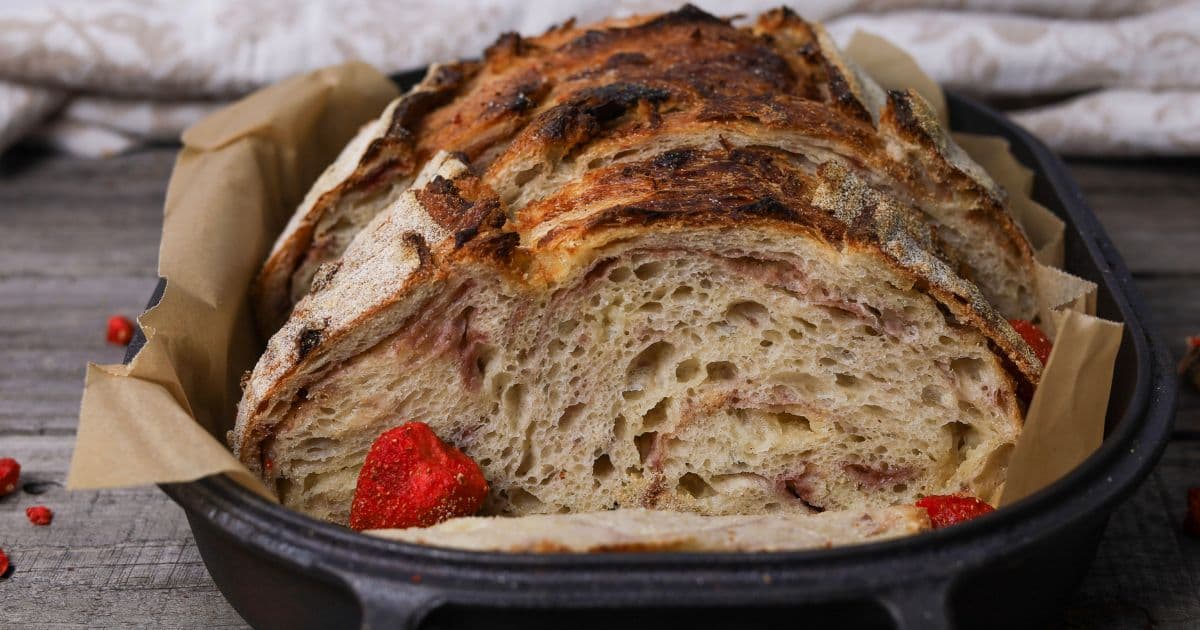

Strawberries and cream sourdough combines the best of two worlds: the complex, tangy flavor of sourdough bread with the fresh, fruity taste of summer strawberries. If you’ve been intimidated by sourdough baking, this recipe proves that creating an impressive, show-stopping loaf at home is completely achievable. The process takes patience and planning, but the hands-on work is minimal and deeply rewarding.
How to Make Strawberries and Cream Sourdough Loaf
This recipe uses active sourdough starter and incorporates fresh strawberries and a cream cheese mixture throughout the dough. Plan ahead for multiple fermentation periods.
Ingredients
- 1 cup active sourdough starter (fed and bubbly)
- 1.5 cups warm water
- 3.5 cups all-purpose or bread flour
- 1.5 teaspoons salt
- 8 oz fresh strawberries, diced
- 4 oz cream cheese, softened, mixed with 1 tablespoon sugar and 1 teaspoon vanilla extract
Method
Mix your dough
Combine your active starter, warm water, and flour in a mixing bowl. Let this sit at room temperature for about 30 minutes to allow the flour to fully hydrate. This autolyse period helps develop gluten naturally. After 30 minutes, add salt and mix thoroughly until no dry flour remains.
Perform stretch and fold sessions
Over the next 4-5 hours, perform four sets of stretch and fold motions at 30-minute intervals. Wet your hand, grab one side of the dough, stretch it up and fold it over the center. Rotate the bowl and repeat. This builds strength without intensive kneading and is much gentler on the dough than traditional methods.
Laminate with strawberries and cream
After your final stretch and fold, turn the dough out onto a lightly floured surface. Pat it into a thin rectangle. Spread the cream cheese mixture across the surface, then distribute the diced strawberries evenly. Roll the dough tightly from the short end, then gently pat and shape it into a round boule. Some strawberries and cream will leak during baking, and that’s part of the charm.
Perform bulk fermentation
Place your shaped dough seam-side up in a floured proofing basket or bowl lined with a kitchen towel. Cover loosely and let it ferment at room temperature for 2-4 hours, or until it increases by about 50% in volume. You can also refrigerate overnight for 8-12 hours, which actually improves flavor development.
Preheat your Dutch oven
About 30 minutes before baking, preheat your oven to 500 degrees Fahrenheit with your Dutch oven inside. The high initial heat and trapped steam create the crispy, caramelized crust that makes sourdough special. Be very careful when handling as it will be extremely hot.
Score and bake covered
Carefully turn your dough out onto parchment paper and score the top with a sharp blade or lame, making a single slash or decorative pattern. Transfer it into the preheated Dutch oven using the parchment paper as a sling. Bake covered for 20 minutes to trap steam, then uncover and bake for another 25-30 minutes until deep golden brown.
Cool completely before slicing
Remove the loaf from the oven and let it rest on a cooling rack for at least one hour before cutting. This allows the interior crumb structure to set properly. Slicing too early will result in a gummy texture and strawberry leakage. Once cooled, you’ll see beautiful pockets of strawberry throughout.
- If your strawberries are very wet, pat them dry with paper towels first to prevent excess moisture from making your dough soggy or gummy.
- Refrigerating the shaped dough overnight actually improves the sourdough flavor and makes it easier to score cleanly because the dough is firmer.
- Some strawberry bleeding is normal and delicious. The caramelized fruit on the crust adds wonderful flavor and visual interest.
What to Look For in Sourdough Baking Equipment
- Dutch Oven: A heavy-bottomed, oven-safe pot with a fitted lid that traps steam during baking. Look for one that holds at least 5-6 quarts and can safely reach 500+ degrees. Enameled cast iron or stainless steel both work well.
- Proofing Basket: A cloth-lined banneton or bowl that supports your dough during final fermentation. Choose one sized for a 1-2 pound loaf with a spiral or concentric ring pattern that creates beautiful scoring guides on the finished bread.
- Bread Lame or Scoring Tool: A sharp blade specifically designed for scoring sourdough. This allows precise, clean slashes that control oven spring and create that signature shattered crust. Safer and more effective than knives for this task.
- Kitchen Scale: Sourdough baking relies on precision ratios (hydration percentages), making a digital scale essential rather than optional. Choose one that reads in both grams and ounces, with accuracy to 1 gram or better.
Staub Cast Iron 5.5-Quart Round Cocotte
Best for: Serious sourdough bakers
The gold standard for sourdough baking. This enameled cast iron Dutch oven distributes heat evenly and retains steam perfectly for that crispy, shattered crust. The 5.5-quart capacity accommodates large loaves, and the dark interior doesn’t reflect heat away from your bread. Superior to lighter alternatives because the thick walls maintain consistent oven temperature throughout baking.
Check Current Price on Amazon →Lodge 5-Quart Enameled Cast Iron Dutch Oven
Best for: Budget-conscious beginners
Lodge offers excellent value without sacrificing performance. This 5-quart enameled Dutch oven is heavy-duty and oven-safe to 500 degrees, making it perfectly suitable for sourdough. While not quite as premium as Staub, it delivers 90% of the performance at half the price. The wider color selection lets you match your kitchen while maintaining reliability.
Check Current Price on Amazon →Banneton Proofing Basket 10-Inch Round
Best for: First-time sourdough makers
A properly designed banneton takes the guesswork out of proofing. This 10-inch round basket with cloth lining supports your dough during fermentation and prevents sticking. The spiral pattern imprints a beautiful decorative guide on your loaf’s surface. Comes with a linen cover to prevent drying out, and the food-grade material is easy to clean and long-lasting.
Check Current Price on Amazon →Lame Bread Scoring Tool with Safety Guard
Best for: Precision scoring
This single-use scoring tool eliminates the learning curve of knife-scoring. The replaceable razor blade creates clean, precise cuts that control oven spring and reduce accidental tears. The integrated safety guard protects your fingers during use and storage. Professional bakers prefer lames because they deliver consistent results every time, making your loaves look bakery-quality.
Check Current Price on Amazon →Final Recommendation
Strawberries and cream sourdough is an elegant way to celebrate summer while mastering your sourdough skills. The recipe looks complicated but breaks down into simple, repeatable steps: mix, stretch, fold, shape, ferment, score, and bake. The strawberries and cream filling add visual drama and fresh flavor that regular sourdough lacks, making your loaf worthy of a farmers market or dinner party centerpiece. With just basic equipment and a bit of planning, you’ll produce bread that looks and tastes professionally made.
Invest in at least a Dutch oven and proofing basket to set yourself up for success. These two pieces of equipment make the difference between struggling and thriving as a sourdough baker. Once you’ve mastered this strawberries and cream version, you’ll confidently experiment with other fillings and flavor combinations. The skills you develop here transfer directly to every other sourdough variation you’ll ever attempt.
Frequently Asked Questions
Can I make this recipe without a sourdough starter?
No, active sourdough starter is essential for this recipe’s flavor and rise. You cannot substitute instant yeast for the same tangy complexity. If you don’t have starter, begin feeding one 5-7 days before baking, or ask a local baker for some.
What if I don’t have strawberries? Can I use frozen or other berries?
Yes, frozen strawberries work well if thawed and patted dry first. Blueberries, raspberries, or even diced peaches are excellent substitutes. Avoid very wet berries because excess moisture can make the dough gummy or create an overly wet crumb.
How long does the total baking process take?
From mixing to finished loaf takes approximately 24 hours, but most is passive fermentation. Active work time is only about 30 minutes spread across the day. You can refrigerate overnight to shorten the active timeline or improve flavor.
Why is my Dutch oven so important for sourdough?
The Dutch oven traps steam during the first 20 minutes of baking, which keeps the dough moist and allows it to expand fully before the crust sets. This steam creates the characteristic crispy, shattered crust that makes sourdough special. Without it, your loaf becomes dense and tough.
Can I bake this on a regular baking sheet instead of in a Dutch oven?
You can try, but results will be significantly different. Without steam trapping, your loaf will develop a thick, hard crust quickly and won’t expand as much. Dutch ovens are the industry standard for sourdough because they’re genuinely necessary for the best results.
As an Amazon Associate, Build & Bloom earns from qualifying purchases. We only recommend products we genuinely think are useful. Prices and availability vary; check Amazon for the latest.
Leave a Reply