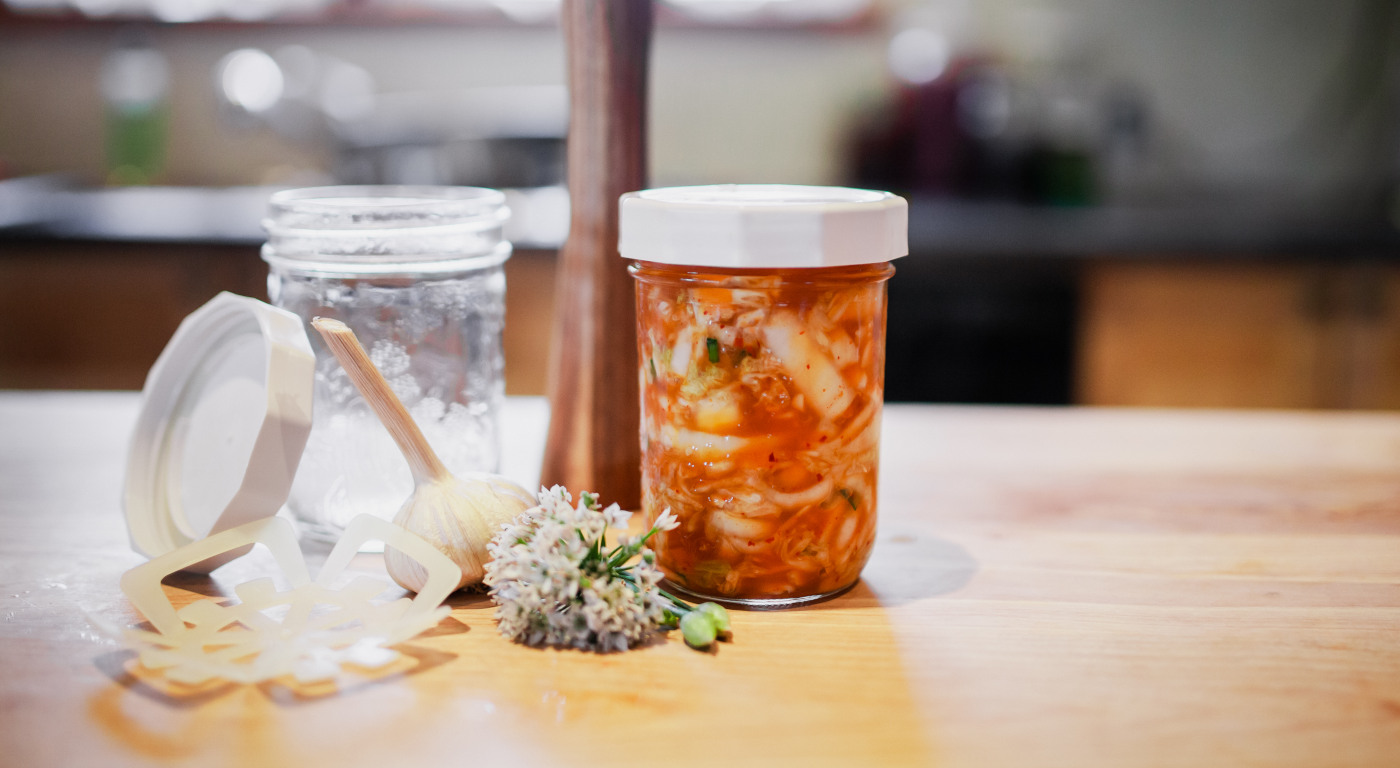

Making kimchi at home is one of the most rewarding fermentation projects for homesteaders and food gardeners. The process is simple, the ingredients are affordable, and you’ll have a probiotic-rich condiment that transforms your meals while supporting gut health. Whether you’re a fermentation beginner or experienced preserver, this traditional kimchi recipe delivers authentic Korean flavor without complicated steps.
How to Make Traditional Kimchi
This classic kimchi recipe uses napa cabbage as the base with a spicy, savory paste coating. Fermentation happens naturally at room temperature over several days.
Ingredients
- 1 head napa cabbage, roughly 2-3 pounds
- 3-4 tablespoons non-iodized salt, divided
- 2-3 tablespoons gochugaru (Korean red chili flakes)
- 4-5 cloves garlic, minced
- 1 tablespoon fresh ginger, minced
- 2-3 scallions or green onions, chopped
- 1 teaspoon sugar
- 2 cups filtered water
Method
Prepare the cabbage
Remove the outer leaves and set aside. Slice the cabbage lengthwise into quarters, then cut across into 2-inch pieces. Rinse thoroughly under cool water and pat dry with a clean cloth.
Salt the cabbage
Place cabbage in a large bowl and sprinkle with 2-3 tablespoons of salt. Massage the salt into the leaves for 5-10 minutes until they release their liquid. The cabbage should become limp and wilted. Let sit for 30 minutes, stirring occasionally.
Rinse and drain
Rinse the salted cabbage under cool water twice to remove excess salt, then press gently to remove water. This step prevents the kimchi from becoming overly salty during fermentation.
Make the paste
In a small bowl, combine minced garlic, ginger, gochugaru, sugar, and remaining 1 tablespoon salt. Mix with a spoon until a thick paste forms. Add a tablespoon of water if the mixture is too dry.
Coat the cabbage
Working in batches, take a small handful of cabbage and spread a thin layer of paste on each piece, working from the outside leaves inward. Return coated cabbage to the bowl and repeat until all pieces are covered. Mix gently but thoroughly.
Pack the jar
Transfer the coated cabbage and any accumulated liquid into a clean glass jar, pressing down firmly so the cabbage is submerged under its own juices. Leave 1 inch of headspace. Tuck reserved outer cabbage leaves on top to keep pieces submerged.
Ferment at room temperature
Cover the jar loosely with a cloth or loose lid to allow gases to escape. Keep at room temperature (68-75 degrees F) away from direct sunlight. Taste after 3 days; ferment for 3-7 days depending on desired sourness and room temperature.
Transfer to cold storage
Once fermentation reaches your preference, seal the jar and move to the refrigerator. Kimchi continues fermenting slowly in cold storage and keeps for 2-3 months.
- Use non-iodized salt only–iodine interferes with fermentation and creates off-flavors. Sea salt or pickling salt work best.
- Keep cabbage submerged by using a smaller jar inserted inside, a fermentation weight, or clean cabbage leaves as a barrier against mold.
- Taste kimchi on day 3 and every day after; fermentation speed varies with room temperature, so check regularly rather than assuming a set timeline.
What to Look For in Fermentation Equipment
- Fermentation vessel capacity: Choose a glass jar with at least 1-2 quart capacity for small batches. Wider-mouth jars are easier to pack and remove kimchi from. Avoid plastic or metal containers that can react with salt and acid.
- Weight or submersion method: Keeping vegetables submerged prevents mold growth. Look for dedicated fermentation weights, or use smaller jars and kitchen tools that fit inside your vessel to press produce down below the brine line.
- Breathable cover: Fermentation produces gas that must escape, so avoid airtight lids during active fermentation. Cloth covers, coffee filters, and loose lids work well; transition to sealed storage only after fermentation completes.
- Temperature stability: Ideal fermentation occurs between 65-75 degrees F. A dark, cool corner of your kitchen away from direct sunlight is often sufficient. Consistent temperature produces more predictable results than fluctuating conditions.
Bormioli Rocco Fido Glass Jar with Hinged Lid (2 Quart)
Best for: Serious fermenters who want traditional glass with reliable sealing
This Italian glass jar features a hinged ceramic stopper and rubber gasket that allows gases to escape during fermentation while preventing contamination. The wide mouth makes filling and removing kimchi effortless. The transparent glass lets you monitor fermentation progress without opening the jar. At 2-quart capacity, it’s large enough for a small household batch. The durable construction withstands years of fermentation cycles, making it a one-time investment.
Check Current Price on Amazon →Ball Wide Mouth Quart Canning Jar (Pack of 12)
Best for: Budget-conscious beginners making multiple small batches
Standard mason jars are reliable fermentation vessels when used with loose lids or cloth covers. This 12-pack provides affordability and extra jars for simultaneous ferments or storage. The wide mouth design accommodates vegetables easily. While not purpose-built for fermentation, these jars have proven themselves over decades of home preserving. Use a cloth or coffee filter secured with a rubber band to allow gas exchange.
Check Current Price on Amazon →Mortier Pilon Fermentation Jar Kit (1 Liter)
Best for: First-time fermenters who want built-in guidance and weights
This Canadian-made kit includes a 1-liter glass jar, glass weights, and an airlock lid designed specifically for fermentation. The included instruction guide demystifies the process for newcomers. Glass weights keep vegetables submerged without extra tools. The airlock design lets CO2 escape while preventing outside air from entering. Perfect starter size for experimenting without large commitment. The quality construction encourages repeated use and exploration of different vegetables.
Check Current Price on Amazon →Harsch Fermentation Crock (5 Liter)
Best for: Dedicated fermenters wanting German engineering and large capacity
Harsch ceramic crocks are the gold standard for serious fermentation. The 5-liter capacity handles large family batches or multiple vegetables simultaneously. Traditional water-seal design creates an anaerobic environment that prevents spoilage. Heavy ceramic construction maintains optimal fermentation temperature. The curved sides allow perfect weight placement, and the design has been refined in Germany for generations. Investment piece that lasts decades.
Check Current Price on Amazon →Start Your Kimchi Fermentation Today
Making traditional kimchi is an accessible entry point into fermentation for homesteaders and gardeners. The recipe requires only common vegetables, pantry spices, and salt. Your biggest investment is a quality glass vessel that will serve you for years of fermentation experiments. Whether you choose a simple mason jar or a dedicated fermentation crock, the process works the same: salt your cabbage, coat it with spicy paste, submerge it in brine, and let time and beneficial bacteria do the work. Within a week, you’ll have a probiotic-rich condiment that costs a fraction of store-bought versions.
Start small with a single 2-quart batch to understand how fermentation works in your kitchen environment, then expand to larger vessels or faster ferments as you gain confidence. The best fermentation vessel is the one you’ll actually use–whether that’s an expensive German crock or a humble mason jar. Your success depends on consistency, clean practices, and patience, not equipment cost. Once you’ve made your first jar of kimchi, you’ll understand why this ancient Korean technique has sustained communities for generations.
Frequently Asked Questions
How salty should my kimchi be?
The brine should taste pleasantly salty when you lick your finger–similar to seawater. This level of salinity prevents harmful bacteria while allowing beneficial lactobacillus to thrive. Start with the recommended 3-4 tablespoons total salt and adjust slightly based on your preference in future batches.
What does properly fermented kimchi smell like?
Good fermentation produces a pungent, sour, garlicky aroma that intensifies over days. If your kimchi smells rotten, fishy, or foul in an unpleasant way (versus the normal strong funkiness), mold may have contaminated it. A white surface film is usually harmless kahm yeast; mold appears fuzzy and greenish.
Can I use regular table salt for kimchi?
No–avoid table salt with iodine or anti-caking agents, which interfere with fermentation and darken vegetables. Use non-iodized sea salt, kosher salt, or pickling salt. The fermentation process requires pure sodium chloride without additives.
Is my kimchi still good if it tastes very sour?
Yes–sourness means fermentation has progressed. Very sour kimchi has been fermenting longer (often 7+ days or in warm temperatures). Move it to the refrigerator immediately to slow fermentation. Use it in cooking, soups, or as a condiment for stronger-flavored dishes.
How long does homemade kimchi last in the refrigerator?
Properly fermented and sealed kimchi keeps 2-3 months in the refrigerator, though flavor continues evolving slowly. It becomes increasingly sour over time. Discard only if you notice mold, off-odors, or slimy texture. Taste and appearance are your best guides.
As an Amazon Associate, Build & Bloom earns from qualifying purchases. We only recommend products we genuinely think are useful. Prices and availability vary; check Amazon for the latest.
Leave a Reply