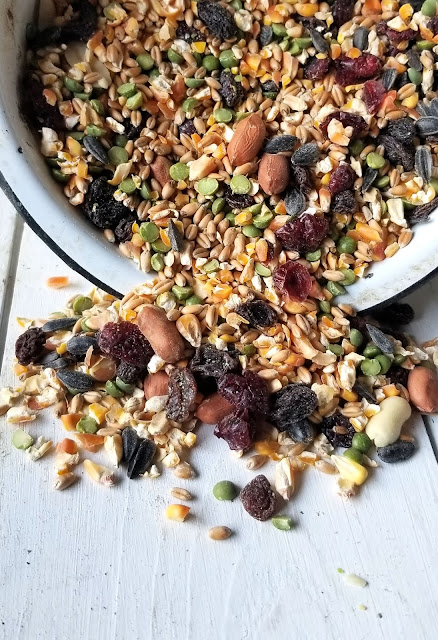

Store-bought chicken scratch can drain your homesteading budget fast, especially if you’re feeding a large flock. The good news: making your own scratch grain at home is simple, cost-effective, and lets you control exactly what goes into your birds’ diet. This recipe gives your chickens the whole grains and seeds they love while keeping your feed costs down and nutritional quality up.
How to Make Homemade Chicken Scratch Grain
This basic recipe yields about 25 pounds of scratch grain and costs roughly half what commercial blends charge. Scale the quantities up or down based on your flock size and storage space.
Ingredients
- 10 pounds of cracked corn (main energy source and flock favorite)
- 6 pounds of rolled oats or steel-cut oats (added fiber and warmth)
- 4 pounds of millet seed (small seeds birds peck eagerly)
- 3 pounds of black oil sunflower seeds (protein and fat for feather health)
- 2 pounds of split peas or cracked barley (legumes for amino acids)
Method
Gather and measure all ingredients
Pour each ingredient into your measuring container and verify amounts using a kitchen scale for accuracy. Weighing rather than measuring by volume ensures consistent batches and proper nutritional balance across your grain mix.
Combine dry ingredients in a large container
Transfer all measured grains and seeds into a large mixing vessel such as a 5-gallon bucket or feed storage bin. Choose a container with a tight-fitting lid so you can seal and store the finished batch without transferring it again.
Mix thoroughly with a scoop or shovel
Stir the mixture for 2-3 minutes using a sturdy scoop or shovel, making sure to blend from the bottom and sides to distribute smaller seeds evenly throughout the batch. The goal is uniform distribution so each handful your chickens eat contains a balanced ratio of all ingredients.
Break up any clumped seeds
Run your hands or a wooden spoon through the mixture to break apart any clusters of oil-rich seeds that may have stuck together. This prevents larger seeds from settling to the bottom during storage and ensures consistent nutrition with every scoop.
Store in airtight containers away from moisture
Transfer the finished scratch grain into sealed buckets or containers with tight lids. Place in a cool, dry location away from direct sunlight, moisture, and rodent access. Properly stored scratch grain keeps for 4-6 weeks without spoiling.
Feed to your flock as a treat or supplement
Scatter a small handful of scratch grain per bird directly on the ground or in a shallow feeding tray. Use as a daily treat or afternoon supplement rather than a complete diet replacement, as scratch is lower in protein than layer pellets.
- Buy ingredients in bulk from agricultural supply stores or feed mills rather than grocery stores to save 30-40% compared to retail pricing.
- Adjust the recipe based on season: add more sunflower seeds in winter for extra fat and warmth, and increase millet in spring and summer for variety.
- Store a small test batch in a glass jar first to check that your chickens actually enjoy the blend before mixing a large 25-pound batch.
What to Look For in Chicken Scratch Grain Supplies
- Storage Container Capacity: A 5-gallon bucket holds approximately 25-30 pounds of mixed grain and is ideal for a small to medium flock. Larger homesteads may want multiple buckets or a larger storage bin with a hinged lid and locking clasp to keep contents dry and pest-free.
- Ingredient Source and Quality: Purchase grains from feed mills, agricultural co-ops, or bulk suppliers that source non-GMO ingredients when possible. Inspect seeds visually for debris, mold, or discoloration before buying, as quality directly impacts your chickens’ health and feed conversion.
- Measuring Accuracy: A reliable kitchen scale ensures consistent recipe batches and prevents over- or under-mixing of expensive ingredients like sunflower seeds. Digital scales with tare function let you measure directly into the mixing container without constant transfers.
- Mixing Equipment: A sturdy metal or wooden scoop and a large mixing vessel make blending faster and more thorough. Consider a shop-style shovel for larger batches, as it handles coarse grains better than delicate kitchen utensils.
Rubbermaid Roughneck 14-Gallon Storage Container with Latch Lid
Best for: Homesteaders needing reliable, airtight scratch grain storage
This heavy-duty plastic storage bin offers 14 gallons of space–enough for two full batches of homemade scratch grain. The secure latch lid keeps moisture and rodents out, while the stackable design saves space in a garage or shed. Rubbermaid’s reputation for durability means this container will outlast multiple seasons of daily use. The translucent walls let you see when supplies run low without opening the lid.
Check Current Price on Amazon →5-Gallon Food Grade Bucket with Gamma Lid
Best for: Budget-conscious farmers wanting simple, affordable storage
Standard food-grade buckets are the workhorse of small homesteads. This pack includes a 5-gallon bucket rated for food storage and a Gamma-style screw-on lid that seals tightly. At under $10 per bucket, they’re the most economical choice for storing your grain batches. Easy to stack, transport, and label, these buckets work for both storage and mixing depending on batch size.
Check Current Price on Amazon →Etekcity Digital Kitchen Scale with Bowl
Best for: First-time scratch makers wanting foolproof ingredient measurements
This affordable digital scale eliminates guesswork when measuring grains and seeds. The tare function resets to zero after placing your bowl, so you can measure each ingredient directly without transferring back and forth. Large LCD display shows ounces or grams, and the scale handles up to 11 pounds–perfect for measuring ingredients one at a time before combining. Compact size stores easily in a kitchen drawer.
Check Current Price on Amazon →Cambro Polycarbonate Food Storage Containers 6-Piece Set
Best for: Serious homesteaders needing professional-grade organization
Cambro containers are used by restaurants and commercial kitchens for good reason–they’re virtually indestructible. This 6-piece set includes containers ranging from 2 to 6 quarts, perfect for organizing multiple grain batches or keeping different recipe variations separate. Crystal-clear polycarbonate lets you monitor fill levels at a glance, and graduated measurements on the side show quantities precisely. Lids are color-coded for easy identification.
Check Current Price on Amazon →Start Making Your Own Chicken Scratch Today
Homemade chicken scratch grain is one of the easiest and most rewarding DIY projects for backyard chicken keepers. By spending just 15-20 minutes mixing grains and seeds, you’ll save hundreds of dollars annually while giving your flock a customized diet that matches their nutritional needs and seasonal preferences. The recipe is forgiving–adjust proportions based on what your birds love most and what your local feed suppliers have in stock.
Start with a single 25-pound batch using the basic recipe outlined above, then tweak the blend based on your flock’s response and your budget. Many experienced homesteaders keep multiple variations on hand: a winter blend with extra sunflower seeds for warmth, a spring blend with more variety to prevent boredom, and a standard summer mix. Invest in good storage containers and measuring tools now, and you’ll have a reliable system that keeps your flock happy and your wallet fuller for years to come.
Frequently Asked Questions
Can I use whole grains instead of cracked corn in this recipe?
Yes, whole grains work, but cracked corn is easier for chickens to digest and eat than whole kernels. If you prefer whole grains, soak them in water for 2-3 hours before feeding to soften them. You can also purchase a small grain mill to crack larger quantities at home.
How often should I feed scratch grain to my chickens?
Scratch grain should be a treat or supplement, not a complete diet. Feed a small handful per bird 3-5 times weekly, ideally in the afternoon after they’ve eaten their main layer pellets. Excessive scratch grain can cause nutritional imbalances and obesity, especially in less active flocks.
What’s the shelf life of homemade scratch grain?
Properly stored in airtight containers in a cool, dry place, homemade scratch grain keeps for 4-6 weeks. Exposure to humidity, warmth, or sunlight shortens shelf life and increases mold risk. Store in a garage or shed rather than a damp coop for best results.
Can I add treats like dried mealworms or oyster shells to my scratch blend?
Absolutely. Dried mealworms add protein and are a favorite treat, while crushed oyster shells provide calcium for laying hens. Add these as 5-10% of your total batch so they don’t overwhelm the base grain mix. Keep oyster shells separate if feeding to non-laying birds like roosters or chicks.
Is homemade scratch grain really cheaper than store-bought?
Yes, typically 40-50% cheaper when buying ingredients in bulk from feed mills rather than grocery stores. A 25-pound batch costs around $8-12 to make versus $20-30 for commercial brands. Savings increase with larger flocks and when buying seasonal bulk grains.
As an Amazon Associate, Build & Bloom earns from qualifying purchases. We only recommend products we genuinely think are useful. Prices and availability vary; check Amazon for the latest.
Leave a Reply