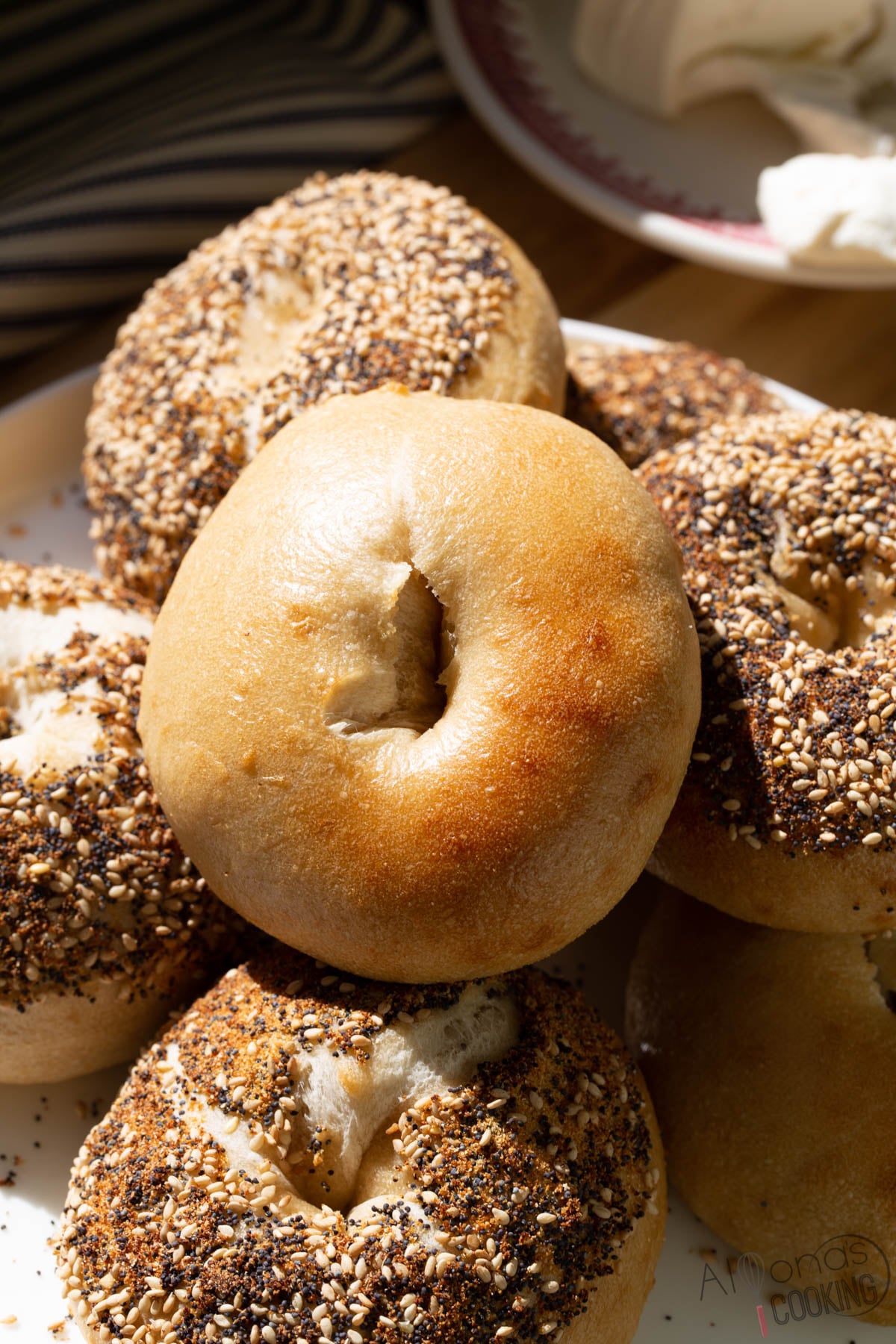

Traditional bagels have that distinctive chewy texture and subtle tang that store-bought versions rarely deliver. When you make sourdough bagels at home, you control the fermentation time, hydration, and boiling technique–resulting in bagels with deep flavor and that perfect dense crumb that holds up to any topping. Whether you’re already baking sourdough bread or just starting to explore fermented dough, bagels are an achievable weekend project that yields impressive results.
How to Make Chewy Sourdough Bagels
This method uses a long, cold overnight fermentation to develop flavor and improve digestibility. The bagels boil briefly before baking, creating their signature chewy crust and tender interior.
Ingredients
- 2 cups active sourdough starter (fed 4-8 hours before use, bubbly and at peak)
- 3 cups bread flour or all-purpose flour
- 1 1/2 teaspoons fine sea salt
- 1 tablespoon honey or sugar (for dough)
- 2 quarts water with 1 tablespoon honey or baking soda (for boiling)
Method
Mix the Dough
Combine your active sourdough starter with 3/4 cup water in a large mixing bowl. Add bread flour, salt, and honey. Stir until all flour is incorporated and you have a shaggy, stiff dough. No kneading is needed at this stage.
Bulk Fermentation
Let the dough rest at room temperature for 4-6 hours, performing 3-4 sets of stretch and folds at 30-minute intervals during the first 2 hours. The dough will become smoother and more extensible. By the end, it should feel alive and jiggly but hold its shape.
Shape Into Bagel Rounds
Turn the dough onto a lightly floured surface and divide into 6-8 equal pieces (roughly 90-110g each). Pre-shape each piece into a tight round, then let rest uncovered for 10 minutes to relax the gluten before final shaping.
Form the Bagel Rings
Take each round and poke a hole in the center with your thumb. Gently stretch and rotate the dough to form a ring about 3 inches in diameter with a 1.5-inch hole. Aim for even thickness throughout. Place each bagel on parchment paper.
Cold Overnight Fermentation
Cover the shaped bagels loosely with a towel or place in the refrigerator uncovered for 12-18 hours. This long, cold rest develops complex flavor and makes the dough easier to handle. The bagels should puff slightly but won’t be pillowy like bread.
Prepare for Boiling
Remove bagels from the refrigerator 30 minutes before boiling. Bring a large pot of water to a rolling boil and add honey or baking soda (baking soda creates a darker, crispier crust). Working in batches, gently place bagels into the boiling water.
Boil and Bake
Boil each bagel for 60-90 seconds per side (the dough should sink, then float, then sink again). Remove with a slotted spoon and place on a baking sheet lined with parchment. Bake at 425F for 20-25 minutes until deep golden brown.
Cool and Enjoy
Transfer bagels to a wire rack and cool for at least 15 minutes before slicing. The crumb will continue to set as they cool. Store in a paper bag or bread box for up to 3 days, or freeze for later.
- Use a scale to weigh your starter, flour, and dough pieces. Consistency in bagel weight ensures even baking and predictable results.
- Don’t skip the cold fermentation. This time in the refrigerator is what builds the tangy flavor and chewy texture that defines great sourdough bagels.
- Test your bagel dough readiness by doing a poke test: gently press the shaped bagel; it should slowly spring back halfway. If it springs back completely, it needs more fermentation.
What to Look For in Bagel-Baking Equipment
- Dutch Oven or Heavy Baking Vessel: A covered baking environment retains steam during the initial bake phase, which promotes oven spring and crust development. Cast iron or ceramic options are most durable and heat-retentive.
- Large Boiling Pot with Slotted Spoon: Bagels must boil briefly in a wide pot for even cooking. A slotted spoon prevents bagels from tearing and allows controlled removal without splashing boiling water.
- Digital Kitchen Scale: Precise measurements by weight ensure consistent bagel size and bake time. Scaling dough pieces to 90-110g each eliminates guesswork and improves success rates.
- Wire Cooling Rack: Bagels must cool on a rack to allow air circulation underneath. This prevents the bottom from becoming soggy and helps the crumb set properly.
Lodge Cast Iron Dutch Oven 5.5 Quart
Best for: Home bakers making bagels and crusty breads
This seasoned cast iron Dutch oven is the workhorse of sourdough and bagel baking. Its heavy construction distributes heat evenly, and the lid traps steam during the critical first 15 minutes of baking, creating the chewy crust that defines excellent bagels. The 5.5-quart capacity accommodates a full batch, and it lasts for generations with basic care.
Check Current Price on Amazon →Anova Culinary Precision Digital Kitchen Scale
Best for: First-time bagel makers and sourdough bakers
This compact digital scale provides accurate measurements to 0.1 ounce, making bagel dough portioning foolproof. Its intuitive display, tare function, and durable platform handle repeated use. At an accessible price point, it eliminates the most common source of bagel inconsistency: uneven dough weights.
Check Current Price on Amazon →Le Creuset Enameled Cast Iron Dutch Oven 5.5 Qt Caribbean Blue
Best for: Bakers who want heirloom quality and color
Le Creuset’s enameled cast iron Dutch oven offers superior heat retention and a non-reactive enameled interior that eliminates seasoning maintenance. The vibrant exterior brings kitchen style, while the heavy construction ensures even heat distribution for bagels with perfect crust and crumb.
Check Current Price on Amazon →Rubbermaid Brilliance Digital Kitchen Scale
Best for: Cost-conscious bakers on a tight budget
This no-frills digital scale delivers accurate gram and ounce measurements without premium features. It’s sufficient for weighing bagel dough portions and fermentation starter. While less durable than premium models, it provides reliable measurements for fraction of the cost.
Check Current Price on Amazon →Start Your Bagel Baking Journey This Weekend
Making sourdough bagels is entirely achievable for home bakers, even if bread baking feels intimidating. The long cold fermentation does most of the work for you, developing complex flavor while you sleep. The boiling step is quick and straightforward, and the reward is bagels that taste nothing like supermarket versions. With a scale, a sturdy pot, and proper equipment, you’ll produce bagels that rival the best bagel shops in your city.
Start by gathering quality ingredients and the essential tools listed above. Your first batch might not be perfect–and that’s fine. Each bake teaches you how your particular kitchen, starter, and equipment interact. By your third or fourth batch, you’ll develop an intuitive feel for the dough and know exactly how long fermentation takes in your environment. Soon, fresh sourdough bagels become a regular weekend ritual, and you’ll wonder why you ever bought them from anywhere else.
Frequently Asked Questions
Can I use sourdough starter that’s not at peak activity?
Peak starter (bubbly, doubled in size, with a slightly domed top) is essential for proper fermentation and rise. Feed your starter 4-8 hours before mixing, then wait until it reaches maximum volume. Using inactive starter will result in dense, gummy bagels that don’t hold their shape.
What’s the difference between boiling with honey versus baking soda?
Honey adds subtle sweetness and creates a glossy, burnished crust. Baking soda produces a deeper mahogany color and crispier exterior. Both work; choose based on your flavor preference and desired crust appearance.
Can I skip the overnight cold fermentation?
The cold fermentation is responsible for the tangy flavor and chewy texture. Skipping it will give you denser, blander bagels. If timing is tight, you can do 4-6 hours in the refrigerator, but 12-18 hours is ideal.
How do I know when my bagels are proofed and ready to boil?
Use the poke test: gently press a shaped bagel with your finger. It should slowly spring back halfway. If it springs back completely, fermentation isn’t complete. If it doesn’t spring back at all, you’ve overproofed.
How should I store sourdough bagels to keep them fresh longer?
Keep them in a paper bag or bread box at room temperature for up to 3 days. For longer storage, slice and freeze them in an airtight container for up to 2 months. Reheat frozen bagels in a toaster oven at 350F for 10-12 minutes.
As an Amazon Associate, Build & Bloom earns from qualifying purchases. We only recommend products we genuinely think are useful. Prices and availability vary; check Amazon for the latest.
Leave a Reply