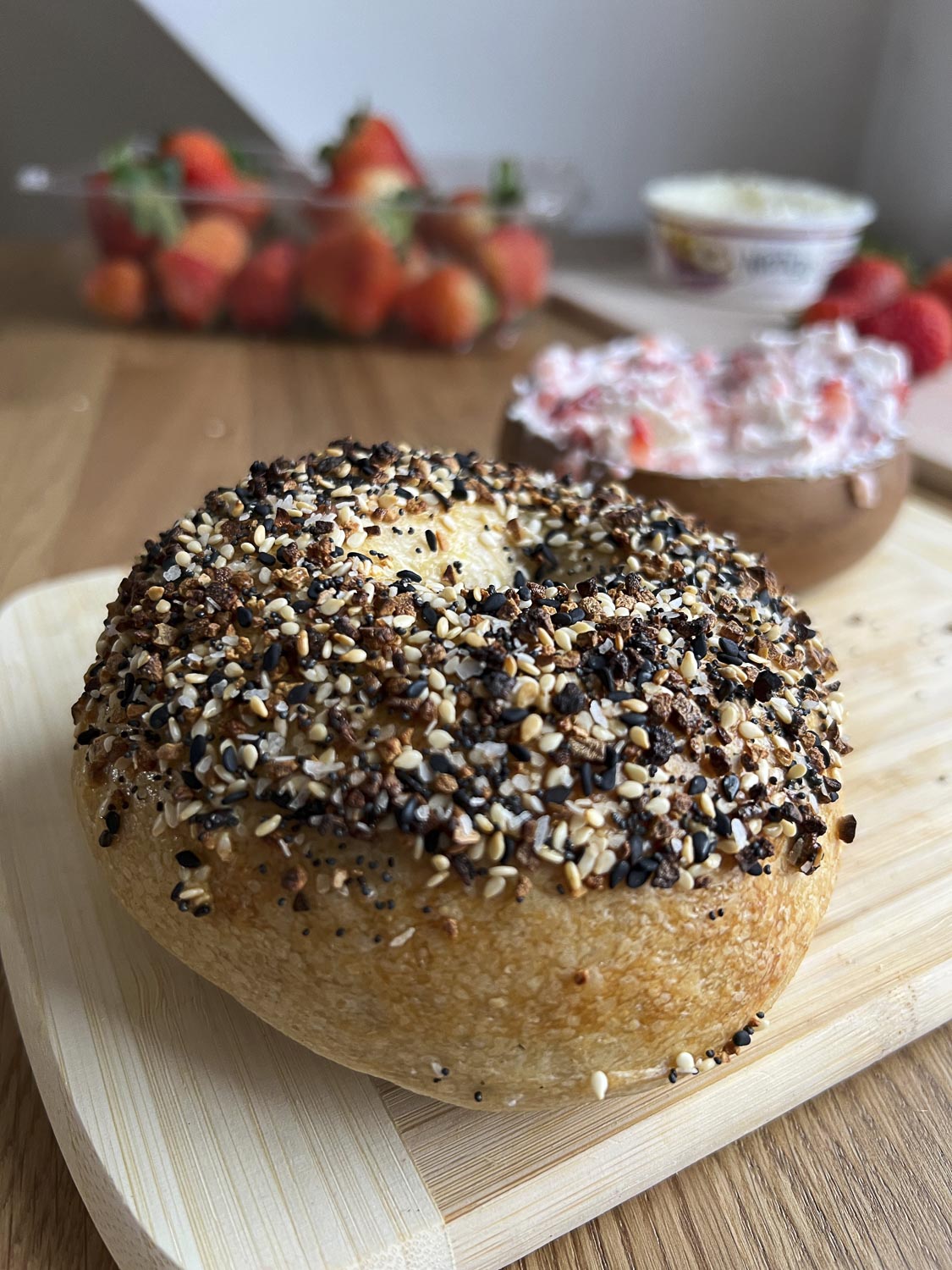

Making bagels at home seems intimidating, but sourdough bagels are actually more forgiving than traditional recipes because the long fermentation develops flavor without requiring commercial yeast. The ‘everything’ seasoning—a mix of sesame, poppy, garlic, onion, and sea salt—transforms simple dough into a bakery-quality bagel you can’t buy fresh in most places. If you already have sourdough starter, you have everything you need to begin.
How to Make Sourdough Everything Bagels
This recipe makes six to eight bagels and uses a slow fermentation method that develops deep flavor. Plan for 24-48 hours total time, with most of that being hands-off.
Ingredients
- 1 cup active sourdough starter (fed 4-8 hours prior)
- 1 1/2 cups warm water
- 3 1/2 cups bread flour
- 2 teaspoons salt
- 1 tablespoon honey or sugar
- Everything bagel seasoning blend (sesame seeds, poppy seeds, garlic powder, onion powder, sea salt)
Method
Mix the dough
Combine your active sourdough starter, warm water, and flour in a large bowl. Mix until all flour is hydrated and no dry bits remain. Let this mixture rest for 30 minutes (this is called autolyse). After resting, add salt and honey, then knead for 8-10 minutes until the dough becomes smooth and elastic.
Begin bulk fermentation
Place dough in an oiled bowl, cover loosely, and let it ferment at room temperature for 4-6 hours. Perform four stretch-and-fold motions (gently pulling dough from the sides and folding over itself) at 30-minute intervals during the first 2 hours. The dough should increase in volume by about 50% and feel airy.
Cold retard for flavor
After bulk fermentation, transfer the dough to the refrigerator and let it rest overnight (8-16 hours). This cold fermentation develops complex sourdough flavor and makes shaping easier. The dough will continue to rise slowly in the cold.
Divide and shape
Remove dough from refrigerator and divide into 6-8 equal portions. Shape each portion into a tight ball, then use your thumb to poke a hole in the center. Gently stretch the dough into a bagel ring about 3-4 inches in diameter, keeping the hole consistent. Place shaped bagels on parchment paper.
Proof at room temperature
Cover shaped bagels with a damp cloth and let them proof for 2-4 hours at room temperature until they’re puffy but still hold their shape when gently pressed. You want them risen but not over-fermented, or they’ll burst during boiling.
Prepare boiling water and toppings
Fill a large pot with water and bring to a boil. Add 1 tablespoon of honey or malt syrup to the water (this creates a glossy crust). Pour your everything bagel seasoning into a shallow dish. Have a slotted spoon and cooling rack ready.
Boil the bagels
Carefully place bagels into boiling water, a few at a time so they have space. They’ll sink, then float to the surface after 30-45 seconds. Boil for another 30-45 seconds per side (total 1-1.5 minutes). Remove with a slotted spoon and place on a cooling rack.
Season and bake
While bagels are still slightly warm and damp from boiling, brush or spray lightly with water and immediately press the top into the everything bagel seasoning. Place on a lined baking sheet and bake at 425 degrees Fahrenheit for 22-28 minutes until golden brown and crispy. Cool on a wire rack before slicing.
- Use a scale to weigh ingredients for consistency—sourdough bagels are sensitive to hydration ratios, and volume measurements vary by how densely you pack flour.
- The boiling step is crucial and non-negotiable; it creates the bagel’s characteristic chewy texture by setting the exterior starch before baking.
- If your sourdough starter is weak or young, add 1/4 teaspoon instant yeast to the dough to ensure reliable rise, though pure sourdough fermentation will work with patience.
What to Look For in Sourdough Bagel-Making Equipment
- Dough scale: Digital scales ensure consistent bagel size and fermentation results. Look for one with 0.1 oz or 1 gram precision and a 5+ pound capacity. A scale is the single most valuable tool for sourdough baking success.
- Dutch oven or covered baking vessel: While not strictly required for bagels, a heavy covered vessel traps steam during baking and isn’t necessary since bagels are boiled first. A simple baking sheet suffices, but look for heavy-duty material that distributes heat evenly.
- Slotted spoon: A wide, sturdy slotted spoon safely removes bagels from boiling water without tearing dough. Look for stainless steel with a handle long enough to keep hands away from steam.
- Banneton or proofing bowl: While optional, a round banneton basket supports bagel dough during the final proof and prevents them from spreading sideways. Natural cane or silicone models work equally well. A standard mixing bowl lined with a well-floured kitchen towel is a free alternative.
Escali Primo Digital Kitchen Scale
Best for: Serious sourdough bakers
The Escali Primo is a precision digital scale with 0.1 oz and 1 gram accuracy, perfect for weighing sourdough ingredients with consistency. Its 11-pound capacity handles flour, water, and starter easily. The bright LCD display is easy to read, and the stainless steel platform is durable for daily baking. Tare function lets you weigh multiple ingredients in one bowl without resetting. This scale transforms sourdough baking from guesswork to science.
Check Current Price on Amazon →Hario V60 Gooseneck Kettle with Thermometer
Best for: Temperature-conscious bakers
While not exclusively for bagels, this precision kettle ensures your water hits the exact temperature needed for dissolving honey in boiling water and maintaining consistent fermentation temperatures. The built-in thermometer eliminates guesswork, and the gooseneck design gives control when pouring. Stainless steel construction withstands repeated use. Temperature control is subtle but important for sourdough consistency.
Check Current Price on Amazon →OXO Good Grips Slotted Spoon
Best for: Home bagel makers
The OXO slotted spoon is a reliable, ergonomic tool designed for removing foods from boiling liquid. Its soft-grip handle stays cool and provides control, while the wide, shallow bowl safely scoops bagels without breaking dough. The stainless steel slots drain quickly, and the spoon is long enough to keep hands safely away from steam. This is the workhorse tool you’ll use every time you boil bagels.
Check Current Price on Amazon →Banneton Proofing Basket by Bellemain
Best for: First-time bagel makers
The Bellemain banneton is a round, natural cane proofing basket specifically sized for bagel-shaped dough. Its traditional design supports dough during final fermentation, preventing it from spreading flat. The circular shape is ideal for round bagels, and the natural cane won’t stick to dough if properly floured. At an affordable price point, it removes a barrier to consistent bagel shaping without requiring DIY cloth-lined bowls.
Check Current Price on Amazon →Making Sourdough Everything Bagels at Home
Sourdough everything bagels are achievable for any home baker with a starter and patience. The recipe looks lengthy because fermentation is slow, but active work time is under an hour spread across two days. The boiling step is non-negotiable and creates that signature chewy bagel texture you can’t replicate in an oven alone. Start with a scale to ensure consistency, a slotted spoon for safe boiling, and a banneton basket to support your shaped dough. Everything else you likely already own.
The everything bagel seasoning transforms basic dough into something special, offering complexity that plain bagels can’t match. Once you nail the technique—usually by your second or third batch—you’ll wonder why you ever bought bagels from a store. Sourdough fermentation naturally develops flavor overnight, so even a novice baker produces results that rival professional bagel shops. Invest in the key tools, follow the fermentation timeline, and you’ll have fresh, tangy, seeded bagels for toast, sandwiches, and simple cream cheese breakfasts.
Frequently Asked Questions
Can I use a sourdough starter that’s less than a week old?
A very young starter (less than 5-7 days old) may lack the strength to fully leaven bagels. If your starter is brand new, add 1/4 teaspoon of instant yeast as insurance. Once your starter is a few weeks old and reliably doubling within 4-8 hours of feeding, you can rely on it alone.
What if I don’t have everything bagel seasoning?
You can mix your own: combine 2 tablespoons sesame seeds, 1 tablespoon poppy seeds, 1 tablespoon minced dried garlic, 1 tablespoon minced dried onion, and 1 teaspoon coarse sea salt. Store in an airtight jar. Alternatively, use just one topping like everything seeds, poppy seeds, or coarse salt for simplicity.
How do I know when the dough is ready to boil?
The shaped bagels should feel puffy but firm when gently pressed. They should rise but still hold their shape—if they’re drooping, they’re over-proofed. A quick test: poke the side gently; if the indent springs back slowly, they’re ready. If it springs back quickly, they need more time.
Can I freeze bagel dough before boiling?
Yes, freeze shaped, unboiled bagels on a baking sheet, then transfer to a freezer bag for up to 3 months. Boil directly from frozen (no thawing), adding 15-20 extra seconds to the boiling time. This is convenient for make-ahead baking.
What’s the difference between sourdough bagels and regular bagels?
Sourdough bagels rely on fermented starter for leavening and flavor, creating a tangier taste and more complex crumb without commercial yeast. They require longer fermentation (24-48 hours) but develop deeper flavor. Regular bagels use commercial yeast and proof faster but lack the nuanced sourness.
As an Amazon Associate, Build & Bloom earns from qualifying purchases. We only recommend products we genuinely think are useful. Prices and availability vary; check Amazon for the latest.
Leave a Reply