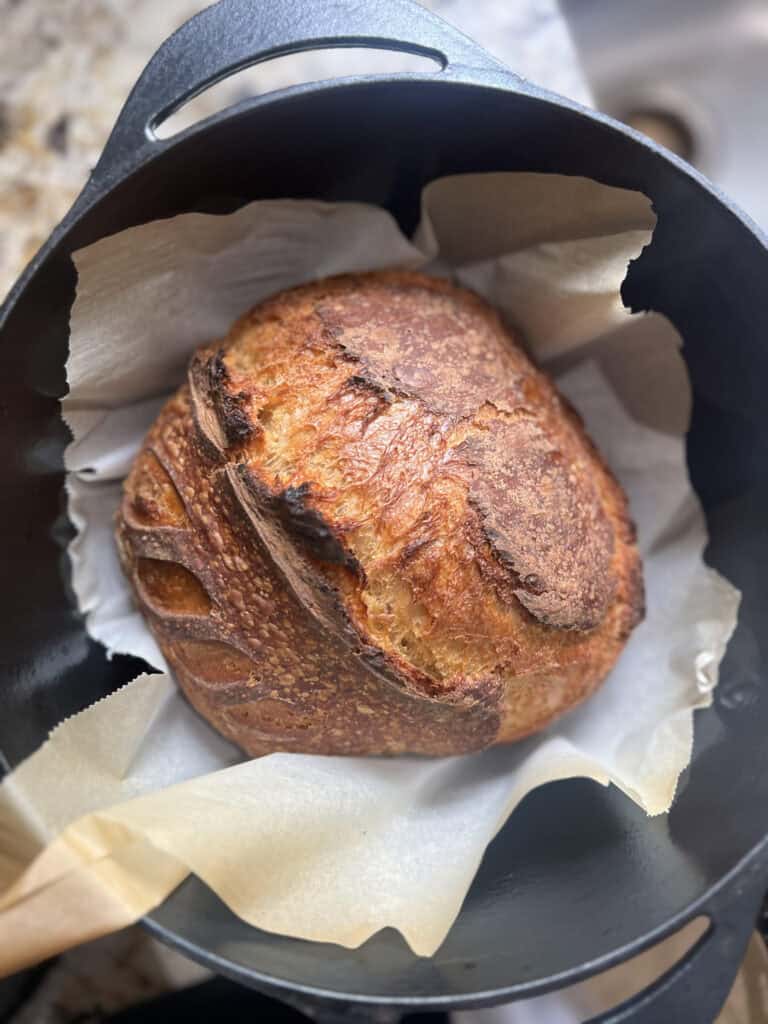

Gingerbread sourdough is a show-stopping loaf that bridges the gap between everyday bread and holiday treats. The warm spices complement the natural sourness of your starter, creating a loaf that’s aromatic, slightly sweet, and deeply satisfying. If you’ve mastered basic sourdough but want to experiment with flavor profiles, this recipe delivers impressive results with minimal extra effort.
How to Make Gingerbread Sourdough Loaf
This recipe combines your active sourdough starter with warming spices to create a beautifully complex loaf. Plan for a 3-4 day timeline including bulk fermentation and cold retard.
Ingredients
- 500g bread flour or all-purpose flour
- 350ml water at room temperature
- 100g active sourdough starter (fed 4-8 hours prior)
- 10g salt
- 8g ground ginger
- 6g ground cinnamon
- 2g ground cloves
- 1g freshly grated nutmeg
- 2 tablespoons unsulfured molasses or honey (optional, for subtle sweetness)
Method
Mix and Autolyse
Combine flour and 320ml of water in a large mixing bowl, stirring until all flour is hydrated. Let this mixture rest for 30-60 minutes at room temperature. This initial rest allows the flour to fully absorb water and develops gluten naturally.
Add Starter and Spices
After the autolyse, add your active starter, remaining 30ml water, salt, ginger, cinnamon, cloves, and nutmeg to the dough. Mix thoroughly for 5-10 minutes by hand or with a dough hook until the spices are evenly distributed and no dry flour remains. The dough should be shaggy but cohesive.
Bulk Fermentation with Stretches
Place the dough in a large, lightly oiled container. At room temperature (68-72F), perform a series of stretch-and-fold motions every 30 minutes for the first 2 hours (4 sets total). After this, let the dough rest undisturbed for 2-4 more hours until it increases 50-75% in volume and shows visible bubbles.
Pre-shape and Rest
Turn the dough onto a lightly floured surface and gently pre-shape it into a round. Let it rest uncovered for 20-30 minutes. This bench rest allows the gluten to relax before final shaping, making it easier to work with.
Shape and Cold Retard
Shape the dough using a standard boule or batard technique, creating surface tension as you go. Place seam-side up in a floured banneton basket or bowl lined with a kitchen towel. Cover and refrigerate for 12-24 hours. This long, cold fermentation develops deep flavor and makes scoring easier.
Prepare for Baking
Preheat your oven to 450F for at least 45 minutes, using a covered Dutch oven or baking vessel inside. Remove the dough from the refrigerator while the oven preheats. The cold dough will benefit from the extended preheat time.
Score and Bake
Carefully turn the cold dough out of the banneton onto a piece of parchment paper. Score the top with a sharp blade using a confident, swift motion in your desired pattern. Transfer to the hot Dutch oven, cover, and bake for 20 minutes. Remove the lid and bake an additional 25-30 minutes until the crust is deep golden brown.
Cool Completely
Remove the loaf from the oven and place it on a wire cooling rack. Resist cutting into it for at least 1-2 hours. The interior crumb continues to set during cooling, and cutting too early will compress the texture and release steam unevenly.
- Toast whole ginger, cinnamon, and cloves in a dry pan for 2-3 minutes before grinding to amplify their aromatic oils and deepen flavor complexity
- If your kitchen is cool (below 65F), extend bulk fermentation time by 1-2 hours or use slightly warmer water to maintain proper fermentation speed
- The cold retard is essential for gingerbread sourdough; it allows the spices to meld and mature, creating a more developed flavor than same-day baking would produce
Essential Equipment for Sourdough Baking
- Dutch Oven or Covered Baking Vessel: Traps steam during the first phase of baking, creating a crispy, expanded crust. Choose a 4-6 quart capacity with an oven-safe lid that tolerates 500F heat.
- Kitchen Scale: Sourdough success depends on precise measurement by weight, not volume. A digital scale measuring in grams ensures consistent results batch to batch.
- Banneton Proofing Basket: Supports the shaped dough during the final rise and retard, preventing it from spreading sideways. The ridged surface also helps create an attractive scored pattern.
- Lame or Sharp Scoring Knife: A specialized scoring tool or very sharp blade cuts clean, deep scores on cold dough without dragging or tearing, resulting in a professional-looking ear and bloom.
Le Creuset Enameled Cast Iron Dutch Oven 5.5 Qt
Best for: Serious sourdough bakers wanting heirloom quality
The gold standard for artisan bread baking. This heavy-duty Dutch oven distributes heat evenly and retains it exceptionally well, producing consistently beautiful crusts with expansive oven spring. The enameled interior won’t rust or require seasoning, and the pot will last decades with proper care. Le Creuset’s design has been proven by countless professional bakers.
Check Current Price on Amazon →Cuisinart Advantage Ceramics 5.5 Qt Dutch Oven
Best for: Budget-conscious bakers starting their sourdough journey
Delivers reliable baking performance at half the price of premium brands. The ceramic-coated cast iron interior is non-stick and toxin-free, and the pot handles repeated high-heat sourdough bakes without warping. This is an excellent starter Dutch oven that won’t break the bank while you develop your technique.
Check Current Price on Amazon →Oster Expressions 5 Qt Oval Dutch Oven
Best for: New bakers wanting forgiving, consistent results
The oval shape gives you extra room for larger boules, and the lightweight construction makes it easier to maneuver than cast iron. Oster’s design heats evenly and cools predictably, reducing the learning curve for temperature management. It’s also significantly less expensive than cast iron options.
Check Current Price on Amazon →Staub Cocotte Cast Iron Dutch Oven 5.5 Qt
Best for: Experienced bakers who value heirloom craftsmanship
Staub’s matte black enamel finish resists chips and staining better than glossy alternatives, and the self-basting lid design (with small spikes on the interior) promotes even moisture distribution. The heavier construction holds heat exceptionally well, rewarding skilled technique with dramatic crust development.
Check Current Price on Amazon →Final Recommendation
Gingerbread sourdough is an achievable seasonal project that rewards you with an aromatic, stunning loaf. The spice blend is forgiving enough for experimentation, so feel free to adjust proportions based on your taste preferences. Start with the suggested amounts, and scale up ginger or cinnamon in your next bake if you want deeper flavor. The long cold retard is non-negotiable; it’s what transforms this from pleasant bread into something truly memorable.
Invest in a reliable Dutch oven and digital scale as your core equipment, and you’ll nail this recipe consistently. The Le Creuset is the gold standard, but Lodge or Cuisinart options deliver nearly identical results at lower cost. Once you’ve successfully baked one loaf, you’ll understand the process well enough to tweak timing and hydration for your specific kitchen environment. That’s when sourdough becomes truly rewarding.
Frequently Asked Questions
Can I make gingerbread sourdough without molasses?
Absolutely. The molasses adds subtle sweetness and a slight caramel note, but the spices carry the gingerbread flavor on their own. Skip it if you prefer a more savory bread or don’t have it on hand.
What if my dough rises too quickly?
Move it to a cooler location or place it in the refrigerator temporarily to slow fermentation. Warm kitchens (above 75F) accelerate activity significantly. If bulk fermentation finishes early, proceed to shaping and cold retard rather than overfeeding your dough.
How long will gingerbread sourdough stay fresh?
Wrapped tightly in a cloth bag at room temperature, it stays fresh for 3-4 days. After that, slice and freeze individual portions. Toast from frozen to revive the texture and flavor.
Can I substitute ground spices with whole spices?
Yes, but grind them fresh just before mixing for maximum flavor. Whole spices lose potency once crushed, so measure by weight if possible. You may need slightly more whole spice by volume to achieve the same intensity.
Should I add extra salt because of the spices?
No, keep salt at 10g per 500g flour. Salt enhances spice flavors rather than competes with them. If you find the spices muted after baking, increase them slightly in your next loaf instead of adjusting salt.
As an Amazon Associate, Build & Bloom earns from qualifying purchases. We only recommend products we genuinely think are useful. Prices and availability vary; check Amazon for the latest.
Leave a Reply