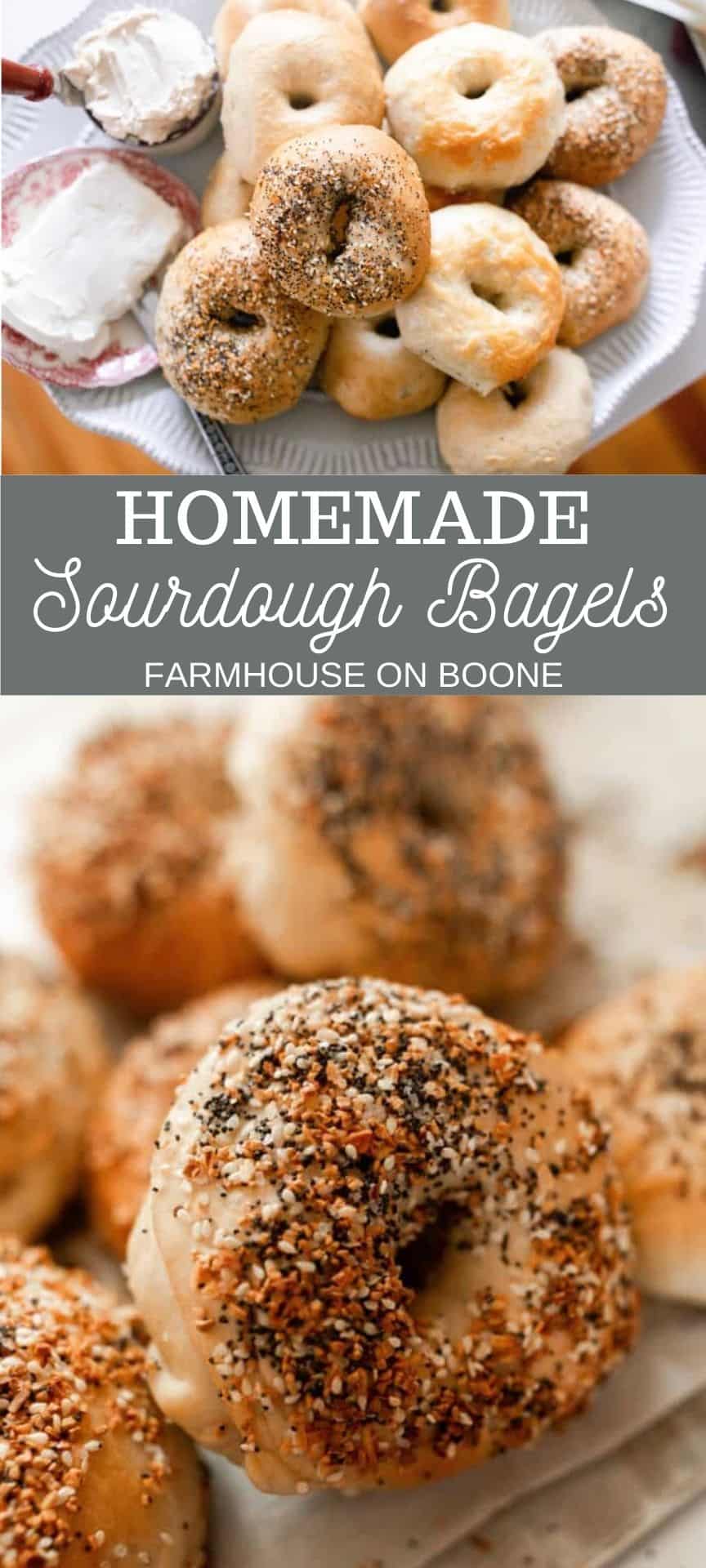

Homemade sourdough bagels taste nothing like the store-bought variety — they’re tangier, chewier, and have that perfect crispy-outside, pillowy-inside texture that makes you wonder why you ever bought them at a bakery. If you already have a sourdough starter going, you’ve got everything you need to transform it into bagels that rival the best bagel shops. The process takes two days but most of that is hands-off fermentation time, making it perfect for weekend baking.
How to Make Sourdough Bagels
This recipe uses active sourdough starter to create deeply flavored bagels. The long cold fermentation develops the characteristic tang while making the dough easier to shape.
Ingredients
- 1 cup active sourdough starter, fed and bubbly
- 1 1/2 cups warm water
- 3 1/2 cups bread flour
- 2 teaspoons salt
- 1 tablespoon honey or sugar (for boiling water)
- Optional toppings: sesame seeds, everything bagel seasoning, poppy seeds
Method
Mix the dough
Combine your fed sourdough starter with warm water in a large mixing bowl, stirring until mostly combined. Add bread flour and salt, then mix by hand or with a stand mixer until a shaggy dough forms. The mixture should be slightly stiff compared to bread dough. Knead for 8-10 minutes until smooth and elastic.
Bulk ferment at room temperature
Place the dough in a lightly oiled bowl, cover with a damp cloth, and let it rest at room temperature for 2-4 hours. You’re looking for the dough to increase in volume by about 50%, not a full doubling. The cooler your kitchen, the longer this will take.
Cold ferment overnight
Transfer the dough to a sealed container or cover the bowl tightly with plastic wrap and refrigerate for 12-24 hours. This extended cold fermentation develops the sour flavor and makes the dough much easier to shape without springing back.
Pre-shape and rest
Remove the dough from the refrigerator and divide it into 8-10 equal portions. Roll each piece into a ball and let them rest on your work surface, covered, for 15-20 minutes. This relaxes the gluten so they won’t fight you during final shaping.
Shape into bagels
Take one dough ball and poke a hole in the center with your thumb. Gently stretch and rotate the dough, enlarging the hole until you have a ring about 3 inches in diameter. The bagel should be about 1/2 inch thick. Repeat with remaining pieces.
Proof the shaped bagels
Place shaped bagels on a parchment-lined baking sheet. Cover loosely and let them proof at room temperature for 2-4 hours, or until they pass the poke test (when gently pressed, the indentation springs back slowly but not completely). You can also refrigerate them overnight for an even tangier flavor.
Boil the bagels
Bring a large pot of water to a rolling boil and add honey or sugar to enhance browning. Working in batches, carefully place bagels in the water. They should float after 30-60 seconds. Boil for 1 minute per side, then remove with a slotted spoon to a wire rack.
Bake until golden
Preheat your oven to 425F. Place boiled bagels on a baking sheet lined with parchment paper. If desired, brush with water and add your chosen toppings. Bake for 20-25 minutes until deeply golden brown. Cool on a wire rack before slicing.
- Your sourdough starter should be at peak activity (doubled in size, bubbly on top) when you use it. Feed it 4-8 hours before mixing if it seems sluggish.
- Don’t skip the boiling step — this is what creates the bagel’s signature chewy crust and dense crumb structure that distinguishes it from regular bread.
- If your bagels seem to be rising too fast during proofing, move them to the refrigerator to slow fermentation and develop more sour flavor.
Equipment You Need for Sourdough Bagel Baking
- Large mixing bowl: A sturdy 3-4 quart bowl is essential for mixing and bulk fermenting the dough. Choose one with a wide mouth for easy handling and ideally one you can see through to monitor dough development.
- Stand mixer with dough hook: While optional, a stand mixer saves significant arm fatigue when kneading the stiff bagel dough. A dough hook attachment does the work automatically in 8-10 minutes.
- Dutch oven or large heavy pot: You’ll need a pot deep and wide enough to comfortably boil 2-3 bagels at a time without them sticking together. Cast iron or stainless steel works equally well.
- Digital kitchen scale: Bagel dough is finicky, and weighing ingredients rather than measuring by volume ensures consistency between batches and more predictable results.
KitchenAid Artisan Stand Mixer
Best for: Home bakers making bagels regularly
The gold standard for home bakers, this 5-quart stand mixer handles stiff bagel dough effortlessly with its powerful motor and dough hook attachment. The tilting head design makes it easy to add ingredients mid-mixing, and the stainless steel bowl is durable enough for years of weekly baking. A single investment that transforms bread, pastry, and bagel making from exhausting hand work into hands-off mixing.
Check Current Price on Amazon →Hamilton Beach Stand Mixer
Best for: Budget-conscious bagel makers
This affordable stand mixer offers solid performance without the premium price tag. The 4-quart capacity handles bagel dough well, and the dough hook attachment does the heavy lifting. While not as powerful as commercial-grade mixers, it’s perfect for home use and occasional sourdough bagel batches.
Check Current Price on Amazon →Oxo Good Grips Digital Kitchen Scale
Best for: First-time bagel makers who want accuracy
This intuitive digital scale removes guesswork from sourdough bagel recipes by measuring ingredients precisely in grams or ounces. The large, easy-to-read display and simple button interface make it beginner-friendly, while the 11-pound capacity handles most home baking projects. Consistent measurements equal consistent bagels.
Check Current Price on Amazon →Le Creuset Enameled Cast Iron Dutch Oven
Best for: Serious bakers who want heirloom equipment
This iconic 7.25-quart Dutch oven excels at boiling bagels and can double as an excellent bread-baking vessel. The enameled cast iron interior resists water staining, while the heavy construction ensures even heat distribution. These ovens often last generations and come with a lifetime warranty, making them a premium investment in your baking future.
Check Current Price on Amazon →Start Your Sourdough Bagel Journey
Making sourdough bagels at home is one of the most rewarding baking projects you can undertake. The combination of a long fermentation, intentional shaping, and the dramatic transformation that happens during boiling makes each batch feel special. Once you’ve made your first batch, you’ll understand why bagel obsessives talk about them the way they do.
The key to success is patience and consistency. Use a scale to measure ingredients precisely, respect the fermentation timeline even when you’re tempted to rush it, and don’t skip the boiling step. Every element serves a purpose in creating that perfect bagel. Start with just one batch to understand the process, then adjust fermentation times and proofing based on your kitchen temperature. Before long, you’ll be making bagels so good that breakfast becomes the highlight of your day.
Frequently Asked Questions
Can I make sourdough bagels without a stand mixer?
Yes, absolutely. Mix and knead by hand using the stretch-and-fold method every 30 minutes during the 2-4 hour bulk ferment. It’s more work, but the cold overnight fermentation still makes the dough manageable for shaping without a mixer.
What’s the difference between boiling and steaming bagels?
Boiling creates the signature chewy, dense bagel crust by gelatinizing starches on the surface, while steaming produces a softer exterior more similar to bread rolls. Authentic bagels are boiled, and the brief water bath is essential to their texture and structure.
How long do homemade sourdough bagels stay fresh?
They stay soft for 2-3 days in an airtight container at room temperature. After that, they become stale but are still delicious toasted. Freeze extras in a freezer bag for up to 3 months and toast directly from frozen.
Why did my bagels turn out dense and heavy?
This usually means under-fermentation during bulk ferment or the final proof. Bagel dough needs enough time to develop flavor and structure. Also ensure your sourdough starter is active and bubbly when you use it, as a weak starter won’t provide enough rise.
Can I use all-purpose flour instead of bread flour?
Bread flour is better because its higher protein content creates more gluten structure for the chewy bagel texture. All-purpose flour will work but may yield slightly less chewy results. Don’t use cake flour, which lacks the protein needed for proper bagel structure.
As an Amazon Associate, Build & Bloom earns from qualifying purchases. We only recommend products we genuinely think are useful. Prices and availability vary; check Amazon for the latest.
Leave a Reply