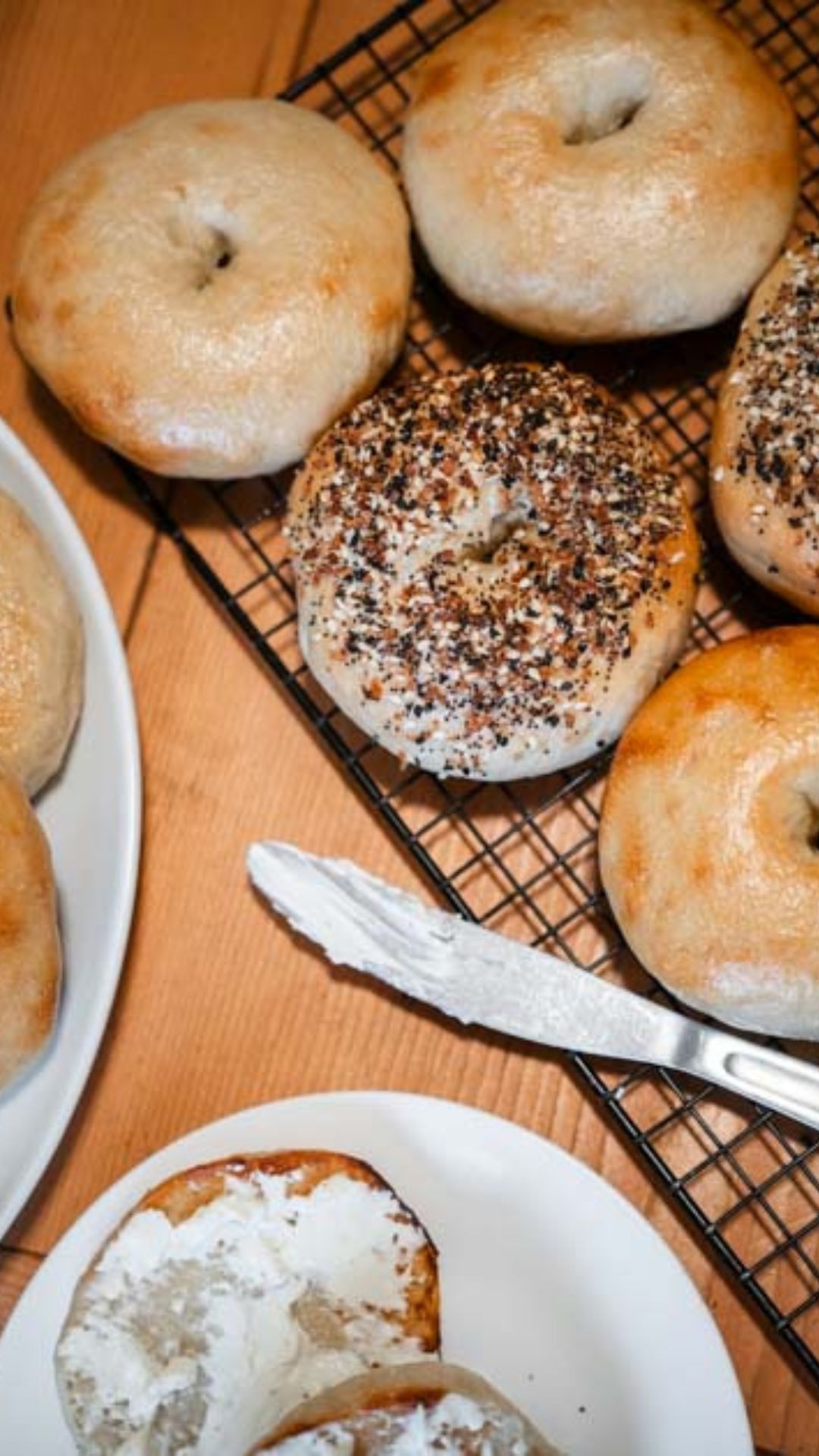

Making bagels at home sounds intimidating, but the overnight sourdough method actually simplifies the process by letting time do the heavy lifting. Instead of complicated overnight poolish or commercial yeast, you’ll use your sourdough starter to develop deep flavor while you sleep. The result is a chewy, hole-friendly bagel with authentic tang that grocery store versions can’t match.
How to Make Overnight Sourdough Bagels
This method relies on cold fermentation to develop flavor, making it perfect for weeknight prep and weekend baking.
Ingredients
- 2 cups active sourdough starter (fed 4-8 hours prior, bubbly and risen)
- 1 3/4 cups warm water (about 90F)
- 3 1/2 cups bread flour
- 1 1/2 teaspoons salt
- 1 tablespoon honey or sugar
- 2 tablespoons baking soda (for boiling water)
Method
Mix your dough base
Combine active starter, warm water, and flour in a large bowl. Stir until all flour is hydrated and you have a shaggy, wet dough. Let this mixture rest for 20-30 minutes (autolyse phase) to allow the flour to fully absorb the water and develop structure naturally.
Add salt and knead
Sprinkle salt over the rested dough and knead by hand for 8-10 minutes until the dough becomes smooth, elastic, and slightly tacky but no longer sticky. Alternatively, use a stand mixer with a dough hook for 5-6 minutes on medium speed. The dough should pass the windowpane test.
Bulk ferment at room temperature
Place dough in an oiled bowl, cover with a damp cloth, and let it rise at room temperature (68-72F) for 4-6 hours. You’re looking for the dough to increase by about 50-75% in volume and show visible bubbles when you gently poke it. It should feel airy but still hold its shape.
Divide and pre-shape
Turn dough onto a lightly floured surface and divide into 8 equal portions (roughly 100-120g each). Gently pre-shape each piece into a round ball by folding the edges toward the center. Let these rest uncovered for 15-20 minutes to relax the gluten.
Form bagel rings
Working with one piece at a time, use your thumb to poke a hole in the center of each ball. Gradually stretch and rotate the dough around your thumbs until you have a ring about 3 inches in diameter with a hole roughly 1.5 inches wide. Place on a parchment-lined baking sheet.
Cold overnight proof
Cover the shaped bagels loosely with plastic wrap and refrigerate for 8-16 hours. This slow fermentation in cold develops the tangy sourdough flavor and makes the bagels easier to boil without collapsing. The bagels won’t rise much in the fridge, which is normal and desired.
Boil before baking
Remove bagels from fridge 20-30 minutes before baking. Bring a large pot of water to a boil and dissolve baking soda into it. Working in batches, carefully lower bagels into boiling water and boil for 60-90 seconds per side (total 2-3 minutes per bagel). They should rise to the surface and stay there.
Bake until golden
Transfer boiled bagels to a parchment-lined baking sheet. Bake in a preheated 425F oven for 20-25 minutes until deep golden brown. The bagels should sound hollow when tapped on the bottom. Cool on a wire rack for at least 15 minutes before slicing.
- Ensure your sourdough starter is truly active and bubbly before mixing — a weak starter will result in dense bagels. Feed it 4-8 hours before using and look for it to double in size.
- Don’t skip the baking soda in boiling water. It raises pH and creates the signature chewy bagel crust and darker color that plain water can’t achieve.
- Slightly underproof rather than overproof your bagels. They should look like they still have room to expand when you boil them. Overproofed bagels will flatten and lose their shape.
What to Look For in Bagel-Making Equipment
- Large boiling pot (8-10 quart capacity): You need room for water, heat distribution, and space to boil bagels without crowding. Stainless steel is durable and won’t react with baking soda in the water. A pot that’s too small will cool down when you add cold dough.
- Digital kitchen scale for accuracy: Sourdough bagels benefit from precise ingredient ratios, especially when dividing dough into equal portions. A scale eliminates guesswork and helps you consistently get 8 bagels of the same size and bake time.
- Wire cooling rack: After baking, bagels must cool on a rack (not on the pan) to prevent steam from softening the crust. The rack allows air circulation on all sides, preserving that crispy exterior.
- Dough scraper or bench knife: This tool makes shaping bagels and dividing dough much easier. It cleanly cuts portions without compressing the dough and helps you form ring shapes with better control than your hands alone.
Calphalon Contemporary Stainless Steel 12-Quart Stock Pot
Best for: Home bakers making multiple bagel batches
This large-capacity stainless steel pot is purpose-built for boiling bagels without temperature loss. The 12-quart volume gives you plenty of water depth and space to boil 2-3 bagels comfortably without crowding, ensuring even cooking. Stainless steel resists baking soda corrosion and heats evenly. The pot includes a stainless steel lid and works on all cooktop types including induction. Perfect size for home sourdough projects.
Check Current Price on Amazon →Winco Stainless Steel Stock Pot 20-Quart
Best for: Budget-conscious bakers who want commercial durability
A commercial-grade pot at a fraction of the price of restaurant supply brands. The 20-quart capacity is excellent for boiling large batches of bagels while maintaining stable water temperature. Winco uses durable 18/8 stainless steel that won’t pit or corrode even with repeated baking soda exposure. Heavy-bottomed for even heat distribution and compatible with all stovetop types.
Check Current Price on Amazon →OXO Good Grips Food Scale 11-Pound Capacity
Best for: First-time sourdough bagel makers
This intuitive digital scale removes the guesswork from ingredient measurements and dough portioning. The 11-pound capacity handles your full batch, while the large LCD display is easy to read. It has a tare function to zero weight between additions, pull-out display for overhead viewing, and automatic shut-off. The non-slip base and compact design make it kitchen-friendly. Perfect for building confidence with precision baking.
Check Current Price on Amazon →Hario V60 Stainless Steel Scale with Timer
Best for: Serious sourdough enthusiasts optimizing every step
This premium Japanese scale combines precision weighing (0.1g accuracy) with an integrated timer for managing fermentation steps. The stainless steel construction is virtually indestructible, and the minimalist design looks professional on any counter. Built-in timer lets you track bulk fermentation and boiling times without switching devices. App connectivity allows recipe logging and batch comparison for continuous improvement.
Check Current Price on Amazon →Why Overnight Sourdough Bagels Are Worth the Wait
The overnight method transforms bagel baking from a time-intensive same-day project into a convenient weeknight preparation. By leveraging your sourdough starter and cold fermentation, you’re working smarter, not harder. The flavor payoff is massive — that tangy, complex taste you get from a real bagel shop, now from your own kitchen. The cold proof gives you flexibility: shape bagels on Thursday evening, boil and bake Friday morning, and enjoy fresh-baked bagels for the weekend.
Investing in a few key tools (especially a large pot and accurate scale) makes the entire process more enjoyable and consistent. Start with one batch to nail your technique, then scale up once you understand how your dough behaves. Homemade sourdough bagels taste so superior to grocery store versions that once you make them, you’ll wonder why you ever bought them frozen.
Frequently Asked Questions
Why does my sourdough starter need to be ‘active’ before making bagels?
An active starter (one that’s doubled in size and is actively bubbling) means the yeast and bacteria are vigorous and ready to ferment. A weak or hungry starter won’t produce enough lift during bulk fermentation, resulting in dense, gummy bagels. Always feed your starter 4-8 hours before mixing and confirm it has doubled.
Can I skip the overnight cold fermentation and bake bagels the same day?
You can, but you’ll lose the distinctive sourdough tang and potentially get less chewy results. The cold overnight proof lets flavor compounds develop slowly while gluten structure improves. If you’re in a hurry, room-temperature proof for 2-3 hours works, but reduce your expectations on final flavor complexity.
What happens if I boil my bagels too long?
Overboiled bagels become waterlogged and develop a gummy interior instead of the desired chewy crumb. They may also lose their shape or absorb too much water. Stick to 60-90 seconds per side; the bagel should float and stay at the surface. If it sinks after 30 seconds, your water temperature is too low and needs reheating.
Why does the baking soda matter in the boiling water?
Baking soda raises the pH of the water, which causes the dough’s outer surface to brown and gelatinize more effectively. This creates the signature chewy, dark crust that makes real bagels distinct. Plain water produces pale, cake-like bagels. Never skip this step if you want authentic results.
How do I store baked sourdough bagels to keep them fresh?
Slice and freeze baked bagels in an airtight container or freezer bag for up to 3 months. Toast directly from frozen for best texture. Room-temperature storage in a paper bag keeps them fresh for 1-2 days, though they’ll gradually dry out. Avoid plastic bags, which trap moisture and accelerate staleness.
As an Amazon Associate, Build & Bloom earns from qualifying purchases. We only recommend products we genuinely think are useful. Prices and availability vary; check Amazon for the latest.
Leave a Reply