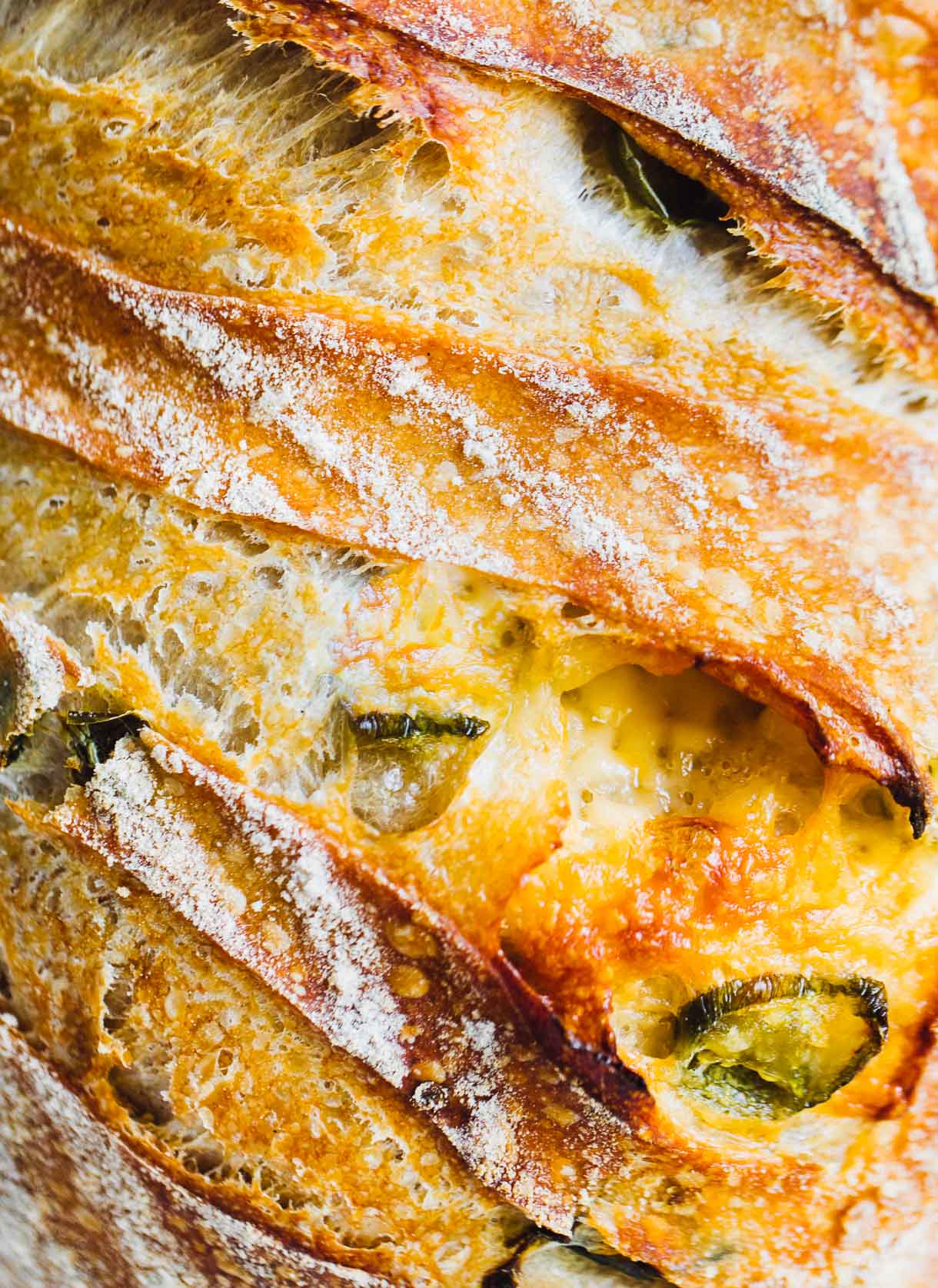

You’ve got a bubbling sourdough starter and a craving for something more interesting than plain white loaves. Store-bought sourdough tastes flat compared to what you know is possible, and those fancy artisan breads cost a fortune. Making jalapeño cheddar sourdough at home transforms basic ingredients into restaurant-quality bread with a crispy crust, tangy crumb, and bursts of spicy cheese flavor—and it costs just pennies per loaf.
How to Make Jalapeño Cheddar Sourdough Bread
This recipe uses a long, cold fermentation to develop complex flavor while the jalapeños and sharp cheddar create pockets of heat and richness throughout the loaf.
Ingredients
- 1 cup active sourdough starter (fed 4-8 hours prior, doubled and bubbly)
- 3.5 cups bread flour, divided
- 1.5 teaspoons salt
- 1 cup warm water
- 1.5 cups shredded sharp cheddar cheese
- 3-4 fresh jalapeños, diced and seeds removed for less heat
Method
Mix dough and autolyse
Combine your active starter, warm water, and 3 cups of flour in a large mixing bowl. Stir until no dry flour remains. Let this mixture rest for 30 minutes to 1 hour—this resting period, called autolyse, allows the flour to fully hydrate and makes the dough easier to work with.
Add salt and begin folding
Sprinkle salt over the dough and incorporate it with wet hands using a folding motion—push the dough from the sides toward the center, rotate the bowl, and repeat. Perform four sets of these folds, spaced 30 minutes apart over the next 2 hours. The dough will transform from shaggy to smooth and elastic.
Incorporate cheese and jalapeños
After the second set of folds, gently spread the dough flat and distribute the diced jalapeños and shredded cheddar across the surface. Fold the dough over itself several times to distribute the fillings evenly throughout, then continue with the remaining fold sets.
Bulk ferment at room temperature
After your final set of folds, cover the bowl with a damp kitchen towel and let the dough bulk ferment at room temperature for 4-6 hours. You’re looking for the dough to increase by 50-75% in volume and show visible bubbles on the surface and sides.
Shape and cold ferment
Transfer the dough to a lightly floured surface and gently shape it into a round boule, being careful not to deflate the gas bubbles. Place the shaped dough seam-side up into a floured banneton basket or bowl lined with a kitchen towel. Cover loosely and refrigerate for 12-24 hours. This long, cold ferment deepens the sour flavor and makes scoring easier.
Preheat Dutch oven and score
About 1 hour before baking, place a Dutch oven in your oven and preheat to 500 degrees F. Turn your cold dough onto parchment paper and use a sharp bread lame or knife to score the top in a shallow X or cross pattern. This guides the oven spring and prevents random bursts.
Bake covered and uncovered
Carefully transfer the dough on parchment into the preheated Dutch oven. Cover with the lid and bake at 500 degrees F for 20 minutes. Remove the lid, reduce heat to 450 degrees F, and bake for 25-30 minutes more until the crust is deep golden brown and sounds hollow when tapped.
Cool completely before slicing
Remove the bread from the oven and transfer it to a wire cooling rack. Let it cool for at least 1-2 hours before cutting. Cutting too early releases moisture and leaves you with a gummy interior; patience rewards you with a perfect crumb structure and those gorgeous cheese pockets visible in the cross-section.
- If your sourdough starter is younger or weak, feed it twice daily for 3-5 days before making this recipe to ensure it has the strength to leaven your dough properly.
- Remove jalapeño seeds if you prefer milder heat, or leave them in for extra spice. You can also try roasted poblanos or crispy bacon for fun variations.
- A bench scraper and banneton basket aren’t required but transform the shaping and baking experience—they’re affordable investments that last for years.
Essential Equipment for Sourdough Success
- Dutch oven: A heavy, lidded pot is the single most important piece of sourdough equipment. It traps steam during the first phase of baking, which creates the beautiful, crispy crust and proper oven spring. Cast iron and enameled steel both work well.
- Banneton proofing basket: This woven or fabric basket holds your shaped dough during cold fermentation, supporting it so it rises upward rather than spreading outward. It prevents sticking and makes transferring the dough to your Dutch oven safer.
- Bread lame or scoring knife: A sharp blade—whether a traditional bread lame or sharp serrated knife—creates controlled slashes across the dough’s surface. These cuts allow the bread to expand upward during baking rather than bursting randomly.
- Digital kitchen scale: Sourdough baking relies on precise ratios of flour, water, and starter. A scale eliminates the inconsistency of cup measurements and helps you dial in the hydration level your starter and kitchen environment need.
Le Creuset Enameled Cast Iron Dutch Oven 5.5 Qt
Best for: Serious sourdough bakers who want professional results
Le Creuset’s iconic Dutch oven is the gold standard for sourdough. The 5.5-quart size fits large loaves, and the enameled interior prevents sticking while the heavy cast iron distributes heat evenly. The tight-fitting lid traps steam perfectly for maximum crust development. While premium-priced, it lasts decades and produces bakery-quality bread every time.
Check Current Price on Amazon →Tramontina Enameled Cast Iron Dutch Oven 6 Qt
Best for: Budget-conscious home bakers
Tramontina delivers nearly identical performance to premium brands at half the price. This 6-quart Dutch oven features a durable enamel coating and reliable heat distribution. Home bakers report excellent sourdough results, and the larger capacity means you can bake bigger loaves or two smaller ones simultaneously.
Check Current Price on Amazon →Banneton Proofing Basket Set by Artisan Crafted (Round and Oval)
Best for: First-time sourdough makers
This two-piece set includes both round and oval baskets, so you can experiment with different shapes. Hand-woven from natural rattan with food-grade liners, they’re affordable and work beautifully for overnight cold fermentation. The liners prevent sticking, making transfer to the Dutch oven foolproof for beginners.
Check Current Price on Amazon →OXO Good Grips Bread Lame and Scraper Set
Best for: Bakers who want reliable scoring tools
OXO’s combination set includes a sharp bread lame and a dough scraper in one purchase. The lame has replaceable blades for consistent, clean scores, and the scraper helps with shaping and bench work. This set eliminates the need to hunt for individual tools and provides everything needed for confident scoring.
Check Current Price on Amazon →Make Bakery-Quality Jalapeño Cheddar Sourdough at Home
Jalapeño cheddar sourdough is one of the most rewarding breads to bake at home. The long fermentation develops a complex tang that no commercial yeast loaf can match, while the cheese and peppers transform it into something you’d happily pay $8 for at a farmers market. The recipe is forgiving enough for beginners yet flexible enough to keep experienced bakers engaged. Once you master this formula, you’ll find yourself baking loaves weekly and experimenting with different cheese and pepper combinations.
Invest in the core equipment—a Dutch oven, banneton, and scale—and you’ve set yourself up for years of sourdough success. These tools pay for themselves after just a few loaves, especially compared to buying artisan bread regularly. Your kitchen will smell incredible, your family will be amazed, and you’ll finally understand why sourdough bakers get so passionate about their craft.
Frequently Asked Questions
Can I use store-bought sourdough starter instead of cultivating my own?
Yes, absolutely. Dry sourdough starters like those from King Arthur Baking Company work well—just rehydrate and feed according to package directions for 3-5 days before using. The bread will taste delicious even without a 10-year-old starter sitting on your counter.
What if I don’t have a Dutch oven?
You can bake on a preheated baking stone or steel and cover the loaf with an upside-down bowl for the first 20 minutes to trap steam. The crust won’t be quite as thick, but the bread will still be good. A Dutch oven is worth the investment if you plan to make sourdough regularly.
How do I know when bulk fermentation is complete?
Look for 50-75% volume increase and visible bubbles throughout the dough. The dough should jiggle slightly when you gently shake the bowl. Poke it gently—if your finger leaves an indentation that slowly springs back halfway, it’s ready. Over-fermented dough collapses when shaped.
Can I freeze the dough after shaping instead of doing cold fermentation overnight?
Yes. Shape the dough, let it rest 1-2 hours at room temperature, then freeze it in the banneton for up to 3 months. Bake directly from frozen, adding 5-10 minutes to the total baking time. This is convenient for making multiple loaves throughout the month.
Why does my crust collapse or wrinkle after baking?
This usually means over-fermentation—the dough ran out of strength before baking. Reduce bulk fermentation time or use a shorter cold fermentation. Also ensure your oven is fully preheated and your Dutch oven is hot before baking, as this helps the dough set quickly.
As an Amazon Associate, Build & Bloom earns from qualifying purchases. We only recommend products we genuinely think are useful. Prices and availability vary; check Amazon for the latest.
Leave a Reply