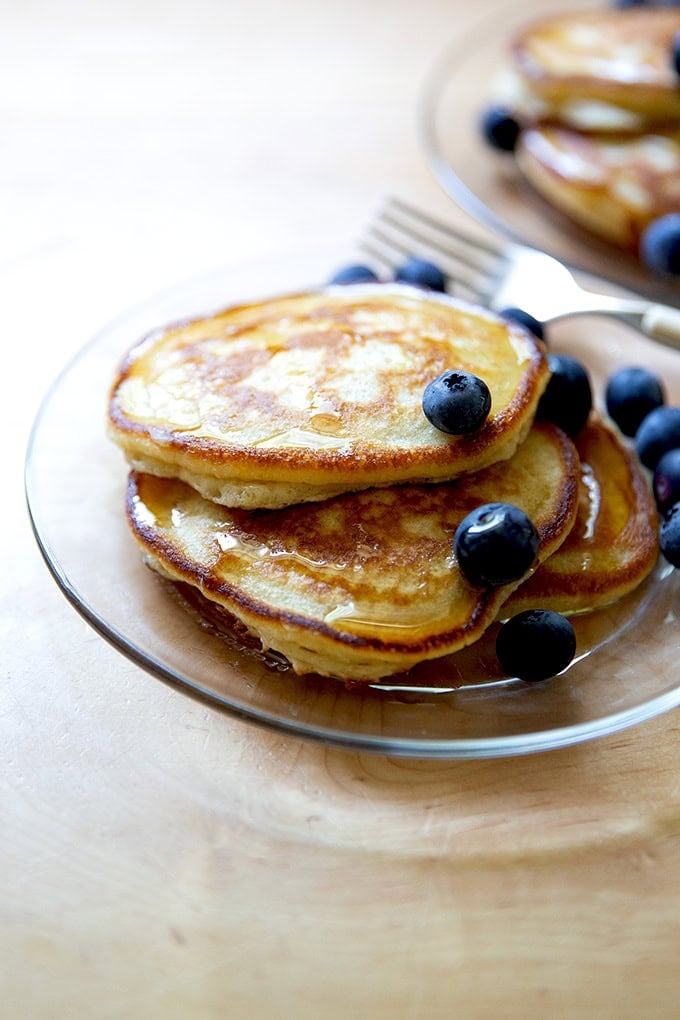

If you maintain a sourdough starter, you know the guilt of discarding perfectly good starter each week. Sourdough discard pancakes solve that problem by transforming your weekly discard into tender, tangy breakfast pancakes ready in hours, not overnight. Unlike traditional sourdough pancake recipes that require 8-12 hours of fermentation, this same-day method lets you go from bowl to plate by lunchtime while delivering authentic sourdough flavor and a cloud-like texture.
How to Make Same-Day Sourdough Discard Pancakes
This recipe produces approximately 12-16 pancakes with crispy exteriors and fluffy interiors. The fermentation happens quickly because you’re using actively fed sourdough starter at peak activity.
Ingredients
- 1 cup active sourdough discard (fed 4-6 hours prior, bubbly and rising)
- 3/4 cup all-purpose flour
- 1/2 cup whole wheat flour (optional, adds nuttiness)
- 2 tablespoons sugar or honey
- 1 teaspoon baking powder
- 1/2 teaspoon salt
- 1/2 teaspoon vanilla extract
- 2 tablespoons melted butter
- 1/2 cup milk or buttermilk
Method
Combine dry ingredients
In a medium mixing bowl, whisk together both flours, sugar, baking powder, and salt. These components create lift and structure independent of fermentation. Combine thoroughly so the baking powder distributes evenly throughout.
Mix wet ingredients separately
In another bowl, combine your active sourdough discard, milk, melted butter, and vanilla. Stir vigorously until the discard breaks down and incorporates into the liquid. The starter should have visible bubbles and smell pleasantly tangy at this stage.
Create the batter
Pour the wet mixture into the dry ingredients and fold gently with a spatula until just combined. Stop when you see a few streaks of flour remaining. Overmixing develops gluten, which tightens the crumb. Small lumps are perfectly fine and will disappear during cooking.
Let batter rest briefly
Allow the batter to sit at room temperature for 15-30 minutes. During this time, the flour fully hydrates, the baking powder activates slightly, and the sourdough culture continues working, all contributing to lift. You’ll notice the batter becoming slightly thicker and more aerated.
Heat your cooking surface
Preheat a griddle or large skillet over medium-high heat. Test readiness by sprinkling water droplets on the surface; they should sizzle and dance. A properly heated surface is essential for achieving golden-brown exteriors while keeping interiors tender.
Cook the first side
Lightly butter or oil your hot cooking surface, then pour batter in 1/4-cup portions, leaving 2 inches between pancakes. Let them cook undisturbed for 2-3 minutes until the bottoms are golden and bubbles form across the top surface. Resist the urge to flip early, as this breaks the delicate structure.
Flip and finish cooking
Once bubbles have popped and edges look set, flip each pancake and cook the second side for 1-2 minutes until golden brown. Sourdough pancakes cook faster than conventional pancakes because the batter is already slightly fermented. Transfer finished pancakes to a warm plate immediately.
Serve while warm
Stack your pancakes on a warmed plate and serve within minutes with butter, maple syrup, or your favorite toppings. The tangy sourdough flavor pairs beautifully with fruit compotes, whipped cream, or yogurt. Leftover pancakes keep refrigerated for 3 days and reheat well in a toaster.
- Feed your starter at least 4-6 hours before you plan to cook; use it when it’s peaked and just beginning to recede. A starter at its absolute peak creates the lightest, most voluminous pancakes.
- Don’t skip the baking powder. While sourdough provides some lift through fermentation, baking powder gives the quick rise that creates that signature fluffy interior on a same-day timeline.
- If your first batch spreads too thin, your batter is too wet. Add an extra tablespoon of flour and let it rest another 5 minutes. If pancakes are too thick and dense, thin with a splash of milk.
Essential Equipment for Sourdough Pancake Success
- Griddle or Cast Iron Pan: Even heat distribution matters enormously for pancakes. Cast iron retains heat exceptionally well and creates superior browning, while a flat griddle lets you cook multiple pancakes simultaneously.
- Mixing Bowls (Glass or Stainless Steel): You’ll need at least two separate bowls for dry and wet ingredients. Glass and stainless steel don’t react with acidic sourdough starter, unlike reactive metals.
- Measuring Cups and Spoons: Precision matters for achieving the right batter consistency. Dry measuring cups (level with a knife) and liquid measuring cups (read at eye level) produce different volumes of the same ingredient.
- Whisk and Silicone Spatula: A whisk aerates dry ingredients and breaks up starter efficiently, while a silicone spatula gently folds wet and dry components without overworking the batter.
Lodge Cast Iron 10.25 Inch Skillet
Best for: Anyone serious about pancake texture and browning
The Lodge 10.25-inch skillet is the pancake-maker’s gold standard. Its seasoned cast iron surface heats evenly and maintains steady temperatures, creating consistently golden-brown pancakes every time. The sloped sides make flipping easy, and the 10.25-inch diameter fits 2-3 pancakes comfortably. This heirloom-quality pan costs less than specialty griddles and lasts generations.
Check Current Price on Amazon →Calphalon Contemporary Non-Stick 12 Inch Skillet
Best for: Budget-conscious cooks wanting easy cleanup
The Calphalon Contemporary delivers non-stick convenience at a fraction of cast iron’s cost. Its 12-inch diameter fits 3-4 pancakes at once, speeding breakfast service. The non-stick coating requires zero seasoning and cleans in seconds. While it won’t last 50 years like cast iron, it performs reliably for 5-7 years of regular use.
Check Current Price on Amazon →All-Clad Ha1, Hard Anodized 10 Inch Skillet
Best for: Cooks wanting professional-grade performance without learning curve
All-Clad’s hard-anodized aluminum offers the even heating of cast iron without the maintenance. The non-stick surface prevents sticking without seasoning requirements. At 10 inches, it fits 2-3 pancakes and conducts heat quickly. This mid-range option suits cooks who find cast iron intimidating but reject disposable cookware.
Check Current Price on Amazon →Oxo Good Grips 3-Piece Mixing Bowl Set
Best for: Anyone mixing sourdough pancake batter
Oxo’s mixing bowl set includes 1.5-quart, 2.5-quart, and 4-quart capacities with non-slip bases that prevent sliding on wet countertops. The measurements printed on the interior help with quick ingredient checks. Glass construction remains inert with acidic sourdough, and the graduated sizes handle everything from small dry ingredient mixes to full-batch wet ingredients.
Check Current Price on Amazon →Master Same-Day Sourdough Pancakes
Same-day sourdough discard pancakes transform weekend breakfast while solving the starter-discard dilemma. The magic lies in understanding your starter’s peak activity window and respecting a brief 15-30 minute rest period that lets fermentation do its work. With proper technique and quality equipment, you’ll produce pancakes rivaling any sourdough bakery, with a delicate crumb structure and authentic tangy flavor that guests will ask about.
Start with a reliable cast iron skillet or quality non-stick pan, measure your ingredients carefully, and trust the process. The combination of active sourdough culture and baking powder creates the ideal rise pattern—gentle fermentation plus chemical lift equals restaurant-quality results. Your weekly starter discard has been waiting for this moment. Transform it into breakfast that justifies keeping a sourdough culture alive.
Frequently Asked Questions
Can I make these pancakes with discard that’s not actively bubbly?
Yes, but results improve dramatically with peak starter. If your discard is dormant or newly fed, you can still make pancakes by adding an extra 1/2 teaspoon baking powder to compensate for lost fermentation lift. The flavor will be milder and less tangy.
How do I know when my sourdough starter is ready to use?
Your starter should be fed 4-6 hours before cooking and at peak rise—visibly doubled or tripled in volume, smelling pleasantly sour, and showing active bubbles throughout. If it’s collapsing or separating, it’s past peak and will produce denser pancakes.
Can I make the batter the night before?
Not recommended for same-day pancakes. Prepared batter ferments overnight, becoming overly sour and separating. If you need advance prep, mix your dry ingredients the night before and combine everything fresh in the morning for best results.
Why are my pancakes coming out dense instead of fluffy?
Dense pancakes usually result from overmixing (which develops gluten), a griddle that’s too cool, or using dormant starter. Try mixing less, heating your pan hotter, and always using peak starter fed 4-6 hours prior.
Can I freeze leftover pancakes?
Absolutely. Cool pancakes completely, layer them between parchment paper, and freeze in a sealed container for up to two months. Reheat in a toaster or toaster oven at 350F for 3-4 minutes until warm and crispy outside.
As an Amazon Associate, Build & Bloom earns from qualifying purchases. We only recommend products we genuinely think are useful. Prices and availability vary; check Amazon for the latest.
Leave a Reply