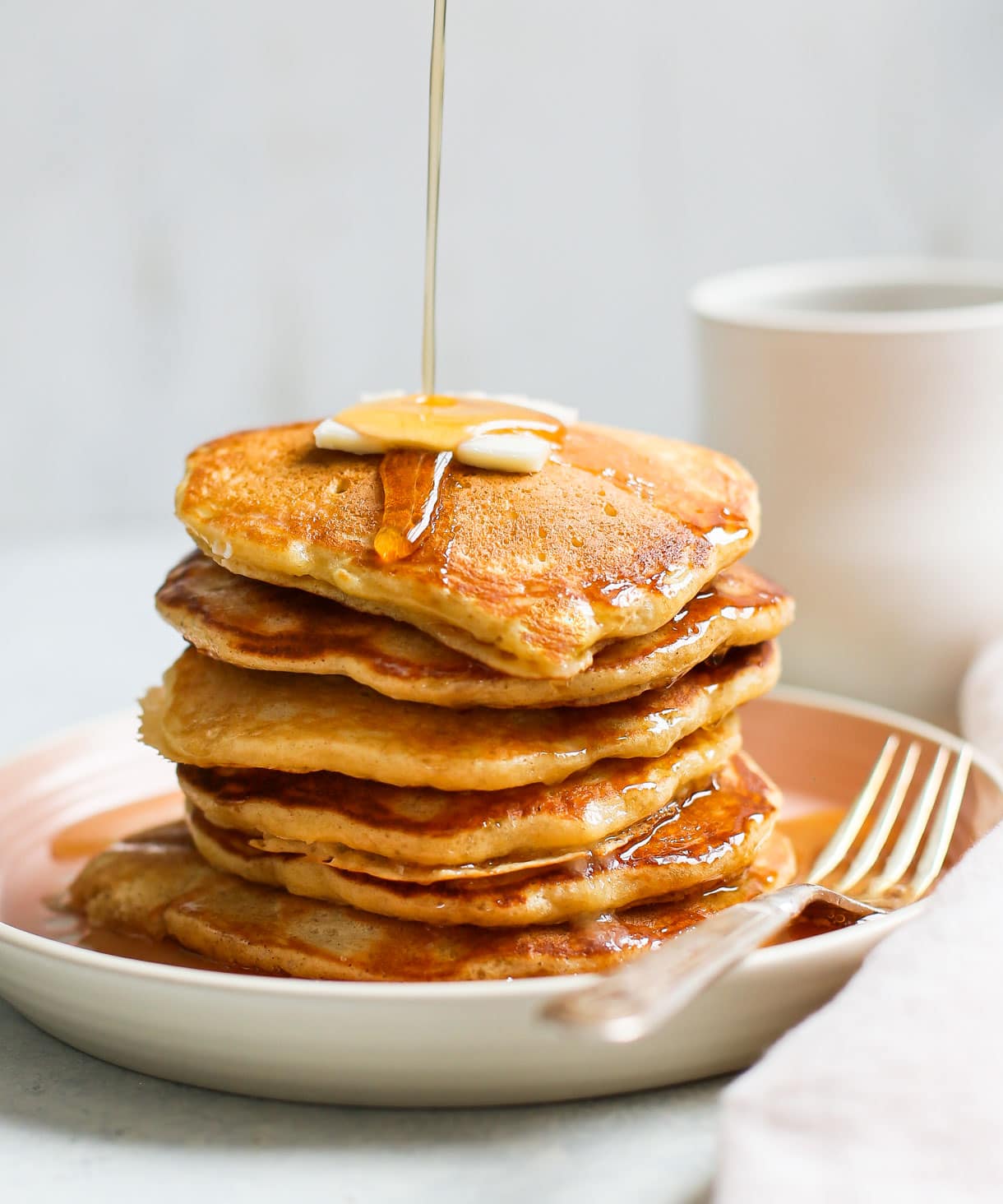

If you maintain a sourdough starter, you already know the guilt of discarding half of it before feeding. These fluffy pancakes are the perfect solution—they use sourdough discard as the base, creating a tender crumb with subtle tang while keeping your starter alive. The best part? They’re just as quick to make as regular pancakes, and they taste significantly better.
How to Make Sourdough Discard Pancakes
This straightforward method transforms your sourdough discard into breakfast gold. The recipe yields about eight 4-inch pancakes and takes roughly 20 minutes from start to finish.
Ingredients
- 1 cup sourdough discard (unfed, straight from the fridge)
- 1 cup whole milk or buttermilk
- 2 eggs, beaten
- 2 tablespoons melted butter or oil
- 1.5 tablespoons honey or sugar
- 1 teaspoon baking powder
- 0.5 teaspoon baking soda
- 0.5 teaspoon salt
- 0.5 teaspoon vanilla extract
Method
Combine wet ingredients
In a large mixing bowl, whisk together the sourdough discard, milk, eggs, melted butter, honey, and vanilla until you achieve a smooth, pourable consistency. Don’t worry if small lumps remain—they’ll disappear during cooking.
Mix dry ingredients separately
In a separate small bowl, whisk together flour (approximately 1 cup all-purpose), baking powder, baking soda, and salt. This ensures even distribution of the leavening agents, which is crucial for lift.
Combine wet and dry gently
Pour the dry mixture into the wet ingredients and fold together with a spatula using about 15-20 gentle strokes. Stop when you see just a few streaks of dry flour. Overmixing develops gluten and creates dense pancakes instead of fluffy ones.
Let batter rest briefly
Allow the batter to rest for 5 minutes while you heat your cooking surface. This gives the baking powder and baking soda time to begin activating, which contributes to the rise.
Heat your cooking surface
Preheat a griddle, skillet, or non-stick pan to medium heat (about 350 degrees Fahrenheit if using an electric griddle). Lightly butter or oil the surface to prevent sticking.
Cook first side until edges set
Pour batter in quarter-cup portions onto the hot surface and cook for 2-3 minutes without moving them. Look for bubbles forming on the surface and the edges turning slightly opaque—these are your signals that it’s time to flip.
Flip and finish cooking
Using a spatula, carefully flip each pancake and cook the second side for 1-2 minutes until it’s golden brown and springs back lightly when touched. Transfer finished pancakes to a warm plate.
Serve immediately
Serve warm with butter, maple syrup, fresh berries, whipped cream, or yogurt. These pancakes are best enjoyed fresh off the griddle while the exterior is still slightly crispy and the interior remains tender.
- Don’t use freshly fed sourdough starter—the unfed, refrigerated discard works best because its fermentation adds flavor and tang without making pancakes dense.
- If your batter seems too thick, add milk one tablespoon at a time. If it’s too thin, fold in an extra tablespoon of flour. The consistency should pour slowly but steadily.
- Make a batch on Sunday morning and refrigerate leftovers in an airtight container for up to three days. Reheat gently in a toaster oven at 300 degrees to restore the crispy exterior.
Essential Equipment for Perfect Pancakes
- Non-stick griddle or electric skillet: A large, flat cooking surface with even heat distribution prevents hot spots and ensures consistent browning. Electric griddles maintain steady temperature throughout cooking, ideal for batch-cooking pancakes for families.
- Reliable instant-read thermometer: Verify your cooking surface has reached the ideal 350 degrees without guessing. Consistent temperature prevents pancakes from burning on the outside while remaining raw inside.
- Quality measuring cups and spoons: Accurate ingredient measurements are non-negotiable for recipe success. A set with clear markings ensures you’re adding the right proportions of sourdough discard, baking soda, and other ingredients.
- Offset or silicone spatula: A proper spatula with a thin, flexible edge slides under pancakes without breaking them apart. Silicone won’t scratch non-stick surfaces, while metal works best on cast iron or steel.
Cuisinart CGR-4N Nonstick Griddle
Best for: Home cooks making pancakes for groups
This electric griddle offers precise temperature control and a spacious 200-square-inch cooking surface, allowing you to cook four to six pancakes simultaneously. The built-in moat collects grease away from food, and the nonstick coating releases pancakes effortlessly. Dishwasher-safe removable plates make cleanup quick. It heats evenly across the entire surface, eliminating cold spots that cause uneven browning on sourdough pancakes.
Check Current Price on Amazon →Lodge Cast Iron Griddle 20 Inch
Best for: Budget-conscious cooks with stovetop cooking
This seasoned cast iron griddle spans 20 inches across and distributes heat exceptionally evenly once preheated. One-piece construction means no seams to trap food particles. Cast iron requires more attention to temperature management but is incredibly durable and works beautifully on gas or electric stovetops. Many families own cast iron for decades, making the initial investment worthwhile.
Check Current Price on Amazon →OXO Good Grips Silicone Flexible Spatula
Best for: First-time pancake flippers
The soft silicone head flexes to slide under pancakes without damaging nonstick surfaces, while the slim edge slips easily under even delicate sourdough pancakes. A heat-resistant handle withstands temperatures up to 600 degrees Fahrenheit. The silicone won’t scratch cookware, and the spatula is one-piece for durability and easy cleaning.
Check Current Price on Amazon →All-Clad HA1, Hard Anodized Nonstick Fry Pan 12-Inch
Best for: Serious home cooks investing in durability
All-Clad’s hard-anodized aluminum construction withstands decades of use without warping. The superior nonstick coating performs better after years of cooking than budget alternatives wear out. A 12-inch diameter accommodates four to five large pancakes comfortably. The stainless steel handles remain cool and secure, and the pan transitions from stovetop to oven seamlessly.
Check Current Price on Amazon →Transform Your Sourdough Routine
Sourdough discard pancakes solve a problem every sourdough baker faces: the guilt and waste of discarding starter before feeding. By using this quick recipe, you’ll stop dreading maintenance feedings and start looking forward to the pancakes that come from them. The tangy, complex flavor profile elevates these beyond standard breakfast fare—they rival restaurant-quality pancakes while using ingredients you already maintain at home.
The key to success lies in respecting the gentle technique: don’t overmix, preheat properly, and use unfed discard straight from the refrigerator. Invest in a reliable spatula and measuring cups, and your sourdough pancake-making will become second nature. Within weeks, this recipe will be your go-to method for using discard, transforming a perceived inconvenience into an eagerly anticipated breakfast tradition.
Frequently Asked Questions
Can I make sourdough pancakes without baking soda or baking powder?
Not if you want fluffy results. While sourdough fermentation produces carbon dioxide, the volume isn’t sufficient alone. Baking powder and baking soda provide the additional lift needed for the characteristic fluffy texture. Without them, you’ll get dense crepes instead of pancakes.
How much sourdough discard do I need to use for this recipe?
One cup of unfed sourdough discard is ideal. This amount provides enough fermented flavor and structure without overwhelming the batter. If your discard is thicker or thinner than typical starter consistency, adjust milk proportions slightly to maintain a pourable batter.
Can I refrigerate the batter overnight before cooking?
Yes, but plan to cook within 12 hours maximum. Store it in an airtight container. Before cooking, gently stir the batter and add a tablespoon of milk if it has thickened. The baking soda and baking powder will lose some potency overnight, so the pancakes may be slightly less fluffy than fresh batter.
What’s the difference between sourdough discard and active starter for this recipe?
Unfed discard is thick and tangy from fermentation—perfect for pancakes. Active starter that’s just been fed is too thin and will make the batter too liquid. If you only have fed starter, use less liquid or feed your starter and wait for the recommended time before measuring discard.
Why are my pancakes coming out dense even after following the recipe?
The most common cause is overmixing the batter, which develops gluten and traps bubbles. Mix only until dry ingredients disappear. Other culprits include stale leavening agents (check expiration dates), cooking on insufficient heat (use 350 degrees), or using fed starter instead of discard.
As an Amazon Associate, Build & Bloom earns from qualifying purchases. We only recommend products we genuinely think are useful. Prices and availability vary; check Amazon for the latest.
Leave a Reply