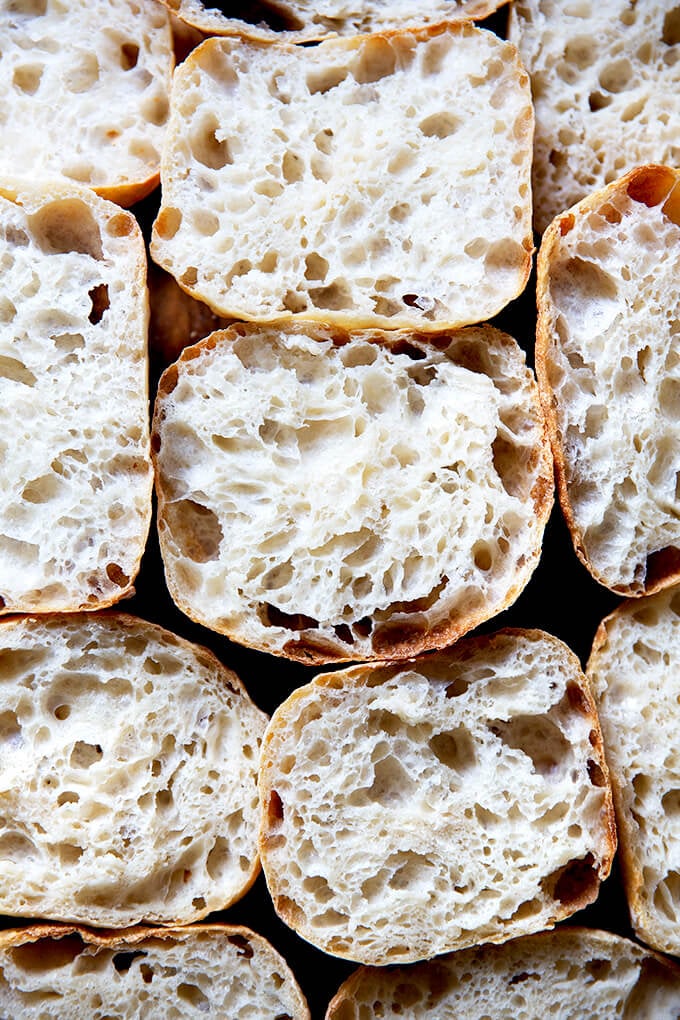

Sourdough ciabatta looks intimidating, but it’s one of the most forgiving breads to make once you understand the simple fermentation process. If you’ve been scrolling through sourdough pins wondering how to graduate from basic boules to a showstopper loaf with that signature open, airy crumb—this is where you start. The wetter dough and long fermentation do the heavy lifting for you.
How to Make Sourdough Ciabatta Bread
Sourdough ciabatta relies on a simple dough, a strong starter, and patience. This recipe produces two loaves with that distinctive open crumb structure and chewy interior.
Ingredients
- 1 cup (240ml) active, bubbly sourdough starter at peak fermentation
- 1.5 cups (360ml) lukewarm water
- 3.5 cups (420g) bread flour or all-purpose flour
- 2 teaspoons (12g) fine sea salt
- Additional water for scoring and steam
Method
Mix the dough
Combine your active starter, water, and flour in a large bowl. Stir until a shaggy, wet dough forms with no dry flour remaining. This dough will be much wetter than typical bread dough—resist the urge to add more flour. Let it rest, covered, for 30 minutes to an hour.
Add salt and develop gluten
Sprinkle salt over the dough and incorporate it using the pincer method: pinch the dough from the sides and fold it over itself repeatedly for 5-10 minutes. This builds strength without kneading. The dough should become smoother and slightly firmer. Rest covered for another 30 minutes.
Perform stretch and folds
Over the next 2-3 hours, perform 4 sets of stretch and folds at 30-minute intervals. Wet your hand, grab one side of the dough, stretch it up and fold it over the center. Rotate the bowl and repeat from all four sides. This develops structure in the wet dough.
Cold ferment overnight
After the final stretch and fold, transfer the dough to a lightly oiled container. Cover and refrigerate for 12-16 hours. This long, cool fermentation develops flavor and makes the dough easier to handle while the yeast continues working slowly.
Preheat and prepare
Remove dough from refrigerator 30 minutes before baking. Preheat your oven to 475°F (245°C) with a baking surface inside for at least 45 minutes. If using a baking stone, dust it lightly with flour. Prepare a spray bottle filled with water for steam.
Shape and score
Turn the dough onto a well-floured surface. Gently pre-shape into a rectangle, then let it rest 15 minutes. Shape into an oblong ciabatta form by folding the sides in and gently rolling. Score the top with diagonal slashes using a sharp blade. Transfer to your preheated baking surface.
Score and steam bake
Immediately after loading the dough, spray the oven interior with water 3-4 times to create steam. This helps the bread expand and develop a crispy crust. Bake for 25-30 minutes until deep golden brown. The crust should sound hollow when tapped.
Cool completely
Transfer the baked ciabatta to a cooling rack. Wait at least 1 hour before slicing—the interior continues to set during cooling. Cutting too early releases steam and results in a gummy crumb.
- Your starter should be at peak activity (doubled or tripled, with visible bubbles and a pleasant sour smell) when you use it. Underfed or sluggish starter will result in dense bread.
- Don’t skip the stretch and folds. This is what builds strength in a wet dough without aggressive kneading. Each fold incrementally develops gluten structure.
- The wet dough is intentional—ciabatta’s open crumb comes from high hydration. Use wet hands instead of flouring heavily when handling; this preserves the structure you’ve built.
What to Look For in Sourdough Baking Equipment
- Dutch Oven or Covered Baking Vessel: Traps steam during the first part of baking, which is essential for crust development and oven spring. Look for one that can handle 475°F+ temperatures and has a secure-fitting lid.
- Digital Scale: Sourdough baking is a science. Volume measurements are unreliable for starter and flour. A scale accurate to 1 gram ensures consistent results every time you bake.
- Banneton Proofing Basket or Cloth Liner: Supports the dough’s shape during final proof and cold fermentation. Prevents spreading and helps you achieve a rounded, professional-looking loaf. Choose one appropriately sized for your dough weight.
- Lame or Scoring Blade: A sharp scoring blade allows you to make clean, controlled cuts that guide expansion. This prevents uncontrolled tearing and creates the bakery-style appearance of your finished ciabatta.
Staub Cocotte 5.5-Quart Round Dutch Oven
Best for: Serious sourdough bakers
The gold standard for bread baking. Staub’s enameled cast iron traps steam perfectly and distributes heat evenly for exceptional crust and oven spring. The dark enamel interior hides discoloration from repeated baking. Lifetime durability and exceptional craftsmanship justify the investment for anyone committed to sourdough.
Check Current Price on Amazon →Amazon Basics Enameled Cast Iron Dutch Oven, 5-Quart
Best for: Budget-conscious home bakers
Excellent value for occasional to regular sourdough baking. Heats evenly and traps steam adequately at a fraction of premium brands’ cost. The 5-quart capacity handles most home sourdough recipes. Durable enough for years of use, though the enamel may show wear faster than luxury options.
Check Current Price on Amazon →Hario V60 Digital Scale
Best for: New bakers learning precision
Affordable, accurate digital scale with a 2kg capacity and 1-gram precision. The compact design saves counter space, and it’s responsive enough to track flour measurements quickly. Perfect for sourdough recipes where exact ratios determine success without breaking the budget.
Check Current Price on Amazon →Acaia Pearl Digital Kitchen Scale
Best for: Precision-obsessed bakers
Espresso-level engineering applied to baking. Hyper-responsive sensors and elegant design. While overkill for bread, the reliability and aesthetic appeal attract serious home bakers. The scale weighs up to 2kg and responds in milliseconds, ideal for exact sourdough hydration.
Check Current Price on Amazon →Begin Your Sourdough Ciabatta Journey
Sourdough ciabatta sits at the intersection of simplicity and technique. With just four ingredients and proper timing, you’ll create a loaf that rivals bakery quality. The key is respecting the fermentation process and resisting the urge to rush or over-manipulate the dough. Invest in one good Dutch oven and a digital scale, and you have everything needed to bake exceptional ciabatta for years.
Start with this recipe on a weekend when you can attend to stretch-and-folds without stress. Once you’ve succeeded once, the process becomes intuitive. Each bake teaches you something about your kitchen’s temperature, your starter’s personality, and your own preferences. That’s the real magic of sourdough—it’s not just bread, it’s a conversation between you, wild yeast, and flour.
Frequently Asked Questions
How do I know if my sourdough starter is ready to use?
Your starter should be at peak fermentation: doubled or tripled in size with visible bubbles throughout, a pleasant sour smell, and a domed or slightly collapsed top. This usually means feeding it 4-8 hours before use depending on temperature. A starter that’s underactive will produce dense, slow-rising bread.
Can I bake ciabatta without a Dutch oven?
Yes, but you’ll need to create steam another way. Place a baking sheet on the oven rack below your bread, and add boiling water to it after loading the dough. Alternatively, spray the oven walls with water several times during the first 10 minutes. A Dutch oven is easier and more reliable.
Why is my ciabatta dense instead of airy?
Dense crumb usually indicates insufficient fermentation, weak gluten development, or underactive starter. Extend your bulk fermentation time, perform more stretch-and-fold sets, and ensure your starter is vigorous. Cold fermentation should last 12-16 hours minimum for flavor and structure.
How long does sourdough ciabatta stay fresh?
Properly baked ciabatta stays fresh for 2-3 days at room temperature in a paper bag or bread box. After that, slice and freeze it for up to a month. Plastic bags trap moisture and soften the crust quickly, so avoid them for storage.
What hydration percentage is ciabatta?
Ciabatta typically uses 80-85% hydration (water weight compared to flour weight). This high water content creates the open, irregular crumb structure. For a 500g flour recipe, use 400-425g water plus your starter’s water content. The dough will be wet and sticky—this is correct.
As an Amazon Associate, Build & Bloom earns from qualifying purchases. We only recommend products we genuinely think are useful. Prices and availability vary; check Amazon for the latest.
Leave a Reply