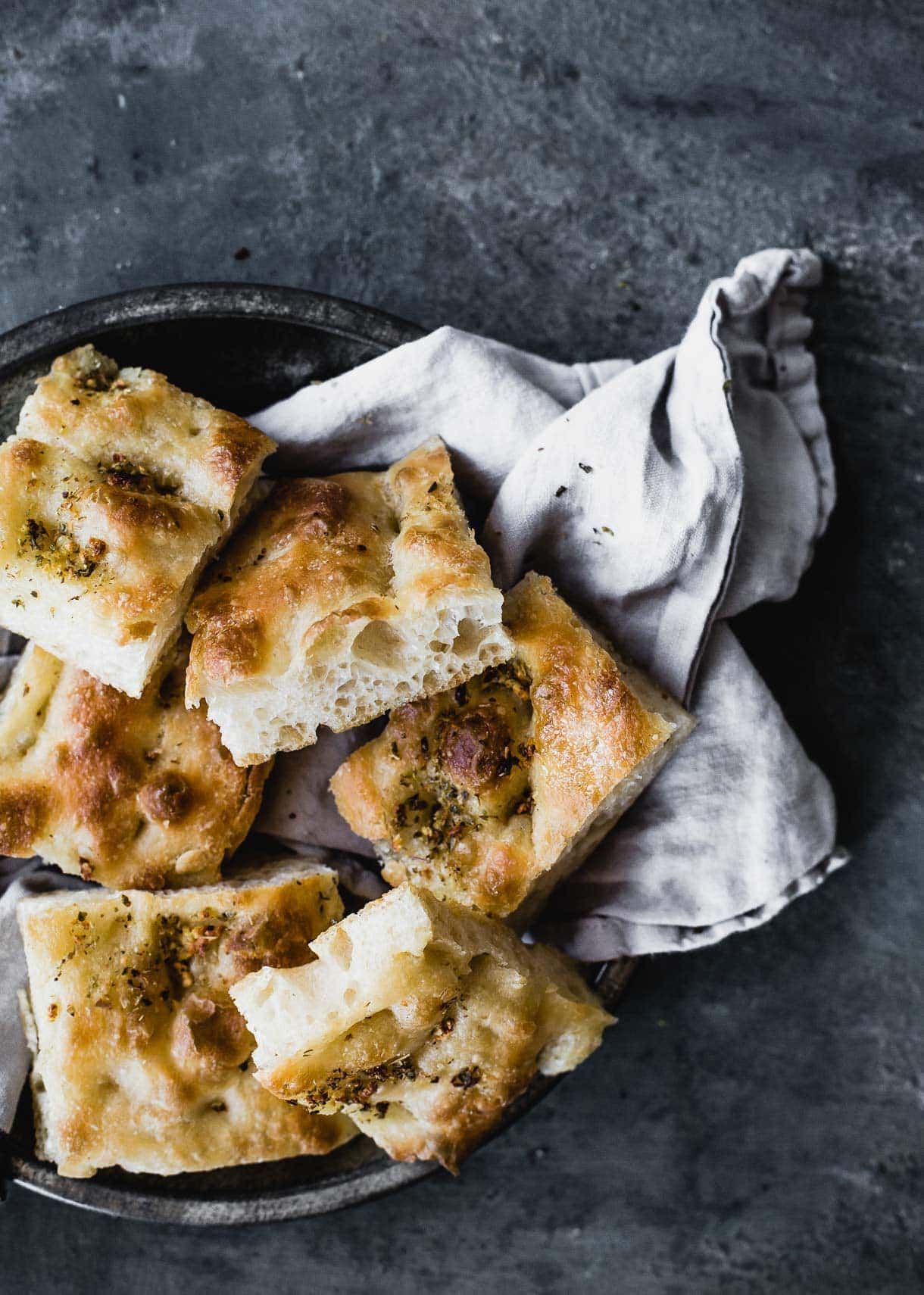

You’ve got a healthy sourdough starter on the counter, but you’re tired of baking the same loaves week after week. Focaccia is the perfect next step: it’s more forgiving than shaping a tight boule, it uses the same long fermentation magic that makes sourdough delicious, and it transforms into something completely different at the table. This soft, dimpled flatbread with crispy edges and an airy crumb is easier than it looks, and once you master the method, you’ll be making it constantly.
How to Make Sourdough Focaccia
Sourdough focaccia relies on a long, cold fermentation to develop flavor and an open crumb structure. The dough is wetter than sandwich bread, which creates its signature pillowy texture when baked.
Ingredients
- Active sourdough starter (fed 4-8 hours before use) – 150g
- Bread flour or all-purpose flour – 350g
- Water (room temperature) – 200g
- Fine sea salt – 7g
- Extra virgin olive oil – 60g plus more for the pan and topping
- Coarse sea salt and fresh rosemary for finishing
Method
Mix the dough
Combine active starter, water, and flour in a bowl, stirring until a shaggy dough forms with no dry flour remaining. Let it rest for 30 minutes. Add salt and half the olive oil, then mix thoroughly by hand or with a stand mixer until the dough becomes smooth and elastic, about 5-8 minutes. The dough should feel soft and slightly sticky.
Knead and incorporate oil
Gradually work in the remaining olive oil over 2-3 minutes, kneading gently until it’s fully incorporated and the dough becomes silky. This creates the tender crumb focaccia is known for. The dough will feel slippery but should hold together.
Bulk ferment at room temperature
Transfer the dough to a lightly oiled bowl and cover with a cloth or plastic wrap. Let it ferment at room temperature for 4-6 hours, performing a series of stretch-and-folds every 30 minutes for the first 2 hours. The dough should increase in volume by 50-75% and feel airy with visible bubbles.
Cold ferment overnight
After bulk fermentation, shape the dough gently into a round, then transfer it to an oiled 9×13-inch baking pan. Cover tightly and refrigerate for 12-24 hours. This overnight rest develops deep sourdough flavor and makes the dough easier to handle and dimple.
Preheat and bring to room temperature
Remove the pan from the refrigerator 1-2 hours before baking to bring the dough closer to room temperature. Preheat your oven to 425F. The dough should look puffy with visible fermentation bubbles across the surface.
Dimple and top
Using your fingertips, gently press dimples all over the dough, creating a characteristic textured surface. Be careful not to deflate the dough completely. Drizzle generously with olive oil, then sprinkle with coarse sea salt and fresh rosemary. Let rest 15 minutes before baking.
Bake until golden
Bake for 20-25 minutes until the top is deep golden brown and the edges are crispy and slightly caramelized. The focaccia should sound hollow when tapped on the bottom. The interior will remain soft and airy while the crust develops color and crunch.
Cool and finish
Transfer to a wire rack and let cool for 5-10 minutes. While still warm, brush lightly with additional olive oil for extra richness. Serve warm or at room temperature, tearing into pieces at the table.
- Don’t skip the cold overnight fermentation–this is where sourdough flavor develops and the dough becomes easier to work with and shape.
- Keep your fingers wet when dimpling to prevent sticking, but be gentle to preserve the airy bubbles you’ve worked to develop.
- For extra crispy edges, place a second baking pan on the lowest oven rack during preheating and slide your focaccia onto it for even bottom browning.
What to Look For in Sourdough Focaccia Baking Equipment
- Dough fermentation container: A clear bowl with volume markings helps you monitor fermentation progress without opening the cover repeatedly. Look for at least 3-4 liter capacity to accommodate the dough’s growth.
- Rimmed baking sheet: A sturdy 9×13-inch pan holds your focaccia and contains the oil during proofing and baking. Look for commercial-grade steel that won’t warp at high heat.
- Kitchen scale: Precise measurements make sourdough baking consistent and reliable. Digital scales with 0.1g accuracy ensure your starter, flour, and water ratios are exact.
- Wire cooling rack: A sturdy rack allows air to circulate under the focaccia after baking, preventing a soggy bottom while preserving the crispy crust.
Pyrex Mixing Bowl Set with Lids
Best for: Sourdough bakers who need reliable fermentation containers
Pyrex glass bowls are the workhorse of sourdough baking. These durable, scratch-resistant containers let you monitor fermentation without lifting the cover, and the included lids seal tightly for cold overnight fermentation. The clear glass shows volume growth and bubble development. Available in multiple sizes, they stack efficiently in the refrigerator and dishwasher safe for easy cleanup.
Check Current Price on Amazon →AmazonBasics Stainless Steel Baking Sheet
Best for: Home bakers on a budget
This commercial-grade steel baking sheet is lightweight enough for daily use yet sturdy enough to withstand repeated high-heat baking. The rolled rim prevents warping, and the light surface distributes heat evenly for consistent browning. At a fraction of premium brands, it delivers professional results without the price tag.
Check Current Price on Amazon →Etekcity Digital Kitchen Scale
Best for: New sourdough bakers learning precision
This affordable digital scale features large LCD display and 0.1g accuracy at weights under 500g, perfect for measuring sourdough ingredients. The tare function resets to zero instantly between measurements. It runs on batteries, has an auto-off feature, and includes a stainless steel platform that’s easy to wipe clean.
Check Current Price on Amazon →Hario Stainless Steel Mixing Bowl
Best for: Serious bakers investing in long-term equipment
Hario’s Japanese-crafted stainless steel bowl is indestructible and heavier than typical options, creating thermal stability during fermentation. The mirror-polished interior resists staining, and the rolled rim is safe and comfortable. While premium-priced, it’s a lifetime investment piece that performs beautifully for both sourdough and other baking projects.
Check Current Price on Amazon →Homemade Sourdough Focaccia is Easier Than You Think
Making sourdough focaccia at home transforms what seems like an intimidating yeasted bread into something approachable and deeply rewarding. The long fermentation does most of the work for you–your job is simply to mix, fold gently a few times, and let time and your starter’s natural yeast do the heavy lifting. The overnight cold fermentation is the secret that separates restaurant-quality focaccia from mediocre versions; it develops that complex sourdough tang that makes people ask for your recipe.
The beauty of focaccia is that it forgives imperfection far more gracefully than a tight sourdough boule. If your dough spreads a bit too thin, it still becomes delicious. If your fermentation timing is off by a few hours, the result is still good. Start with the method outlined above, invest in one good fermentation container and a reliable kitchen scale, and you’ll soon be baking focaccia that rivals any Italian bakery. The first time you pull a golden, fragrant, impossibly soft focaccia from your oven, you’ll understand why home bakers become obsessed with this simple, elegant bread.
Frequently Asked Questions
How active should my sourdough starter be before using it in focaccia?
Your starter should be fed 4-8 hours before use and at peak rise–it should have roughly doubled in volume, smell pleasantly sour and yeasty, and show active bubbles throughout. If used when too young, it won’t have enough leavening power; if too old, it will be past peak strength.
Can I skip the cold overnight fermentation and make focaccia the same day?
Yes, but the flavor will be noticeably milder and less complex. If you must skip it, do room-temperature bulk fermentation for 8-10 hours instead, but plan on deeper fermentation next time to experience how much flavor the cold rest develops.
Why is my focaccia dense instead of airy with an open crumb?
Dense focaccia usually results from over-handling, underfermentation, or an inactive starter. Ensure your starter is truly at peak when mixed, perform gentle stretch-and-folds rather than aggressive kneading, and don’t deflate the dough when dimpling before baking.
Can I freeze focaccia dough or baked focaccia?
Both work well. Freeze shaped, unbaked dough in the pan for up to 3 weeks; bake from frozen, adding 5-10 extra minutes. Baked focaccia freezes up to 2 months; reheat wrapped in foil at 350F for 10-15 minutes to restore softness.
What oil should I use for focaccia topping?
Use extra virgin olive oil for the best flavor and richness. Reserve your more expensive, premium bottles for drizzling after baking, and use good-quality but less pricey oil for mixing into the dough, where the nuances are less noticeable.
As an Amazon Associate, Build & Bloom earns from qualifying purchases. We only recommend products we genuinely think are useful. Prices and availability vary; check Amazon for the latest.
Leave a Reply