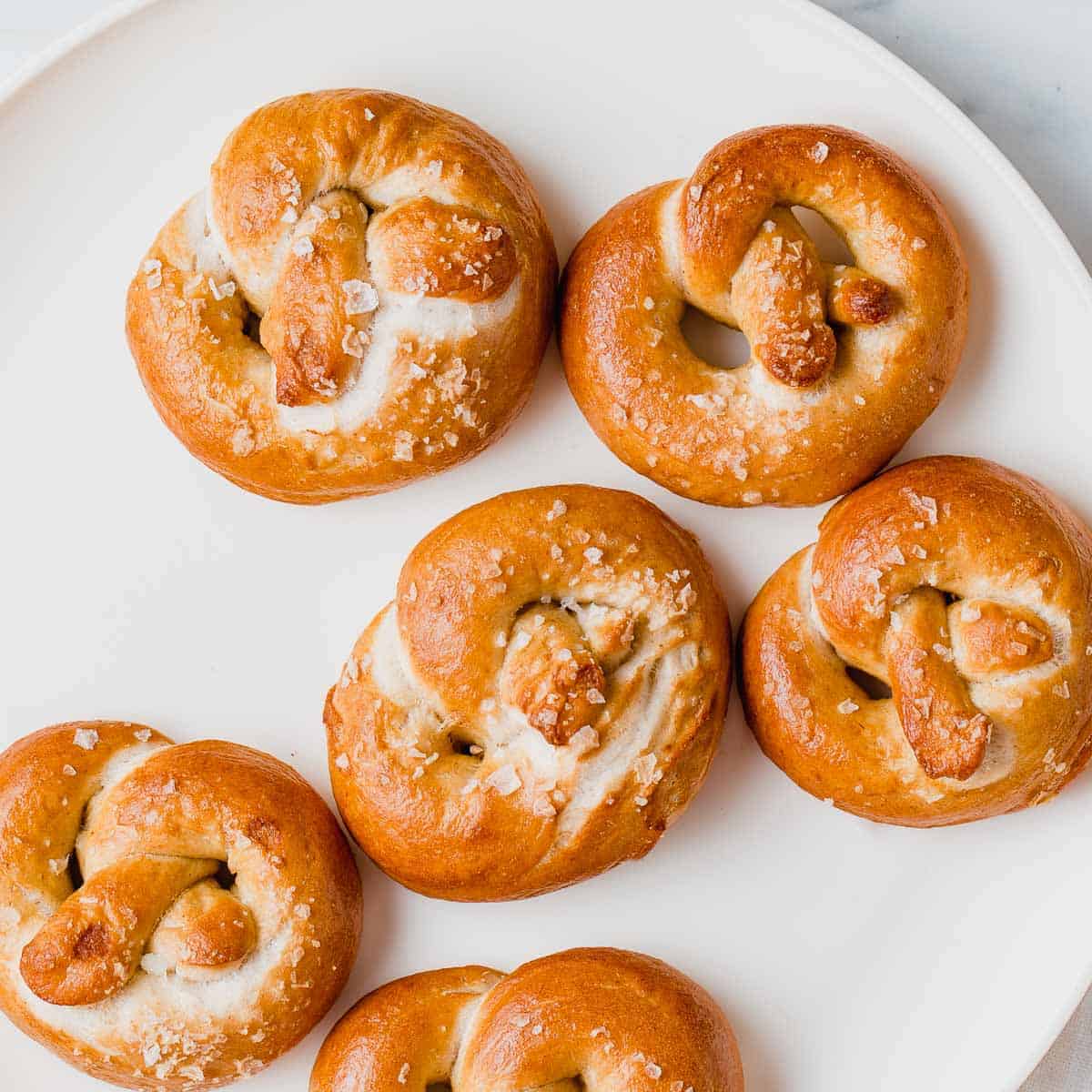

If you have a sourdough starter sitting on your counter, you already have the foundation for one of the most satisfying homemade snacks: soft, chewy pretzels with authentic sourdough tang. Unlike commercial pretzels made with commercial yeast, sourdough pretzels develop deeper flavor through fermentation and achieve that perfect tender crumb that makes them impossible to stop eating. This recipe transforms simple pantry staples into bakery-quality pretzels you can make any weekend.
How to Make Soft Sourdough Pretzels
This recipe creates eight soft pretzels with a chewy interior and slightly crispy exterior. The sourdough fermentation develops complex flavor while the baking soda bath creates that distinctive pretzel crust.
Ingredients
- 1 cup active sourdough starter (fed and bubbly)
- 2.5 cups bread flour or all-purpose flour
- 1 cup warm water
- 1.5 teaspoons salt
- 1 tablespoon sugar or honey
- 3 tablespoons baking soda (for the boiling bath)
Method
Mix the dough
Combine active sourdough starter, warm water, and flour in a large bowl. Stir until shaggy, then add salt and sugar. Knead by hand for 8-10 minutes until the dough is smooth and elastic. The dough should be slightly tacky but hold together.
Bulk fermentation
Cover the dough with a damp cloth and let it rise at room temperature for 4-6 hours. You’re looking for about 50-75% volume increase. The dough develops flavor during this time, so don’t rush it. You can also do a cold overnight fermentation in the refrigerator for 12-16 hours.
Divide and shape
Turn the dough onto a lightly floured surface and divide into 8 equal pieces. Roll each piece into a long rope about 20-24 inches, then form the classic pretzel shape by crossing the ends and tucking them under. Place shaped pretzels on parchment paper.
Final proof
Cover the shaped pretzels and let them rise for 1-2 hours until slightly puffy. They should have visible growth but still hold their shape when poked gently. This final rise ensures a light, tender interior.
Prepare the baking soda bath
Fill a large pot with water and bring to a boil. Remove from heat and stir in baking soda carefully (it will foam). Let it cool slightly. This alkaline bath is essential for developing the traditional pretzel crust and dark brown color.
Boil the pretzels
Working in batches, gently place each pretzel into the baking soda bath for 30-45 seconds per side. Use a slotted spoon to turn and remove them. Place boiled pretzels on a fresh sheet of parchment paper.
Season and bake
Brush each pretzel with beaten egg wash or water, then sprinkle with coarse salt if desired. Bake in a preheated 425°F oven for 18-22 minutes until golden brown and the crust is set. The pretzels will continue to firm slightly as they cool.
Cool and serve
Transfer baked pretzels to a wire rack and let them cool for at least 10 minutes. They’re best eaten the same day, but can be frozen and reheated. Serve warm with mustard, cheese sauce, or your favorite dip.
- An active, recently-fed sourdough starter is crucial. If your starter is sluggish, feed it and wait until it’s at peak activity (doubled, bubbly, with a pleasant sour smell) before using it.
- Don’t skip the baking soda bath. This step creates the chewy, distinctive pretzel texture and dark crust that sets homemade pretzels apart from regular bread.
- The dough can be refrigerated after shaping for up to 24 hours, allowing you to bake fresh pretzels on your schedule and develop even more flavor through cold fermentation.
What to Look For in Pretzel-Making Equipment
- Large Pot Capacity: You need at least a 6-8 quart pot to safely boil pretzels with enough baking soda bath without overflow risk. Wider pots make it easier to manage the boiling process without crowding.
- Slotted Spoon Design: A sturdy slotted spoon with decent depth prevents pretzel collapse during the boiling process. Look for stainless steel construction that won’t rust from the baking soda bath.
- Reliable Oven Thermometer: Accurate temperature control is essential for consistent baking results. An oven thermometer ensures your 425°F bake produces evenly golden pretzels without burning.
- Parchment Paper Quality: High-quality parchment prevents sticking during proofing and boiling stages. Heavy-duty parchment resists tearing when moving wet pretzels and holds up through the baking process.
Calphalon Contemporary Stainless Steel 8-Quart Stockpot
Best for: Reliable sourdough pretzel boiling
This 8-quart stockpot provides the capacity and stability you need for boiling a full batch of pretzels. The stainless steel construction resists corrosion from baking soda, while the flat bottom ensures even heat distribution. The wide opening makes it easy to manage pretzels with a slotted spoon, and the tall sides prevent overflow. Handles are securely riveted for durability through repeated use.
Check Current Price on Amazon →Basic Craft Slotted Spoon Stainless Steel
Best for: Affordable pretzel boiling tool
A simple, effective slotted spoon with long handle that’s perfect for pretzel boiling. The 2-inch deep slots provide adequate support for delicate boiled pretzels, and stainless steel won’t degrade from baking soda exposure. The 13-inch length keeps hands safely away from steam. This no-frills option delivers reliable performance without premium pricing.
Check Current Price on Amazon →Oxo Good Grips Instant Read Thermometer
Best for: First-time pretzel bakers checking oven temperature
This digital thermometer displays temperature in 2-3 seconds, removing guesswork from oven calibration. The large, easy-to-read display and simple operation make it ideal for beginners who want consistent baking results. The probe is thin enough to fit in most ovens without taking up much space. Powered by a single battery that lasts for years of use.
Check Current Price on Amazon →Staub Cast Iron 8-Quart Cocotte with Lid
Best for: Home bakers who want heirloom-quality equipment
This French-made enameled cast iron pot is built to last a lifetime. The superior heat retention ensures stable boiling temperature throughout your pretzel batch. The heavy construction prevents warping, and the black interior enamel hides stains. Though more expensive than standard pots, this investment piece becomes part of your kitchen legacy and performs better with each use.
Check Current Price on Amazon →Making Pretzels is Easier Than You Think
Soft sourdough pretzels are one of those bakes that look intimidating but reward careful attention with remarkable results. Your sourdough starter does most of the flavor work while you focus on technique: mixing, fermenting, shaping, boiling, and baking. The ingredients list is refreshingly short, and the process spans just a few hours once you understand each stage. Most home bakers are surprised how forgiving the dough is and how quickly their second batch improves.
Starting with quality equipment makes the process genuinely enjoyable rather than frustrating. A proper stockpot eliminates splashing during the critical baking soda bath step, while a reliable thermometer ensures your oven temperature is accurate. Parchment paper prevents the sticking disasters that can derail a batch. These aren’t luxuries but practical tools that transform your baking experience. Make one batch this weekend, and you’ll understand why sourdough pretzel baking becomes a weekend ritual for so many home bakers.
Frequently Asked Questions
Can I make sourdough pretzels without a sourdough starter?
Technically yes, but you’d lose the distinctive sourdough tang that makes these special. You could substitute active dry yeast at about 2 teaspoons, but you’d need to adjust fermentation times significantly and miss the complex flavor development that sourdough provides.
What’s the difference between my pretzel and a bagel after boiling?
Baking soda creates a chemical reaction on the pretzel’s surface, developing a chewy, dark exterior unique to pretzels. Bagels use just boiling water, resulting in a different texture and appearance. The baking soda is essential for authentic pretzel character.
Can I freeze shaped pretzels before boiling?
Yes, this is an excellent strategy. Freeze shaped, proofed pretzels on a baking sheet, then transfer to freezer bags for up to 3 months. Boil directly from frozen, adding 15-20 extra seconds to the baking soda bath to ensure they heat through.
How do I know when my sourdough starter is ready to use?
Your starter should be fed 4-12 hours before using, and should be at peak activity: doubled in volume, covered with bubbles, and smelling pleasantly sour and yeasty. If it’s sluggish, wait for the next feeding cycle.
Why did my pretzels turn out dense instead of chewy?
This usually means insufficient bulk fermentation, over-proofing that collapsed the dough, or an insufficiently active starter. Ensure your starter is genuinely active before mixing, and watch for volume increase rather than time during fermentation.
As an Amazon Associate, Build & Bloom earns from qualifying purchases. We only recommend products we genuinely think are useful. Prices and availability vary; check Amazon for the latest.
Leave a Reply