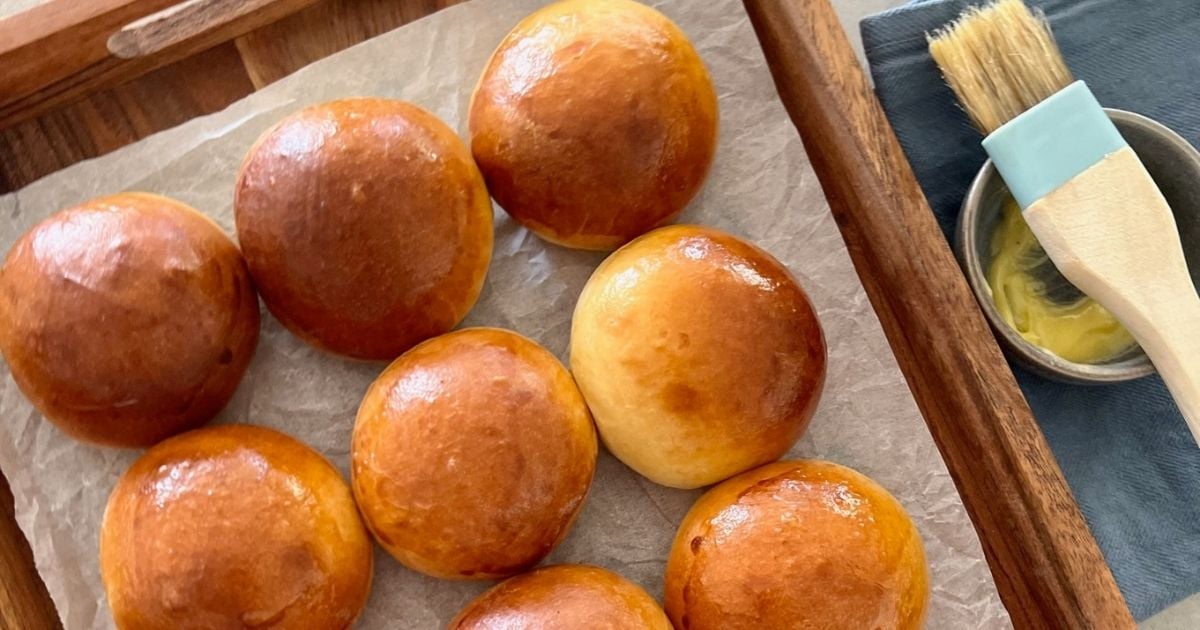

If you’ve mastered basic sourdough but crave something richer and more indulgent, sourdough brioche buns are the perfect next step. These hybrid rolls deliver the complex flavor of fermented sourdough with the luxurious crumb and golden-brown exterior of traditional brioche. Unlike standard dinner rolls, they stay tender for days and freeze beautifully, making them ideal for meal prep. Whether you’re planning a gourmet sandwich bar or elegant brunch spread, this recipe will impress.
How to Make Sourdough Brioche Buns
This recipe combines an active sourdough starter with butter, eggs, and milk to create buns that are both tangy and rich. The long fermentation develops flavor while the high butter content creates that signature brioche tenderness.
Ingredients
- 1 cup active sourdough starter, fed 4-8 hours prior
- 3 1/2 cups all-purpose flour (or bread flour)
- 1/2 cup whole milk, warmed
- 6 tablespoons butter, softened
- 2 large eggs (plus 1 egg for egg wash)
- 2 tablespoons sugar
- 1 1/2 teaspoons salt
- 1/2 teaspoon vanilla extract
- Sesame seeds or coarse sugar for topping (optional)
Method
Mix the dough
In a large mixing bowl, combine your active sourdough starter, warmed milk, eggs, sugar, and vanilla extract. Stir until roughly combined. Add the flour and salt, then mix until shaggy. Let this mixture rest for 20-30 minutes (this is called autolyse). This rest allows the flour to fully hydrate and makes the dough easier to work with.
Incorporate the butter
Add the softened butter to your rested dough in small pieces. Using your hands or a stand mixer, work the butter in gradually until fully incorporated and the dough becomes smooth and slightly sticky. This step is crucial for achieving brioche’s signature tender crumb.
Bulk fermentation
Place the dough in an oiled bowl and cover with a damp cloth. Let it rise at room temperature for 6-8 hours, or until it has increased in volume by about 50-75%. Perform 4-6 sets of stretch-and-folds during the first 2 hours, gently pulling the dough up and folding it over itself to build strength.
Shape the buns
Turn the dough onto a lightly floured surface and gently shape it into a log. Divide into 8-12 equal portions, then shape each piece into a tight ball. Place the shaped buns into a greased baking pan or on a lined baking sheet with about 2 inches between each bun.
Second rise
Cover the shaped buns with a damp cloth and let them proof for 3-4 hours at room temperature, or overnight in the refrigerator. The overnight cold rise is ideal as it enhances flavor and makes the dough easier to handle before baking. Buns should increase noticeably in size.
Apply egg wash and bake
Preheat your oven to 375°F (190°C). Beat the remaining egg with 1 tablespoon water. Brush this egg wash generously over each bun, then sprinkle with sesame seeds or coarse sugar if desired. Bake for 18-22 minutes until deep golden brown on top.
Cool and store
Remove buns from the oven and let them cool on a wire rack for at least 15 minutes before serving. Once completely cooled, store in an airtight container at room temperature for up to 3 days, or freeze for up to 2 weeks.
- Feed your sourdough starter 4-8 hours before mixing the dough. It should be bubbly and at its peak, roughly doubled in size, for best results.
- If your kitchen is cool, bulk fermentation may take longer. Conversely, if it’s warm, reduce fermentation times by 1-2 hours to prevent over-proofing.
- For extra soft buns, brush them with melted butter immediately after removing from the oven, then cover loosely for 5 minutes to trap steam.
What to Look For in Sourdough Brioche Baking Equipment
- Stand Mixer Quality: A reliable stand mixer with a dough hook attachment makes incorporating butter seamless and reduces hand-kneading time. Look for models with at least 5-quart capacity and variable speed settings so you can control how vigorously the butter is worked in.
- Proofing Vessel Size: Your bulk fermentation bowl should be large enough to hold dough that rises 50-75% without overflowing. A 5-quart bowl is ideal for this recipe, and clear glass or silicone allows you to monitor rise progress without uncovering.
- Baking Pan Conductivity: Heavy-duty baking sheets or pans with good heat distribution prevent burning on the bottom while the tops brown. Materials like aluminum or steel with a dark, non-stick surface promote even browning and easy release.
- Thermometer Accuracy: An instant-read thermometer helps confirm dough temperature and oven accuracy. Brioche buns are done when the internal temperature reaches 190-200°F, ensuring a fully set crumb without drying out the interior.
KitchenAid Artisan Stand Mixer
Best for: Home bakers who make brioche regularly
The KitchenAid Artisan 5-quart stand mixer is the gold standard for sourdough brioche baking. Its powerful motor and flat mixing paddle handle heavy, butter-enriched doughs without strain. The bowl is the perfect size for bulk fermentation, and the included dough hook ensures consistent kneading. Multiple speed settings give you precise control when incorporating butter gradually, preventing splashing and overworking.
Check Current Price on Amazon →Cuisinart Stand Mixer
Best for: Budget-conscious beginners
The Cuisinart 5.5-quart stand mixer delivers reliable performance at a fraction of the cost of premium brands. It handles brioche dough admirably with its stainless steel bowl and sturdy dough hook. While it lacks some advanced features of pricier models, it’s fully capable of mixing and kneading sourdough brioche dough efficiently, making it ideal for home bakers on a budget.
Check Current Price on Amazon →Hamilton Beach Stand Mixer
Best for: First-time stand mixer buyers
The Hamilton Beach stand mixer is compact, user-friendly, and perfectly capable of handling sourdough brioche dough. Its 4-quart bowl is slightly smaller but adequate for the recipe, and the intuitive controls make it accessible for beginners. The planetary mixing action ensures even distribution of ingredients, and cleanup is straightforward, making this an excellent entry-level option.
Check Current Price on Amazon →Ankarsrum Original Stand Mixer
Best for: Serious bakers who make diverse recipes
The Ankarsrum is a Swedish-engineered mixer beloved by artisan bakers for its gentle yet effective mixing action and versatile accessory system. It excels with sourdough brioche, using a roller and scraper that prevents over-development while thoroughly incorporating butter. Its compact footprint and quiet operation make it perfect for frequent bakers who value precision and craftsmanship.
Check Current Price on Amazon →Final Recommendation
Sourdough brioche buns represent the sweet intersection of two beloved baking traditions. The tangy, complex flavor from extended fermentation meets the luxurious richness of butter and eggs, creating rolls that elevate any meal. Whether you’re a sourdough enthusiast looking to expand your repertoire or a brioche fan curious about fermentation, this recipe delivers impressive results with manageable complexity. The hands-on time is minimal, and the long fermentation means the work is spread across two days, making it surprisingly accessible.
Invest in a quality stand mixer if you don’t already own one, use a reliable instant-read thermometer to confirm doneness, and don’t rush the bulk or second fermentation stages. The sourdough brioche bun experience is as much about the slow, intentional process as it is about the final product. Your first batch might not be perfect, but with these detailed steps and the right equipment, you’ll create bakery-quality rolls that freeze beautifully and taste even better with a day of rest. Welcome to your new favorite sourdough project.
Frequently Asked Questions
Can I use inactive or newly created sourdough starter?
No. Your starter must be active, fed, and at peak (doubled in size with visible bubbles). An inactive or weak starter won’t provide enough fermentation power, resulting in dense, poorly-risen buns. Feed your starter 4-8 hours before mixing and use it when bubbly and at its peak.
Why is my dough too sticky to shape?
Sourdough brioche dough is naturally sticky due to high butter and moisture content. Dust your work surface generously with flour, refrigerate the dough for 30 minutes before shaping, or lightly oil your hands instead of flouring them. Cold dough is always easier to handle.
Can I skip the overnight cold fermentation and proof at room temperature instead?
Yes, but overnight cold fermentation is superior. The slow rise in the refrigerator develops deeper sourdough flavor and makes dough easier to handle. Room temperature second rise is faster (3-4 hours) but produces milder flavor. For best results, use overnight refrigeration.
How do I store leftover buns and how long do they last?
Store cooled buns in an airtight container at room temperature for up to 3 days, or freeze in a freezer bag for up to 2 weeks. Thaw at room temperature for 1-2 hours. Freeze-thaw cycles preserve softness better than refrigerating, which accelerates staling.
What if my buns don’t rise enough during the second proof?
Weak rise indicates either an underfed starter, insufficient bulk fermentation, or a cool environment. Always confirm your starter is active before mixing. If proofing too slowly, move dough to a warmer spot (75-78°F is ideal), or extend proofing time. Cold kitchens may require 5-6 hours instead of 3-4.
As an Amazon Associate, Build & Bloom earns from qualifying purchases. We only recommend products we genuinely think are useful. Prices and availability vary; check Amazon for the latest.
Leave a Reply