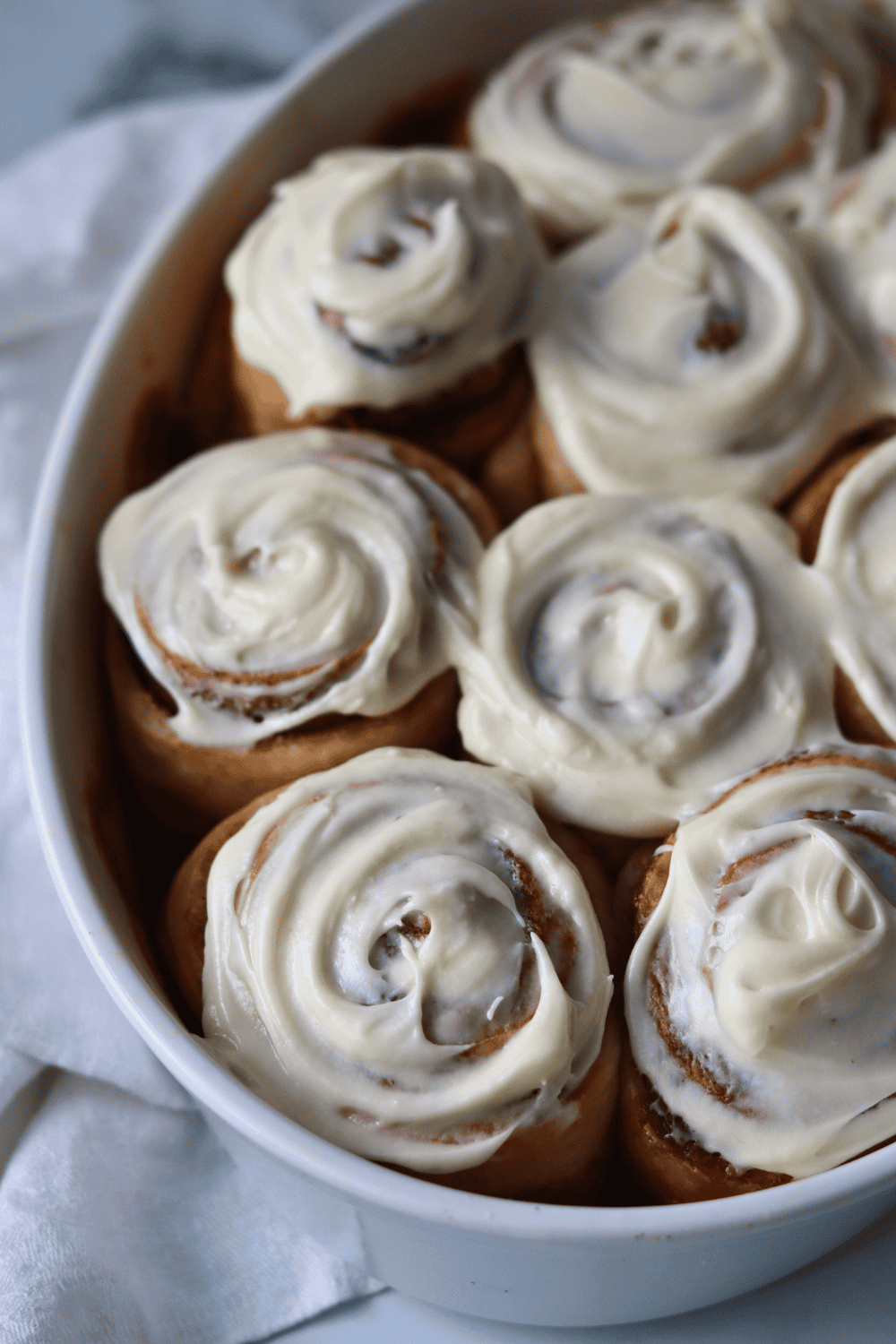

If you’ve mastered basic sourdough bread but want to explore something sweeter, sourdough cinnamon rolls are the natural next step. They combine the tangy complexity of a mature starter with the comfort of a classic pastry, and the long fermentation actually makes them easier to shape while developing incredible depth of flavor. Unlike yeasted rolls that require precise timing, sourdough gives you flexibility: you can proof them overnight in the fridge and bake fresh in the morning.
How to Make Sourdough Cinnamon Rolls
This recipe uses your active sourdough starter to create rolls with complex flavor and a tender crumb. Total time is about 18-24 hours, but most of that is hands-off fermentation.
Ingredients
- 1 cup active sourdough starter (fed 4-8 hours prior, bubbly and at peak)
- 3/4 cup whole milk, warmed to 75-80F
- 3 tablespoons melted butter plus 2 tablespoons for filling
- 3 tablespoons sugar plus 1/4 cup brown sugar for filling
- 1 teaspoon salt
- 3 cups all-purpose flour or bread flour
- 1 tablespoon ground cinnamon
Method
Mix your dough base
Combine your active starter, warm milk, melted butter, and sugar in a large mixing bowl. Stir until roughly combined, then add the salt and flour. Mix until all flour is hydrated and you have a shaggy dough. There should be no dry flour visible in the bowl, but the dough will feel slightly sticky.
Autolyse and bulk ferment
Let the dough rest uncovered for 30 minutes. This allows the flour to fully absorb moisture. After resting, perform 4-6 sets of stretch-and-folds at 30-minute intervals, gently pulling the dough from the sides and folding it over itself. After the final fold, let the dough bulk ferment for 4-6 hours at room temperature (68-72F) until it increases by 50-75% in volume and jiggles when you tap the bowl.
Shape and prepare filling
While dough ferments, mix your brown sugar with cinnamon in a small bowl. Once bulk ferment is complete, turn your dough onto a lightly floured surface and gently shape into a rectangle about 10 inches by 14 inches. Brush the surface with melted butter, then sprinkle the cinnamon-sugar mixture evenly across, leaving a 1/2-inch border on all sides.
Roll and cut
Starting from the long side closest to you, roll the dough tightly toward the far edge, using a bench scraper to help seal the final seam. Cut the log into 8-10 equal pieces using a sharp knife or dental floss (floss creates cleaner cuts without dragging). Place rolls cut-side up in a buttered 9×13-inch baking pan, leaving about 1/2 inch between each roll.
Cold proof overnight
Cover the pan tightly with plastic wrap or a food-safe plastic bag and place it in the refrigerator for 8-16 hours. This overnight cold fermentation develops flavor and makes the rolls easier to bake evenly. The cold dough will rise slowly and require less oven time.
Bring to room temperature and proof
Remove the pan from the refrigerator and let it sit on the counter for 1-2 hours until the rolls feel puffy and spring back slowly when gently poked. You should see some visible rise, but they don’t need to completely fill the pan. Preheat your oven to 375F about 30 minutes before baking.
Bake until golden
Place the pan in the preheated oven and bake for 20-25 minutes until the tops are deep golden brown and the internal temperature reaches 190F at the center of a roll. The rolls should be set but still tender. Remove from the oven and let cool in the pan for 10 minutes before frosting or serving.
- If your starter is young or weak, feed it twice the day before baking to ensure maximum activity and rise. A mature starter should roughly double in volume within 4-8 hours of feeding.
- The overnight cold proof is your secret weapon: it develops tangy flavor and gives you morning flexibility. You can bake straight from the fridge on a weekend, or pull them out Wednesday night for Thursday morning.
- Don’t skip the final room-temperature proof after refrigeration. Cold dough won’t rise properly in the oven and may bake dense. You want visible puffiness before the pan enters the oven.
Essential Equipment for Sourdough Cinnamon Rolls
- Mixing bowl: A large 4-6 quart bowl lets you perform stretch-and-folds and bulk fermentation without spillage. Clear glass or plastic helps you track volume increase.
- Bench scraper: This flat, rigid tool helps you fold, shape, and divide dough cleanly. It prevents sticking and gives you control during the critical shaping step.
- Instant-read thermometer: Sourdough is done when internal temperature reaches 190F. A reliable thermometer removes guesswork and prevents over or under-baking.
- Instant yeast alternative (optional): Pure sourdough uses only starter, but a tiny pinch of instant yeast (1/8 teaspoon) can strengthen rise if your starter is very young.
OXO Good Grips 5-Quart Mixing Bowl
Best for: Serious sourdough bakers
This heavy-duty glass mixing bowl is sized perfectly for sourdough work and bulk fermentation. The wide mouth makes stretch-and-folds easy, and the clear glass lets you track rise progress throughout fermentation. The non-slip base keeps it steady during vigorous mixing. Heat-safe to 350F, dishwasher-safe, and built to last years of daily use. Its size accommodates 3-4 cups of flour-based doughs without overflow.
Check Current Price on Amazon →Winco Stainless Steel Bench Scraper
Best for: Home bakers on a budget
This professional-grade stainless steel bench scraper is the workhorse of dough work. At under 10 dollars, it performs all critical tasks: folding, shaping, dividing, and cleaning your work surface. The sharp edge cuts through dough cleanly without dragging, and the flat design lets you scrape dough off counters efficiently. Commercial bakeries stock dozens of these. Dishwasher-safe and virtually indestructible.
Check Current Price on Amazon →ThermoPro Instant-Read Meat Thermometer
Best for: Home bakers new to sourdough
This fast, accurate digital thermometer removes the guesswork from doneness testing. It reads internal dough temperature in 3 seconds and displays clearly on a large LCD screen. The probe is thin enough to insert without damaging rolls, and it auto-shuts off after 10 minutes. Water-resistant design survives kitchen splashes. At around 20 dollars, it’s the most important accuracy tool you can buy for baking.
Check Current Price on Amazon →Pyrex 6-Quart Glass Mixing Bowl
Best for: Discerning home bakers
Pyrex’s borosilicate glass construction is temperature-stable from freezer to oven, allowing you to transition dough from fridge to proof without transferring. The wide, gentle curve makes folding biomechanically easier on your wrists during extended work. Etched measurement markings help track fermentation progress. This bowl has been the gold standard in professional kitchens for 80 years and will outlive your sourdough journey.
Check Current Price on Amazon →Final Recommendation
Making sourdough cinnamon rolls is less about special equipment and more about understanding fermentation timing. The OXO 5-quart mixing bowl and Winco bench scraper are the only true essentials—they cost under 25 dollars combined and will outlast your sourdough journey. Every other tool is a refinement for comfort or precision. Start with these two items and build from there based on what frustrates you most.
The biggest advantage of sourdough cinnamon rolls over yeasted versions is flexibility and flavor development. The overnight cold fermentation isn’t a limitation; it’s a gift that lets you shape rolls Wednesday night and bake fresh Friday morning while the long fermentation builds complexity that short-fermented rolls simply can’t achieve. Trust the process, track your starter’s strength with a reliable thermometer, and these rolls will become your signature weekend project.
Frequently Asked Questions
Can I make these rolls without overnight refrigeration?
Yes, but with trade-offs. After shaping, you can let rolls proof at room temperature for 2-4 hours until puffy, then bake. You’ll lose some of the tangy flavor that develops during cold fermentation, and timing is tighter. The overnight cold proof is recommended for flavor and flexibility, but room-temperature proofing works in a pinch.
What if my starter is very young or weak?
Feed your starter twice the day before baking (12 hours apart) to maximize activity. If you still lack confidence, you can add 1/4 teaspoon of instant yeast to the dough. This is not cheating; many professional sourdough bakeries use tiny amounts of commercial yeast alongside starter for reliability.
Can I freeze sourdough cinnamon rolls?
Absolutely. Freeze unbaked rolls in the baking pan for up to 3 weeks. When ready to bake, thaw in the refrigerator overnight, bring to room temperature for 1-2 hours, then bake as normal. You can also freeze fully baked rolls and reheat in a 300F oven for 10 minutes.
Why are my rolls dense or gummy inside?
This usually means under-fermentation or under-baking. Ensure bulk fermentation shows 50-75% rise, the final proof produces visible puffiness, and internal temperature reaches 190F. Sourdough needs more time than commercial yeast doughs; don’t rush the process.
Should I frost these rolls, and if so, when?
Frosting is optional but traditional. A simple cream cheese glaze (4 oz softened cream cheese, 2 tablespoons butter, 1 cup powdered sugar) spread while rolls are warm adds richness. Alternatively, dust with cinnamon sugar immediately after baking for a simpler finish. Apply frosting within 10 minutes of removing from the oven while rolls are still warm.
As an Amazon Associate, Build & Bloom earns from qualifying purchases. We only recommend products we genuinely think are useful. Prices and availability vary; check Amazon for the latest.
Leave a Reply