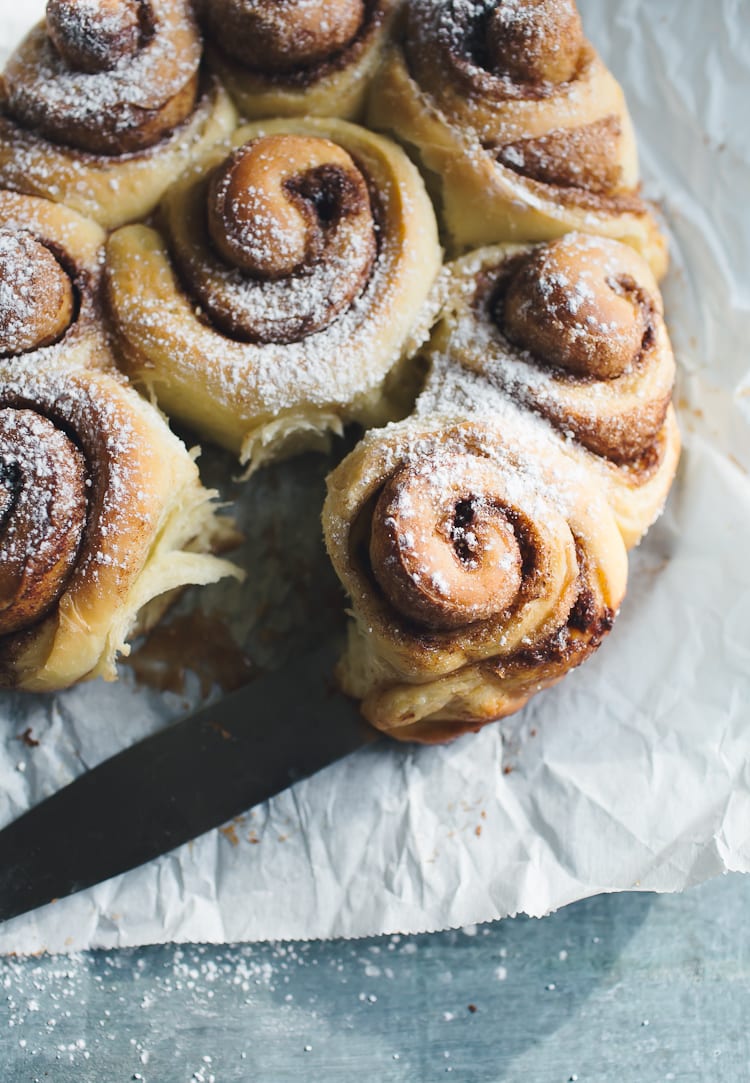

Sourdough cinnamon rolls deliver bakery-quality flavor with that distinctive tangy complexity that only natural fermentation can provide. If you’ve mastered basic sourdough but want to level up into sweet applications, cinnamon rolls are the perfect next step. They require patience and planning, but the overnight rise makes them perfect for weekend baking when you want fresh rolls for Sunday breakfast.
How to Make Sourdough Cinnamon Rolls
This recipe yields 9-12 rolls depending on size. The entire process spans 24-48 hours with multiple rest periods that develop deep flavor.
Ingredients
- 1 cup active sourdough starter (fed 4-8 hours prior)
- 3/4 cup whole milk, warmed to 75-80 degrees F
- 3 cups bread flour or all-purpose flour
- 1/2 teaspoon salt
- 2 tablespoons granulated sugar
- 3 tablespoons softened butter, plus 2 tablespoons for filling
- 1/3 cup packed brown sugar mixed with 2 tablespoons ground cinnamon for filling
Method
Mix the dough
Combine active starter, warm milk, flour, salt, and sugar in a large bowl. Mix until a shaggy dough forms, then rest for 20 minutes. Incorporate the softened butter by kneading or stretching the dough in the bowl until fully incorporated. The dough should feel slightly sticky but manageable.
Bulk fermentation
Place dough in a lightly oiled bowl and cover. Perform 4-6 sets of stretch-and-folds at 30-minute intervals during the first 2-3 hours. After folds are complete, let the dough rest undisturbed at room temperature (68-72 degrees F) for 8-12 hours or until noticeably puffy and increased in volume by 50-75 percent.
Prepare the work surface
Turn dough out onto a lightly floured surface and gently shape into a rough rectangle. Allow it to rest for 10 minutes to relax the gluten, which makes shaping easier and prevents tearing.
Shape the rolls
Roll dough into a 9×12-inch rectangle. Spread softened butter over the entire surface, then distribute cinnamon-sugar filling evenly, leaving a 1/2-inch border on all sides. Starting from the long side closest to you, roll tightly into a log, sealing the edge. Cut into 9-12 equal pieces using a sharp knife or floss.
Final proof
Place rolls in a buttered 9×13-inch baking pan, spacing them so they’re just touching. Cover loosely with plastic wrap and refrigerate overnight (8-16 hours). Cold fermentation allows the flavors to develop and makes the rolls easier to handle. Remove from the refrigerator 30-60 minutes before baking to bring closer to room temperature.
Bake until golden
Preheat your oven to 375 degrees F. Bake rolls for 25-32 minutes until golden brown and the internal temperature reaches 190 degrees F. If tops brown too quickly, tent loosely with foil. The rolls should feel soft but set when lightly pressed.
Cool and glaze
Remove from oven and allow rolls to cool in the pan for 5-10 minutes. Drizzle with a simple glaze (powdered sugar mixed with milk) or cream cheese frosting while still warm. Serve warm or at room temperature.
- Use a thermometer to confirm your starter is at peak activity (approximately doubled in size and showing visible bubbles) before mixing. A weak starter results in flat, under-flavored rolls.
- If your kitchen is cold, wrap the bulk fermentation bowl in a heating pad set to low, or place it inside a turned-off oven with the light on to maintain consistent warmth.
- Refrigerating the shaped dough overnight is not optional for sourdough cinnamon rolls—it’s crucial for flavor development and gives you the convenience of baking fresh rolls in the morning.
What to Look For in Sourdough Baking Equipment
- Kitchen Scale Precision: Sourdough demands accuracy. A scale that measures in both grams and ounces to 0.1-gram increments prevents the guesswork that leads to dense or overly wet dough. Digital scales with a tare function make measuring multiple ingredients seamless.
- Dough Temperature Control: An instant-read thermometer helps you confirm water temperature and dough temperature, critical variables in sourdough timing. Consistent dough temperature (around 75-78 degrees F) produces predictable fermentation schedules.
- Proofing Container Material: Banneton baskets or proofing boxes should be floured adequately or lined with cloth to prevent sticking. Some bakers prefer clear containers for monitoring rise progress. The container must be large enough to accommodate 50% volume increase.
- Cutting Precision: A dough scraper or bench knife with clear measurement markings helps you portion rolls uniformly, ensuring even baking. A long serrated bread knife or dental floss cuts through risen dough cleanly without deflating the pieces.
OXO Good Grips Digital Kitchen Scale
Best for: Precision sourdough bakers
The OXO Good Grips scale is the gold standard for sourdough work. It measures accurately to 0.1 grams, has a large easy-to-read display, includes a removable bowl, and features a tare button for measuring multiple ingredients directly into your mixing bowl. The pull-out display lets you see the readout even when a large mixing bowl sits on the platform. Durable construction and straightforward interface make this the top choice for serious bakers.
Check Current Price on Amazon →Habor Digital Kitchen Scale with Bowl
Best for: Budget-conscious home bakers
This affordable scale delivers accurate measurements to 1-gram increments and includes a mixing bowl, adding value. The stainless steel platform wipes clean easily, and the bowl holds up to 2kg of dough. While slightly less precise than premium options, it’s perfect for home cinnamon roll production where 1-gram variance is negligible. Great entry point for sourdough beginners learning to measure by weight.
Check Current Price on Amazon →Escali Primo Digital Scale
Best for: First-time sourdough bakers
The Escali Primo features a compact footprint, easy-to-use buttons, and clear display without overwhelming options. It measures accurately to 1 gram and can hold up to 11 pounds, accommodating full batches of dough. The flat platform works well with bowls of any size, and the price point is reasonable for an accurate, reliable scale that will last years of weekly baking.
Check Current Price on Amazon →Hario V60 Drip Scale with Timer
Best for: Advanced bakers wanting precision timing and weight
This Japanese-made scale combines accurate weight measurement (0.1g precision) with an integrated timer, ideal for tracking fermentation windows. The stainless steel construction feels premium, and the compact size fits easily on countertops. While technically designed for pour-over coffee, its precision makes it excellent for professional-level sourdough work where monitoring multiple fermentation phases is critical.
Check Current Price on Amazon →Final Recommendation
Sourdough cinnamon rolls represent the sweet side of fermentation and are entirely achievable in a home kitchen. The key is patience with fermentation timing and accuracy with measurements—this is where a quality scale and thermometer pay dividends. Your overnight cold fermentation isn’t a compromise; it’s the secret that develops the complex, tangy flavor that makes sourdough superior to yeasted rolls. Plan ahead, trust your starter, and you’ll produce bakery-quality cinnamon rolls that taste far more interesting than anything commercially available.
Start with the OXO scale as your foundation investment, add a reliable thermometer, and commit to the 24-48 hour process. Once you’ve made one batch, you’ll understand why sourdough devotees insist this method is worth the wait. Your Sunday morning kitchen will smell like a professional bakery, and your family will understand why you spent the entire weekend nurturing dough.
Frequently Asked Questions
Can I make sourdough cinnamon rolls if my starter is very sour?
Yes, sourness is actually desirable in sourdough cinnamon rolls because the sweet filling balances the tangy flavor. However, if your starter is extremely sour (days old without feeding), feed it once or twice and wait 4-8 hours for peak activity before using it. An active starter with visible bubbles will ferment your dough predictably.
What happens if I skip the overnight cold fermentation?
Cold fermentation allows flavors to develop and makes the dough easier to work with, but it’s not strictly required. If you skip it, do a 2-3 hour room-temperature proof instead. However, the rolls will be blander and less complex-flavored compared to a cold-fermented batch. The long chill is one of the main advantages of using sourdough over commercial yeast.
How do I know when bulk fermentation is complete?
The dough should increase visibly in volume (50-75% larger), feel airy with some gas bubbles visible on the surface, and pass the poke test: when you gently poke the dough, the indentation should slowly spring back halfway. If it springs back completely, it needs more time; if it doesn’t spring back at all, it’s overfermented.
Can I freeze sourdough cinnamon rolls before baking?
Yes, and this is highly recommended for convenience. Freeze shaped, unbaked rolls in the pan (wrapped tightly) for up to 2 weeks. Bake from frozen, adding 10-15 minutes to bake time and checking that centers reach 190 degrees F. No thawing needed—bake straight from frozen for maximum freshness.
What’s the difference between active starter and ‘fed’ starter?
Active starter means it’s been recently fed (within the last 4-8 hours) and is at peak rise—doubling or tripling in volume with visible bubbles. Fed starter simply means you’ve given it fresh flour and water but it hasn’t risen yet. Always use active, peaked starter for sourdough baking to ensure consistent fermentation and good rise.
As an Amazon Associate, Build & Bloom earns from qualifying purchases. We only recommend products we genuinely think are useful. Prices and availability vary; check Amazon for the latest.
Leave a Reply