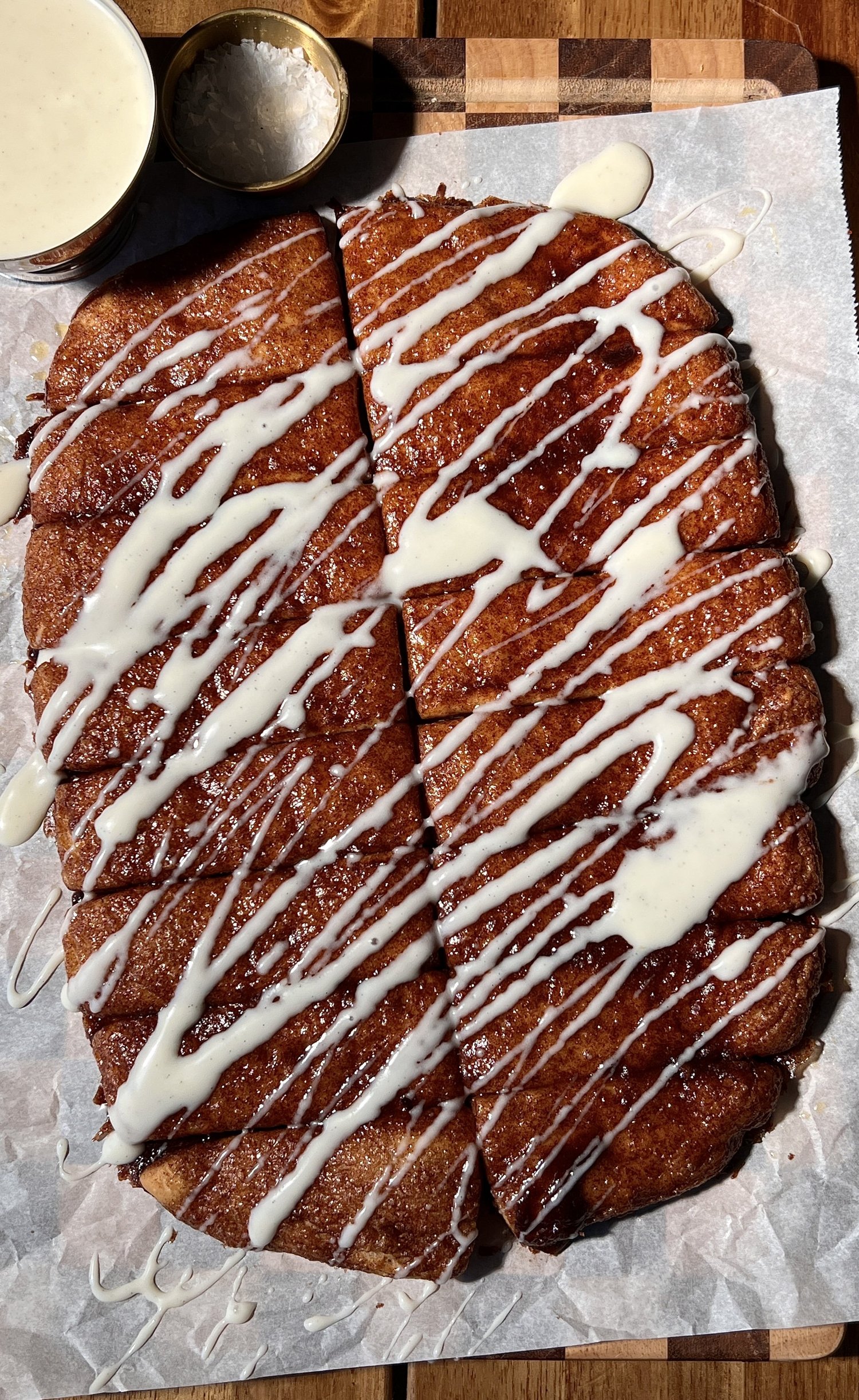

If you love sourdough tang but don’t have time for traditional long ferments, sourdough cinnasticks with Greek yogurt dough are your answer. The Greek yogurt adds moisture and protein, creating a soft crumb while sourdough starter delivers that signature sour flavor and complexity. This hybrid approach cuts your timeline dramatically while keeping all the taste you crave.
How to Make Sourdough Cinnasticks
This recipe yields approximately 12-16 cinnasticks and takes about 90 minutes from start to finish. The dough is forgiving, beginner-friendly, and naturally tangy.
Ingredients
- 1 cup active sourdough starter (fed and bubbly)
- 3/4 cup plain Greek yogurt (full-fat works best)
- 2.5 cups all-purpose flour
- 1/4 cup granulated sugar (for dough)
- 1 teaspoon salt
- 3 tablespoons butter (melted, plus extra for filling)
- 1/2 cup brown sugar (packed)
- 2 tablespoons ground cinnamon
Method
Combine wet ingredients
In a large mixing bowl, whisk together your active sourdough starter, Greek yogurt, and melted butter until fully combined. The mixture should be smooth with no lumps of yogurt remaining. This creates the flavorful, moist base for your dough.
Mix dry ingredients separately
In another bowl, whisk together flour, granulated sugar, and salt. This distributes the salt and sugar evenly throughout the dough, preventing dry pockets. Set this mixture aside.
Combine wet and dry
Pour the flour mixture into the wet ingredients and stir with a sturdy spoon or wooden utensil until a shaggy dough forms. Knead gently by hand for 3-4 minutes until the dough comes together and becomes slightly elastic. The dough should be soft but not sticky.
Rest the dough
Cover your dough with a damp towel or plastic wrap and let it rest at room temperature for 20-30 minutes. This autolyse period allows the flour to fully hydrate and makes the dough easier to stretch and shape.
Roll and fill
On a lightly floured surface, roll the dough into a rectangle approximately 12×9 inches. Brush the surface with melted butter, then sprinkle the brown sugar and cinnamon mixture evenly across the entire surface. Start rolling from one long edge, creating a tight log.
Cut into portions
Using a sharp knife or pastry cutter, slice the log into 12-16 equal pieces depending on desired thickness. Arrange them cut-side up on a parchment-lined baking sheet, leaving about 2 inches between each cinnastick for rise.
Second rise
Cover the baking sheet loosely with a towel and let the shaped rolls proof for 30-45 minutes until puffy and light. They should increase in size but not completely double, as the Greek yogurt dough rises more gently than traditional bread.
Bake and cool
Preheat your oven to 350 degrees Fahrenheit. Bake the cinnasticks for 18-22 minutes until the tops are golden brown and a toothpick inserted into the center comes out clean. Cool on a wire rack for at least 10 minutes before serving, which allows the filling to set.
- Use Greek yogurt at room temperature for easier mixing and more uniform dough development
- Your sourdough starter should be at peak activity (doubled and bubbly) for maximum rise and flavor
- These cinnasticks are best eaten the day they’re made but can be stored in an airtight container for up to 3 days
What to Look For in Baking Equipment for Sourdough Pastries
- Dough mixing bowl: A large, durable bowl with high sides prevents splashing during mixing. Stainless steel or ceramic bowls work best; they’re easy to clean and won’t absorb odors from sourdough cultures.
- Rolling surface and pin: A flat work surface and rolling pin help you achieve even thickness for consistent baking. Marble or silicone surfaces prevent sticking better than bare countertops, saving you flour and frustration.
- Parchment paper and baking sheet: Parchment prevents sticking and eliminates cleanup. A quality baking sheet with even heat distribution ensures your cinnasticks brown uniformly on the bottom without burning.
- Kitchen thermometer: An instant-read thermometer confirms your oven temperature is accurate, which is critical for pastry baking. Even 25-degree swings can affect browning and doneness.
KitchenAid Classic Plus 4.5-Quart Stand Mixer
Best for: Home bakers who make dough regularly
This stand mixer takes the guesswork and arm fatigue out of kneading sourdough dough. The flat beater attachment handles Greek yogurt dough perfectly, achieving optimal gluten development in minutes. Its 4.5-quart capacity accommodates this recipe with room to spare, and the sturdy construction means it’ll outlast dozens of batches. If you plan to bake bread or pastries more than occasionally, this investment pays for itself in convenience and consistency.
Check Current Price on Amazon →Pyrex Mixing Bowl Set (8-Piece)
Best for: Beginners on a tight budget
This affordable glass bowl set offers everything you need for mixing dough and prepping ingredients. Glass is inert, won’t retain sourdough smells, and lets you see your dough developing. The lids make storage convenient, and the set includes multiple sizes for different tasks. At this price point, you get professional-grade mixing surfaces without the premium cost.
Check Current Price on Amazon →OXO Good Grips Silicone Rolling Mat
Best for: First-time pastry makers
This non-slip silicone mat prevents dough from sticking without requiring excessive flour. Measurement markings help you achieve the 12×9-inch rectangle specified in the recipe, removing guesswork. The mat stays put on your counter and folds for easy storage. Its flexibility makes cleanup effortless, and the durability means it lasts through hundreds of rolling sessions.
Check Current Price on Amazon →Matfer Bourgeat Stainless Steel Rolling Pin
Best for: Serious home bakers
This professional-grade rolling pin provides superior weight distribution and heat conductivity, making dough easier to roll and less prone to sticking. The tapered design gives you precise control over thickness, and the stainless steel won’t absorb moisture or odors. While more expensive than basic pins, its durability and performance justify the investment if you bake weekly.
Check Current Price on Amazon →Final Recommendation
Sourdough cinnasticks with Greek yogurt dough represent the best of both worlds: the complex tang you love from sourdough with the convenience of a faster fermentation timeline. This recipe is forgiving enough for beginners yet sophisticated enough for experienced bakers. The Greek yogurt adds nutritional value and creates a tender crumb that stays fresh longer than standard sweet rolls. Whether you’re feeding a crowd or prepping breakfast for the week, this dough delivers impressive results every time.
Start with basic equipment you likely have at home, then gradually invest in pieces that make the process easier and more enjoyable. A quality stand mixer and baking sheet will outlast dozens of recipes, making them smart long-term purchases. The recipe itself is your best teacher; make it twice and you’ll understand how the dough should feel, look, and rise. Share your first batch with someone special, then refine your technique with the second. Within a few attempts, you’ll be confidently producing bakery-quality cinnasticks that taste like they came from a professional kitchen.
Frequently Asked Questions
Can I make this dough without a sourdough starter?
You can substitute with 1/4 teaspoon instant yeast mixed into the flour, though you’ll lose the distinctive sour tang. Alternatively, add 1 tablespoon of lemon juice or vinegar to the wet ingredients for mild tang. The dough will still work but won’t have authentic sourdough complexity.
Why does my dough feel too sticky?
Greek yogurt brands vary in thickness; some are thinner than others. If your dough is overly wet, sprinkle in flour one tablespoon at a time while kneading until it reaches a soft, slightly tacky (but not sticky) consistency. Write down how much extra flour you needed for future batches.
Can I refrigerate the shaped rolls overnight instead of proofing 30-45 minutes?
Yes, this actually improves flavor. Place shaped cinnasticks on the baking sheet, cover tightly with plastic wrap, and refrigerate 8-16 hours. Bake directly from the fridge, adding 3-5 minutes to the baking time until golden brown.
What’s the difference between cinnasticks and regular cinnamon rolls?
Cinnasticks are typically smaller, individually portioned swirls (like breadsticks) rather than large rolls. They bake faster and are perfect for sharing or portion control. The filling-to-dough ratio is often higher, giving you more cinnamon flavor per bite.
Can I freeze unbaked cinnasticks?
Absolutely. After shaping, freeze them on a baking sheet for 2 hours, then transfer to a freezer bag for up to 3 months. Bake from frozen, adding 5-8 minutes to the baking time. No thawing needed; they’ll proof slightly during the initial oven warm-up.
As an Amazon Associate, Build & Bloom earns from qualifying purchases. We only recommend products we genuinely think are useful. Prices and availability vary; check Amazon for the latest.
Leave a Reply