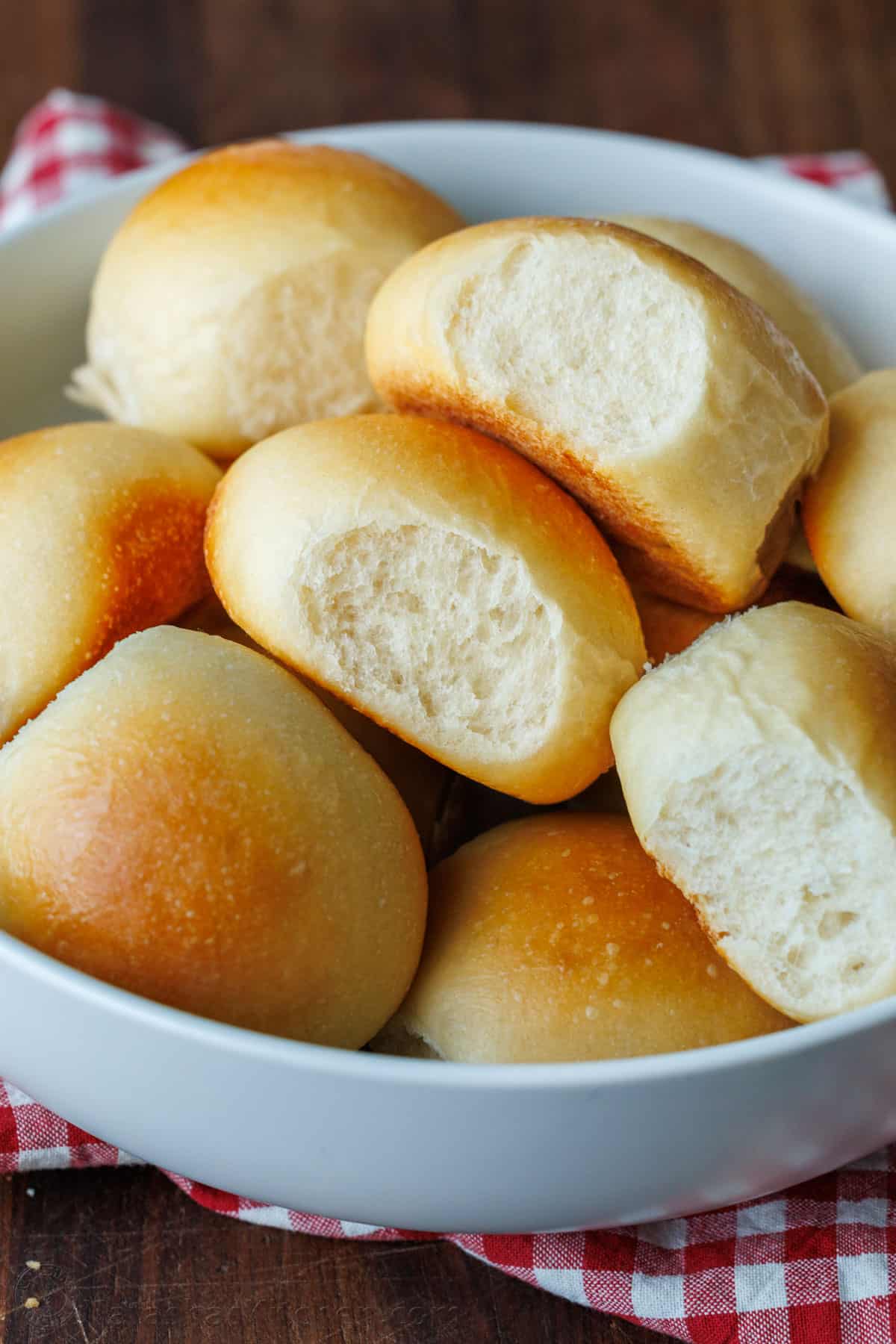

Homemade sourdough rolls elevate any weeknight dinner, but many home bakers feel intimidated by the fermentation process and shaping techniques. The good news: sourdough rolls aren’t complicated once you understand the basic rhythm of feeding your starter, building the dough, and timing your proof. This guide breaks down the entire process into manageable steps so you can confidently bake bakery-quality rolls in your own kitchen.
How to Make Sourdough Dinner Rolls
These tangy, tender rolls develop flavor through a slow fermentation process. Plan for about 24 hours from start to finish, but most of that time is hands-off.
Ingredients
- 1 cup active sourdough starter (fed 4-8 hours prior)
- 2.5 cups all-purpose or bread flour
- 0.75 cup lukewarm water
- 1.5 teaspoons salt
- 2 tablespoons butter (plus extra for topping)
Method
Combine starter and water
In a large bowl, mix your active sourdough starter with lukewarm water until mostly combined. The starter should be bubbly and at peak fermentation. Stir thoroughly to distribute the starter evenly throughout the water.
Add flour and autolyse
Add the flour to the wet mixture and stir until all dry bits are incorporated and you have a shaggy dough. Cover the bowl with a damp towel and let rest for 30 minutes at room temperature. This resting period allows the flour to fully hydrate.
Incorporate salt and butter
After the rest, sprinkle salt over the dough and add softened butter in small pieces. Using wet hands or a dough scraper, work the salt and butter into the dough by pinching and folding it over itself repeatedly. This takes about 5 minutes until the butter is fully incorporated.
Bulk fermentation with folds
Cover the bowl and let it ferment at room temperature for 4-6 hours. Every 30 minutes for the first 2 hours, perform a set of coil folds or stretch-and-folds: wet your hand, grab one side of the dough, stretch it up and over itself, rotate the bowl, and repeat from all four sides. You should see the dough becoming smoother and slightly puffy.
Cold overnight rest
Once the bulk fermentation is complete and the dough looks jiggly and aerated, cover the bowl and refrigerate overnight (or up to 48 hours). Cold fermentation develops flavor and makes the dough easier to shape. The dough will continue rising slowly in the fridge.
Shape into rolls
Remove the dough from the refrigerator and turn it onto a lightly floured surface. Divide the dough into 8-12 equal pieces depending on your preferred roll size. Working with one piece at a time, cup your hand over the dough and drag it toward you in circular motions to create tension on the surface. Place each shaped roll seam-side down into a buttered baking dish.
Final proof and bake
Cover the baking dish with a damp towel and let the rolls proof at room temperature for 3-4 hours until they’ve risen noticeably and feel pillowy. Preheat your oven to 425 degrees F. Just before baking, brush the tops with melted butter and sprinkle with fleur de sel if desired. Bake for 18-22 minutes until the rolls are deep golden brown.
Cool and serve
Remove the rolls from the oven and transfer them to a wire rack to cool for at least 10 minutes. Brush again with melted butter while warm. Serve within a few hours for the best texture, though they’ll keep in an airtight container for 2 days.
- Keep your starter at peak fermentation before mixing it into your dough. You should see lots of bubbles and a slightly dome-shaped peak at the top.
- If your kitchen is cold (below 70F), extend bulk fermentation time by 1-2 hours. If it’s very warm (above 78F), shorten the time to avoid overproofing.
- Wet hands are your best tool during folding and shaping. Water prevents sticking better than flour and doesn’t overdry the dough surface.
What to Look For in Sourdough Baking Equipment
- Bowl material and size: A 5-6 quart stainless steel or glass bowl allows your dough to expand without overflowing during bulk fermentation. Glass lets you visually monitor fermentation progress from all angles.
- Dough scraper or bench knife: A flexible scraper helps you perform stretch-and-folds without deflating the dough and makes shaping easier by cleanly cutting the dough into even pieces.
- Kitchen scale accuracy: Sourdough baking relies on consistent weights, not volume. A scale accurate to at least 1 gram ensures your starter ratio, hydration, and salt levels are precise every time.
- Proofing environment control: A Dutch oven or covered baking dish traps steam during baking, creating a crispy crust. Consistent room temperature (ideally 70-75F) prevents variables in fermentation timing.
OXO Good Grips Stainless Steel Mixing Bowl 5-Quart
Best for: Home sourdough bakers of all levels
This 5-quart stainless steel bowl is the workhorse of sourdough baking. Its durable construction handles hundreds of stretch-and-fold sessions without denting, the wide mouth makes it easy to work with dough, and its neutral color lets you clearly see fermentation progress. The stainless steel doesn’t absorb odors or stains, and it cleans effortlessly in the dishwasher.
Check Current Price on Amazon →JENNINGS Stainless Steel Dough Scraper Set
Best for: New sourdough bakers learning to fold and shape
This three-piece set includes both rigid and flexible scrapers, giving you options for different stages of your bake. The stainless steel scrapers are thin enough to cleanly cut dough without crushing air pockets, yet sturdy enough to handle multiple folds without warping. The included measurements printed on the edge help you portion dough accurately.
Check Current Price on Amazon →Escali Primo Precision Digital Kitchen Scale
Best for: Budget-conscious bakers who prioritize accuracy
This digital scale reads to 1-gram precision with a 5-kilogram maximum capacity, perfect for sourdough recipes. It’s lightweight and compact enough to store in any drawer, features easy-to-read numbers, and includes a convenient tare button to zero out between ingredients. At under $25, it delivers reliable accuracy without the premium price tag.
Check Current Price on Amazon →Hario V60 Precision Digital Scale
Best for: Serious home bakers who want professional precision
With 0.1-gram increments and a built-in timer, this Japanese-made scale eliminates guesswork from your sourdough recipes. The large LCD display is easy to read even at a distance, and the scale auto-shutoff after 10 minutes saves battery life. This scale brings coffeehouse-level precision to your home kitchen.
Check Current Price on Amazon →Your Sourdough Roll Journey Starts Now
Sourdough dinner rolls transform an ordinary table into something special, and the process is more forgiving than most bakers think. With a reliable mixing bowl, accurate scale, and quality Dutch oven, you have everything needed to produce rolls that rival any artisan bakery. The key is understanding that sourdough rewards patience–the slow fermentation creates flavor that fast yeast simply cannot match.
Start with this recipe, keep notes about your timing and room temperature, and you’ll develop an intuition for your specific baking environment. Each loaf teaches you something new about fermentation, shaping, and steam management. Within a few bakes, those techniques become muscle memory, and you’ll be confidently hosting dinners where guests ask, “Did you really make these?” The answer will be yes, and the pride in serving homemade sourdough rolls is worth every minute of the process.
Frequently Asked Questions
How do I know when my sourdough starter is ready to use?
Your starter should be fed 4-8 hours before mixing and should show clear signs of activity: lots of visible bubbles throughout, a dome-shaped peak at the top, and a pleasant tangy smell. At peak fermentation, it should roughly double in size and feel airy when you stir it.
Can I skip the overnight fermentation and make these rolls faster?
You can shorten the process by using warmer water and skipping the cold rest, but you’ll lose much of the sourdough’s signature tangy flavor. The long fermentation is what makes sourdough rolls taste different from regular yeasted rolls, so it’s worth the wait.
What should I do if my dough is too sticky to shape?
Sticky dough is usually a sign of high hydration or incomplete fermentation. Try using wet hands instead of flouring your work surface, chill the dough for 30 minutes before shaping, or extend your bulk fermentation time by 30 minutes to allow more gluten development.
How can I store leftover sourdough rolls?
Store cooled rolls in an airtight container at room temperature for up to 2 days. For longer storage, wrap them individually in plastic wrap and freeze for up to 3 months. Thaw at room temperature or warm in a 350F oven for 5 minutes.
What’s the difference between stretch-and-fold and coil folds?
Stretch-and-folds grab one side of the dough and fold it over the center; coil folds spiral the entire dough up from the outside to the center. Both build strength in the dough without mixing; choose whichever feels more natural to you.
As an Amazon Associate, Build & Bloom earns from qualifying purchases. We only recommend products we genuinely think are useful. Prices and availability vary; check Amazon for the latest.
Leave a Reply